
Observation skills Normal Science Worksheets for Ages 7-9
6 filtered results
Difficulty Level
Grade
Age
-
From - To
Subject
Activity
Standards
Unlock the wonders of science for kids aged 7-9 with our engaging Observation Skills Normal Science Worksheets! Designed to enhance critical thinking and sensory awareness, these worksheets encourage children to explore the world around them. Fun activities promote careful observation, including identifying patterns, describing properties, and recognizing changes in their environment. Each worksheet is a blend of creativity and learning, fostering curiosity and empowering young learners to ask questions and seek answers. Ideal for home or classroom use, our printable resources make science exciting and accessible, laying the foundation for scientific literacy in an interactive way. Start observing today!
Favorites
With answer key
Interactive
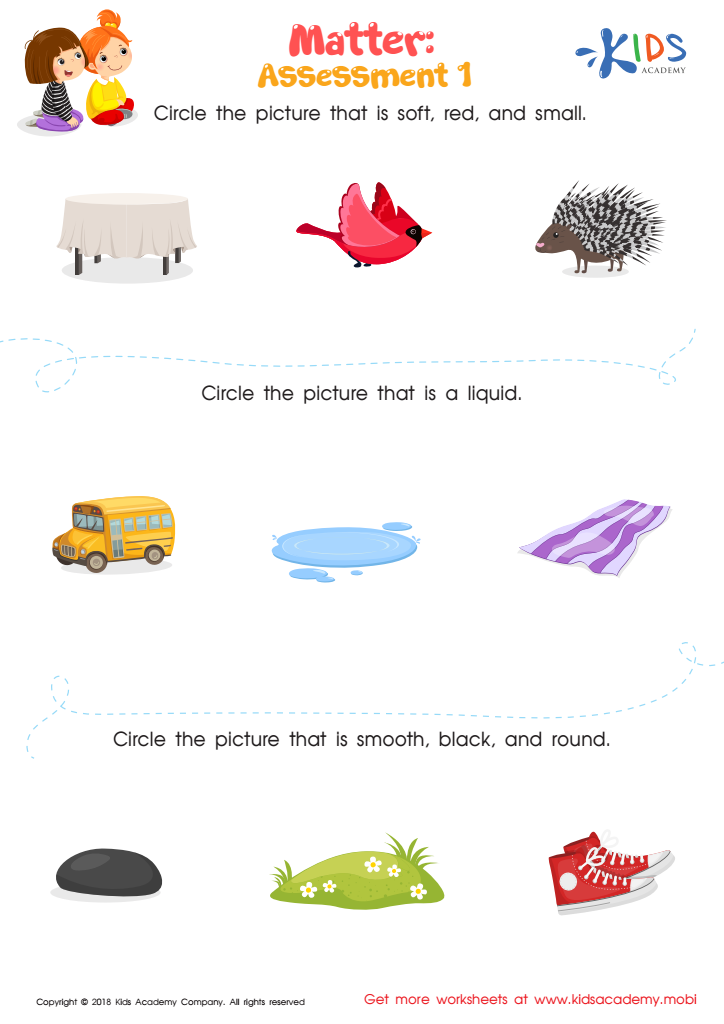
Matter: Assessment 1 Worksheet
Have your children learn that anything that has weight and takes up space is matter. Examples include buses, tables, people, animals, and more. Use this worksheet to help them identify the objects and circle the soft, red, and small one; the liquid; and the smooth, black, and round one.
 Assign to My Students
Matter: Assessment 1 Worksheet
Worksheet
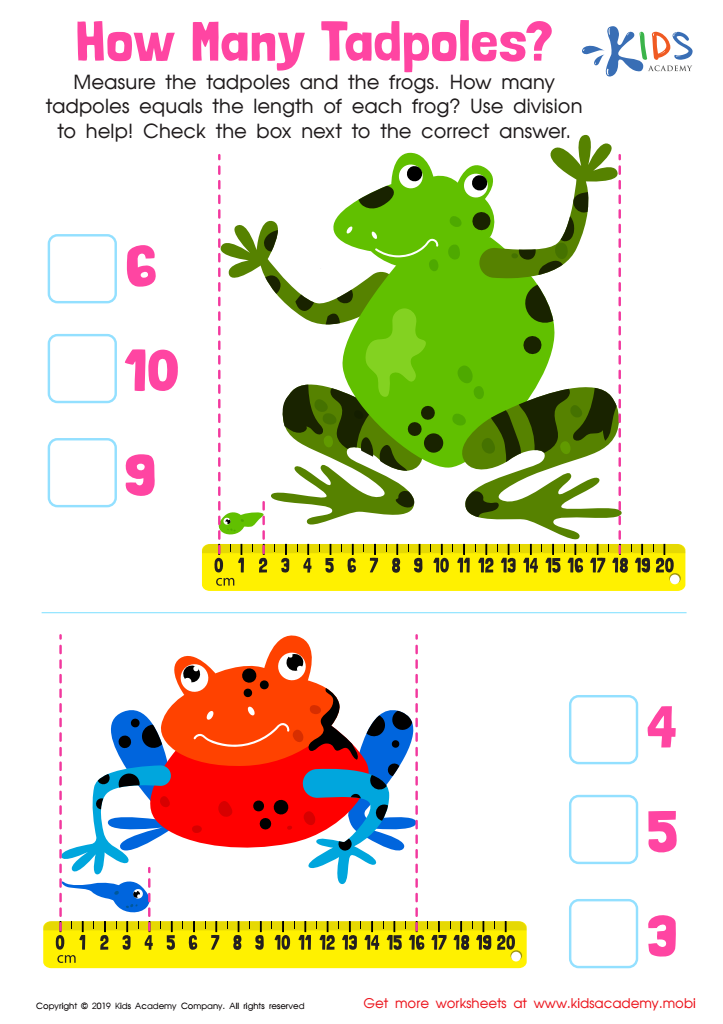
How Many Tadpoles Worksheet
Kids love tadpoles! They'll have fun using them to work out the measurements of their frog friends. By dividing the length of the frogs by the length of the tadpoles, children can deduce how many tadpoles it takes to equal a frog. With the use of 'how many' and 'each' they'll solve math problems without realizing it!
How Many Tadpoles Worksheet
Worksheet
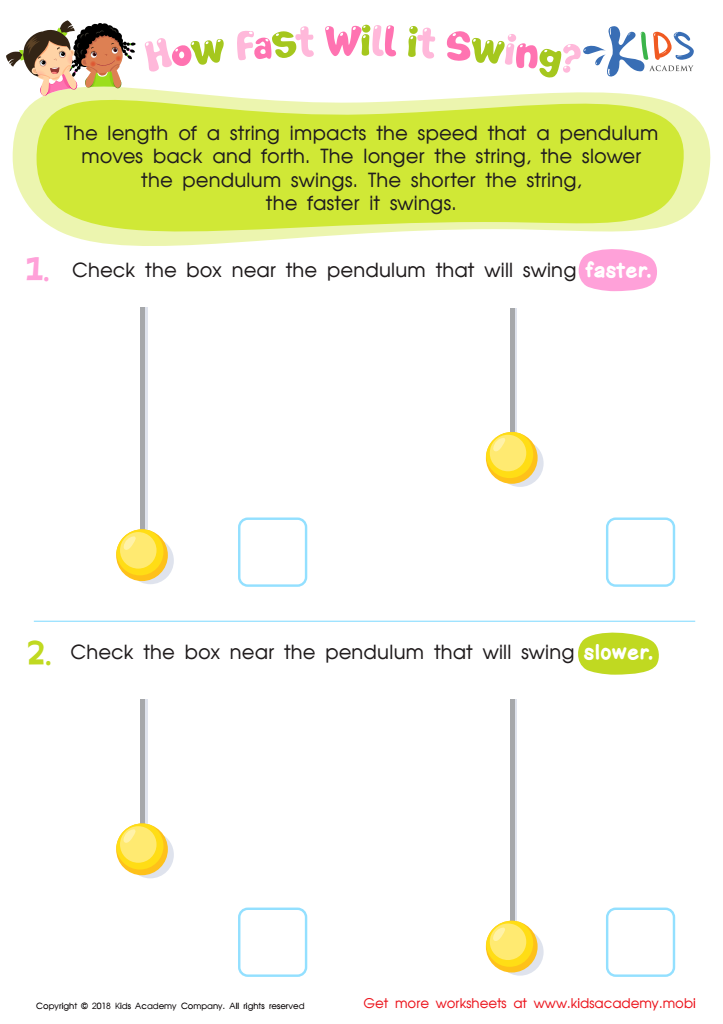
Pendulum Experiment Worksheet For 3rd Grade
Time to flex those science muscles! A pendulum's speed depends on its string length. Complete this 3rd grade pendulum experiment worksheet and experiment with a yo-yo at home! Read the description to answer the questions correctly.
Pendulum Experiment Worksheet For 3rd Grade
Worksheet
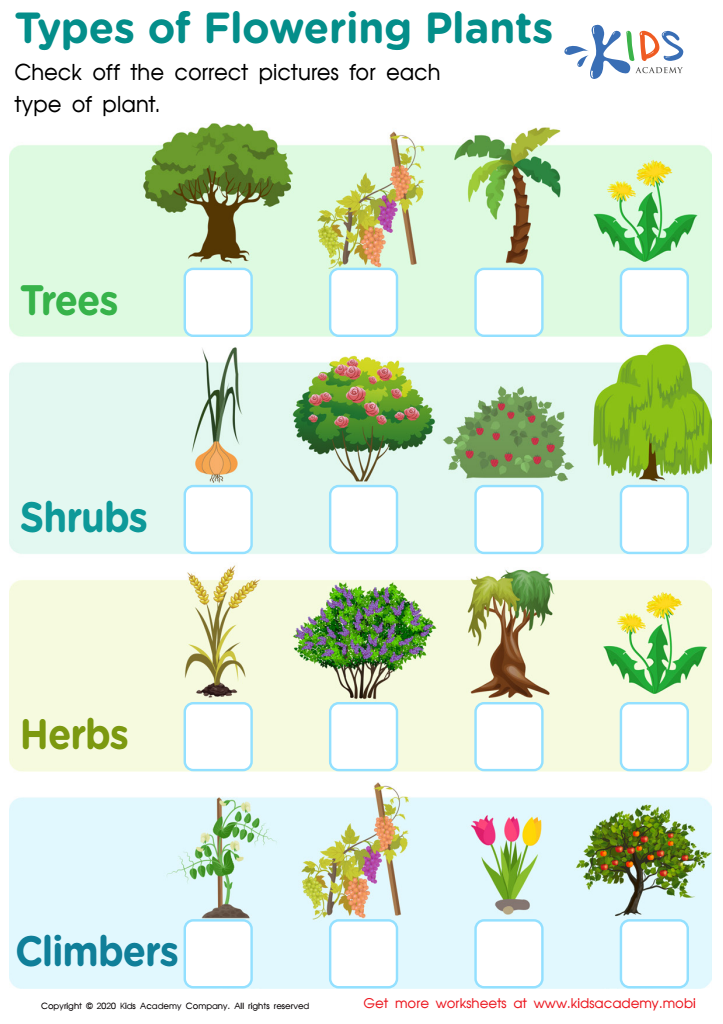
Types of Flowering Plants Worksheet
Help kids explore the variety of plants around them! Have them discover trees, shrubs, herbs, and vines with this fun science worksheet. Print it and let them match the plant pictures to their correct names. It's an exciting learning experience that'll let them check off the right images and explore the botanical world.
Types of Flowering Plants Worksheet
Worksheet
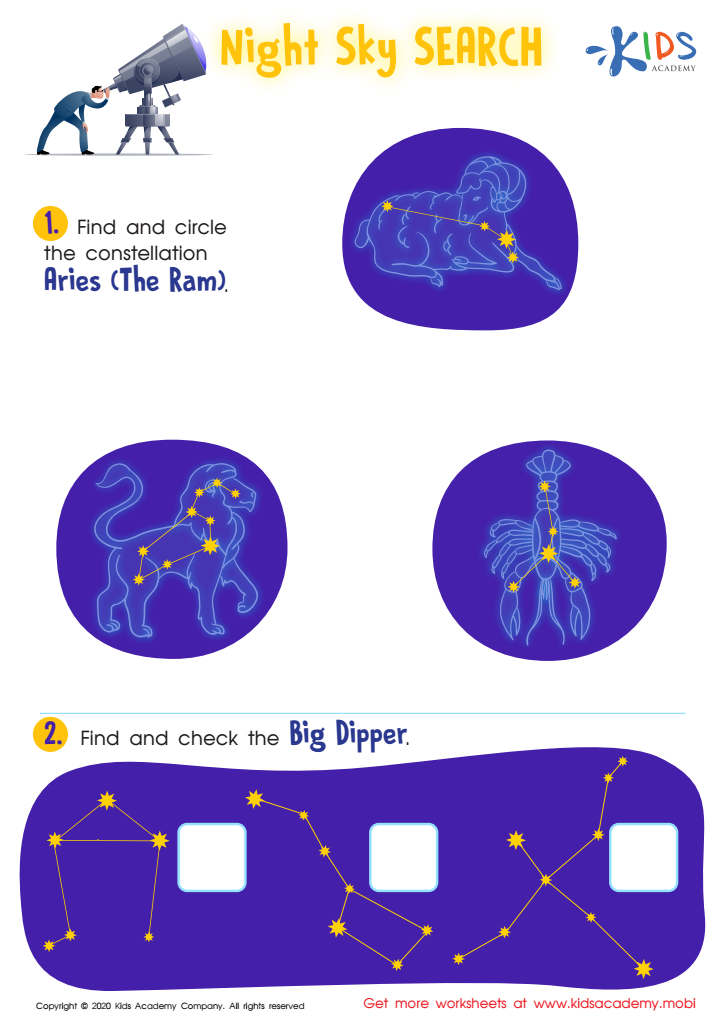
Night Sky Search Worksheet
Gaze up into the night sky and spot the stars! Your little astronomer can learn about Aries and Big Dipper constellations with this science worksheet. Simply find the ram for Aries and check the box for Big Dipper. Then, when the weather is right, go outside and look for them in the night sky!
Night Sky Search Worksheet
Worksheet
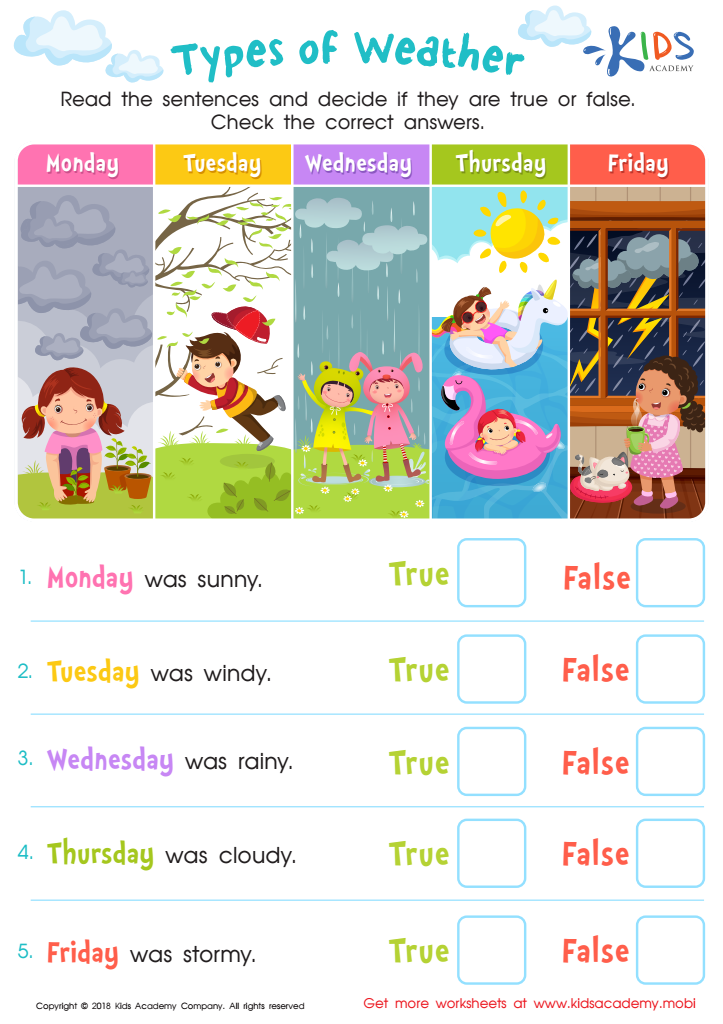
Types of Weather Worksheet
This worksheet will test your child's knowledge of the weather. Show them the pictures of five days of the week, each with a different weather and ask them to describe it. Then read the sentences and ask if they're true/false. Help them find the right answers.
Types of Weather Worksheet
Worksheet
Join Kids Academy for Free
Who is primarily going to use this learning content?



%20(1).jpg)




Observation skills are crucial for children aged 7-9 as they set the foundation for scientific understanding and critical thinking. At this developmental stage, children are naturally curious and keen to explore their environment. By honing their observation skills, parents and teachers can foster this curiosity, encouraging children to ask questions, make connections, and develop a deeper understanding of the world around them.
Observation skills lead to better understanding in various subjects, particularly in science. When children learn to closely observe and describe phenomena, they engage in hands-on learning that promotes retention and comprehension. For instance, observing plant growth can teach them about life cycles and ecosystems.
Furthermore, strong observation skills enhance problem-solving abilities. As children notice patterns and details, they learn to analyze information critically, laying the groundwork for higher-level thinking required in later education.
Additionally, cultivating these skills promotes confidence and independence in learning. As children practice observing, they become more adept at investigating on their own, leading to a lifelong love of inquiry.
Ultimately, by prioritizing observation skills, parents and teachers help children become thoughtful, engaged learners, equipped to navigate academic challenges and the world around them.







