
Reading thermometers Normal Science Worksheets for Ages 7-9
3 filtered results
Difficulty Level
Grade
Age
-
From - To
Subject
Activity
Standards
Discover engaging science worksheets designed to teach kids aged 7-9 essential skills in reading thermometers. Our "Reading Thermometers Normal Science Worksheets" provide a hands-on approach to temperature measurement, combining fun with education. These worksheets help young learners recognize and understand temperature scales, enhancing their observational and analytical abilities. By completing various activities and exercises, children will gain confidence in interpreting thermometer readings effortlessly. Ideal for both classroom and home use, these printable worksheets are a great addition to any science curriculum, fostering an early appreciation for science and critical thinking. Promote scientific curiosity with Kid’s Academy's trusted resources!
Favorites
With answer key
Interactive
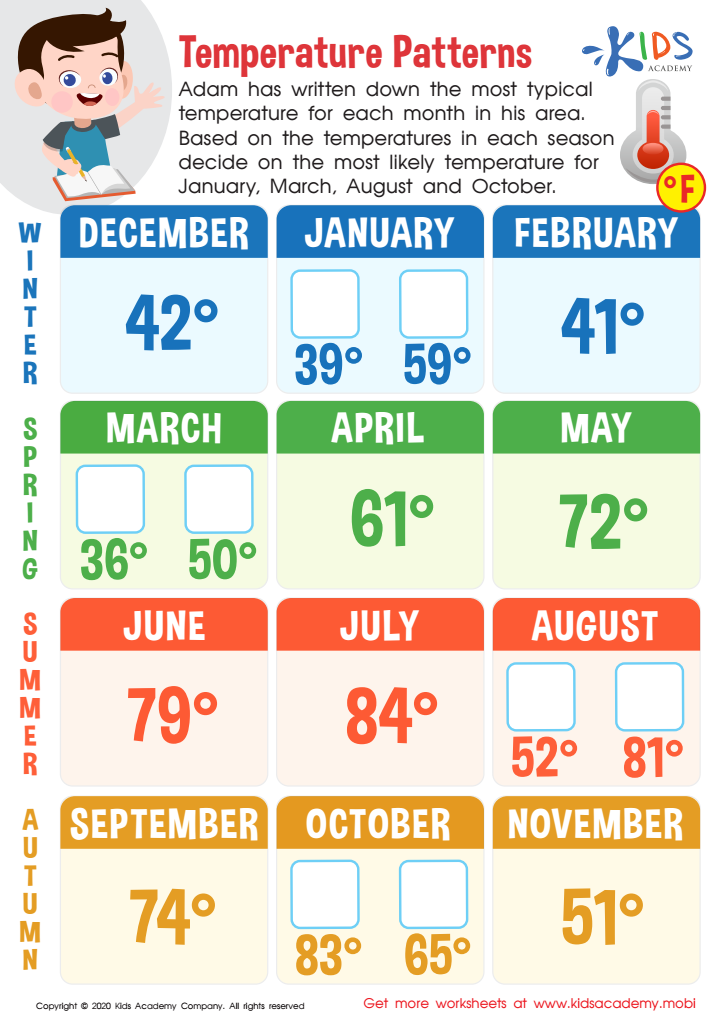
Temperature Patterns Worksheet
Adam has recorded temperatures in his area. Help your child use the data to predict temperatures for one month in each season. Check the box next to the correct temperature for each row in this worksheet. In America, temperatures vary by climate and season - colder in winter, hotter in summer.
 Assign to My Students
Temperature Patterns Worksheet
Worksheet
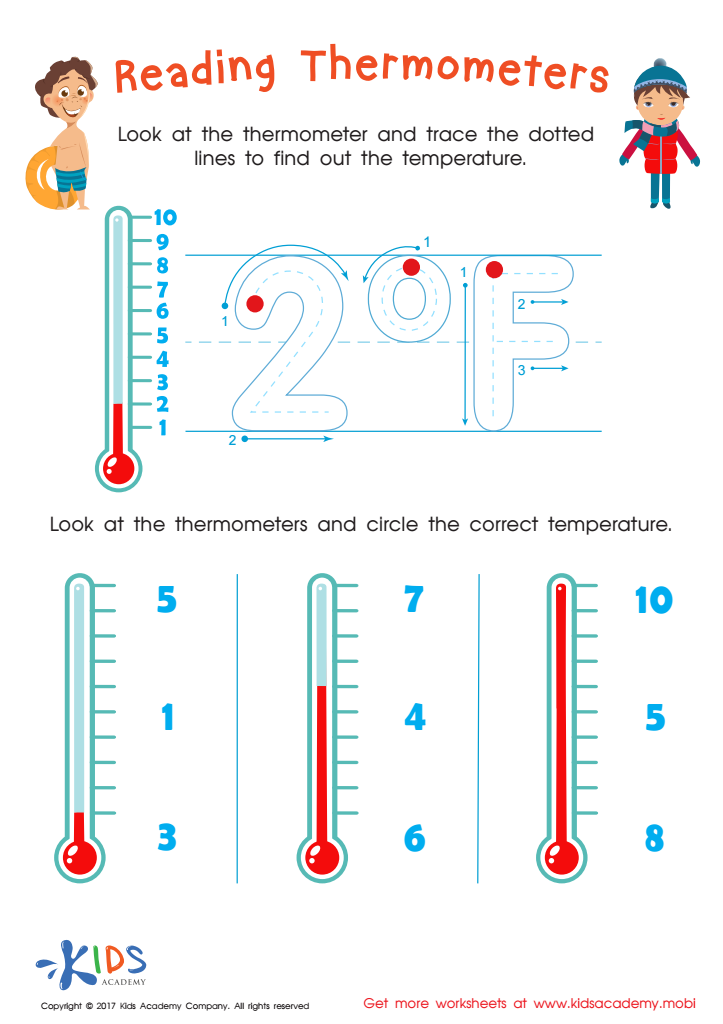
Reading Thermometers Printable
For kids to grasp temperature, they need to learn how to read a thermometer. Use this worksheet to teach them early on - whether they're sick or in the cold. It's an important life skill!
Reading Thermometers Printable
Worksheet
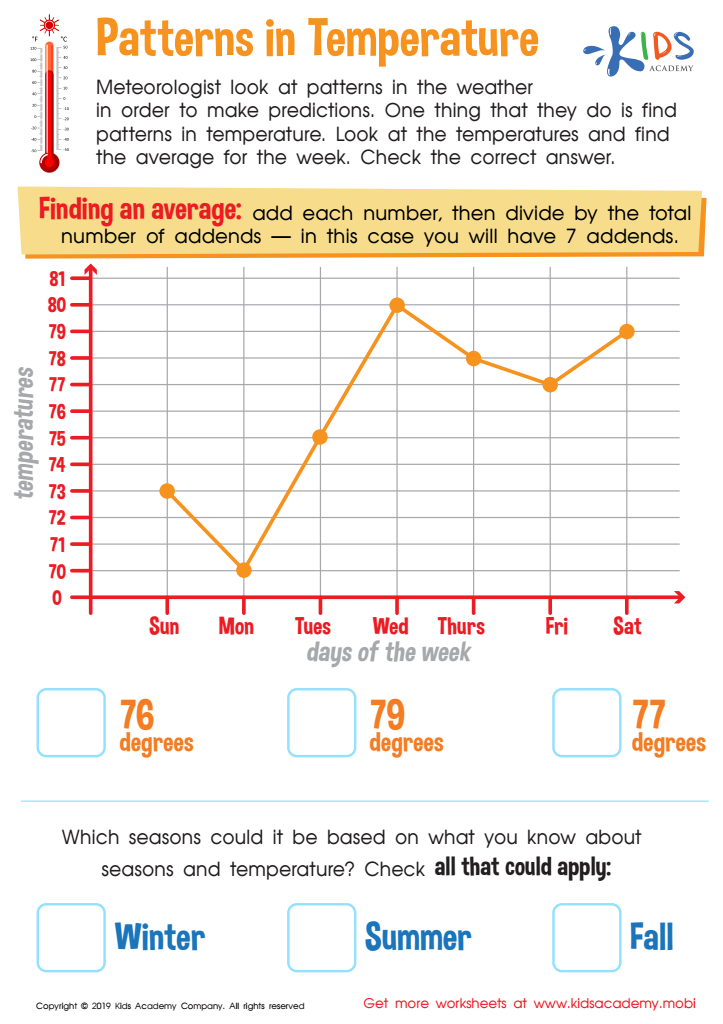
Patterns in Temperature Worksheet
Kids need to learn how to read and interpret data from graphs and charts. This free worksheet on temperature patterns helps them to do just that. They'll practice finding averages and answer questions in multiple-choice format. Plus, it provides a great learning experience!
Patterns in Temperature Worksheet
Worksheet
Join Kids Academy for Free
Who is primarily going to use this learning content?








Understanding how to read thermometers is an essential skill for children aged 7-9 because it serves multiple educational and practical purposes. For one, it bridges science with daily life, helping children make sense of the world around them. It teaches fundamental concepts like temperature, which directly ties into lessons on weather, seasons, and even the states of matter.
Moreover, grasping how to read the thermometer builds mathematical skills. Children practice reading numbers, understanding scales, and interpreting data—skills that are core aspects of their broader education.
From a safety perspective, knowing how to read a thermometer is crucial. Children can recognize when temperatures are unusually high or low, aiding in decisions about proper clothing or outdoor activities. During fevers or illnesses, an ability to read a thermometer can help children take part in monitoring their health, fostering early lessons in self-care and responsibility.
For teachers, integrating this skill into the curriculum enriches science lessons and promotes critical thinking. When parents engage with this learning at home, it reinforces what is taught at school, providing a rounded educational experience. Hence, investing time in teaching children to read thermometers lays a foundation for both academic and practical understanding, making it a valuable component of early education.







