Understanding photosynthesis Normal Science Worksheets for Ages 7-9
3 filtered results
-
From - To
Discover the magic of photosynthesis with our "Understanding Photosynthesis" science worksheets designed for ages 7-9. These engaging and educational printables from Kids Academy help young learners explore how plants make their food using sunlight, water, and carbon dioxide. Perfect for early-grade students, the worksheets simplify complex concepts with fun activities and hands-on experiments. Enhance your child’s learning experience with clear diagrams, easy-to-understand explanations, and interactive tasks that make science both fun and accessible. Spark curiosity and foster a love for biology as your child gets acquainted with the wonders of the natural world!
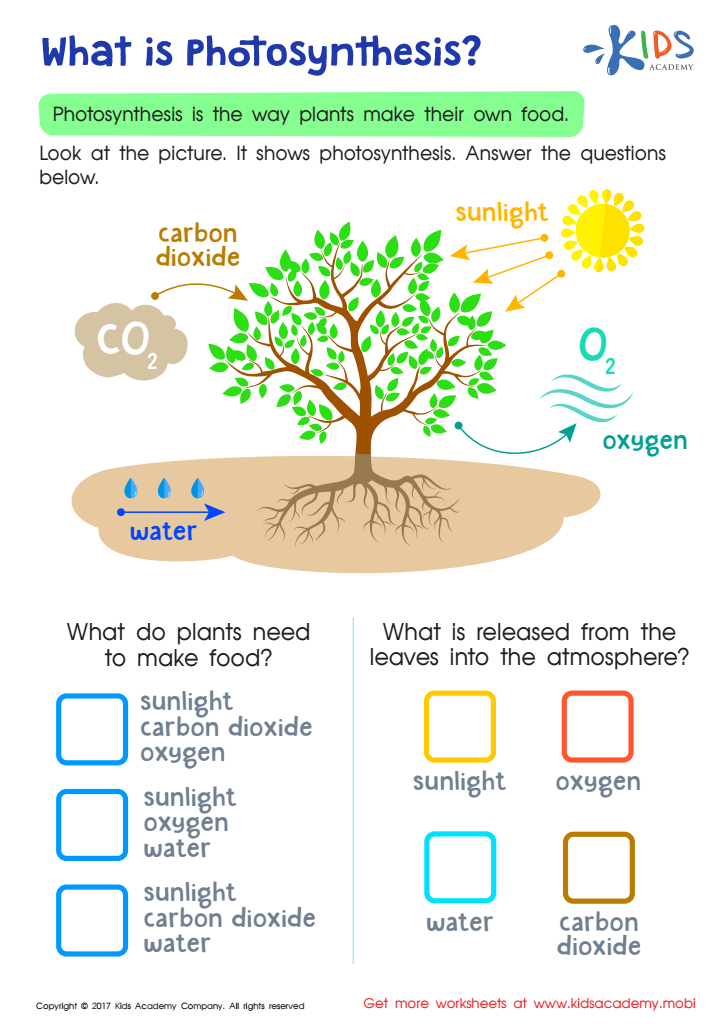
What is Photosynthesis Printable
 Assign to My Students
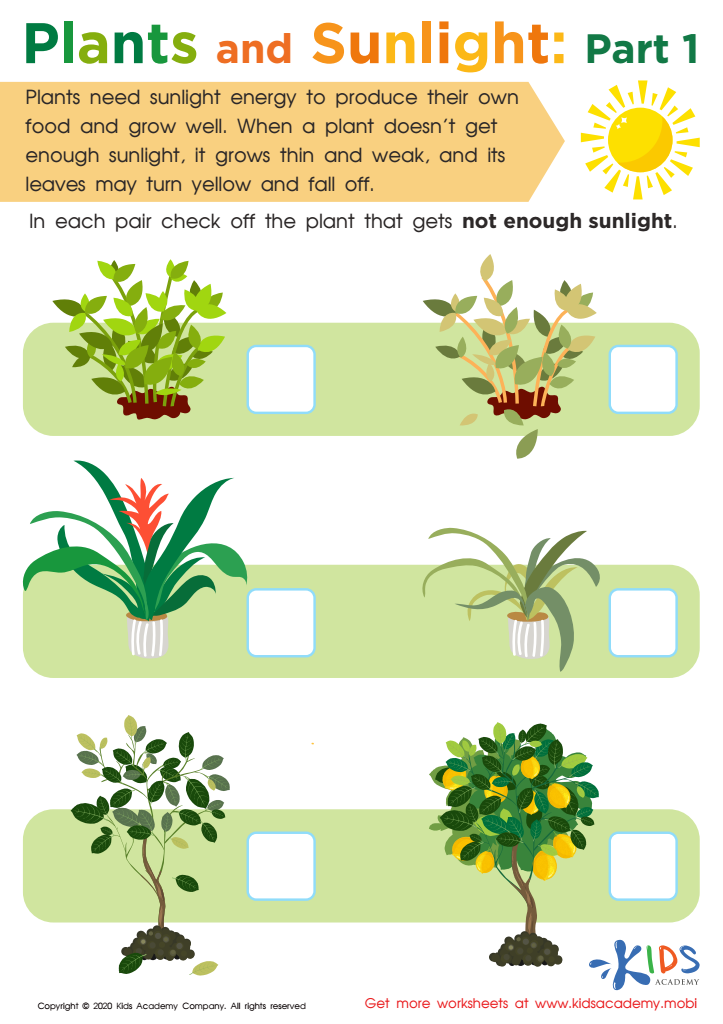
Plants and Sunlight: Part 1 Worksheet
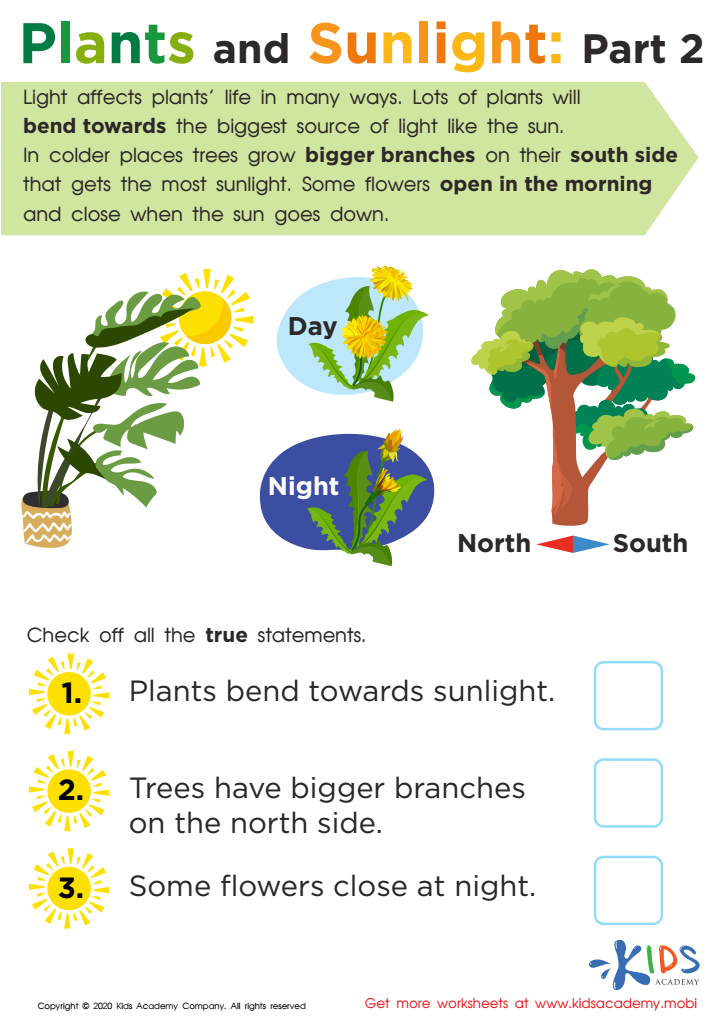
Plants and Sunlight: Part 2 Worksheet







Understanding photosynthesis is crucial for young kids because it lays the foundation for broader scientific knowledge and cultivates an appreciation for nature. Photosynthesis is the process by which plants convert sunlight, water, and carbon dioxide into oxygen and glucose. When children learn about this, they develop a fundamental grasp of how life on Earth is sustained.
Teaching photosynthesis to children ages 7-9 opens up conversations about the importance of plants. Plants are essential for life; they provide the oxygen we breathe and are the basis of most food chains. This knowledge helps children develop environmental awareness and a sense of responsibility towards taking care of our planet, fostering eco-friendly behaviors at an early age.
Moreover, learning about photosynthesis stimulates curiosity and critical thinking. Kids begin to question how the natural world works and make connections between their lessons and real-life phenomena. This cognitive engagement aids in the development of problem-solving skills and scientific thinking, which are beneficial across all areas of learning.
For parents and teachers, emphasizing photosynthesis helps to build more scientifically literate future citizens. These children are better equipped to tackle environmental issues and innovate solutions, contributing to a healthier planet. Nurturing early interest in science can also spark lifelong passion and possibly career interests in biological sciences.







