
Observational skills Normal Physical Science Worksheets for Ages 7-9
4 filtered results
Difficulty Level
Grade
Age
-
From - To
Subject
Activity
Standards
Boost your child’s scientific curiosity and understanding with our "Observational Skills Normal Physical Science Worksheets for Ages 7-9." These engaging worksheets are designed to enhance your child’s observational skills, a foundational aspect of scientific inquiry. They inspire young learners to examine the world around them, make detailed observations, and infer conclusions like true scientists. Our meticulously crafted activities cover key topics in physical science, featuring fun, hands-on exercises that make learning enthralling. Ideal for use both in the classroom and at home, these worksheets help develop critical thinking, attention to detail, and analytical skills in a supportive and stimulating environment.
Favorites
With answer key
Interactive
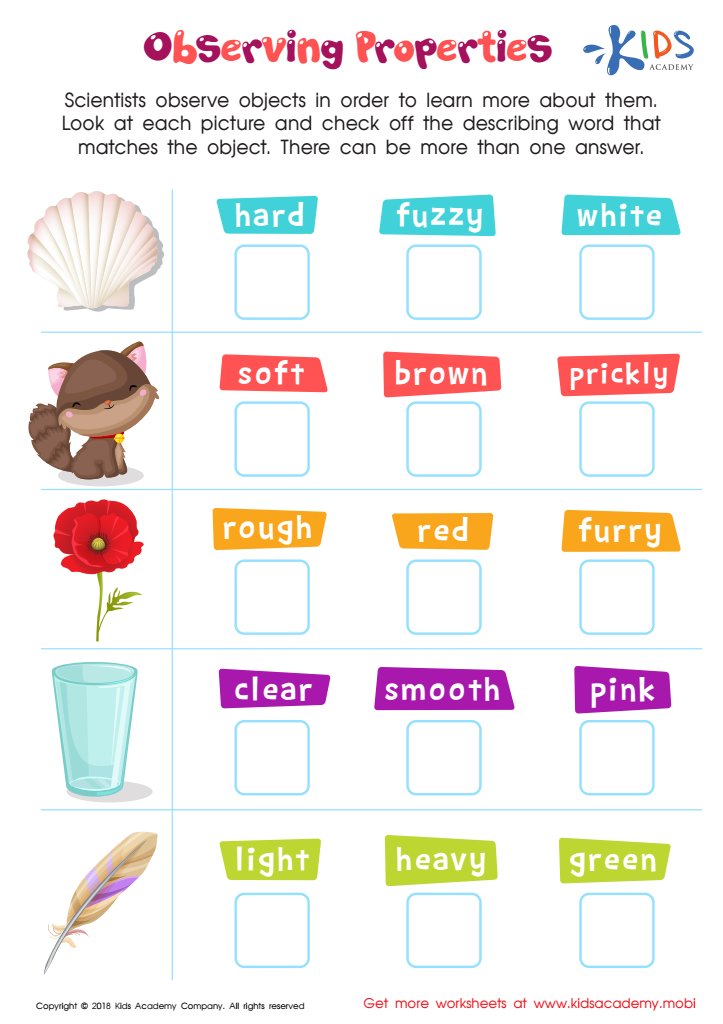
Observing Properties Worksheet
Encourage your kid's interest in science with this fun worksheet! Let them identify the five objects on the left, then choose the most accurate word from the options on the right. There might be more than one answer, so remind them to take their time observing the objects.
 Assign to My Students
Observing Properties Worksheet
Worksheet
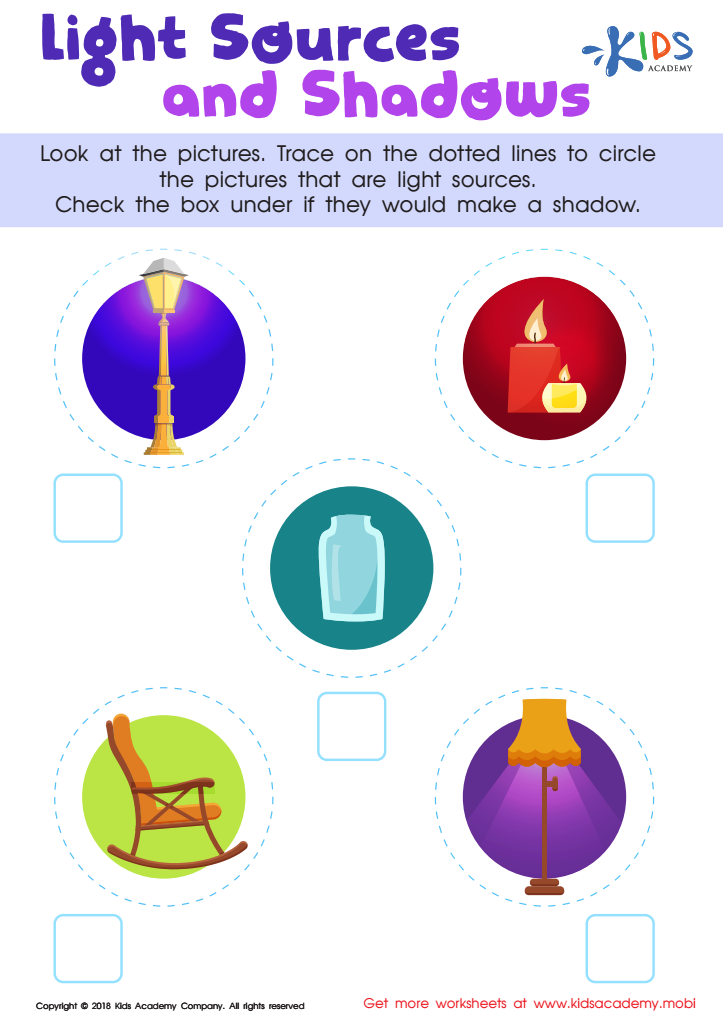
Light Sources and Shadows Worksheet
During the day, the sun radiates bright light. At night, when it's time for bed, the sun sets and darkness takes over. To light our way, we use other sources of light. With your students, trace the dotted lines around the pictures of light sources and check the boxes under the objects that will cast shadows.
Light Sources and Shadows Worksheet
Worksheet
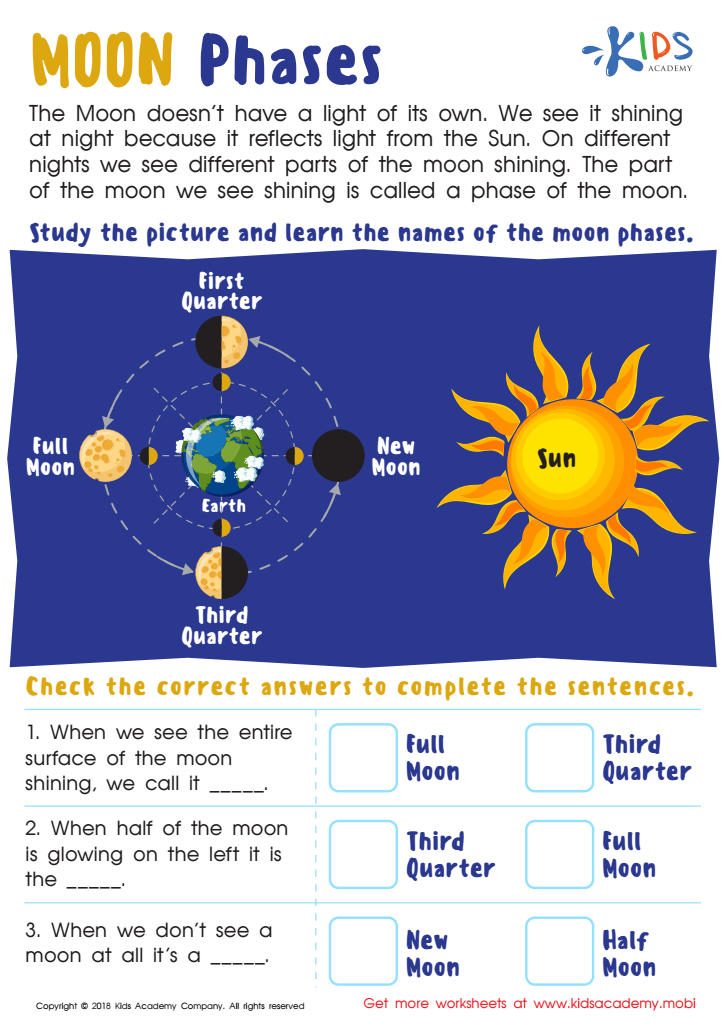
Moon Phases Worksheet
Gaze up at the night sky and the moon's appearance may change from night to night. Encourage your child to learn more about the sun, the moon, and space with this science worksheet. Have them read the text then study the picture. Finally, read the sentences and check the answers to identify the moon's phases.
Moon Phases Worksheet
Worksheet
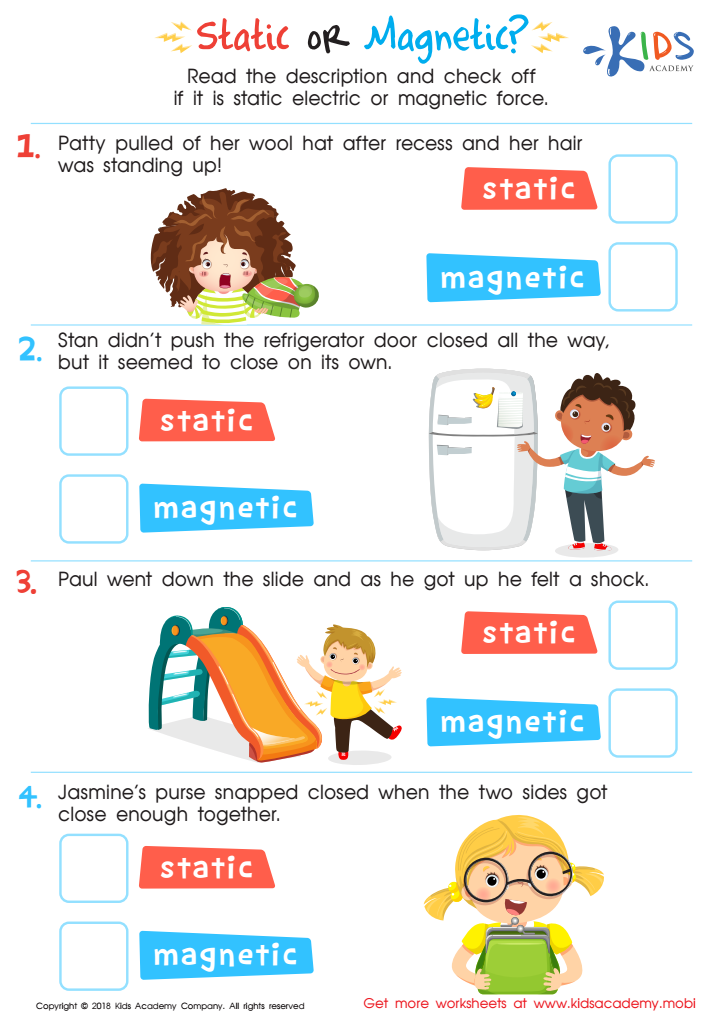
Static or Magnetic Printable Worksheet
Ever wondered if a situation involved static or magnetic force? This printable worksheet has the answer! Read the scenarios and check out the illustrations to decide which force is in play for each. Learn about these two amazing forces with this fun activity!
Static or Magnetic Printable Worksheet
Worksheet
Join Kids Academy for Free
Who is primarily going to use this learning content?



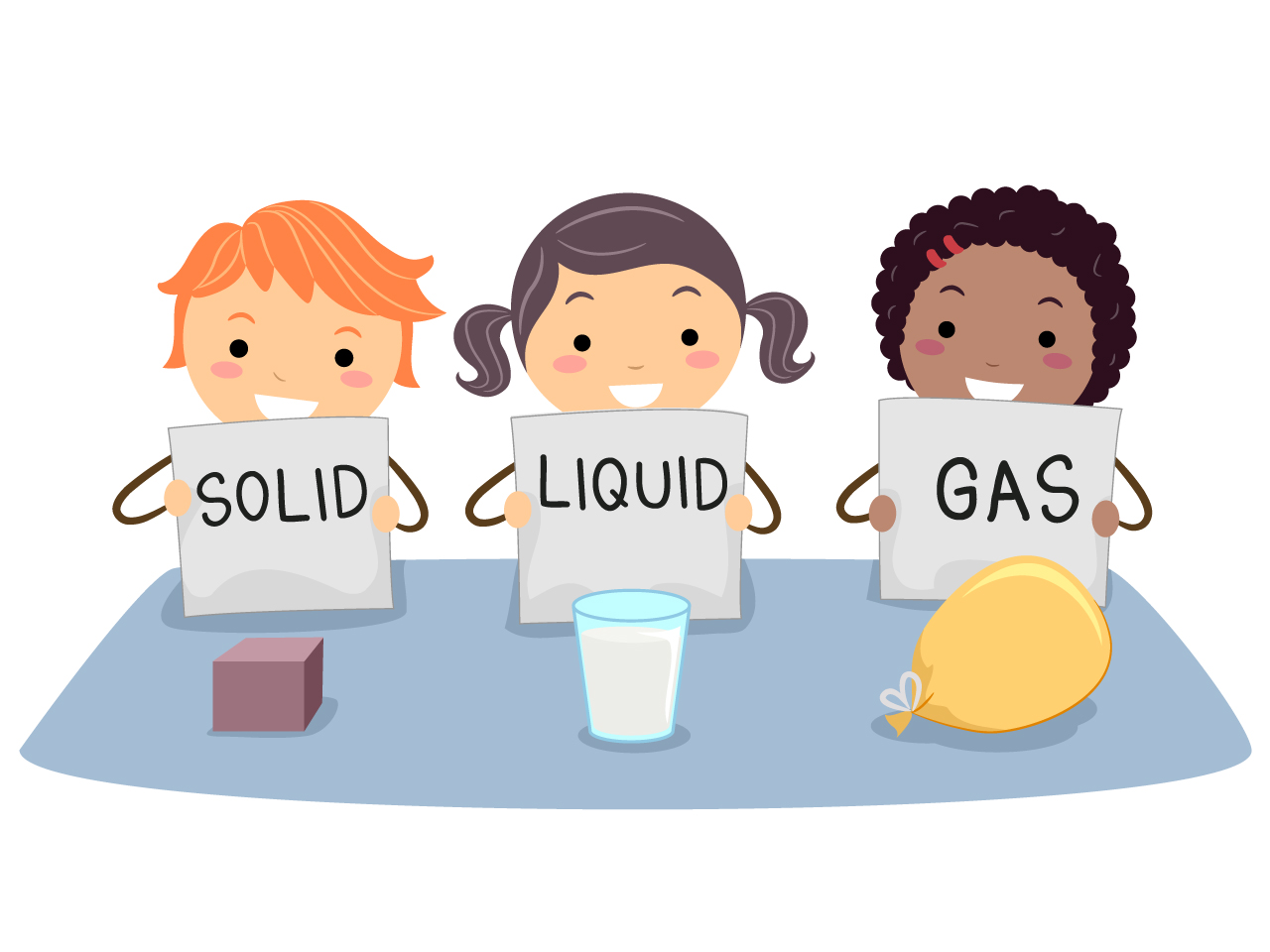




Observational skills are key to fostering curiosity and a deeper understanding of the natural world among children ages 7-9. At this impressionable age, children are naturally inquisitive, and developing their observational skills can anchor this curiosity into systematic learning. Observational skills in the context of physical science allow children to notice and articulate details about their surroundings, encouraging them to ask questions and seek explanations.
This fundamental ability lays the groundwork for scientific thinking. By learning to observe carefully, children can make better connections between cause and effect, patterns, and anomalies in their environment. For instance, they may start noting the difference in the way various materials react to heat or how plants grow under different conditions. These carefully curated observations help them form hypotheses, test predictions, and ultimately, understand basic scientific principles.
Moreover, enhancing observational skills also supports cross-disciplinary learning, benefiting subjects like math and art, where attention to detail is crucial. Teachers and parents who invest in nurturing these skills equip children with tools for engaging in complex problem-solving and creative thinking later in life. Essentially, fostering observational skills is not just about science—it's about empowering children with a lifelong ability to learn and explore.







