
Reading comprehension Normal Physical Science Worksheets for Ages 7-9
7 filtered results
Difficulty Level
Grade
Age
-
From - To
Subject
Activity
Standards
Enhance your child’s understanding of physical science with our engaging reading comprehension worksheets designed specifically for ages 7 to 9. These worksheets go beyond simple facts, encouraging young learners to explore and interpret scientific concepts through captivating texts and comprehension questions. By integrating reading skills with science, children will improve their literacy while discovering fascinating topics like matter, energy, and forces. Our user-friendly format and appealing illustrations make learning enjoyable and effective. With a variety of exercises suited for different learning styles, these worksheets are perfect for both classroom and home use. Inspire curiosity and foster a love for science in your child today!
Favorites
With answer key
Interactive
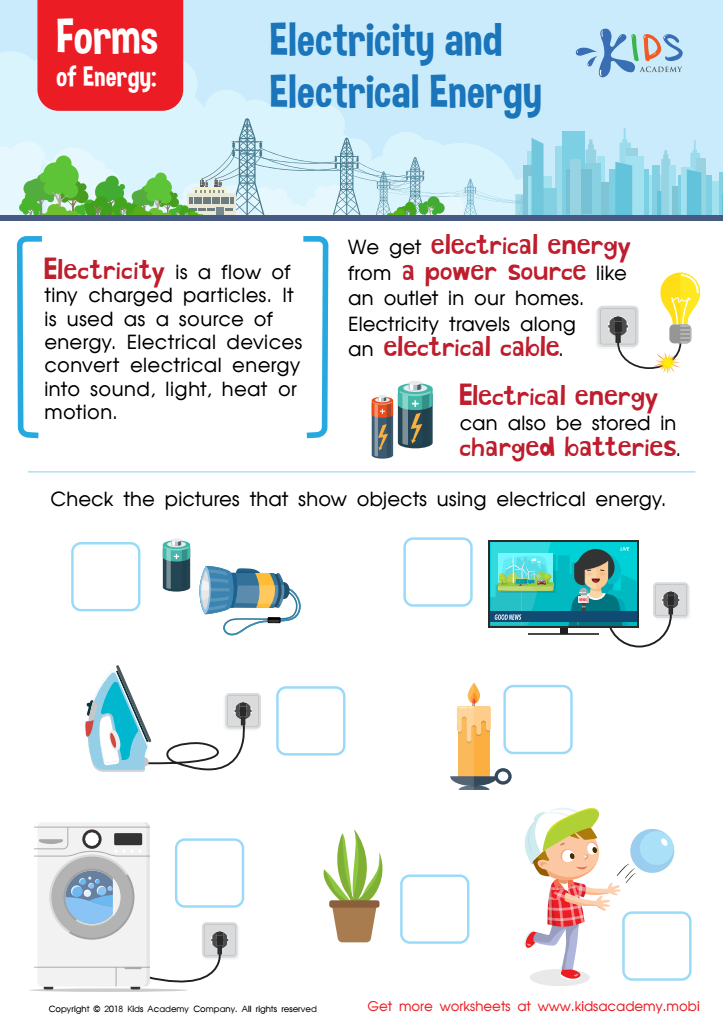
Forms of Energy Worksheet
This fun worksheet will help kids understand electricity. Kids identify objects powered by batteries or outlets. Perfect for 3rd Grade, this worksheet will fascinate them as they learn about this form of energy.
 Assign to My Students
Forms of Energy Worksheet
Worksheet
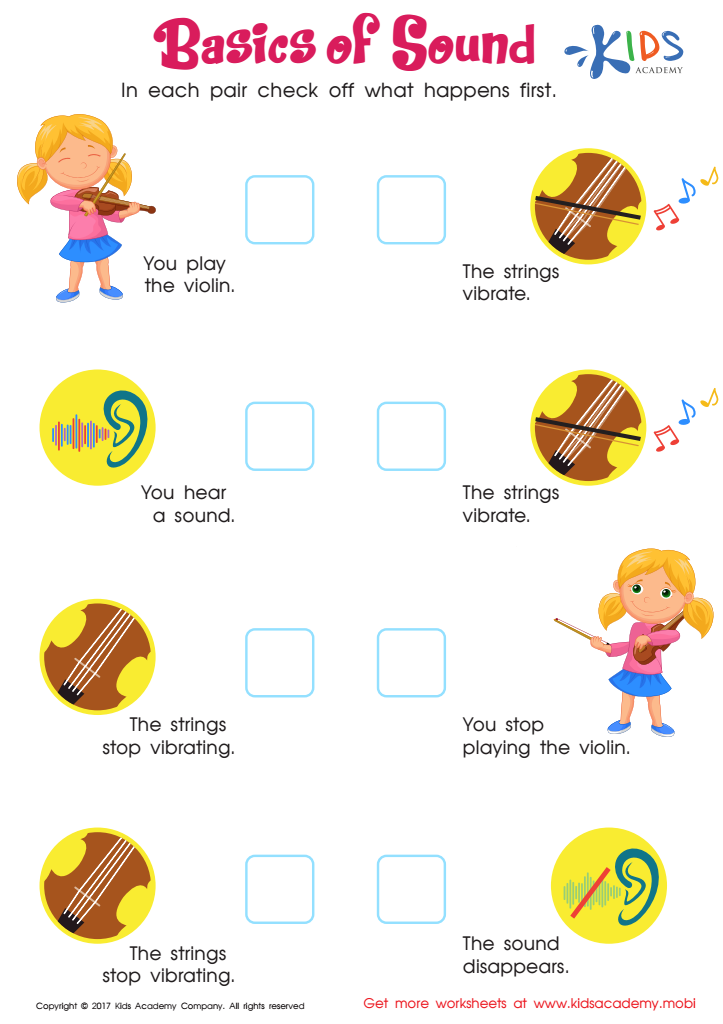
Basics Of Sound Worksheet
Sound is the result of vibrations. As a violinist creates music on her instrument, we can observe how the vibrations start and stop, producing a pleasing sound. This worksheet helps kids understand the basics of physical science behind sound.
Basics Of Sound Worksheet
Worksheet
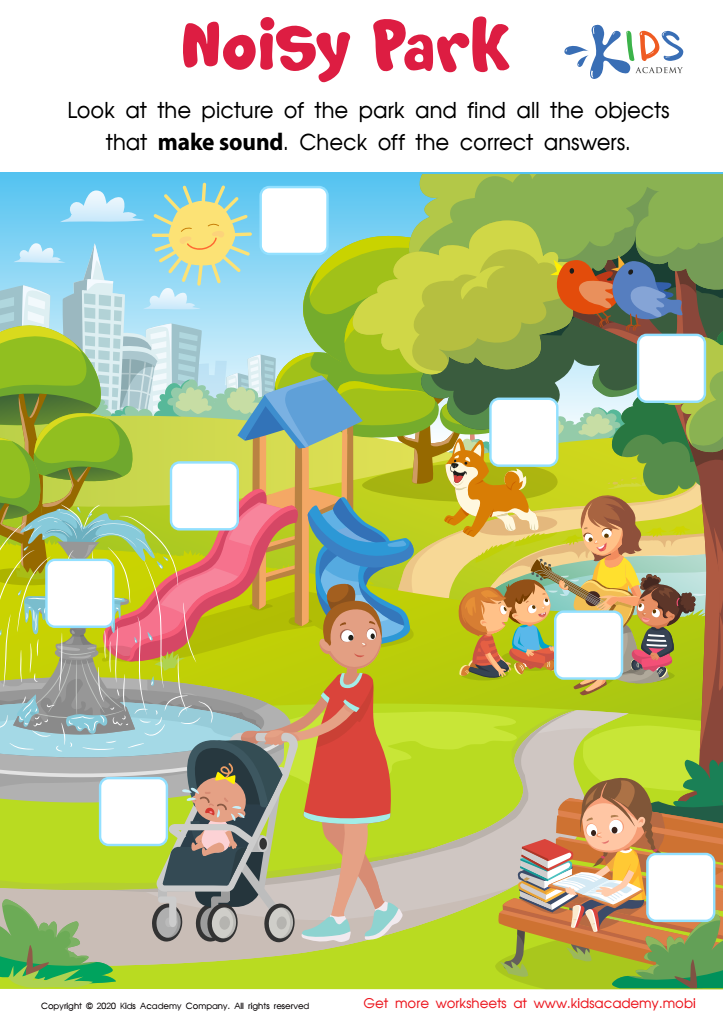
Noisy Park Worksheet
Get your students ready for the exercise by asking them to name things they see and do at the park. Then, have them identify the things in the picture, look for objects that make sounds, and verify the answers.
Noisy Park Worksheet
Worksheet
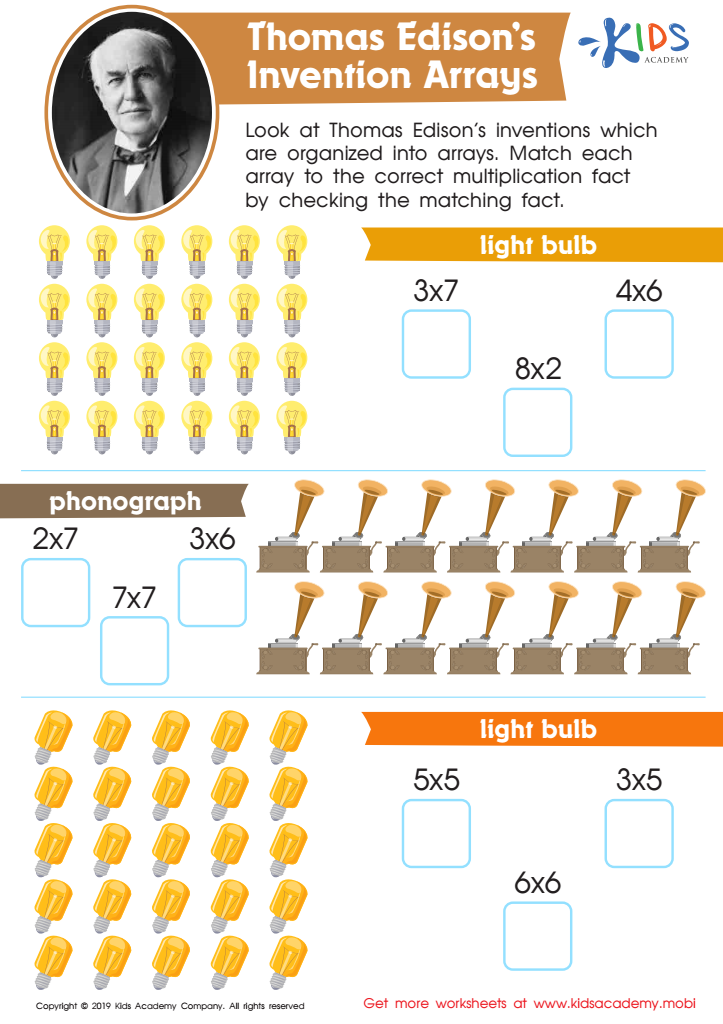
Thomas Edison’s Invention Arrays Worksheet
Test your students' knowledge on history by asking them what Thomas Edison invented. If they get the right answer, provide more information on other inventors. Check out this printout of Edison's light bulb inventions laid out in arrays. Get them to match each array to the correct multiplication fact.
Thomas Edison’s Invention Arrays Worksheet
Worksheet
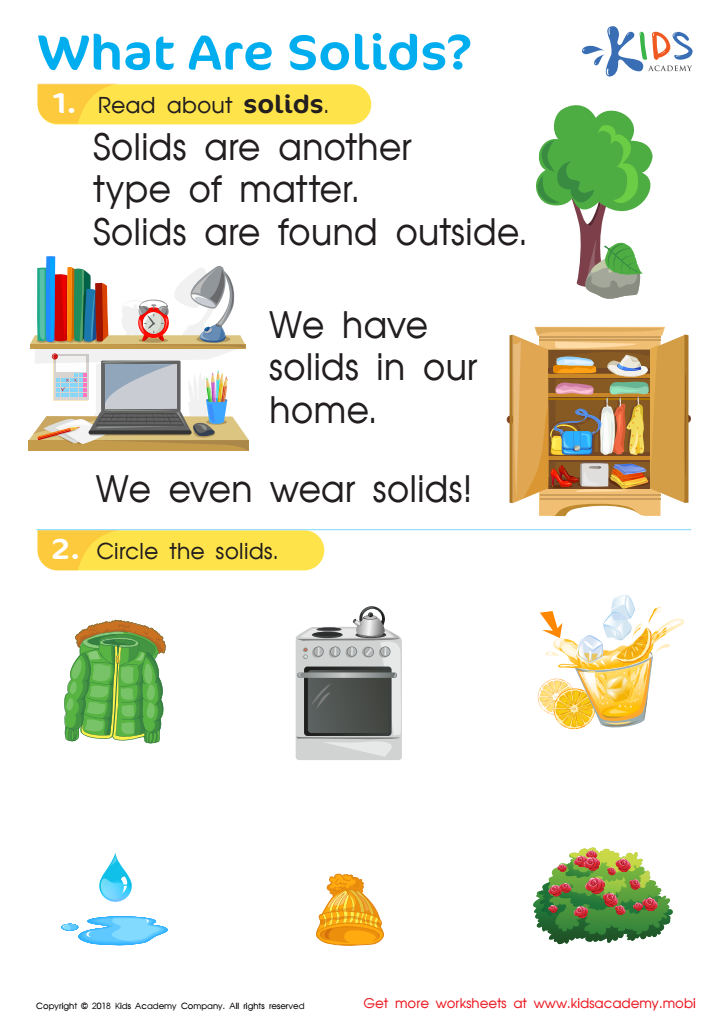
What Are Solids? Worksheet
Help your kids understand matter's three forms - solid, liquid, and gas - with examples. Ask them to give their own and where to find them. Then, read and discuss the worksheet's facts about solids. Afterward, have them circle the solids among the provided objects.
What Are Solids? Worksheet
Worksheet
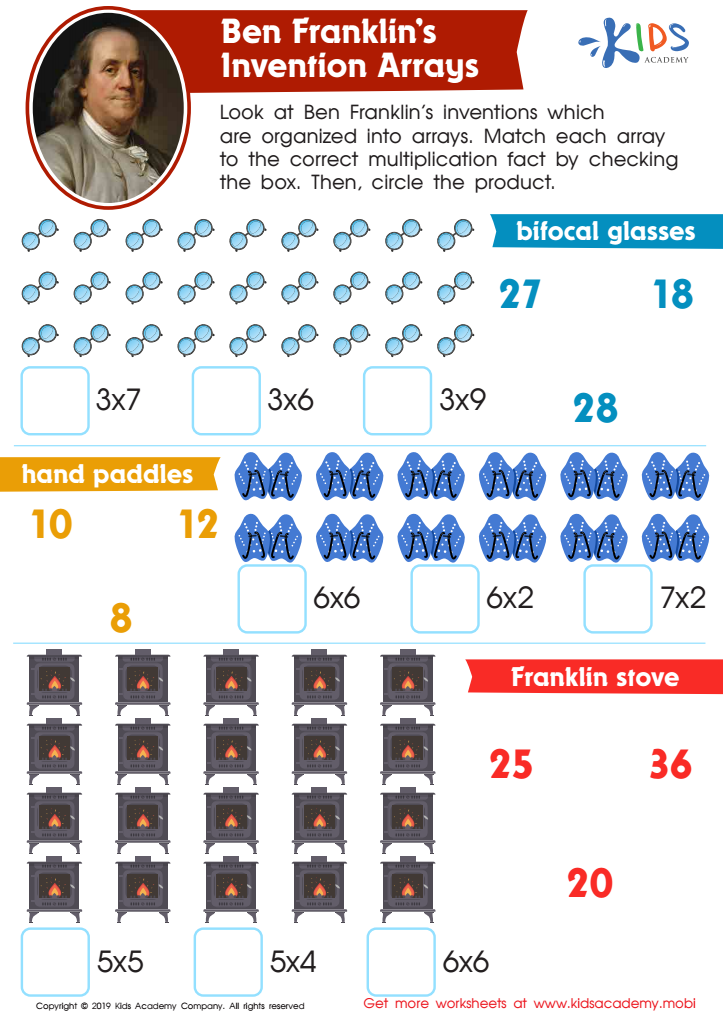
Ben Franklin’s Invention Arrays Worksheet
Have your child guess some of the inventors of the popular items we use today. For instance, the light bulb was invented by Thomas Edison. Look at Ben Franklin's inventions and help your kids match the arrays to the correct multiplication fact. Check the box and circle the product.
Ben Franklin’s Invention Arrays Worksheet
Worksheet
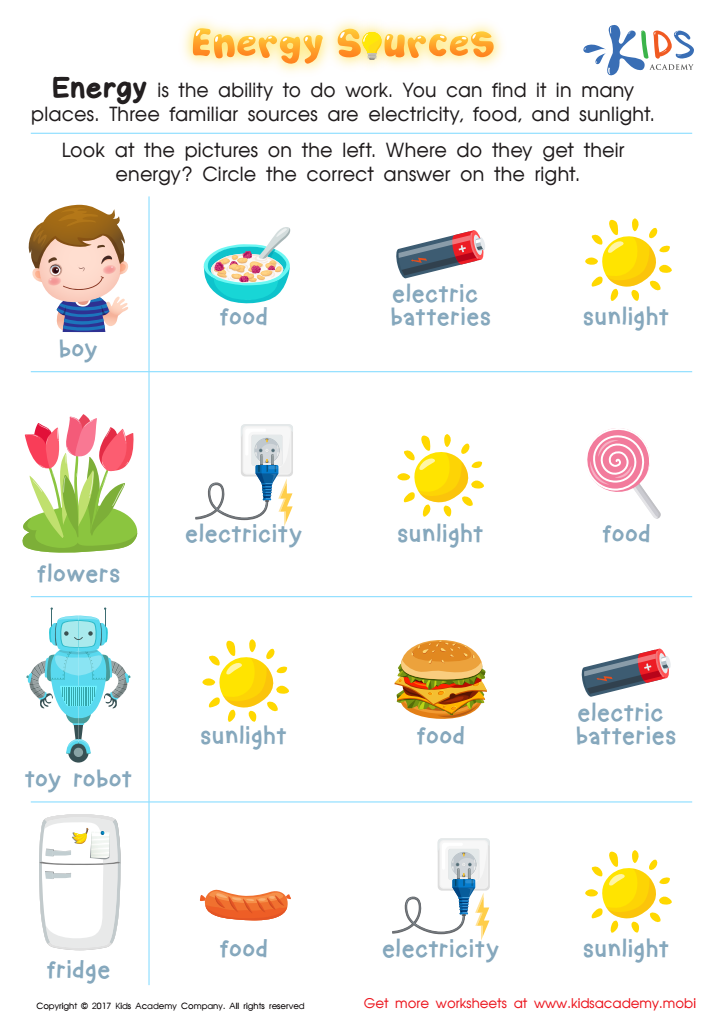
Energy Sources Printable
Introduce energy sources with this worksheet PDF — explore the sun, batteries, and more! Get your mini scientist excited about energy and power up their learning.
Energy Sources Printable
Worksheet
Join Kids Academy for Free
Who is primarily going to use this learning content?







Reading comprehension in the context of Normal Physical Science for ages 7-9 is crucial for several reasons. First, children in this age group are at a developmental stage where they begin to understand complex concepts and relationships in science. Grasping these ideas through reading not only enhances their vocabulary but also fosters critical thinking skills. When students comprehend scientific texts, they can connect what they learn to real-world contexts, making their education relevant and engaging.
Moreover, strong reading comprehension skills encourage curiosity and exploration among young learners. By effectively understanding scientific concepts, children are more likely to engage in discussions, ask questions, and pursue further learning opportunities. This foundational understanding boosts their confidence and instills a lifelong love for learning.
Furthermore, as future innovators and problem-solvers, children must develop an ability to interpret and analyze information. Knowledge in physical science lays the groundwork for more advanced studies in STEM fields. Therefore, parents and teachers should prioritize reading comprehension in science curricula to ensure holistic development in young students, preparing them for future academic success while igniting their interest in the natural world around them. This proficiency not only influences academic achievements but also cultivates informed and responsible citizens.







