Observational skills Normal Space Worksheets for Ages 7-9
3 filtered results
-
From - To
Enhance your child's observational skills with our engaging Normal Space Worksheets designed for ages 7-9! These thoughtfully crafted worksheets help young learners cultivate their ability to observe, analyze, and interpret the wonders of space. Each worksheet features fun activities that encourage children to explore celestial bodies, weather patterns, and the universe's mysteries. Perfect for home or classroom use, these resources aim to make science approachable and exciting. Watch as your child develops critical thinking skills while building an appreciation for the vastness of space. Download our worksheets today to embark on an inspiring space adventure that pairs learning with fun!
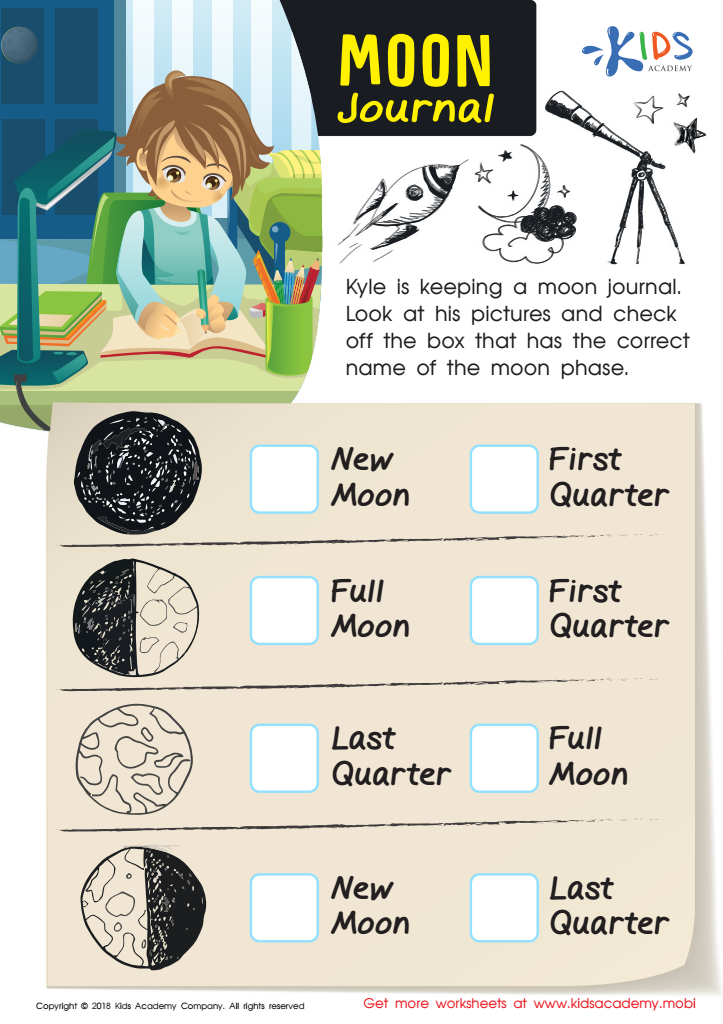
Moon Journal Worksheet
 Assign to My Students
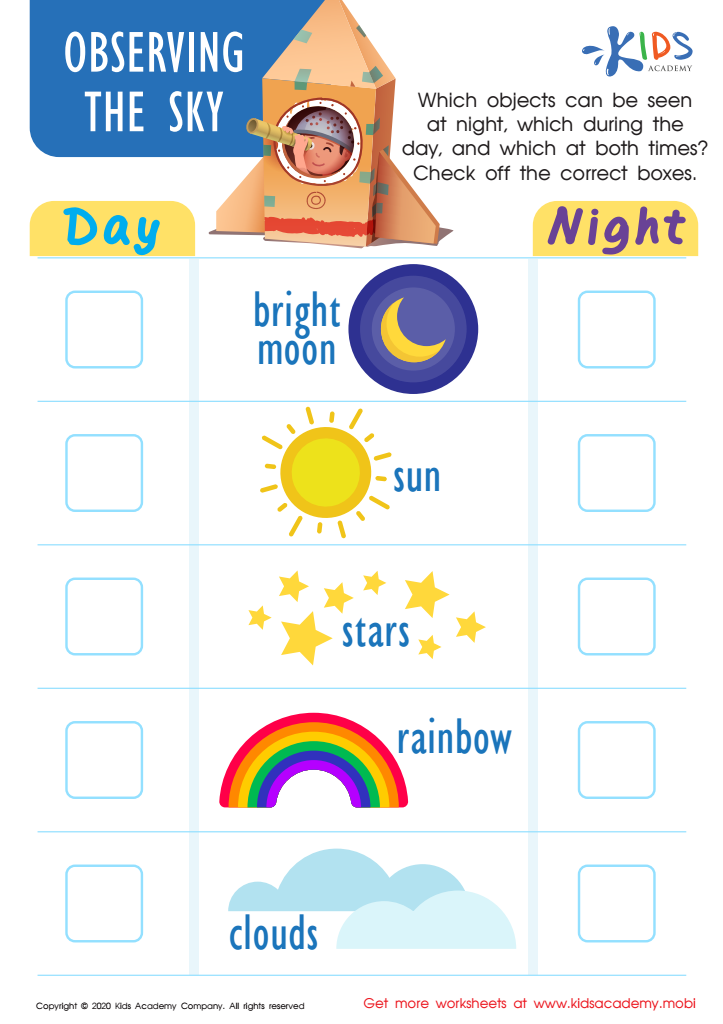
Observing the Sky Worksheet
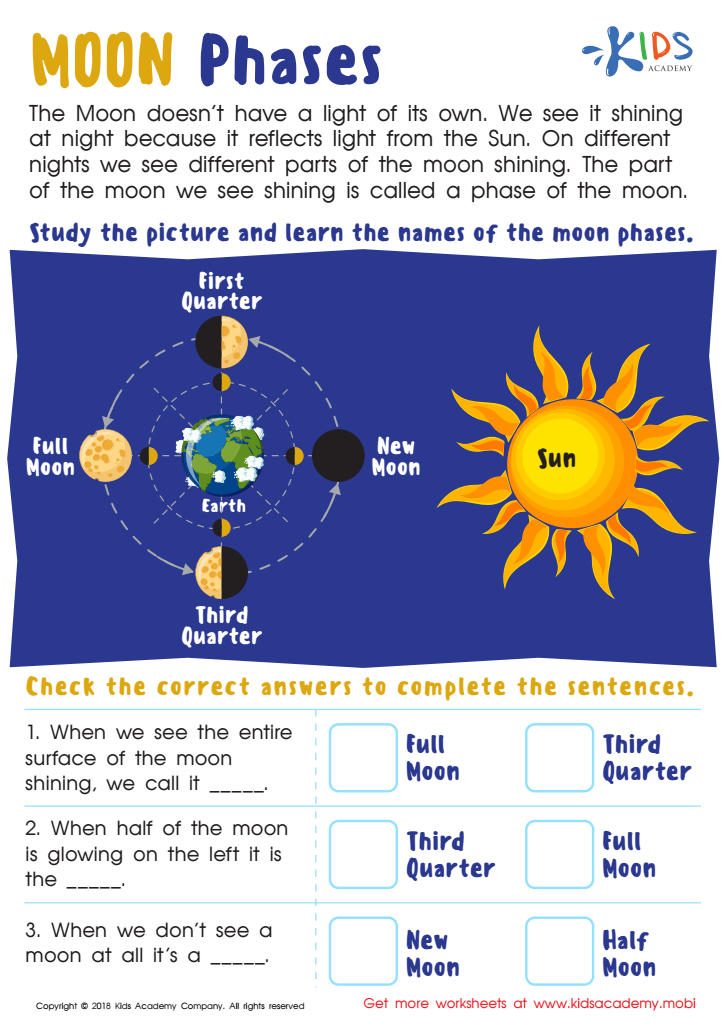
Moon Phases Worksheet





%20(1).jpg)

Observational skills in the context of Normal Space—meaning familiar, everyday environments—are crucial for children aged 7-9 as they form the foundation for critical thinking and learning. At this age, children are naturally curious and observant, making it an ideal time for adults to nurture these skills. When parents and teachers encourage kids to notice details in their surroundings, such as changes in weather, patterns in nature, or interactions between people, they foster a sense of awareness that can enhance their academic success and social development.
Improving observational skills helps children strengthen their ability to ask questions, analyze information, and draw conclusions, which are important components of higher-order thinking. Furthermore, in subjects like science and art, keen observation can boost creativity and understanding, allowing children to make meaningful connections with the material.
Additionally, observational skills contribute to emotional and social intelligence. By being aware of non-verbal cues and the emotions of others, kids can develop empathy and improve their interactions with peers. This not only enriches their personal relationships but also promotes a positive learning environment. Ultimately, parents and teachers who prioritize observational skills build a solid foundation for lifelong learning and personal growth in children.







