Understanding moon phases Normal Space Worksheets for Ages 7-9
3 filtered results
-
From - To
Explore the captivating phases of the moon with our "Understanding Moon Phases" worksheets, specially designed for ages 7-9. These educational printables from Kids Academy stimulate curiosity and foster a deeper understanding of lunar cycles. Interactive activities and engaging visuals simplify complex concepts, making learning exciting and accessible. Ideal for both classroom and home use, these resources enhance science skills through observation, critical thinking, and hands-on practice. Check out our collection to make celestial learning fun and effective, paving the way for young astronomers to marvel at the wonders above.
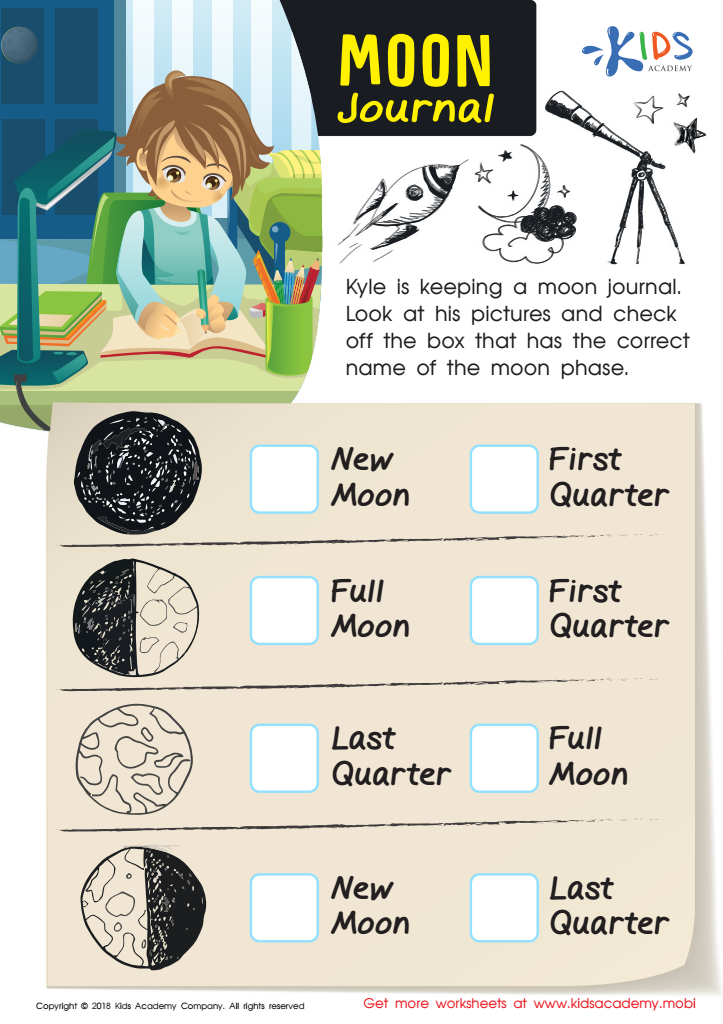
Moon Journal Worksheet
 Assign to My Students
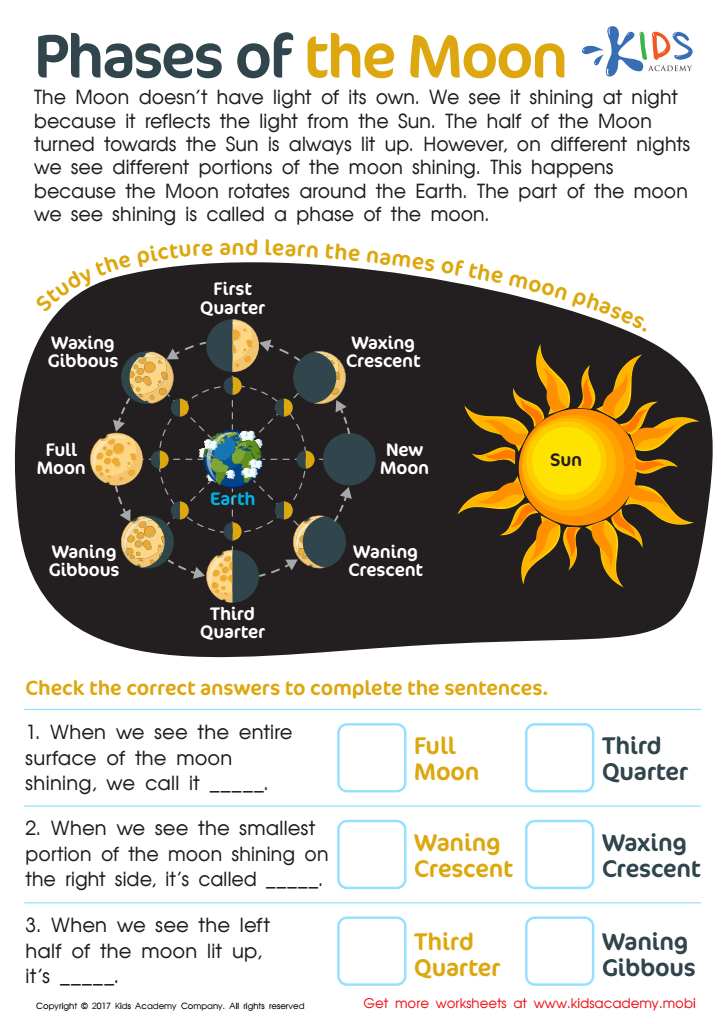
Phases of The Moon Worksheet
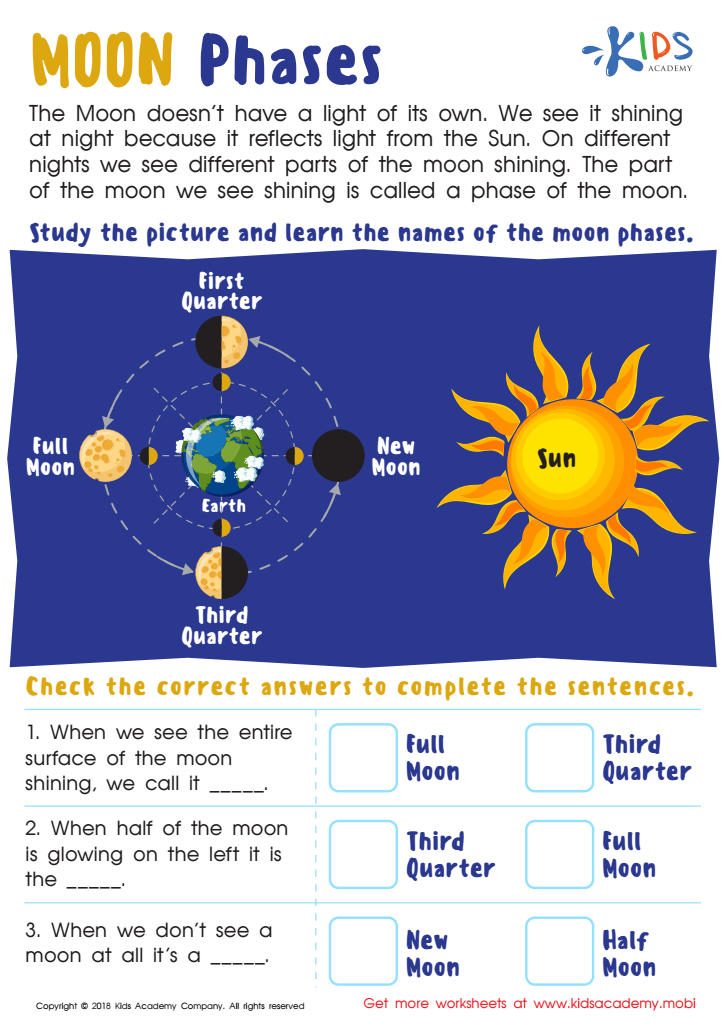
Moon Phases Worksheet








Understanding moon phases is not just an academic exercise; it plays a pivotal role in young learners' overall development. For children aged 7-9, this knowledge offers a gateway to nurturing curiosity about the natural world and, crucially, sparking a love for science.
Firstly, learning about moon phases cultivates critical thinking. Observing how the moon changes shape fosters scientific inquiry, prompting kids to ask questions and seek answers. This engages their logical reasoning and observation skills —essential for problem-solving.
Secondly, it anchors their learning in real-world phenomena. Unlike abstract concepts, the moon is something they can see and track. This experiences blend astronomy with hands-on activities like drawing moon phases or creating lunar calendars which strengthens memory and educational retention.
Moreover, understanding moon phases also opens discussions about broader scientific concepts such as orbital mechanics, light reflection, and time cycles like months and tides. It lays a foundational understanding that supports future, more complex topics in science and mathematics.
Parents and teachers have the opportunity to enrich this learning process using apps, moon-watching events, and DIY projects that make the topic fun and engaging. Above all, fostering an appreciation for the moon and its phases helps children build a connection with the universe, instigating a lifelong appreciation for learning and discovery.







