
Critical Thinking Normal Governance and Civics Worksheets for Ages 7-9
5 filtered results
Difficulty Level
Grade
Age
-
From - To
Subject
Activity
Standards
Enhance your child's understanding of governance and civics with our engaging Critical Thinking Normal Governance and Civics Worksheets, specially designed for ages 7-9. These thoughtfully crafted activities encourage young learners to explore concepts like government functions, community roles, and civic responsibilities. Through stimulating exercises, children will develop essential critical thinking skills, learn to analyze information, and participate in meaningful discussions about their communities. Our printable worksheets not only foster a deep understanding of societal functions but also empower kids to think independently and make informed decisions. Equip your child with the knowledge of civics and governance while making learning enjoyable!
Favorites
With answer key
Interactive
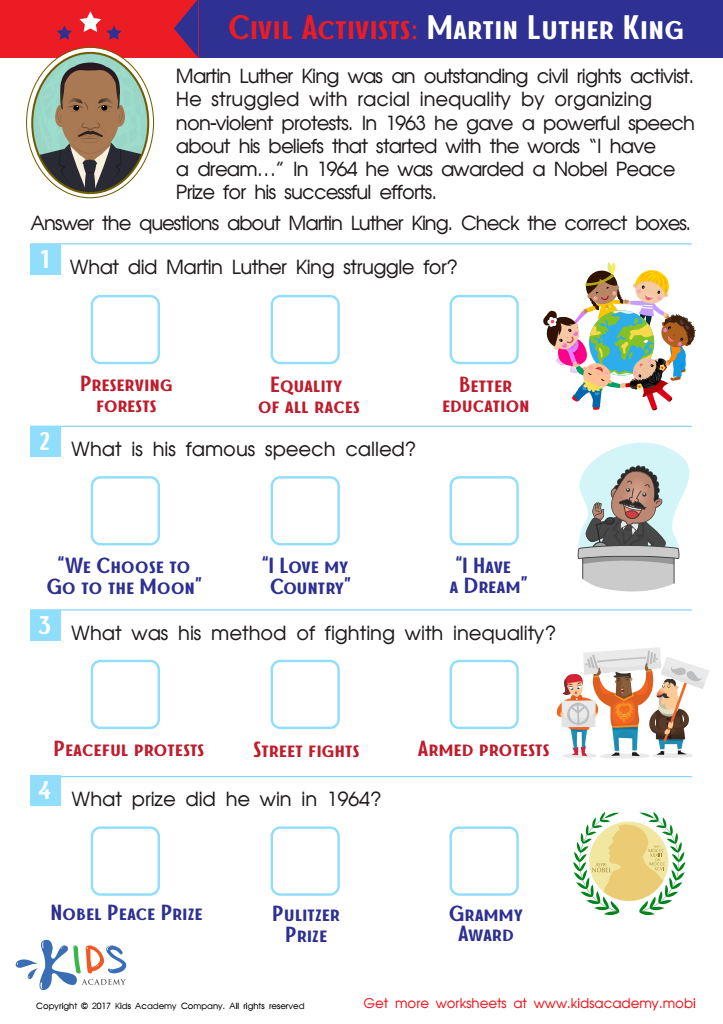
Martin Luther King Worksheet
Introduce your 3rd grader to Martin Luther King Jr.! This worksheet will open their eyes to his impact on US history. Let them discover his life, learnings, and legacy with this informative activity.
 Assign to My Students
Martin Luther King Worksheet
Worksheet
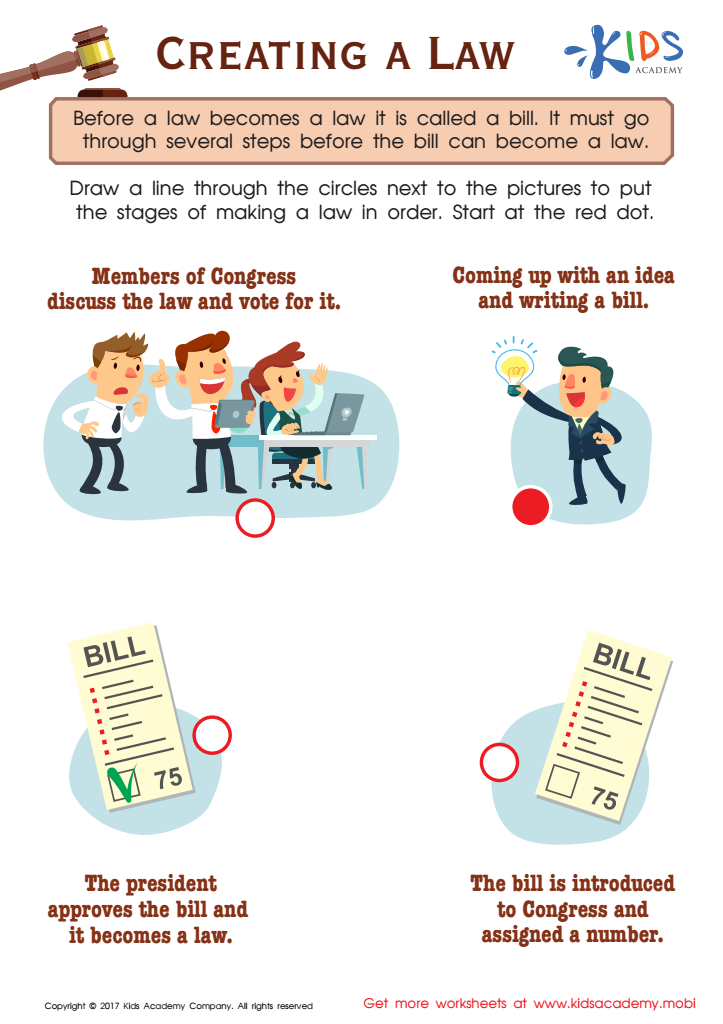
Creating a Law Worksheet
Help your child understand how laws are made with this Creating a Law Worksheet. Perfect for young learners, it covers the lawmaking process with fun pictures and simple language. Get an exciting insight into democracy and teach kids the importance of laws!
Creating a Law Worksheet
Worksheet
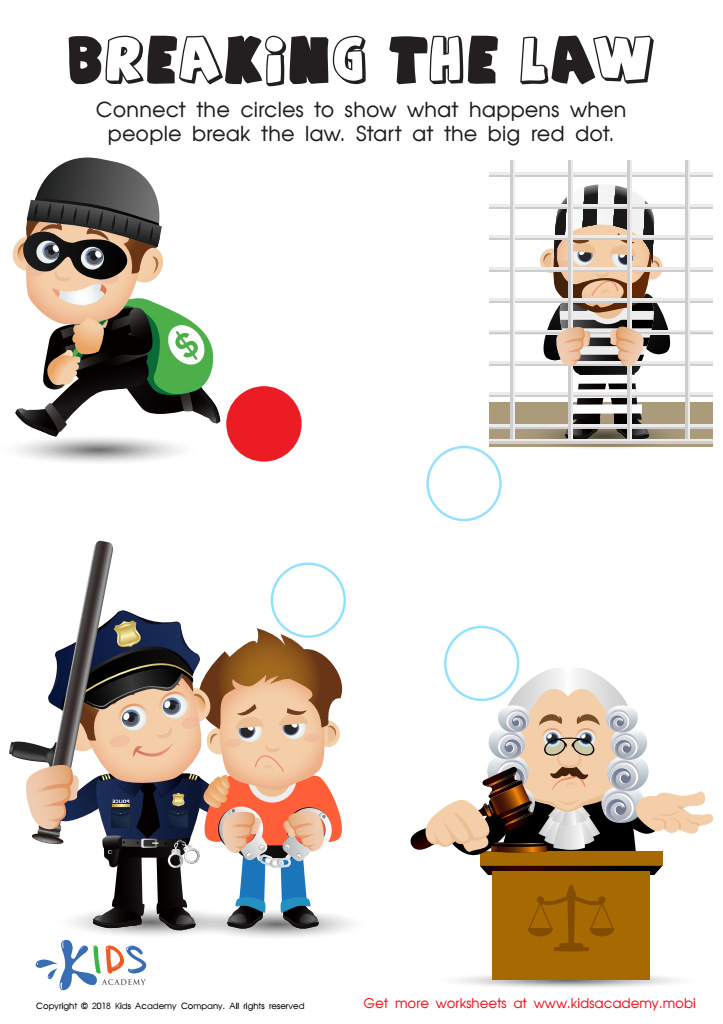
Breaking the Law Worksheet
Explain to your child why people go to jail. Show them this worksheet; it illustrates the stages a criminal goes through from breaking the law to receiving their punishment. Guide them in connecting the circles from the big red dot. Finish with a discussion on why it's important to follow the law.
Breaking the Law Worksheet
Worksheet
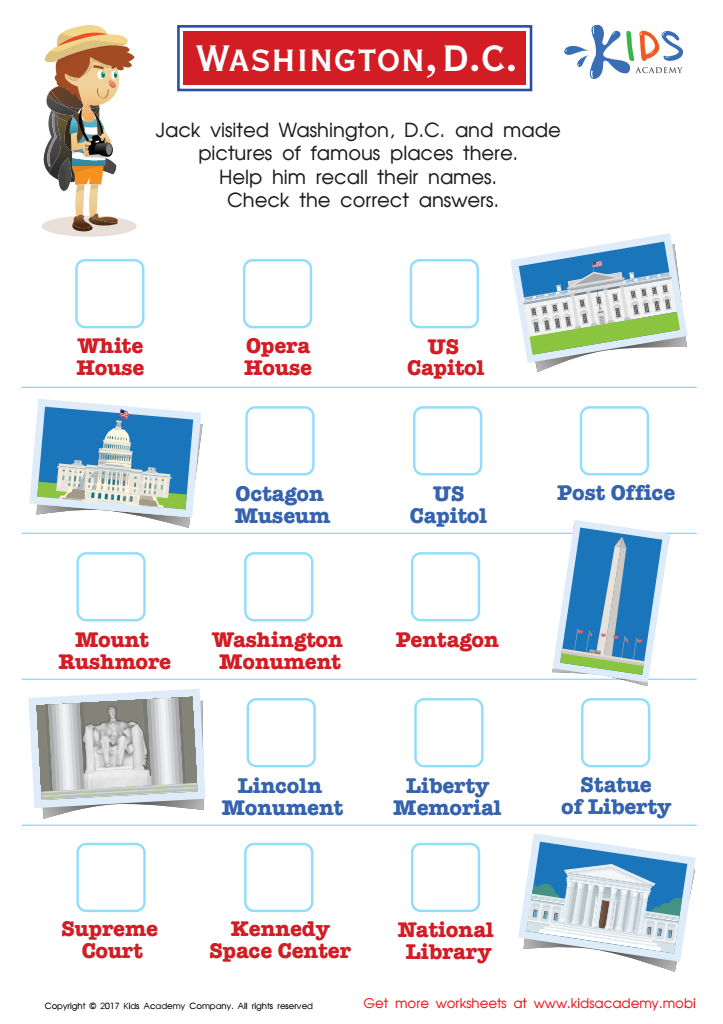
Washington D.C. Printable Worksheet
Join Jack on an adventure to explore the iconic attractions of Washington, D.C.! This printable worksheet helps kids learn about and recognize buildings and monuments that form part of the nation's history. It's a fun way to introduce children to the importance of these landmarks.
Washington D.C. Printable Worksheet
Worksheet
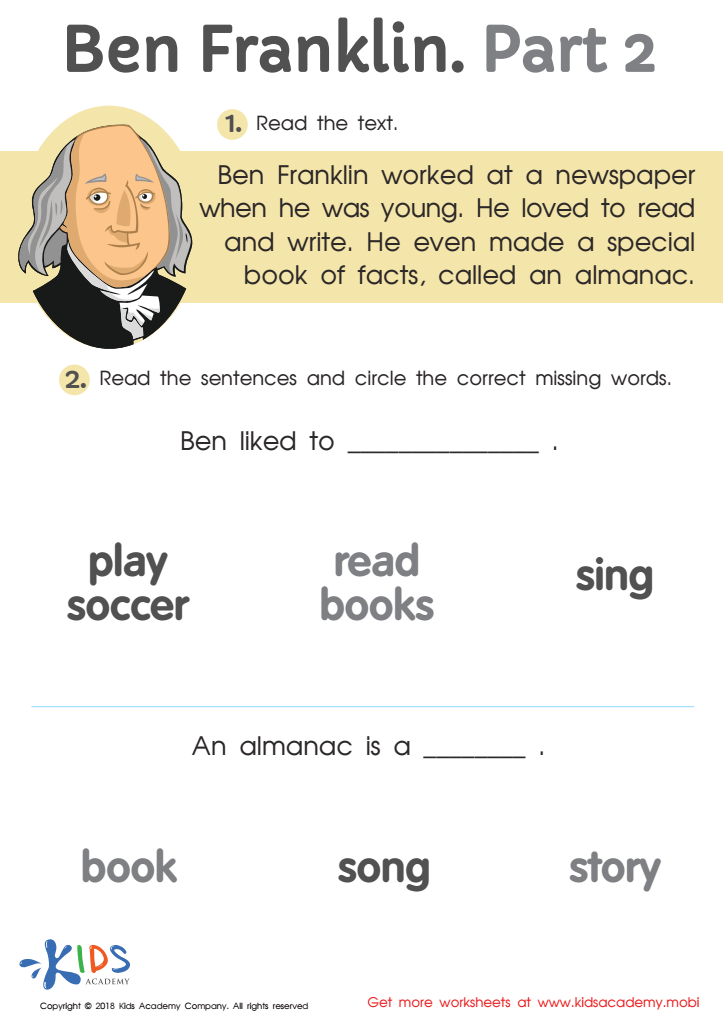
Ben Franklin Part 2 Worksheet
History is filled with great figures, like Benjamin Franklin. Let your kids in on the legacy by introducing them to the founder of the US fire department, diplomat, and inventor. Then, use a worksheet to have them fill in the blanks with the correct word to teach them more. Read the text, then read the sentences and have them circle the missing word.
Ben Franklin Part 2 Worksheet
Worksheet
Join Kids Academy for Free
Who is primarily going to use this learning content?


Parents and teachers should prioritize Critical Thinking, Normal Governance, and Civics for children aged 7-9 as these skills lay the foundation for responsible citizenship and effective decision-making. At this age, children are beginning to understand their role in society and how complex systems, like governance, function. Teaching these concepts equips them with the ability to analyze information, discern fact from opinion, and engage with real-world issues in a thoughtful manner.
Critical thinking fosters curiosity, encouraging children to ask questions and evaluate sources of information, which is vital in today’s information-saturated world. Understanding governance helps them appreciate how communities are organized and how decisions affect their lives. This age group is particularly impressionable, and introducing civics concepts at this stage cultivates a sense of responsibility and awareness of civic duties, such as voting and community service.
Moreover, instilling these skills early promotes empathy and cooperation, essential for function in a diverse society. As children learn to navigate social structures, they become informed citizens who can advocate for themselves and others. Ultimately, investing in critical thinking, governance, and civics education at a young age prepares children to actively participate in their communities and make informed choices throughout their lives.








