
Alphabetical order understanding Normal Alphabet Worksheets for 7-Year-Olds
3 filtered results
Difficulty Level
Grade
Age
-
From - To
Subject
Activity
Standards
Boost your 7-year-old’s alphabetical order skills with our engaging Normal Alphabet Worksheets! These interactive resources are designed to make learning fun while reinforcing essential concepts of letter arrangement. Children will discover how to organize words and phrases alphabetically, enhancing their literacy and critical thinking abilities. Each worksheet offers age-appropriate exercises that involve sorting and sequencing letters, promoting essential skills needed for reading and writing. With clear instructions and visually appealing layouts, these worksheets are perfect for home or classroom use. Help your child excel in their understanding of the alphabet with our comprehensive and easy-to-follow learning materials!
Favorites
With answer key
Interactive
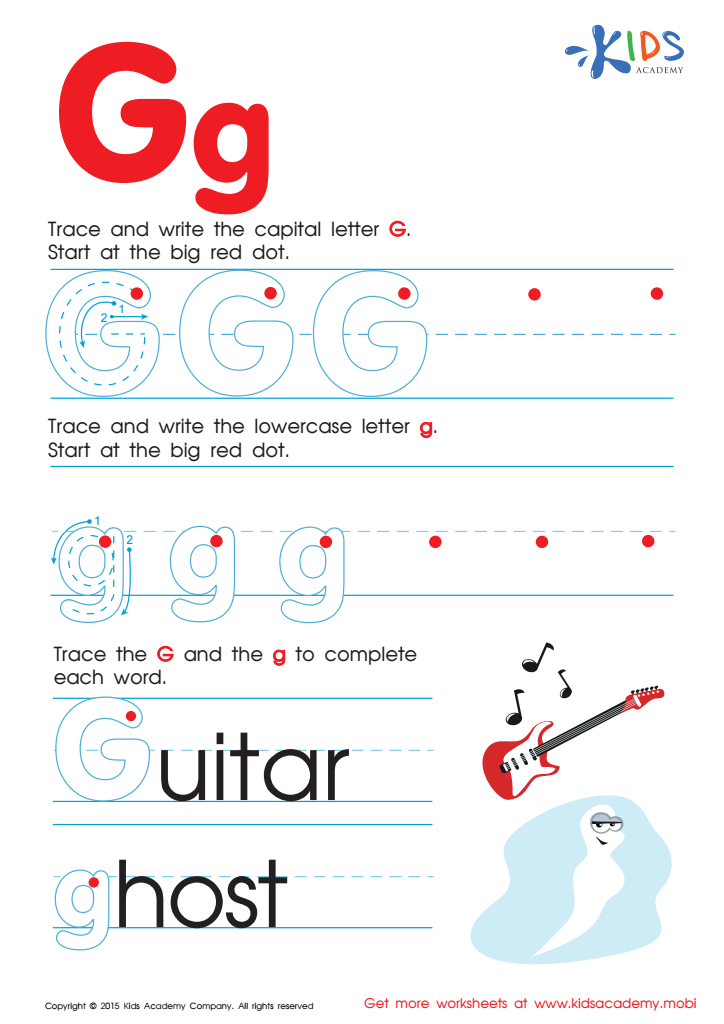
Letter G Tracing Page
Get ready to trace the letter "G" – with a big red spot as the starting point, trace the lines and watch the letter appear. Uppercase and lowercase letters are both easy and fun to write. Give it a go and finish the word "go". Play the guitar and say "hello" to a funny ghost!
Letter G Tracing Page
Worksheet
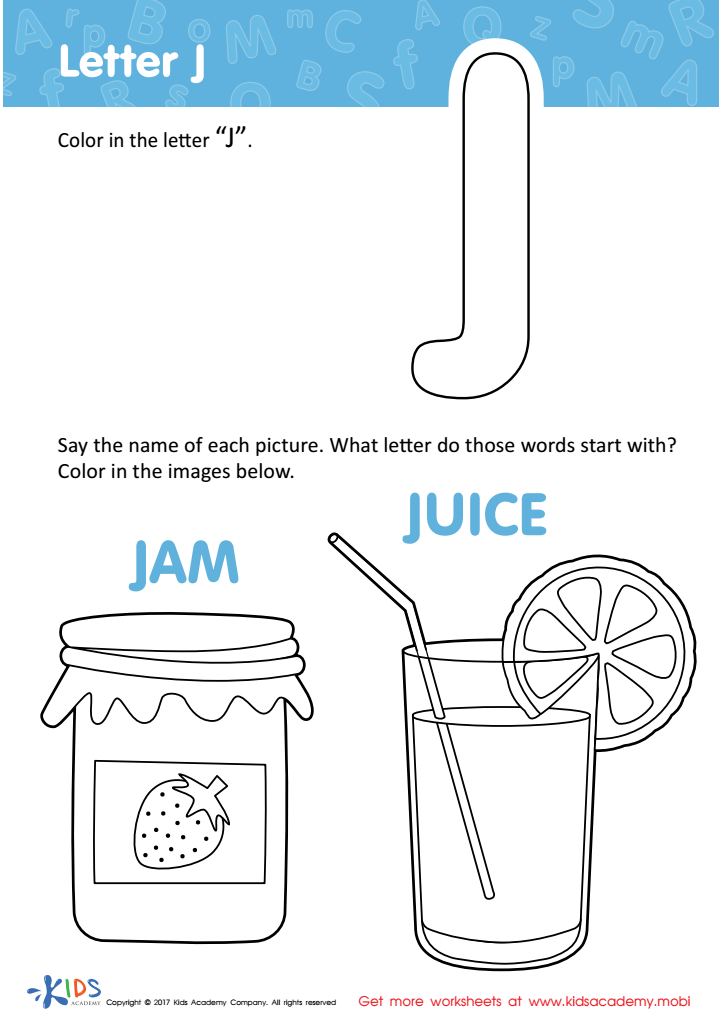
Letter J Coloring Sheet
Practice the letter 'J' with your little one with this fun coloring page! Pictures of jar, juice, jam and jelly make it an enjoyable experience for kids. Learning the letter and coloring is fun for even the youngest learners.
Download (PDF)
 Assign to My Students
Assign to My Students
Letter J Coloring Sheet
Worksheet
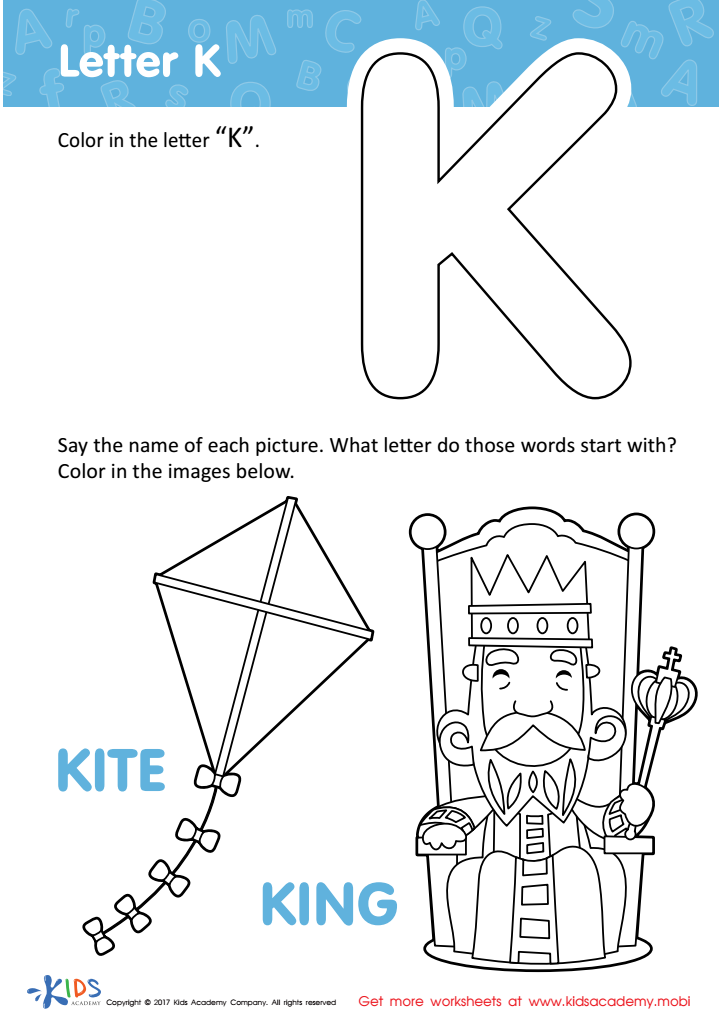
Letter K Coloring Sheet
This letter K coloring page captivates your child's creativity while learning the letter! Showcasing a king and kite, common words for their age group, it's sure to spark their imagination.
Download (PDF)
Assign to My Students
Assign to My Students
Letter K Coloring Sheet
Worksheet
Join Kids Academy for Free
Who is primarily going to use this learning content?







Understanding alphabetical order is crucial for 7-year-olds as it builds a strong foundation for reading, writing, and organizational skills. At this age, children are developing their literacy skills, and the ability to recognize the normal alphabet allows them to navigate through various text efficiently. When children learn to arrange words or items alphabetically, they improve their spelling and vocabulary, as they become more familiar with the sequence and sounds of the letters.
From a practical standpoint, knowing the correct alphabetical order aids in tasks like using dictionaries, encyclopedias, and other reference materials. This skill fosters independence in information retrieval, enhancing their confidence in learning.
Additionally, understanding alphabetical order supports critical thinking and problem-solving skills. It teaches children to categorize and classify information, which can be applied across different subjects, including math and science.
For parents and teachers, encouraging this skill can lead to enriching discussions and activities related to language and literacy. Engaging children in games, such as sorting cards or books alphabetically, makes learning enjoyable. Overall, grasping alphabetical order equips children with essential skills that underpin their academic success and lifelong learning.







