Rhyming skills development Normal Alphabet Worksheets for 7-Year-Olds
4 filtered results
-
From - To
Enhance your 7-year-old’s rhyming skills with our Normal Alphabet Worksheets, designed to make learning fun and effective. These engaging, age-appropriate worksheets help kids explore sounds, patterns, and the connections between words, enhancing both rhyming and phonemic awareness. By mastering rhyming, children improve their reading and spelling abilities, vital for early language development. Our printable activities combine colorful illustrations with interactive tasks, making learning an enjoyable adventure. Perfect for home or classroom use, these worksheets are an essential resource for fostering a strong linguistic foundation through playful and meaningful exercises. Discover the joy of rhyming with our expertly crafted alphabet worksheets today!
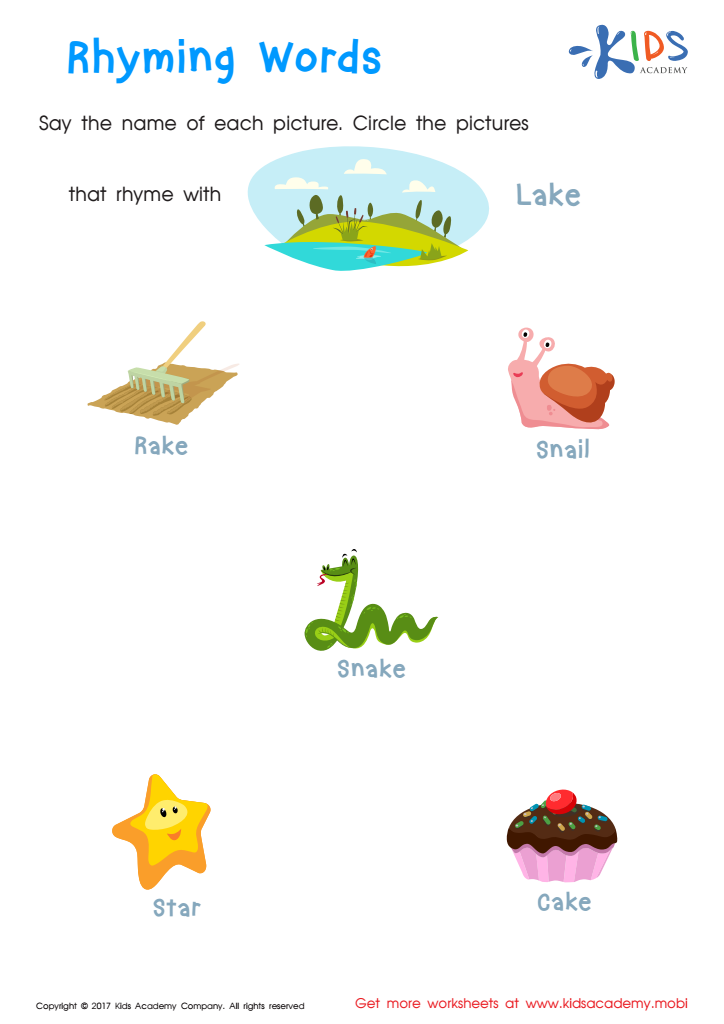
Rhyming Words Rhyming Worksheet
 Assign to My Students
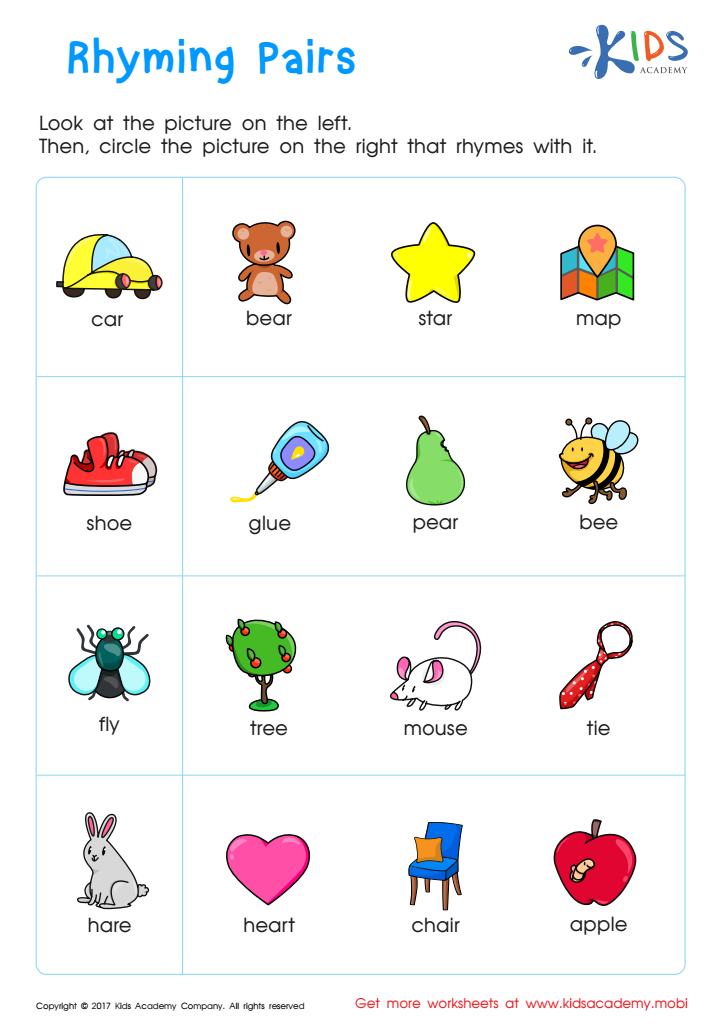
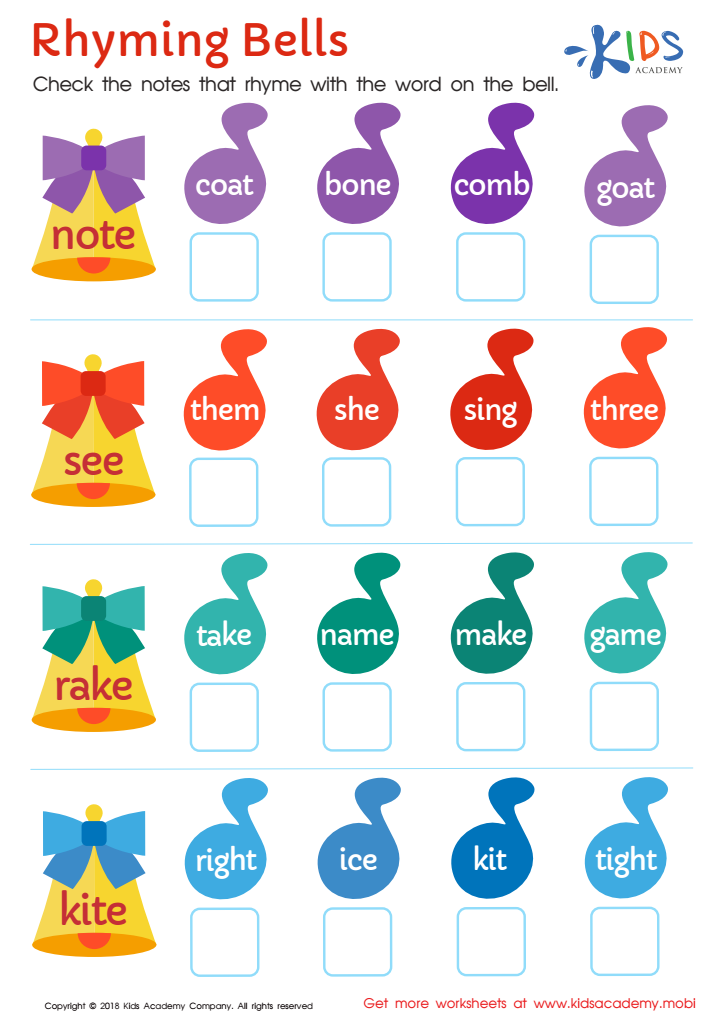
Rhyming Bells Worksheet
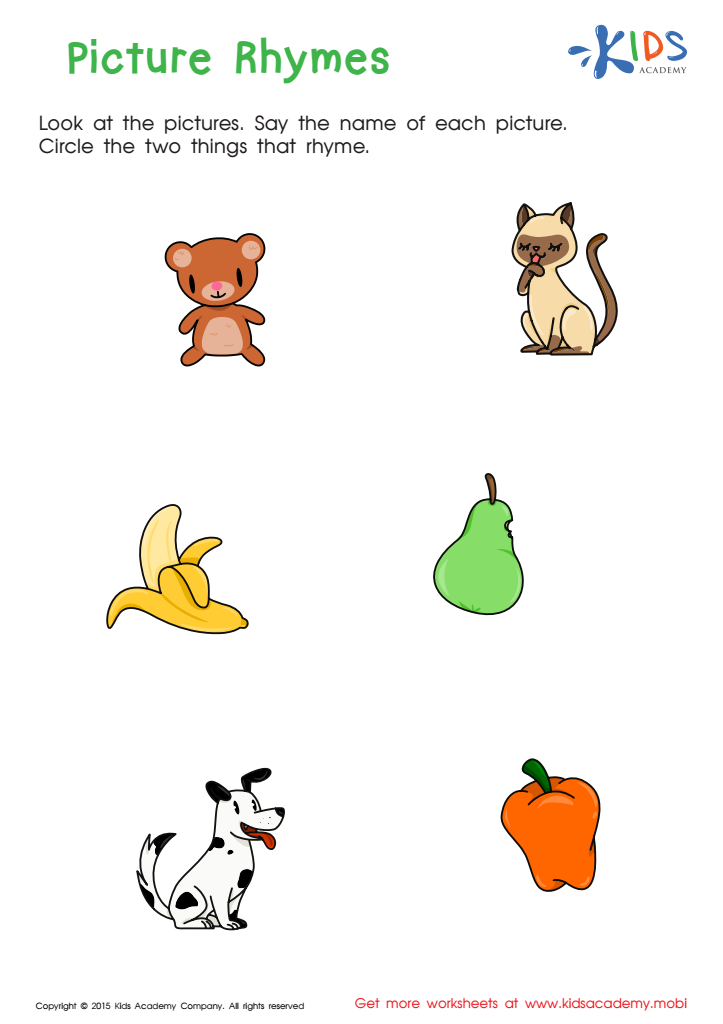
First Words: Picture Rhymes Worksheet







Rhyming skills play a pivotal role in early childhood language development, particularly for 7-year-olds. Engaging with rhymes helps children recognize and generate phonemic patterns, which are foundational for reading and writing proficiency. This auditory recognition allows them to discern sounds more effectively, aiding in decoding words and building a robust vocabulary.
When children practice rhyming, they enhance their listening skills and phonological awareness, crucial steps toward proficient reading. This skill set serves as a precursor for understanding more complex language structures and identifying word families. For instance, recognizing that "cat," "hat," and "bat" rhyme aids in learning spelling conventions and predicting other words with similar patterns, which streamlines word recognition and fluency.
Furthermore, rhyming exercises are often embedded in songs, poems, and playful activities, making learning enjoyable and less intimidating for young minds. These activities foster creativity and improve memory retention through repetition and rhythm, strengthening neural connections associated with language.
For teachers and parents, promoting rhyming can provide insights into a child's speech and language development milestones, allowing for timely intervention if needed. By nurturing rhyming skills, caregivers prepare children for academic success, bolstering their confidence and fostering a lifelong love for learning.







