Reading comprehension Normal Two Letter Phonics Worksheets for 7-Year-Olds
7 filtered results
-
From - To
Discover engaging "Reading Comprehension Normal Two Letter Phonics Worksheets for 7-Year-Olds" at Kids Academy! These colorful, expertly-designed printables help young readers enhance their phonics skills by focusing on two-letter combinations. Each worksheet guides children through fun exercises to sharpen their reading comprehension, word recognition, and phonetic abilities. Perfect for classroom use or at-home practice, the activities promote interactive learning and help build a strong literacy foundation. Join us at Kids Academy for innovative resources that make reading an exciting adventure for your child! Start exploring today and watch your 7-year-old’s confidence soar.
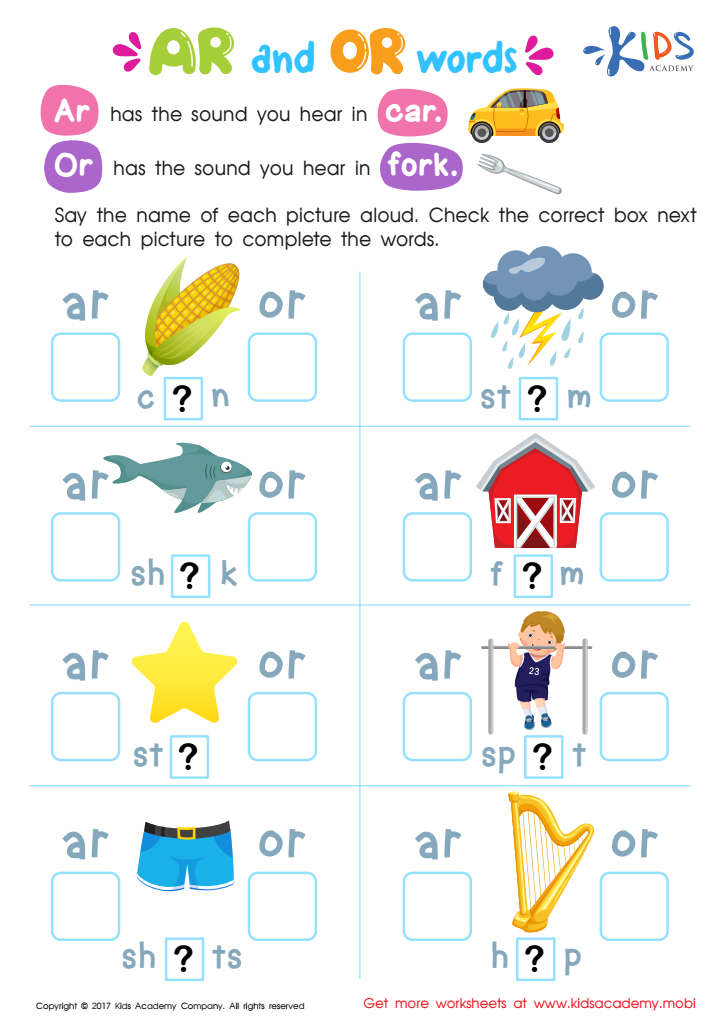
Ar and Or Words Phonics Worksheet
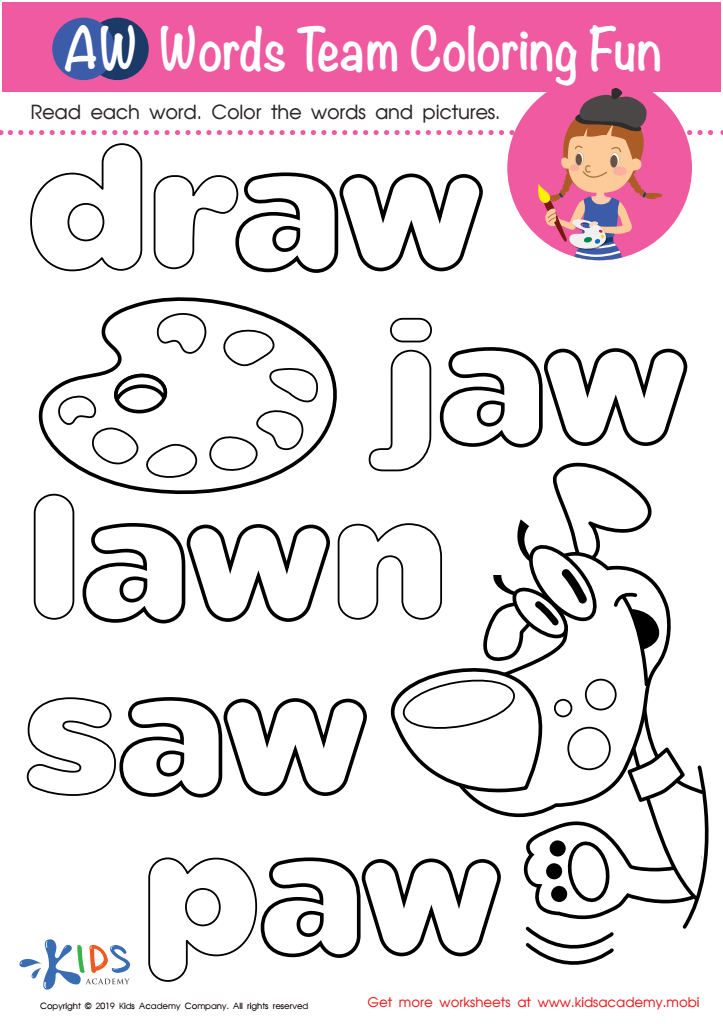
AW Words Team Coloring Fun Worksheet
 Assign to My Students
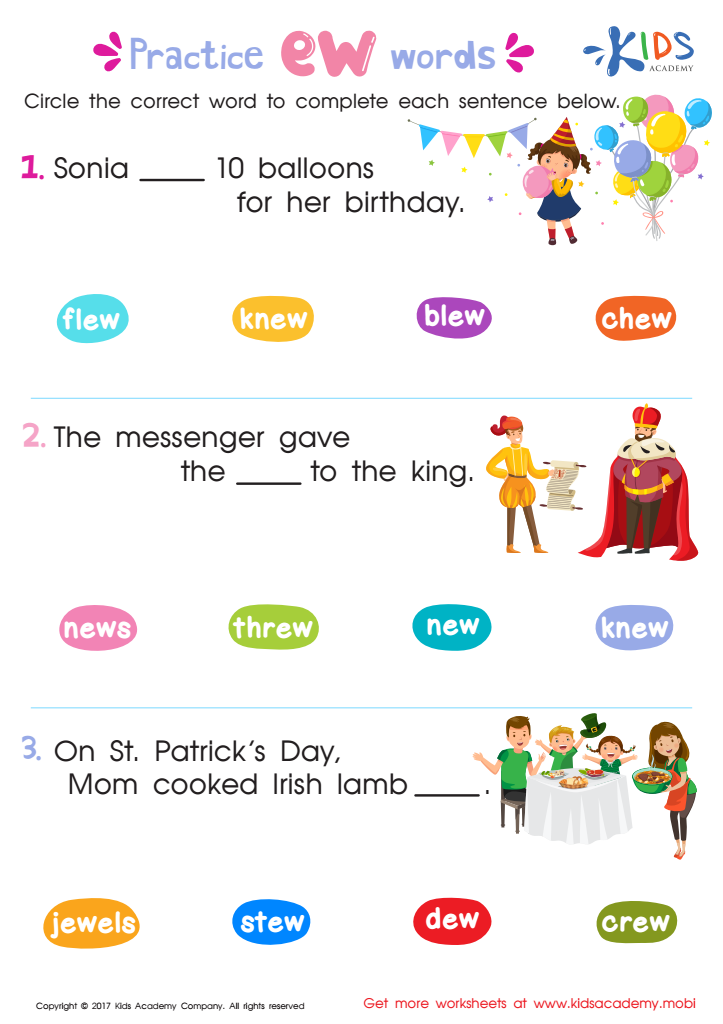
EW Words Worksheet
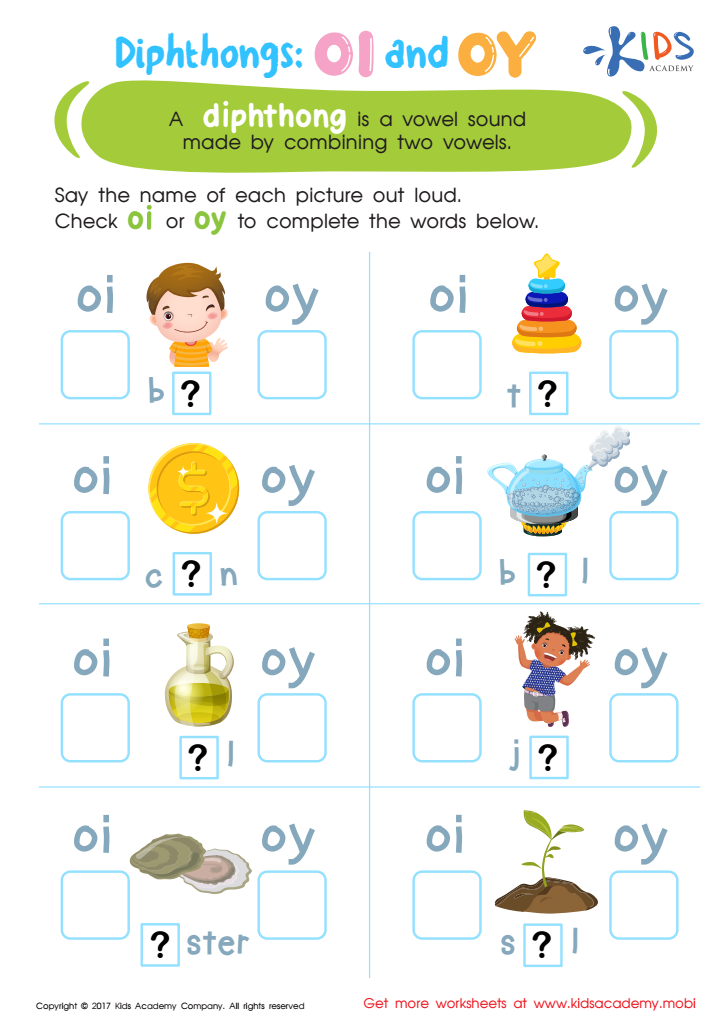
Vowel Diphthongs OI OY Worksheet
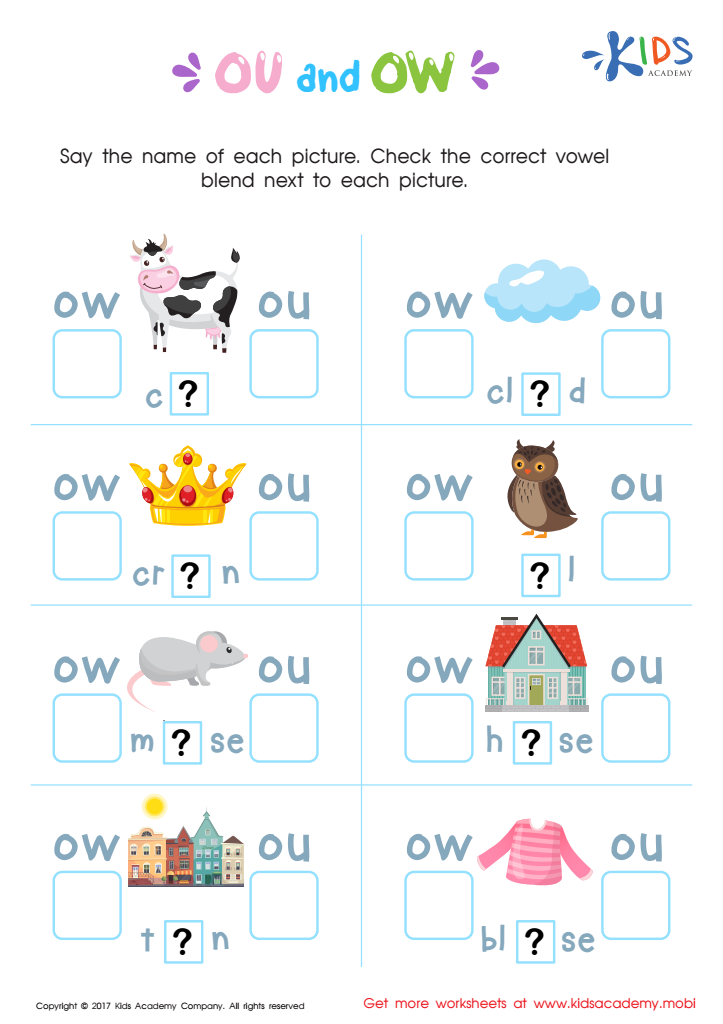
OU and OW Words Worksheet
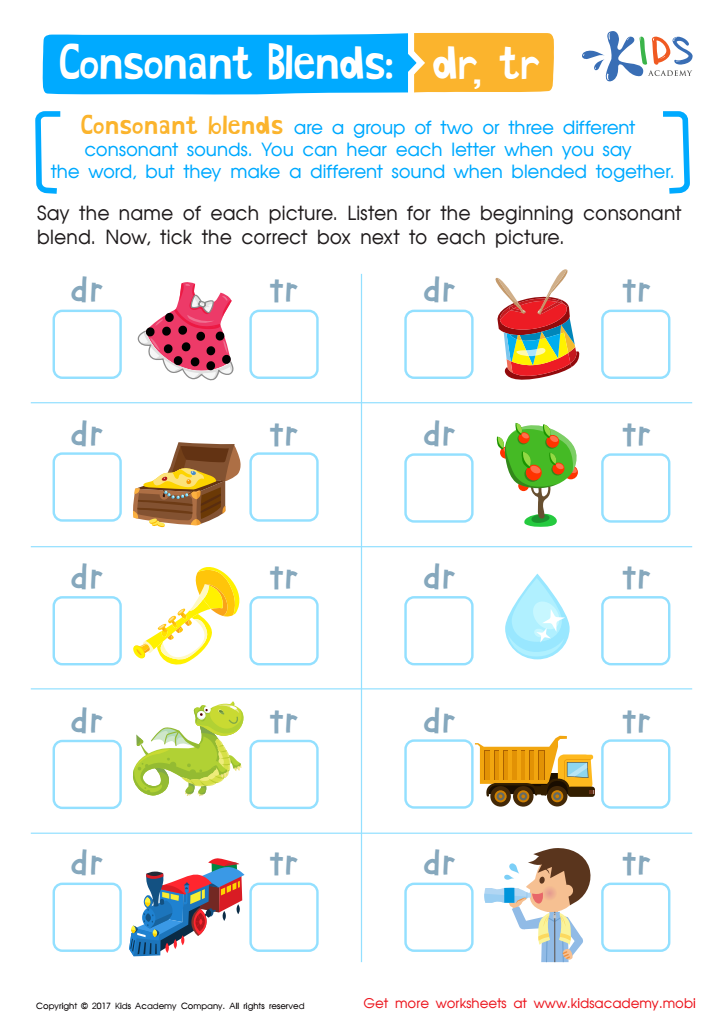
Consonant Blends: "Dr" and "Tr" Printable
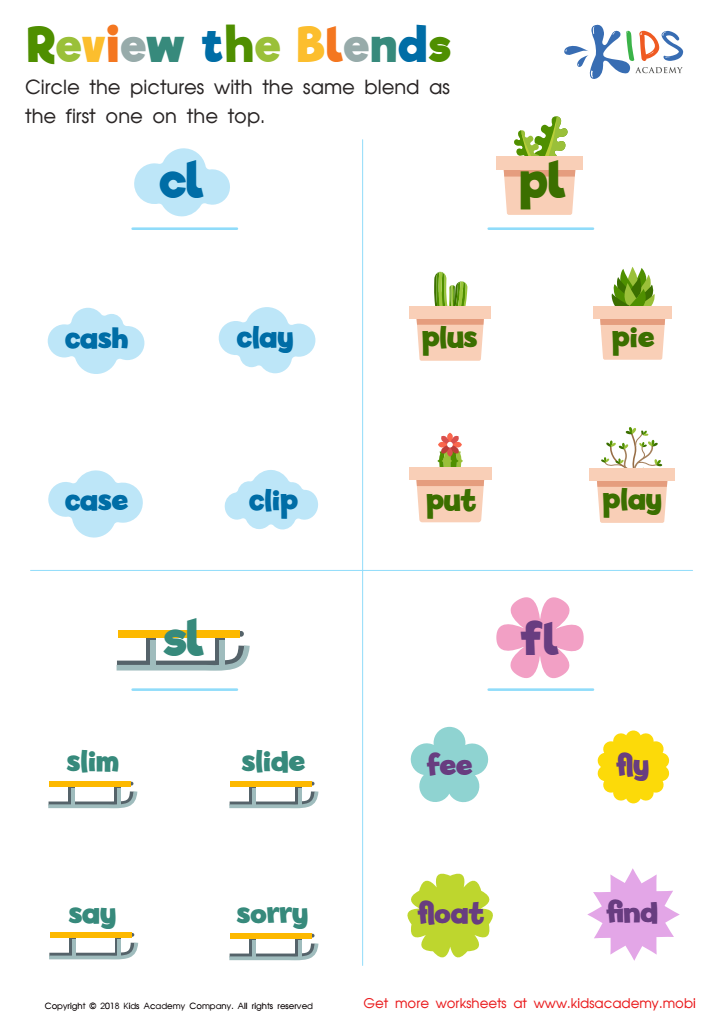
Review the Blends Worksheet



Reading comprehension is a fundamental skill that significantly impacts a child's academic and personal development, and it is closely tied to phonics—especially for young learners like 7-year-olds. Phonics, the relationship between letters and their sounds, serves as the building blocks for reading. By focusing on reading comprehension in tandem with normal two-letter phonics, parents and teachers provide a strong foundation for future reading success and overall learning.
At 7 years old, children are often transitioning from learning to read to reading to learn. This stage emphasizes the need to understand and interpret text rather than just decode words. By mastering two-letter phonics, children can decode new words more fluently, which directly enhances their ability to focus on the meaning of the text rather than the mechanics of reading. As a result, they develop a deeper understanding of what they read, leading to better retention of information and a stronger interest in reading for enjoyment.
Moreover, proficient reading comprehension skills foster critical thinking, problem-solving, and empathy, as children are exposed to diverse stories and ideas. Thus, ensuring that 7-year-olds are proficient in reading comprehension and two-letter phonics equips them with essential tools for lifelong learning and success in various academic subjects, including math, science, and social studies. Therefore, it's crucial for parents and teachers to prioritize these aspects in early education.






