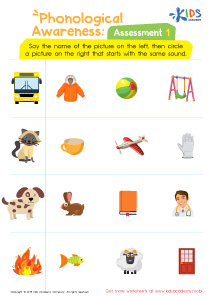
Word Recognition Normal Two Letter Phonics Worksheets for 7-Year-Olds
5 filtered results
Difficulty Level
Grade
Age
-
From - To
Subject
Activity
Standards
Our "Word Recognition Normal Two Letter Phonics Worksheets for 7-Year-Olds" are designed to boost young learners' phonics skills effectively. These engaging worksheets help children recognize and blend common two-letter combinations, enhancing their reading and spelling abilities. Perfectly tailored for 7-year-olds, each activity is both fun and educational, encouraging independent learning and confidence in word decoding. With colorful illustrations and varied exercises, these worksheets make phonics practice enjoyable. Ideal for classroom or at-home learning, our resources ensure a strong foundation in early literacy, supporting academic success. Give your child the phonics advantage today!
Favorites
With answer key
Interactive
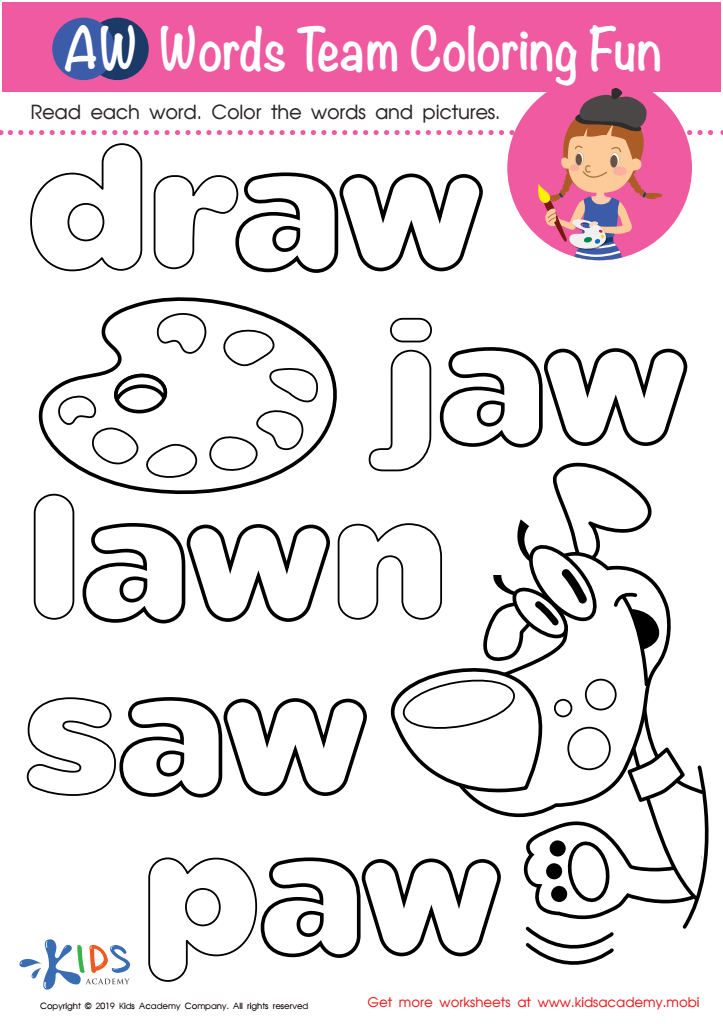
AW Words Team Coloring Fun Worksheet
Coloring words they can read is a blast for little learners! This worksheet offers emerging readers the chance to practice and gain confidence in reading words from the -aw family, while also improving fine-motor and creativity skills. Without knowing it, they'll learn about phonetic teams along the way!
Download (PDF)
 Assign to My Students
Assign to My Students
AW Words Team Coloring Fun Worksheet
Worksheet
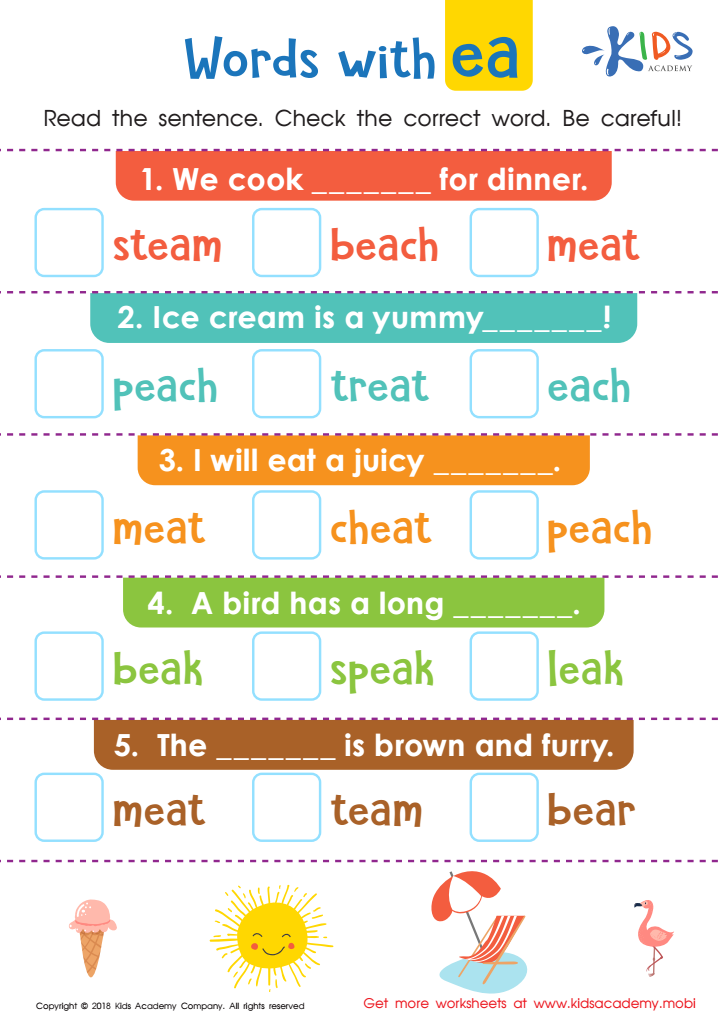
Words with ea Worksheet
Beginning readers may struggle with -ea vowel digraphs, which can have multiple sounds and be tricky to decode. This cheerful worksheet helps kids practice reading sentences with missing -ea words, using context clues to fill in the blanks. They'll also be exposed to various -ea sound examples, and build their sight word knowledge.
Words with ea Worksheet
Worksheet
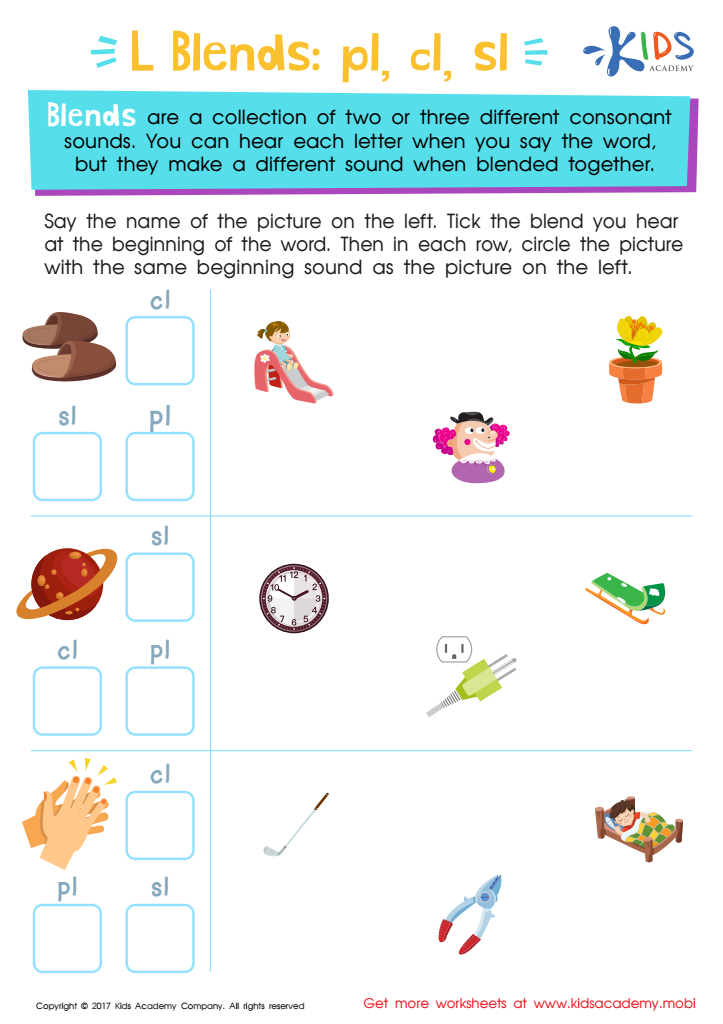
L Blends: "Pl", "Cl" and "Sl" Printable
This printable worksheet will help your child recognize and identify the Pl, Cl, and Sl consonant blends, sound them out, and identify them in print. Improve your child's reading and writing skills with fun and colorful phonics practice!
L Blends: "Pl", "Cl" and "Sl" Printable
Worksheet
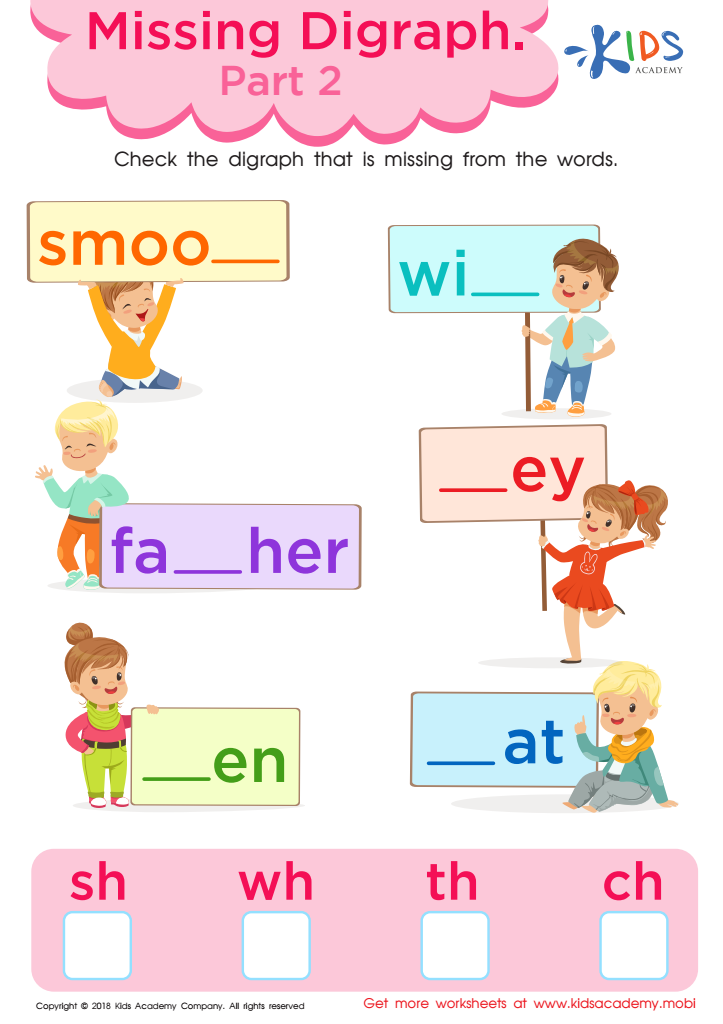
Missing Digraph: Part 2 Worksheet
Practice the "th" digraph with this fun worksheet from Kids Academy! See how it appears at the beginning, middle, or end of words and help learners fill in the blanks. Check if they got it right by finding the th digraph at the bottom!
Missing Digraph: Part 2 Worksheet
Worksheet
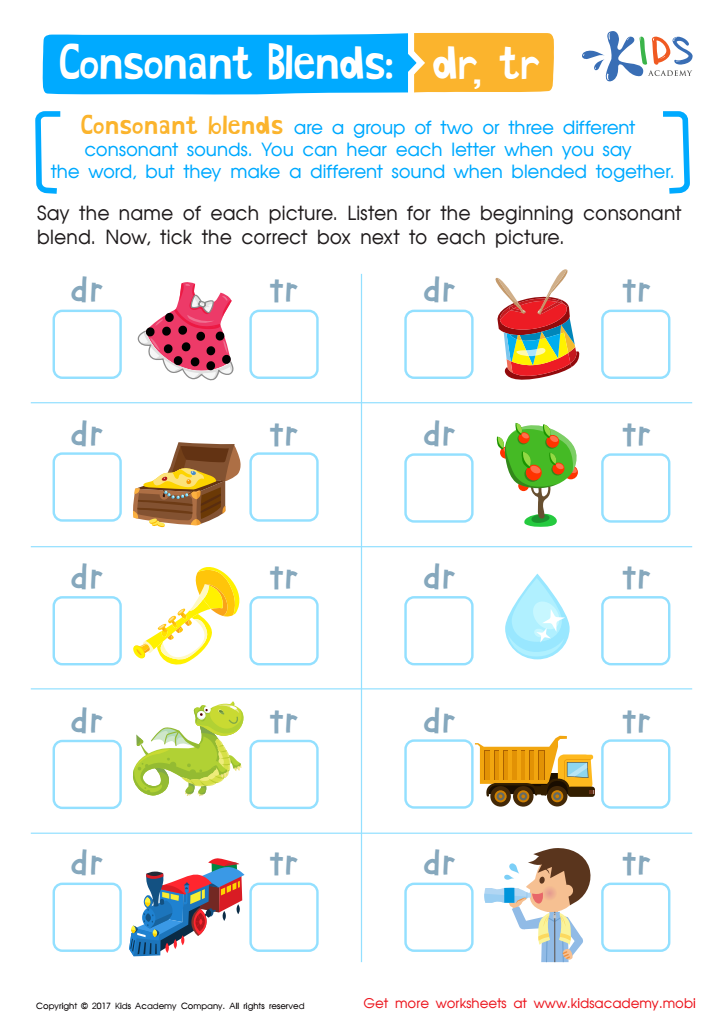
Consonant Blends: "Dr" and "Tr" Printable
Pictures of the words provide a visual cue, and sound-outs help with auditory cues.
Consonant Blends: "Dr" and "Tr" Printable
Worksheet
Join Kids Academy for Free
Who is primarily going to use this learning content?



Parents and teachers should care about Word Recognition Normal Two Letter Phonics for 7-year-olds because it forms the fundamental basis of reading skills that are critical at this developmental stage. At around age seven, children's brains are primed for acquiring reading proficiency, which is pivotal for their overall academic success. Word recognition, especially with two-letter phonics such as "an," "it," "at," and "in," helps solidify the understanding of how letters combine to form sounds and words. This foundational skill enhances children's ability to decode new words, fostering both fluency and accuracy in reading.
Moreover, early success in word recognition contributes significantly to a child's confidence and motivation to read. Children who struggle with phonics at this stage often fall behind in reading and, consequently, other subjects. The proficiency in decoding simple two-letter phonics ensures they can progress to more complex reading tasks with greater ease and less frustration.
Incorporating a solid grasp of two-letter phonics also supports spelling and writing skills, contributing to a well-rounded literacy foundation. Thus, prioritizing word recognition and phonics at this age sets up children for long-term educational success, helping them develop into competent and enthusiastic readers.