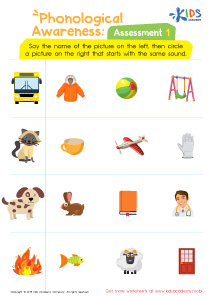
Phonics practice Normal Vowels Worksheets for 7-Year-Olds
7 filtered results
Difficulty Level
Grade
Age
-
From - To
Subject
Activity
Standards
Enhance your 7-year-old's phonics skills with our engaging Normal Vowels Worksheets! Designed specifically for early learners, these printable resources provide a fun and interactive way to reinforce understanding of normal vowels. Through a variety of exercises, including matching, filling in the blanks, and cutting activities, your child will strengthen their reading and writing abilities while gaining confidence in phonics. These worksheets cater to different learning styles, making phonics practice enjoyable and effective. Ideal for classroom or home use, our Normal Vowels Worksheets will help young learners master the fundamentals of vowel sounds, paving the way for successful literacy development.
Favorites
With answer key
Interactive
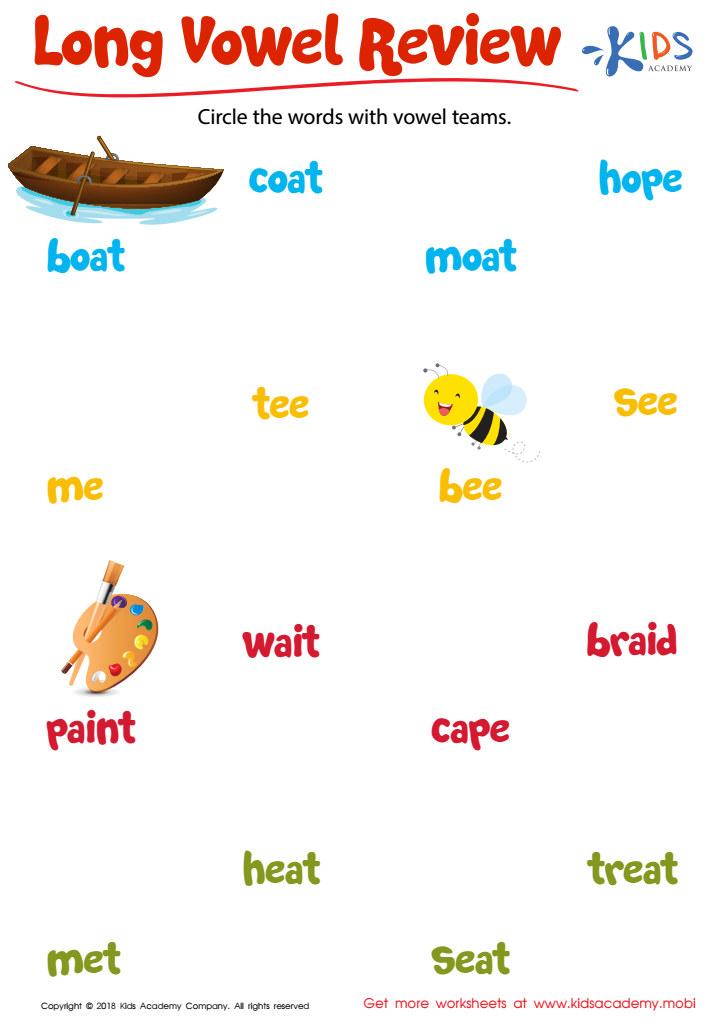
Long Vowel Review Worksheet
Vowel teams like "ea" and "ai" help us make words, and understanding these patterns aids emerging readers in becoming more fluent. This review worksheet has students finding words with vowel teams that make the long vowel sound, and helps them recognize high-frequency words.
 Assign to My Students
Long Vowel Review Worksheet
Worksheet
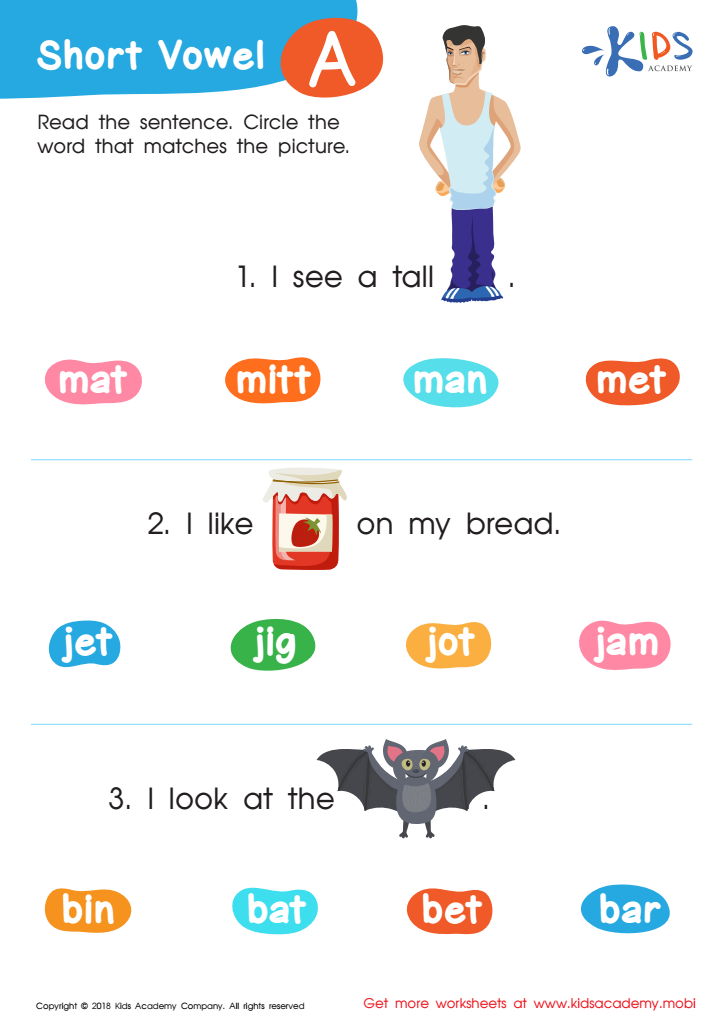
Short Vowel /a/ Worksheet
This free PDF helps new readers use sight words and pictures to read basic sentences. Then, they use accompanying word choices to find the correct word with the short a vowel sound. A key early reading skill, discriminating between short vowel sounds can be tricky in monosyllabic words, so use this PDF to help your reader reinforce it.
Short Vowel /a/ Worksheet
Worksheet
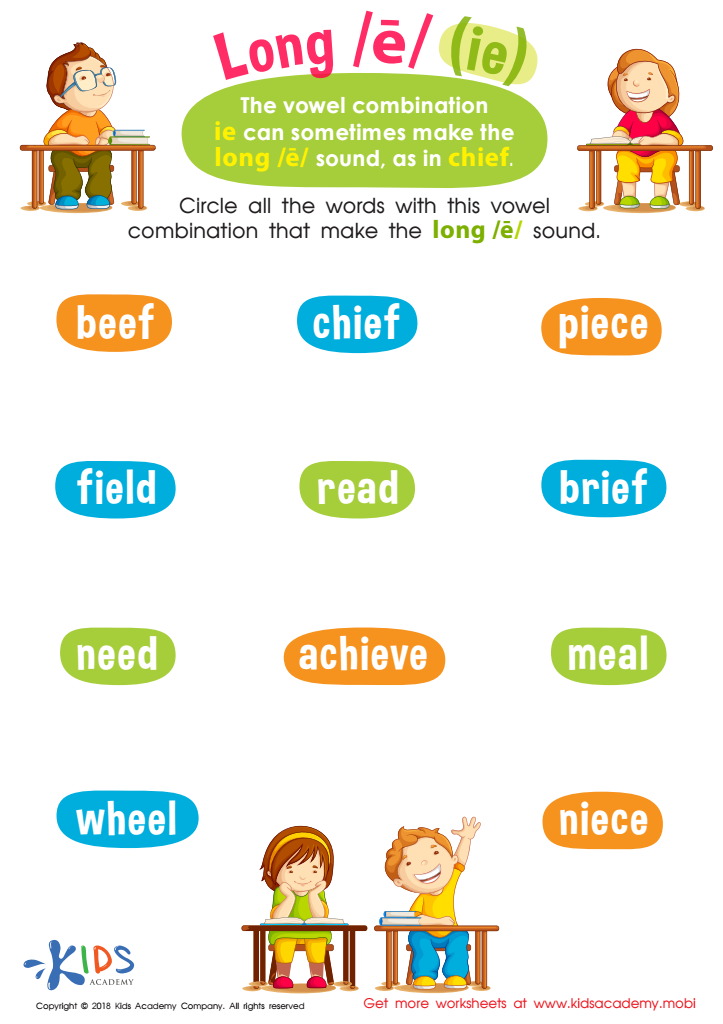
Reading: Long E and IE Worksheet
Ask your child to name some words with the long /e/ sound they hear every day. Then, read aloud all the words in the worksheet with them. Ask them to circle the words containing ie that make this sound.
Reading: Long E and IE Worksheet
Worksheet
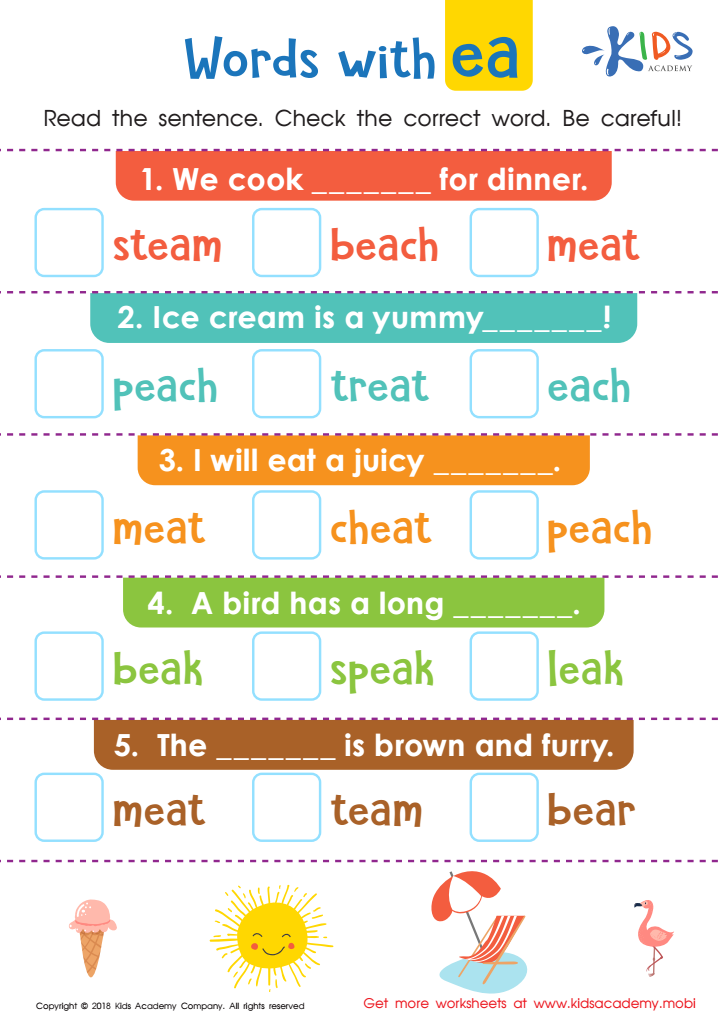
Words with ea Worksheet
Beginning readers may struggle with -ea vowel digraphs, which can have multiple sounds and be tricky to decode. This cheerful worksheet helps kids practice reading sentences with missing -ea words, using context clues to fill in the blanks. They'll also be exposed to various -ea sound examples, and build their sight word knowledge.
Words with ea Worksheet
Worksheet
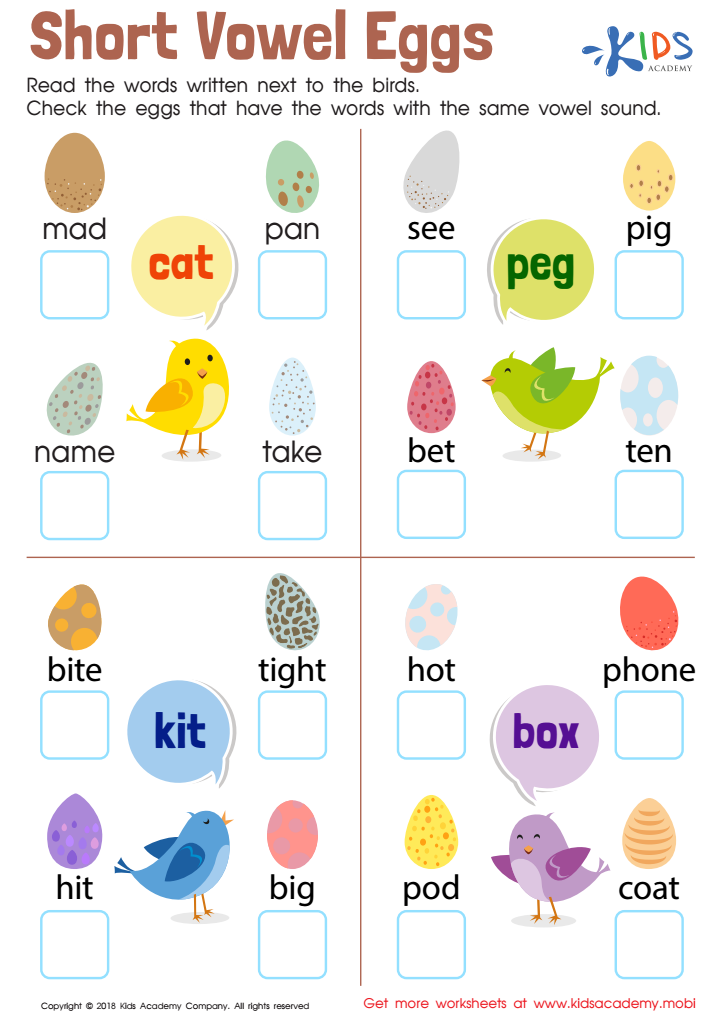
Short Vowel Eggs Worksheet
Your students will love helping these birdies pick the short vowel eggs! Have them read the words in the thought bubbles, then check off the boxes with the same short vowel sounds. The bright colors of this free Worksheet will draw them in and get them practicing their vowels!
Short Vowel Eggs Worksheet
Worksheet
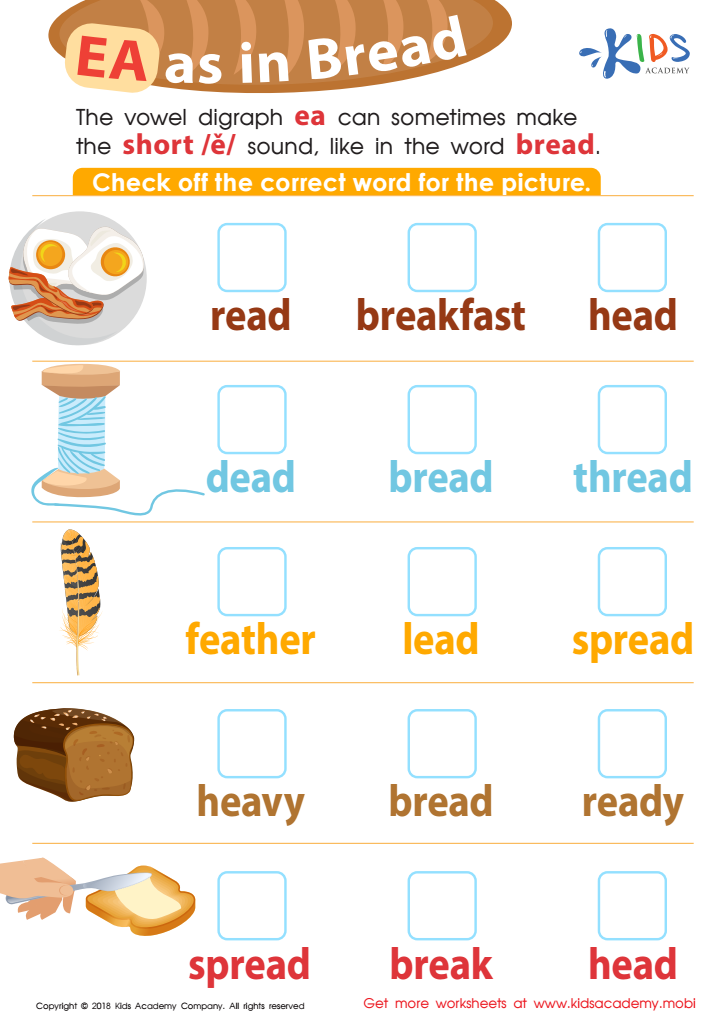
Reading: EA as in Bread Worksheet
The vowel digraph ea can be read in two ways. Examples of the long sound are "read" and "lead"; examples of the short sound are "bread" and "head". Ask your kids to give you more examples and then have them check off the correct word for the pictures on this worksheet. This will help them understand the ea sound.
Reading: EA as in Bread Worksheet
Worksheet
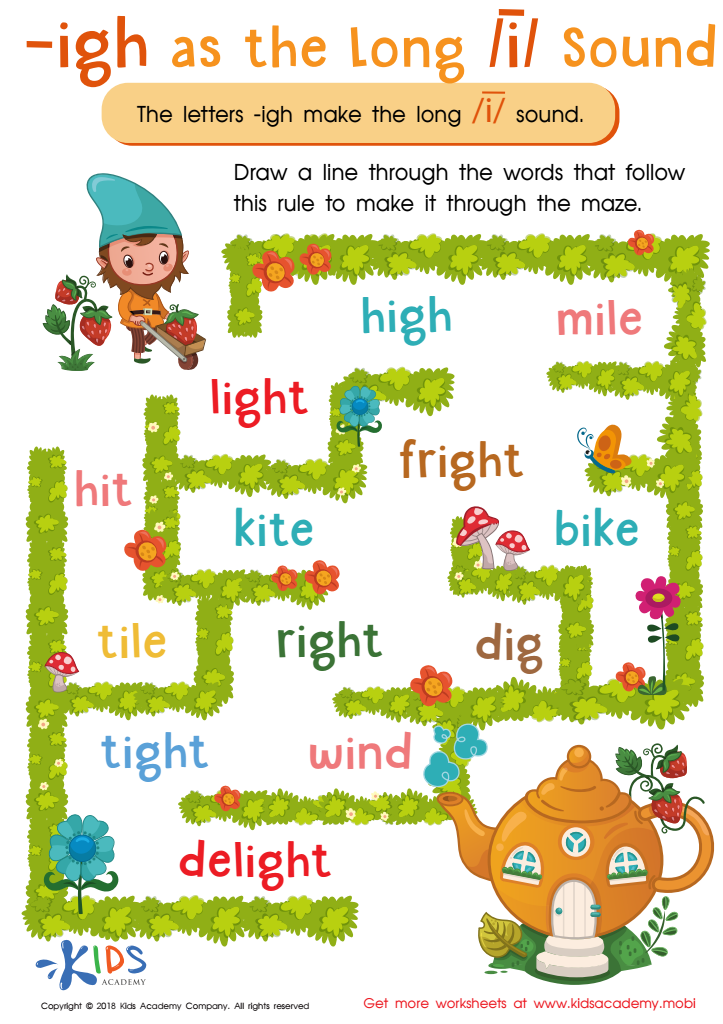
Reading: IGH as Long I Worksheet
Kids can have fun and learn with this maze! They'll look for and read words with the 'long I' sound spelled 'igh'. Most words ending with 'T' have this spelling. Decode words while learning about long vowel sounds and their spellings.
Reading: IGH as Long I Worksheet
Worksheet
Join Kids Academy for Free
Who is primarily going to use this learning content?





Phonics practice, particularly focusing on normal vowels, is crucial for 7-year-olds as it significantly supports their reading development. At this age, children are transitioning from learning to read to reading to learn, and a strong grasp of phonics is essential for this shift. Normal vowels—A, E, I, O, U—are foundational elements in the construction of words. By understanding how these vowels function within the phonetic system, children can decode larger, more complex words which strengthens their reading fluency and comprehension.
Furthermore, mastering normal vowels enhances spelling skills. When children become familiar with vowel sounds and their patterns, they are better equipped to spell words correctly, leading to greater confidence in their writing abilities. This practice also ingrains critical thinking skills, as learners learn to break down words and understand their components, which is essential for literacy.
For teachers and parents, emphasizing phonics helps identify learning gaps early on. Engaging children in fun, phonics-based activities can foster a love for reading and make the learning process enjoyable. Ultimately, strong phonics skills pave the way for academic success in all subjects, promoting lifelong learning and communication skills beyond the classroom.