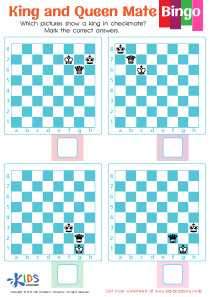
Chess strategy understanding Normal Chess Worksheets for 7-Year-Olds
3 filtered results
-
From - To
Unlock the exciting world of chess for your 7-year-old with our engaging Chess Strategy worksheets! Designed specifically for young learners, these printable resources help develop essential strategic thinking skills. Through fun activities and colorful illustrations, children will grasp fundamental concepts of chess such as evaluating positions, understanding threats, and planning moves. Our worksheets make learning chess accessible and enjoyable, fostering critical thinking while enhancing problem-solving abilities. Perfect for both beginners and those looking to improve, they'll have a blast mastering strategy in this timeless game. Begin their journey to chess mastery today with our carefully crafted worksheets!
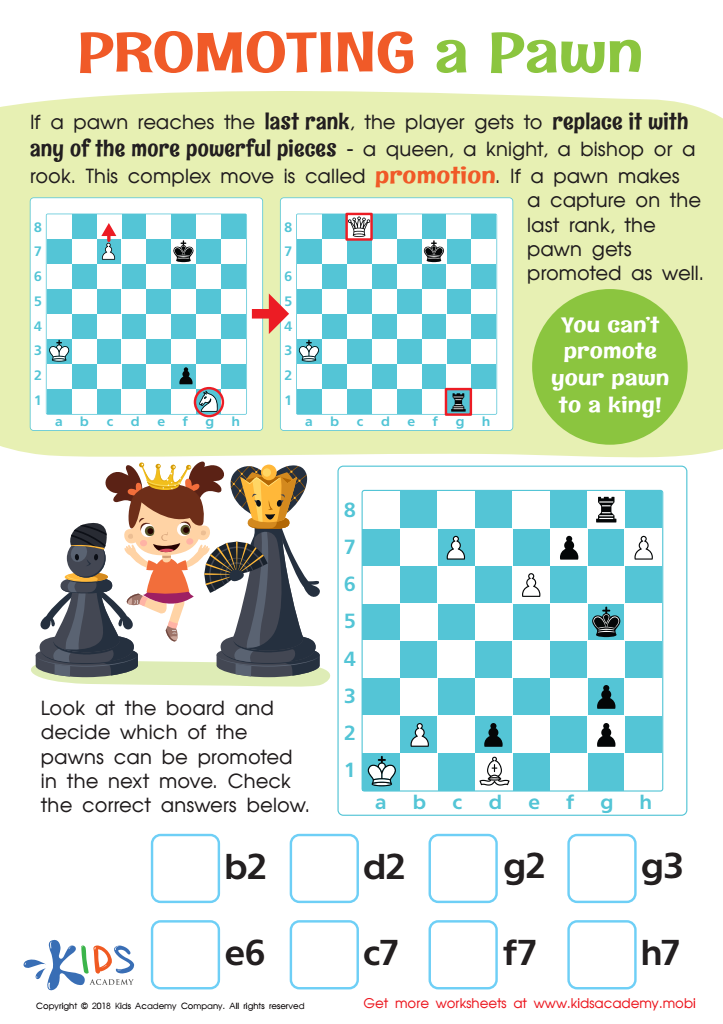
Promoting a Pawn Worksheet
 Assign to My Students
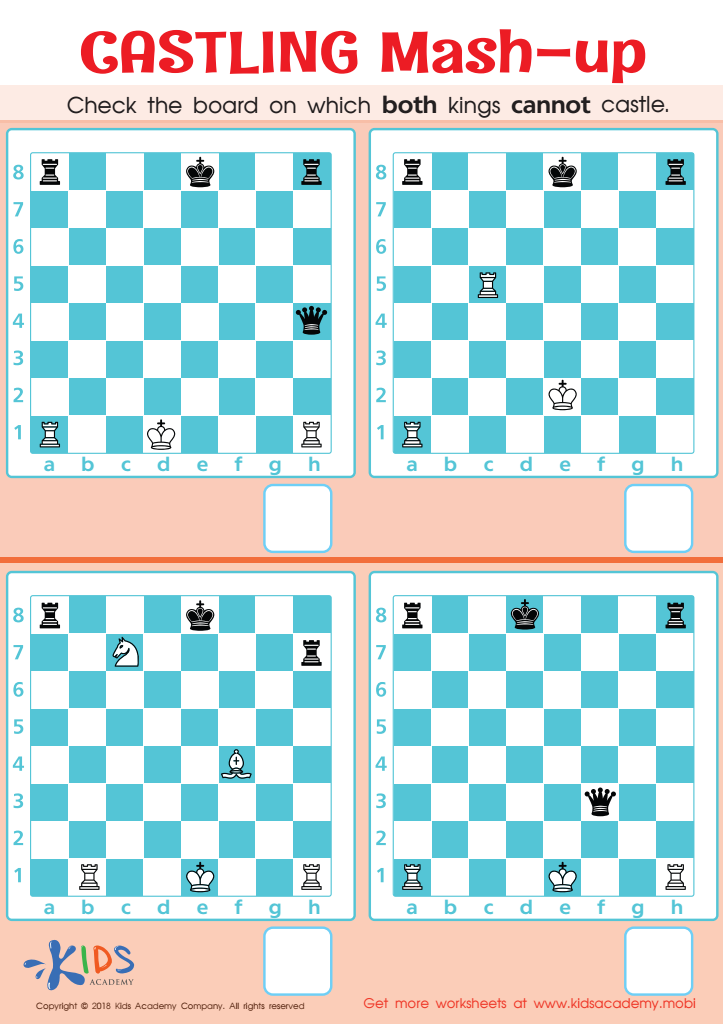
Castling Mash–up Worksheet
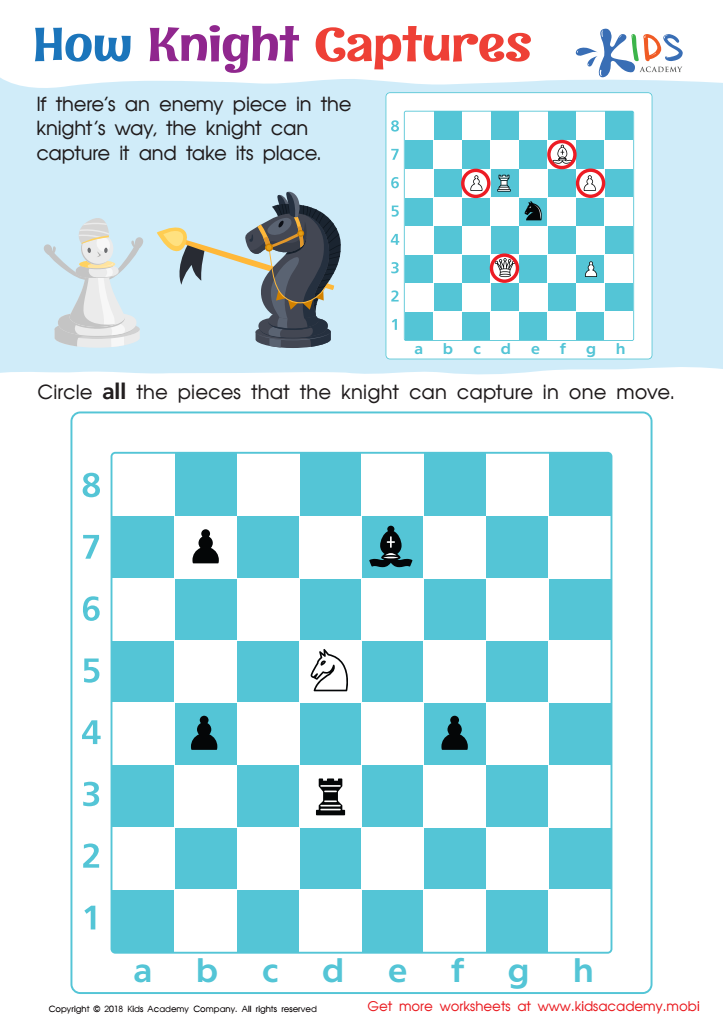
How Knight Captures Worksheet





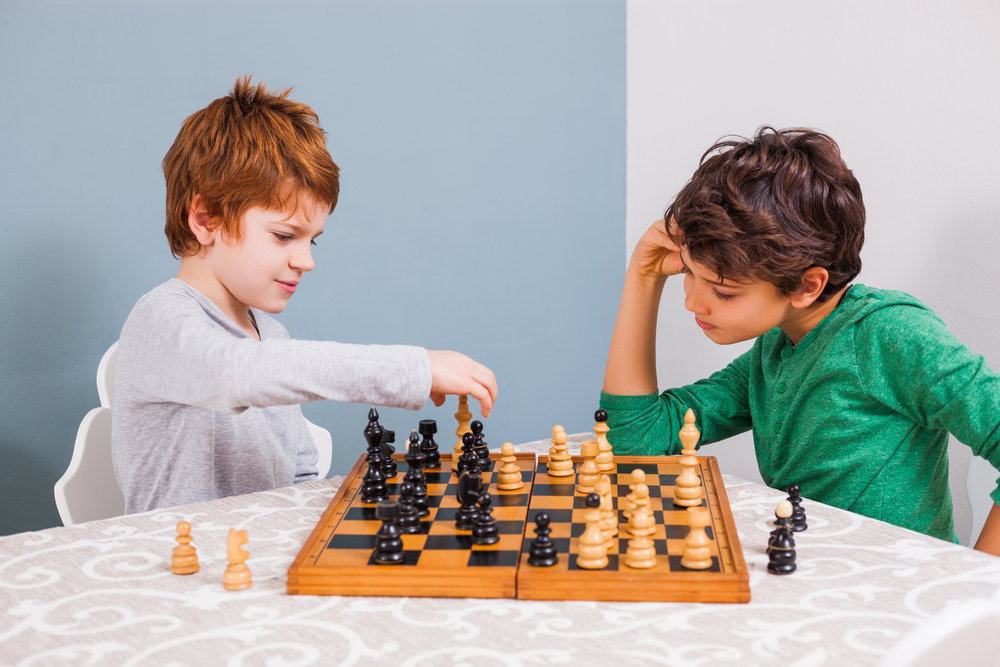

Parents and teachers should be enthusiastic about introducing 7-year-olds to chess and its strategic elements, as it offers numerous cognitive and social benefits. Chess teaches critical thinking and problem-solving skills through learning to evaluate positions, anticipate opponents' moves, and formulate long-term plans. By understanding basic strategies—like controlling the center of the board, developing pieces efficiently, and safeguarding the king—children develop important analytical skills that extend beyond the chessboard and into academic pursuits.
Furthermore, playing chess fosters patience and discipline as children learn to take their time in considering moves, thus improving their focus and concentration. It also encourages creativity, as kids must think outside the box to develop unique strategies against different opponents.
On a social level, chess promotes respect for rules and refined sportsmanship, as players learn to both win graciously and accept losses as part of the game. This resilience and emotional regulation are vital for early developmental stages. By understanding chess strategies, parents and teachers empower students to cultivate a strategic mindset that is applicable in many life aspects, teaching key lessons in resilience, decision-making, and cooperative interaction. Ultimately, chess serves as a powerful tool for holistic child development that is both engaging and educational.