
Alphabet Learning Normal Worksheets for 7-Year-Olds
3 filtered results
Difficulty Level
Grade
Age
-
From - To
Subject
Activity
Standards
Discover our engaging "Alphabet Learning Normal Worksheets" designed specifically for 7-year-olds! These worksheets blend fun and education, helping young learners master the alphabet through a variety of exciting activities. From tracing and identifying letters to interactive games, our materials foster recognition and handwriting skills. Each worksheet is crafted to captivate young minds and encourage independent learning. Perfect for use at home or in the classroom, these resources are tailored to boost confidence in reading and writing. Support your child's literacy journey with our dynamic alphabet worksheets today and watch them thrive as they explore the world of letters!
Favorites
With answer key
Interactive
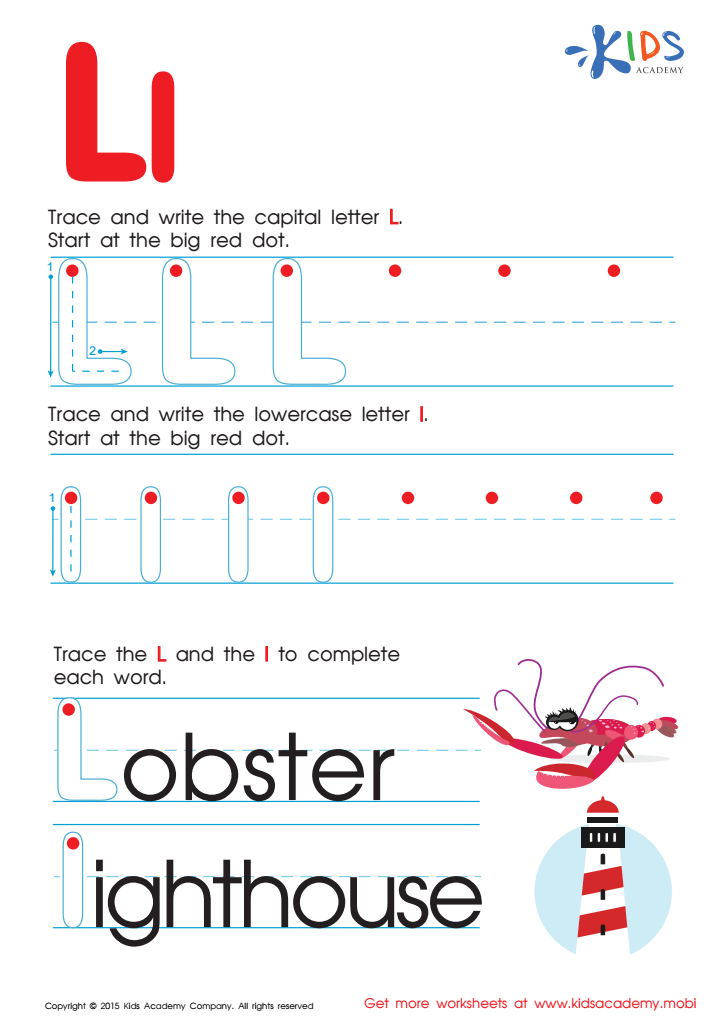
Letter L Tracing Page
Trace uppercase and lowercase letters to practice writing. Pay attention to the lowercase letters, like the "L", that are not as tall as an uppercase "I" or as short as a lowercase "i". Words like "lobster" and "lighthouse" are waiting to be completed. Enjoy!
 Assign to My Students
Letter L Tracing Page
Worksheet
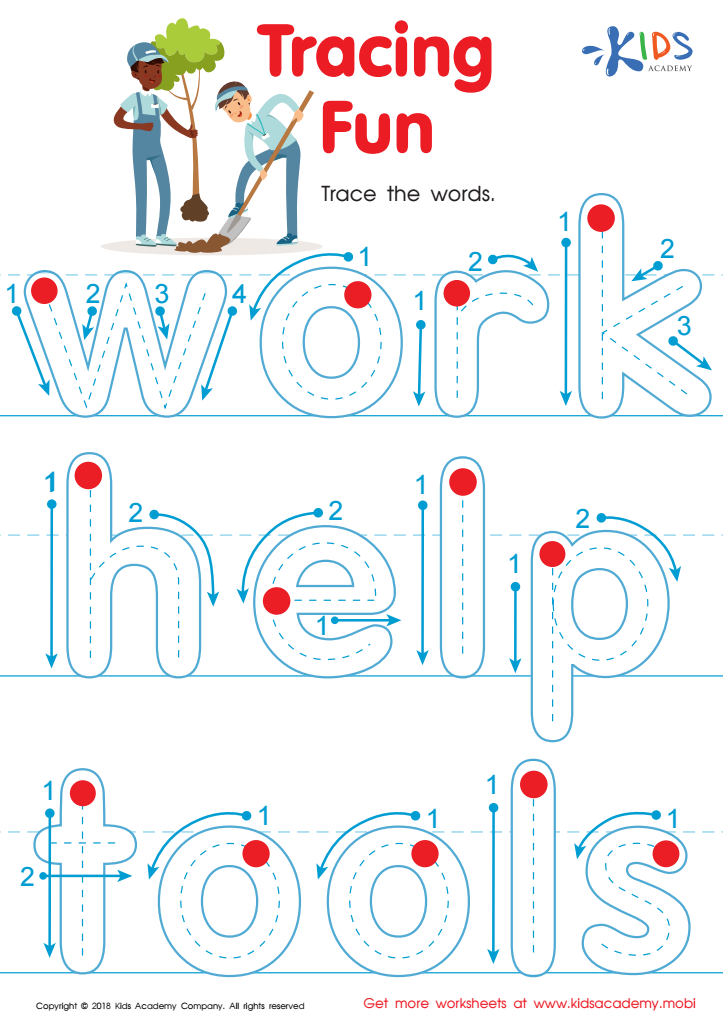
Tracing Fun Worksheet
Believe it or not, good handwriting helps with reading! Starting at the top left and writing legibly builds reading skills. This free worksheet helps little learners practice basic sight words. Red dots show them where to start and the words provide reinforcement without them realising. An enjoyable way to boost their reading and writing.
Tracing Fun Worksheet
Worksheet
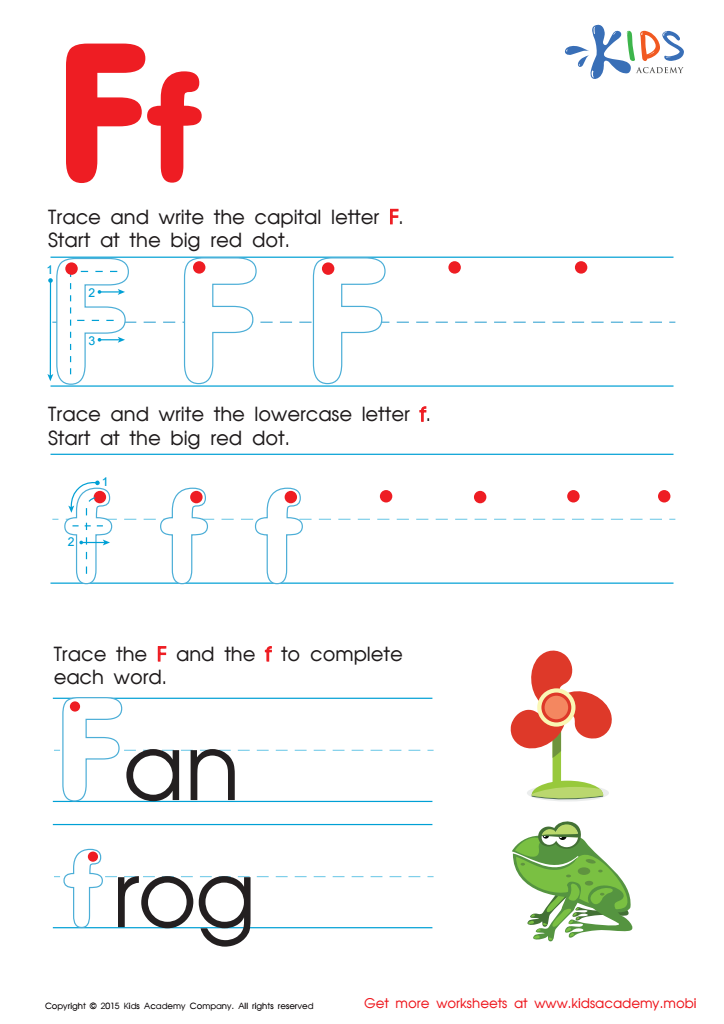
Letter F Tracing Page
Trace "F" with your pencil! Start at the red dot and draw lines — it's fun! Check it out — it looks great! Keep practicing to make it even better. Then, try completing words. Help out the broken fan and funny frog! Get free alphabet worksheets and activities for your kids. Come see our new tracing pages!
Letter F Tracing Page
Worksheet
Join Kids Academy for Free
Who is primarily going to use this learning content?








Alphabet learning is a crucial foundation in a 7-year-old's educational journey, significantly impacting their literacy, communication skills, and overall academic success. By this age, children are transitioning from learning individual letter sounds to recognize and manipulate words, which fosters reading fluency and comprehension. Parents and teachers should care about this learning phase for several reasons.
Firstly, strong alphabet skills enable children to decode words, thereby enhancing their ability to read independently and enjoy literature. Early mastery of letter recognition and sounds boosts confidence, prompting them to engage more actively in reading activities. Secondly, proficient alphabet skills positively influence writing abilities. As children learn to write, they will better express their thoughts and feelings, a fundamental aspect of emotional development.
Moreover, a solid understanding of the alphabet lays the groundwork for more complex language and literacy concepts like phonics, spelling, and vocabulary development. Collaborative efforts between parents and teachers can create structured learning environments that reinforce and extend alphabet learning. By prioritizing this critical stage of learning, they can significantly shape their child's educational path, promoting not only academic success but also a lifelong love for learning.








