Attention to Detail Normal Worksheets for 7-Year-Olds
4 filtered results
-
From - To
Discover our engaging Attention to Detail Normal Worksheets designed specifically for 7-year-olds! These worksheets help young learners enhance their observation and critical thinking skills in a fun and interactive way. With a variety of activities, children will practice identifying differences, detecting patterns, and completing visual puzzles that foster concentration and attention. Each worksheet aligns with educational standards, ensuring that kids not only enjoy their learning experience but also gain valuable skills for future academic success. Perfect for at-home practice or classroom use, our worksheets are an excellent resource for parents and teachers alike. Unlock your child's potential with our exciting attention to detail activities!
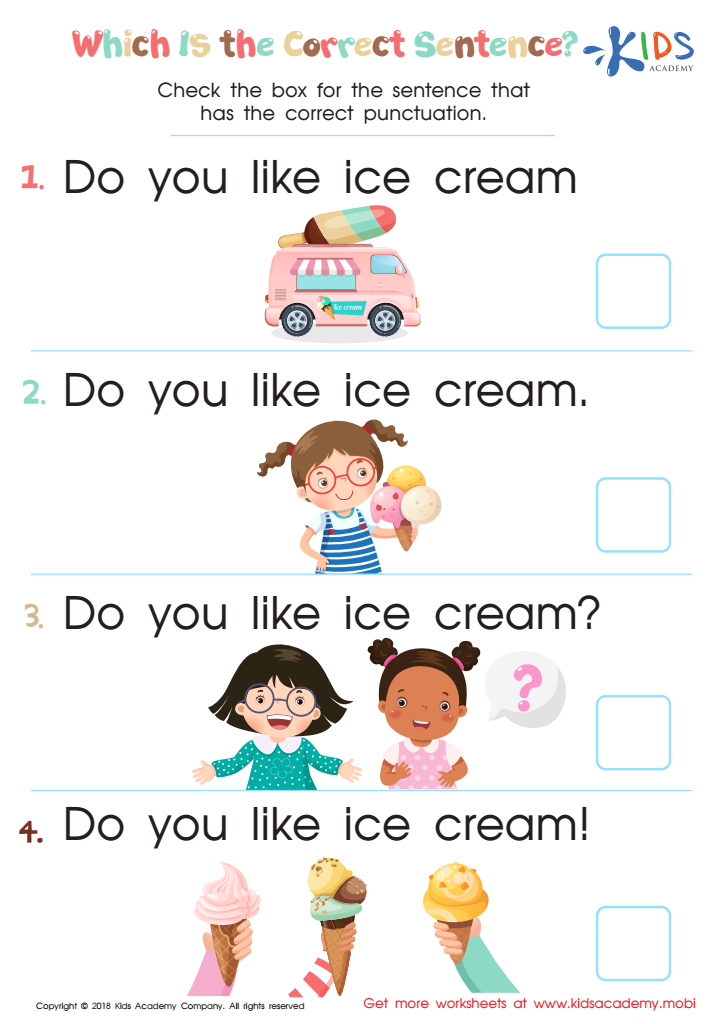
Which is the Correct Sentence? Worksheet
 Assign to My Students
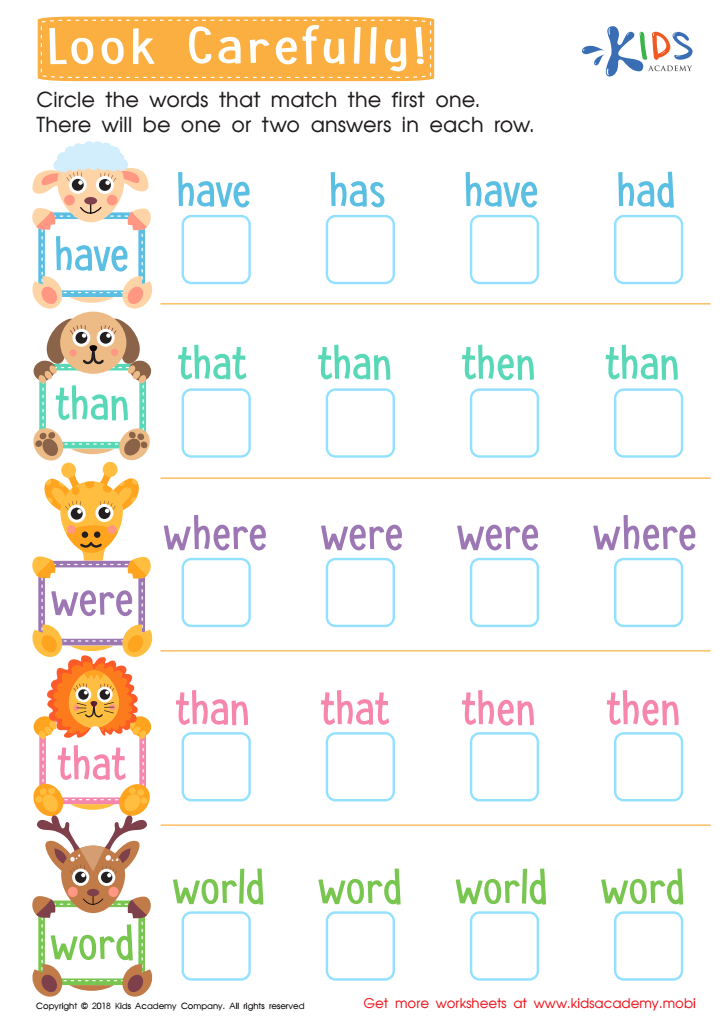
Look Carefully Worksheet
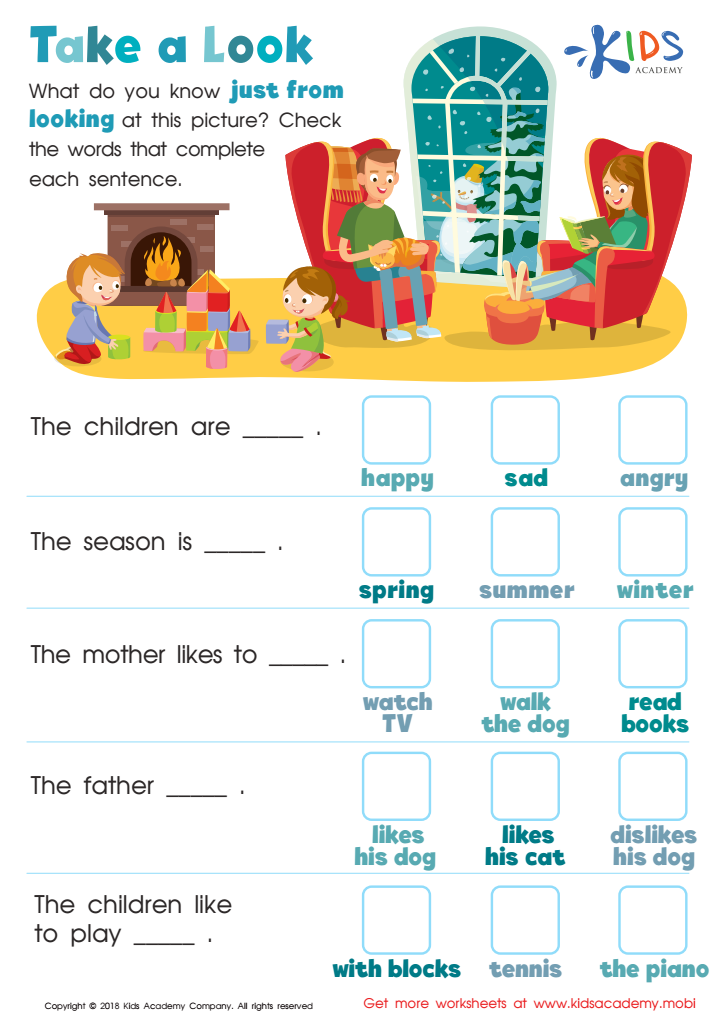
Take a Look - Part 1 Worksheet
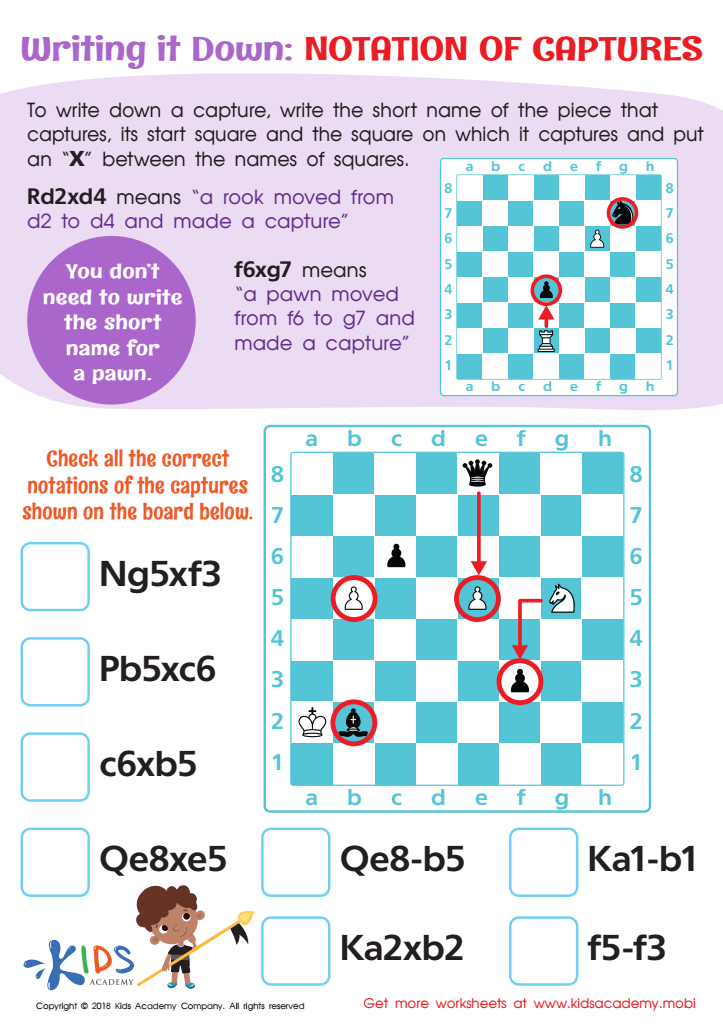
Notation of Captures Writing it Down Worksheet







Attention to detail is a crucial skill for 7-year-olds as it significantly impacts their learning and daily activities. At this age, children are developing critical thinking and problem-solving abilities, which are enhanced through mindful observation. By fostering attention to detail, parents and teachers help children notice important elements in their environment, such as differences in shapes, patterns, and instructions, leading to better comprehension in subjects like math, reading, and science.
Additionally, attention to detail contributes to organizational skills, promoting a sense of responsibility and independence. This skill aids in following multi-step directions for tasks, whether completing homework or organizing their belongings. Heightening awareness of detail can also lead to improved creativity; noticing intricate aspects of art and nature can inspire imaginative thinking and expression.
Moreover, promoting this skill helps children develop patience and perseverance. As they learn to focus on the finer points, they build a foundation for future academic and life success. Encouraging practices such as careful reading, thorough observation during activities, and asking questions fosters an enriching learning environment. Ultimately, nurturing attention to detail empowers children, making them more confident and capable learners, setting the stage for lifelong learning and success.








