
Logical thinking development Normal Worksheets for 7-Year-Olds
5 filtered results
Difficulty Level
Grade
Age
-
From - To
Subject
Activity
Standards
Discover engaging worksheets designed to enhance logical thinking skills for 7-year-olds! Our carefully crafted printable resources focus on critical reasoning, problem-solving, and pattern recognition, empowering young minds to think analytically. These worksheets are perfect for home or classroom use, offering a diverse range of activities that promote essential cognitive skills while keeping kids excited about learning. With topics catering to their age and interests, our logical thinking worksheets foster creativity and confidence in young learners. Visit our website to explore our collection of normal worksheets, and watch your child's logical abilities grow through fun and educational challenges. Start learning today!
Favorites
With answer key
Interactive
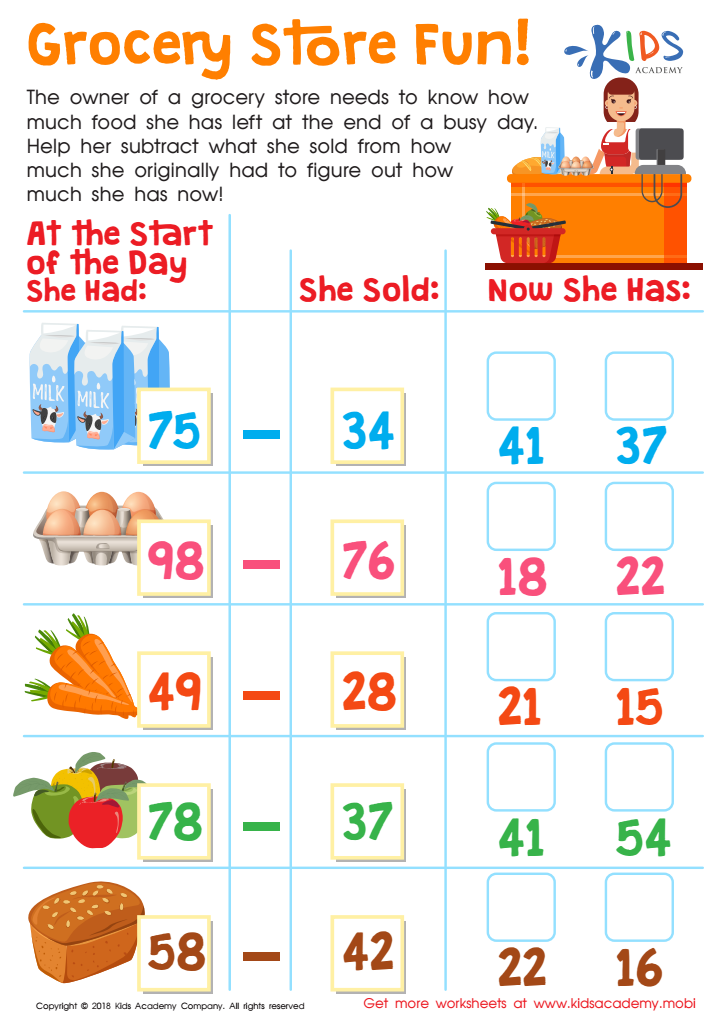
Grocery Store Fun! Worksheet
Let your kids have fun with this store worksheet. It requires them to help the owner by subtracting what she has sold from the original amount to figure out how much is left. Have them read and solve the equations in the printout to give the store owner the answer.
 Assign to My Students
Grocery Store Fun! Worksheet
Worksheet
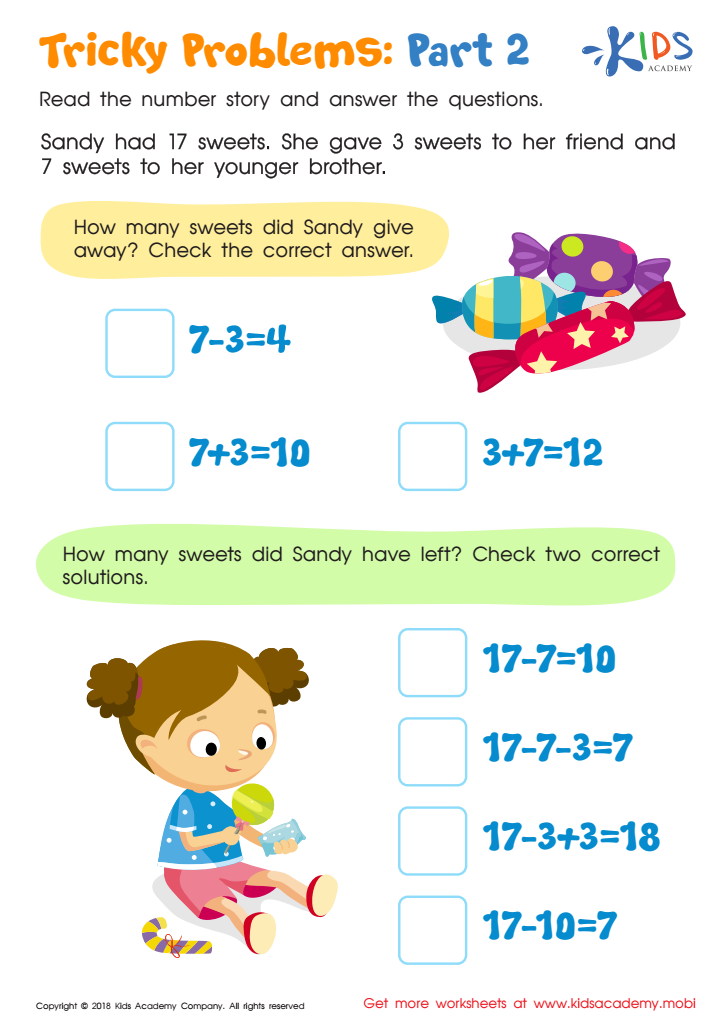
Tricky Problems Worksheet: Part 2
Help your little math learner visualize number stories with this engaging worksheet. They'll connect pictures to the story and use math facts to find the sums. After that, they'll be able to identify the correct number sentences to match. Let them practice and get better at problem solving!
Tricky Problems Worksheet: Part 2
Worksheet
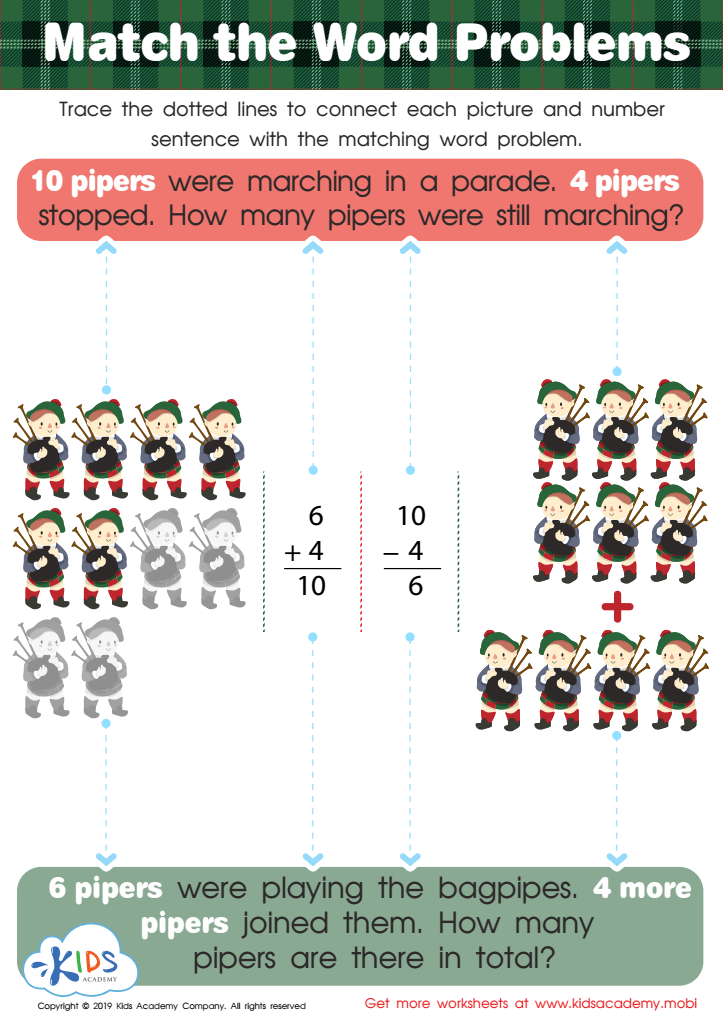
Match the Word Problems Worksheet
Read this word problem to your kids: Help them understand how it can be translated into a number problem. Trace the dotted lines to see how each picture and number sentence match the problem. With this worksheet, you can show your kids how easy it is to transform a word problem into a number problem.
Match the Word Problems Worksheet
Worksheet
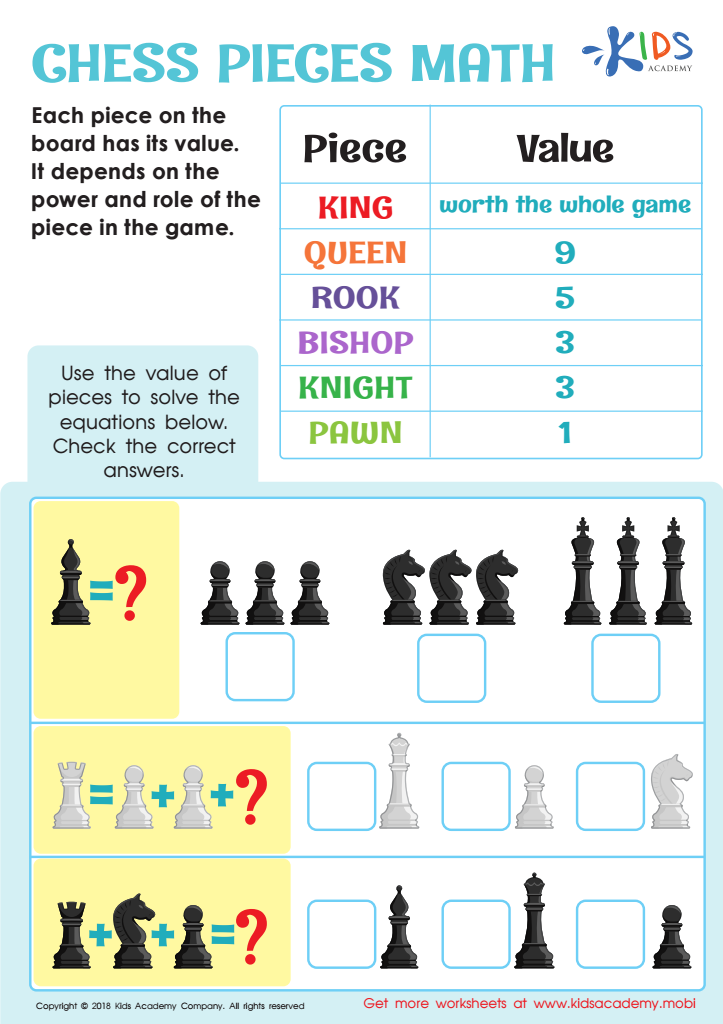
Chess Pieces Math Worksheet
Chess involves math! Each piece has its own value, from the king (worth the entire game) to the queen (9 points), varying according to their power and role. In the worksheet, your child must use these values to solve the equations at the bottom.
Chess Pieces Math Worksheet
Worksheet
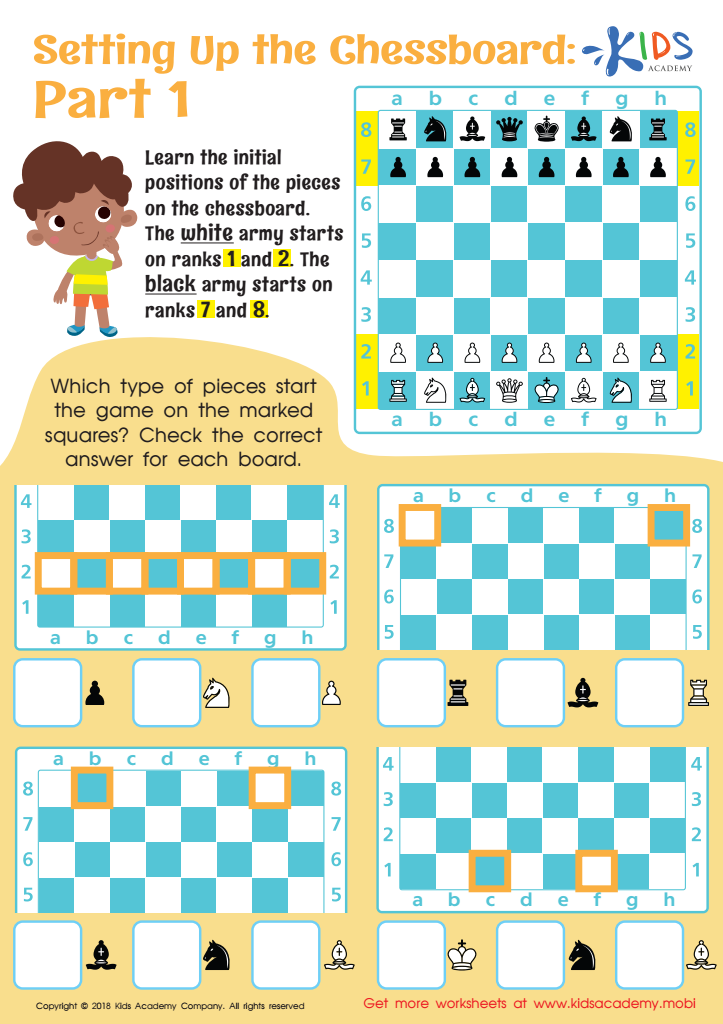
Setting up the Chessboard: Part 1 Worksheet
Teach your child the starting positions of the black and white armies on the chessboard. Black pieces are placed on ranks 7 and 8, and white pieces on ranks 1 and 2. Have them check the highlighted boxes on the chessboard to make sure they know the correct pieces to start with.
Setting up the Chessboard: Part 1 Worksheet
Worksheet
Join Kids Academy for Free
Who is primarily going to use this learning content?








Parents and teachers should prioritize the development of logical thinking in 7-year-olds because it lays the foundation for critical reasoning and problem-solving skills essential for academic success and everyday life. At this age, children are increasingly curious and capable of more complex thought processes. Developing logical thinking helps them analyze situations, make connections, and draw conclusions, which are vital not just in subjects like math and science but also in understanding social scenarios and nurturing emotional intelligence.
Encouraging logical thinking fosters independence and confidence as children learn to navigate challenges through reasoning rather than relying solely on guidance. It equips them with the ability to evaluate evidence, differentiate between fact and opinion, and develop their unique viewpoints. Additionally, strong logical skills can enhance creativity by allowing children to approach problems from multiple perspectives.
Furthermore, instilling logical thinking at an early age prepares children for future educational challenges and real-world situations, giving them a toolkit for any circumstance. By promoting these skills, parents and teachers nurture not just academically successful children, but well-rounded individuals capable of thoughtful and intentional decision-making throughout their lives.








