
Moral understanding Normal Worksheets for 7-Year-Olds
4 filtered results
Difficulty Level
Grade
Age
-
From - To
Subject
Activity
Standards
Discover our engaging "Moral Understanding Normal Worksheets" designed specifically for 7-year-olds! These worksheets aim to nurture essential social skills and ethical reasoning in young learners. Each activity encourages kids to explore concepts like empathy, fairness, and respect, making abstract moral ideas accessible to their age group. With vibrant illustrations and age-appropriate scenarios, your child will not only have fun but will also develop critical thinking skills. Perfect for both classroom use and at-home learning, our resources empower children to articulate their thoughts and engage in meaningful conversations about right and wrong. Start fostering your child’s moral development today with our unique worksheets!
Favorites
With answer key
Interactive
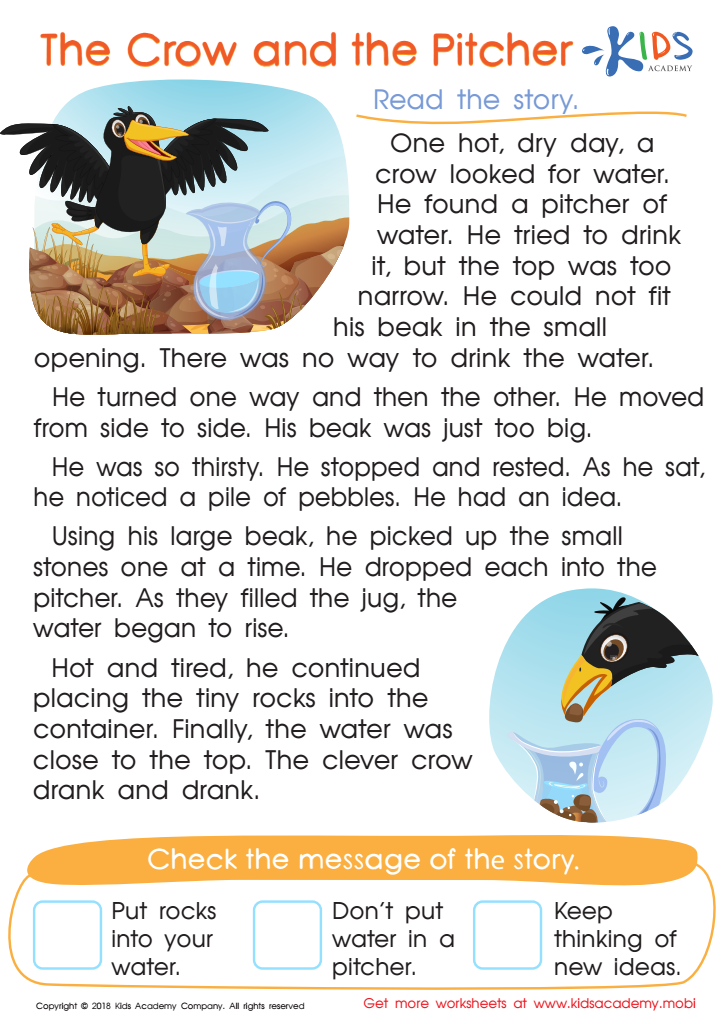
The Crow and the Pitcher Worksheet
Introduce your child to reading comprehension with this fascinating worksheet from Kids Academy! Featuring Aesop's fable of a thirsty crow, your child will enjoy reading and determining the central theme of the passage. This worksheet is a great way to give your child a purpose for reading while helping to build their comprehension skills.
 Assign to My Students
The Crow and the Pitcher Worksheet
Worksheet
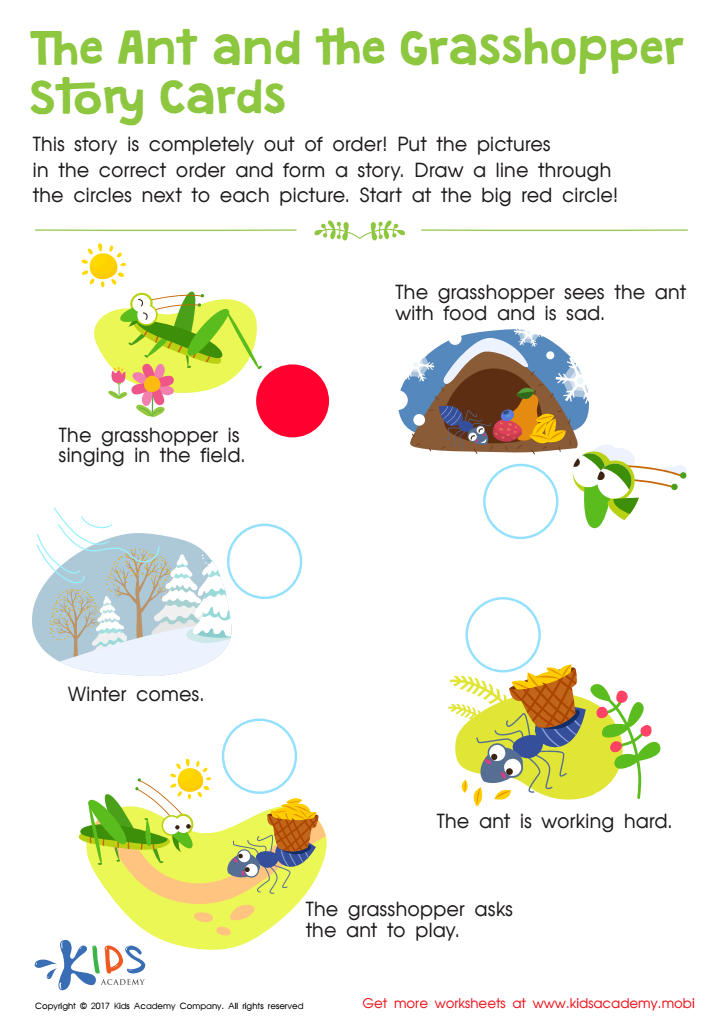
The Ant and The Grasshopper Worksheet
This worksheet uses the beloved childhood fable "The Ant and the Grasshopper" to teach your child about plot and order of events. Your child must read the events and put them in the right order. Once completed, review the story with your child to ensure its accuracy.
The Ant and The Grasshopper Worksheet
Worksheet
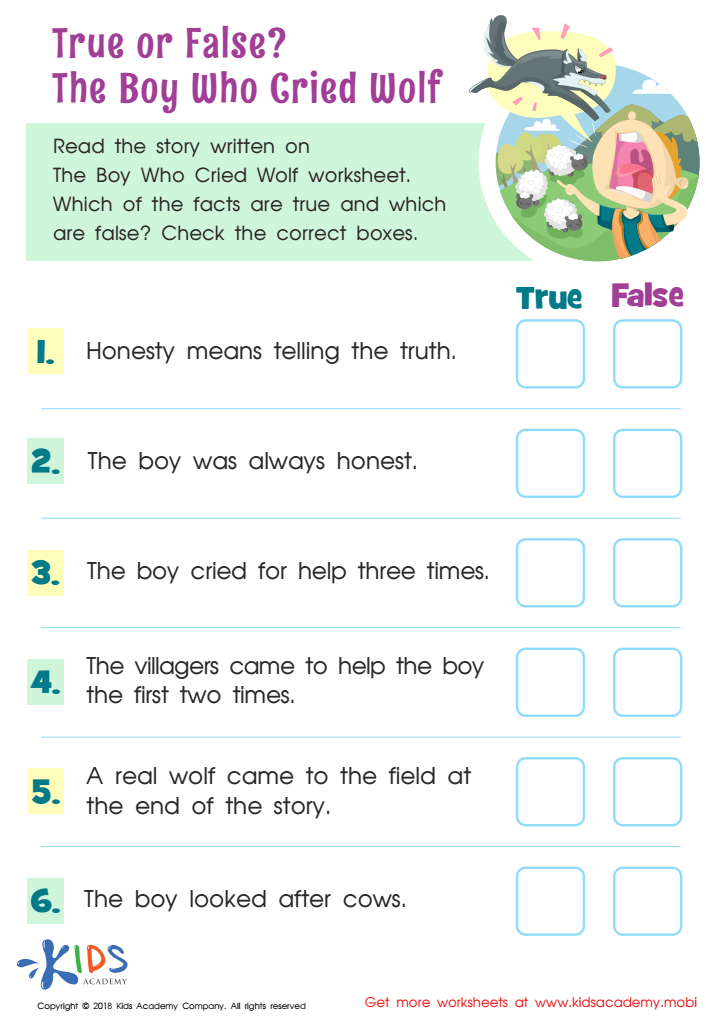
True or False? The Boy Who Cried Wolf Worksheet
Test students' understanding of The Boy Who Cried Wolf with this free downloadable worksheet. It contains true/false questions to assess comprehension of key events. Easy to complete, it checks students can recall facts from the story. Try it and see!
True or False? The Boy Who Cried Wolf Worksheet
Worksheet
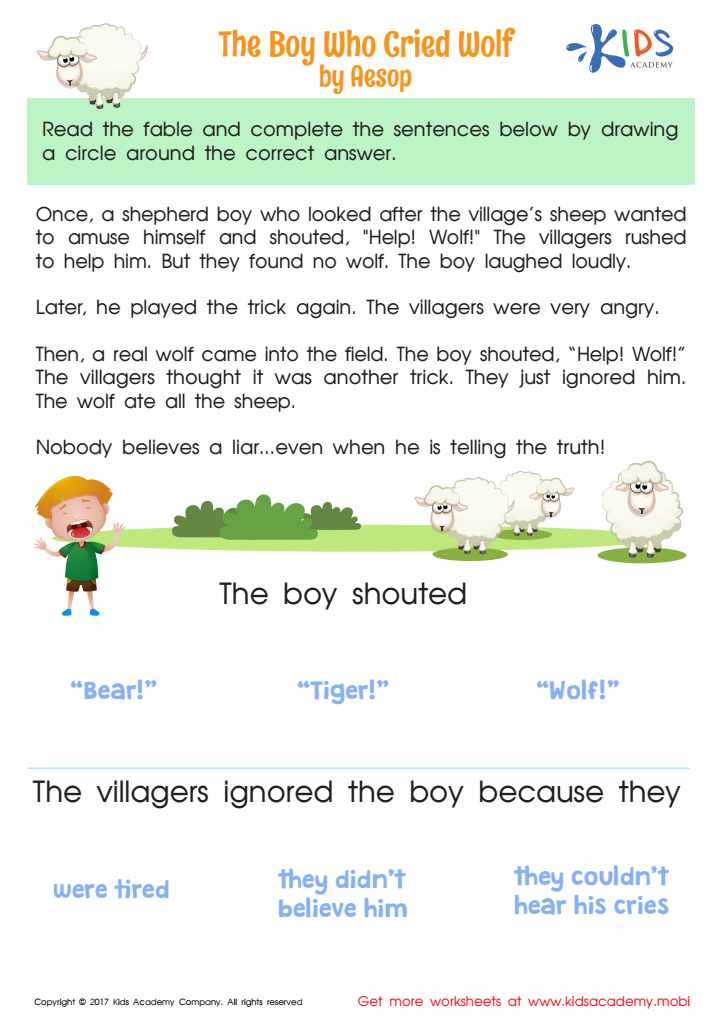
The Boy Who Cried Wolf Worksheet
Test your child's reading comprehension with The Boy Who Cried Wolf worksheet. Read the fable, then answer the questions. Use the text to help your child check their answers are correct. Boost reading skills in a fun, interactive way!
The Boy Who Cried Wolf Worksheet
Worksheet
Join Kids Academy for Free
Who is primarily going to use this learning content?


.jpg)



Moral understanding is crucial for 7-year-olds as it lays the foundation for ethical behavior and social interactions. At this developmental stage, children begin to navigate complex social dynamics and understand concepts like fairness, empathy, and respect. Parents and teachers play a vital role in nurturing this understanding, helping children forge healthy relationships and become responsible citizens.
By fostering moral development, adults can guide children in recognizing the impact of their actions on others. This not only enhances their ability to resolve conflicts and develop friendships but also instills a sense of responsibility and integrity. Understanding moral principles enables children to make informed decisions and discern right from wrong, setting them on a path toward becoming compassionate adults.
Moreover, a strong moral foundation contributes to a positive school environment, promoting cooperation and reducing bullying. Encouraging discussions around moral dilemmas, modeling ethical behavior, and discussing stories with moral lessons can enrich children's understanding. Ultimately, investing in moral education ensures that children grow into empathetic individuals who contribute positively to their communities, making it essential for parents and teachers to prioritize this aspect of development.








