Prefix understanding Normal Worksheets for 7-Year-Olds
3 filtered results
-
From - To
Unlock your 7-year-old’s language potential with our engaging Prefix Understanding worksheets! Specially designed for young learners, these worksheets focus on enhancing their vocabulary and reading skills by introducing common prefixes. With fun exercises and kid-friendly explanations, children learn to recognize and understand how prefixes alter word meanings. Our thoughtfully-crafted activities make learning enjoyable and are perfect for home or classroom use. Watch your child’s confidence and comprehension soar with these essential resources. Start building a strong foundation in language today—fuel their curiosity and aid their academic growth with our Prefix Understanding worksheets!
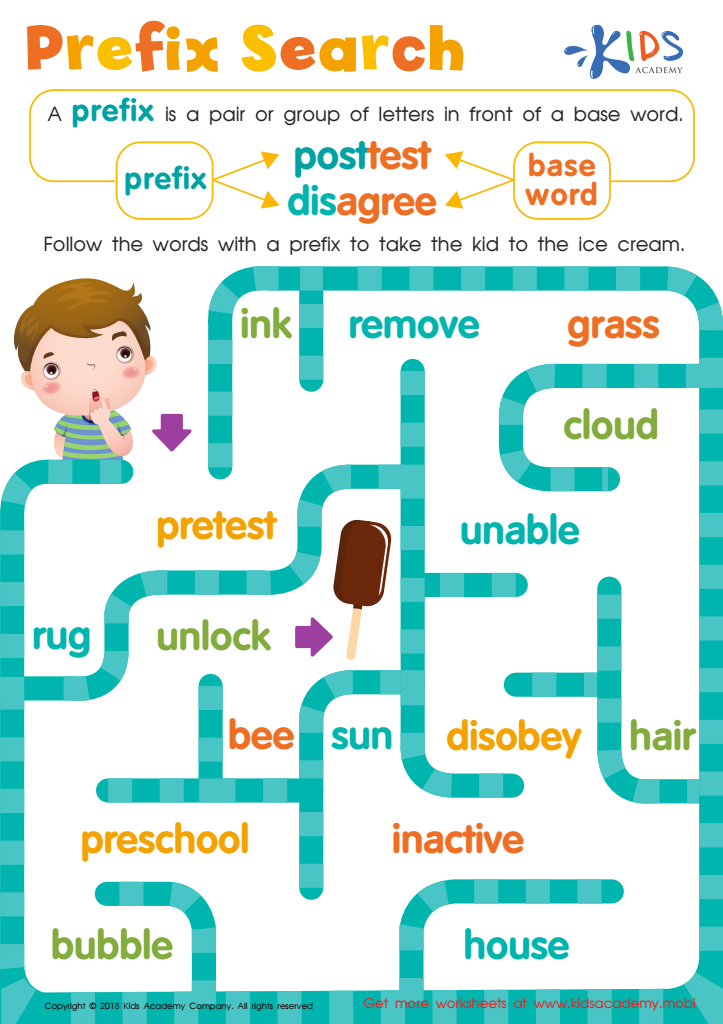
Reading: Prefix Search Worksheet
 Assign to My Students
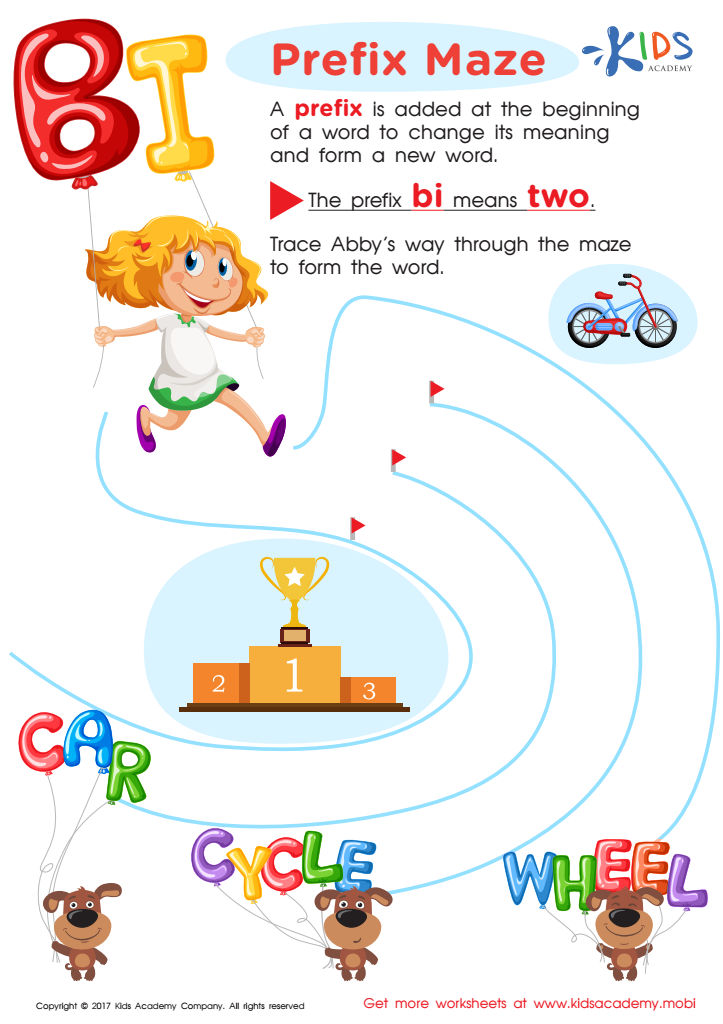
Prefix Bi Words Worksheet
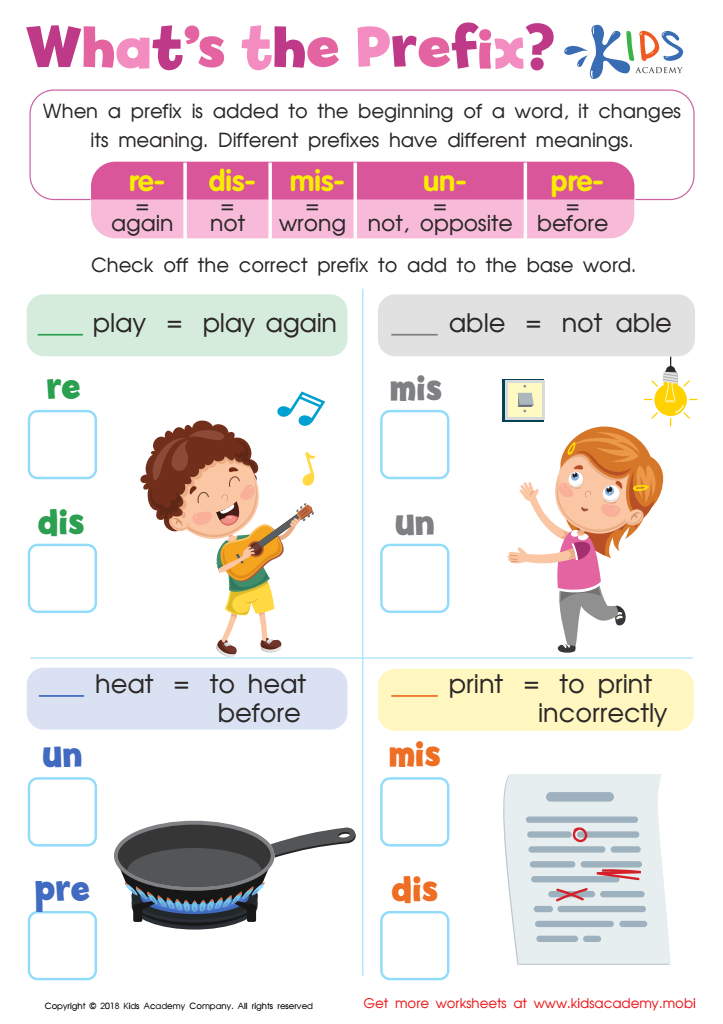
Reading: What Is the Prefix Worksheet







Understanding prefixes is crucial for 7-year-olds as it forms a significant part of their language development, reading comprehension, and overall academic success.
Firstly, learning prefixes helps children decode new words, which is fundamental for building a robust vocabulary. For example, when a child understands that "un-" means "not," they can deduce the meanings of words like "unhappy" or "unstoppable." This skill enhances their ability to tackle unfamiliar words independently, fostering confidence and self-sufficiency in reading.
Secondly, knowledge of prefixes aids in comprehension. By recognizing common prefixes, children can grasp the general meaning of a text more effectively. For instance, knowing that "pre-" means "before," they can comprehend the word "predict" even if they encounter it for the first time. Enhanced comprehension leads to better performance in reading tasks and overall academics.
Additionally, understanding prefixes supports spelling and writing skills. Children can break down complex words into smaller, manageable parts, which simplifies spelling and enhances their writing precision.
Finally, mastering prefixes forms a foundation for learning more advanced language concepts in later grades. It sets the stage for understanding suffixes, root words, and more intricate word structures, thereby promoting lifelong literacy and learning.
Parents and teachers play a significant role in fostering this foundational linguistic understanding, setting students up for continued success.








