Understanding communities Normal Worksheets for 7-Year-Olds
3 filtered results
-
From - To
Explore our collection of engaging worksheets designed to help 7-year-olds understand communities and their importance. Each printable resource offers age-appropriate activities that encourage children to recognize various community roles, the significance of teamwork, and the values of cooperation and respect. These worksheets foster critical thinking and enhance social awareness as young learners discover the different people and services that make up their neighborhoods. Perfect for both classroom use and home learning, our resources support foundational social studies concepts while promoting creativity and discussion. Equip your child with the skills to appreciate their community and play an active, positive role within it!
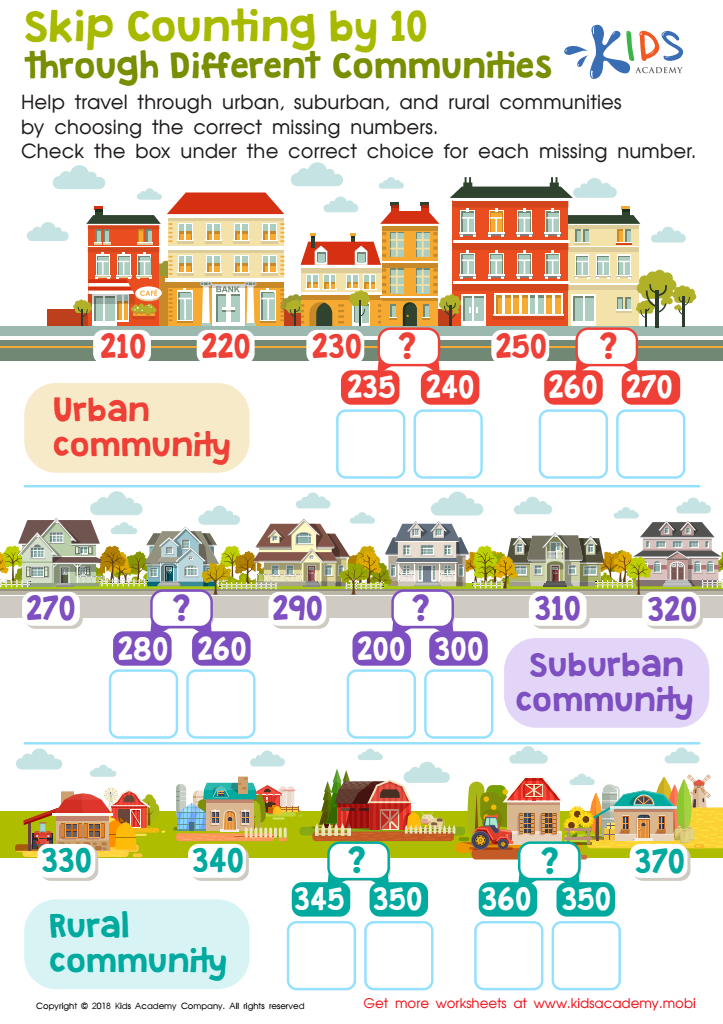
Skip Counting by 10 through Different Communities Worksheet
 Assign to My Students
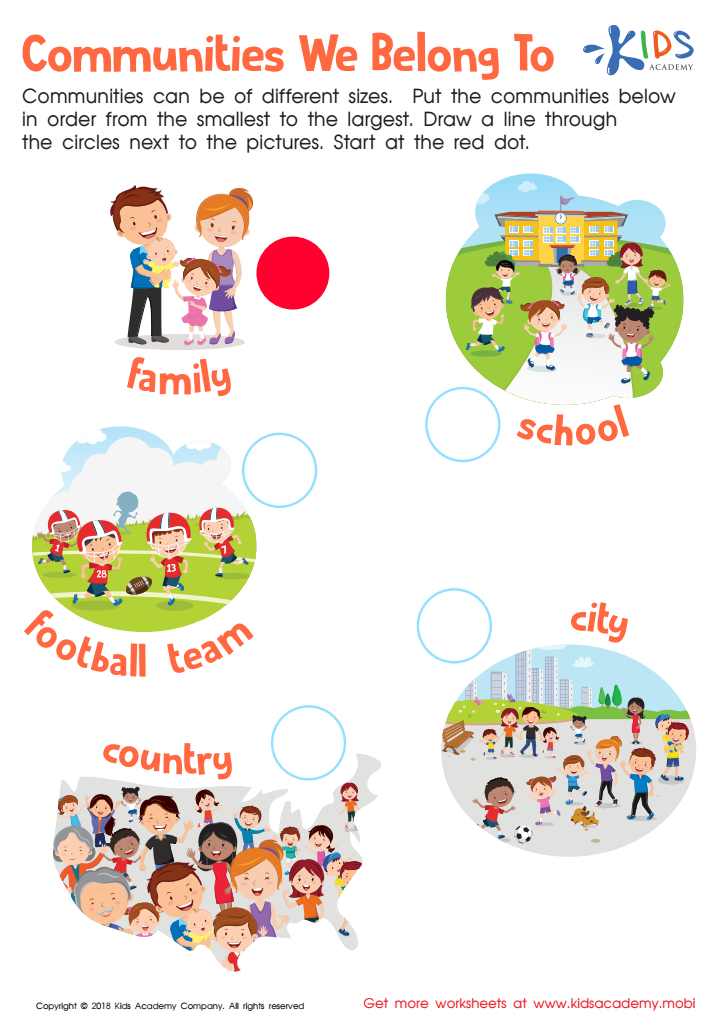
Communities We Belong to Worksheet
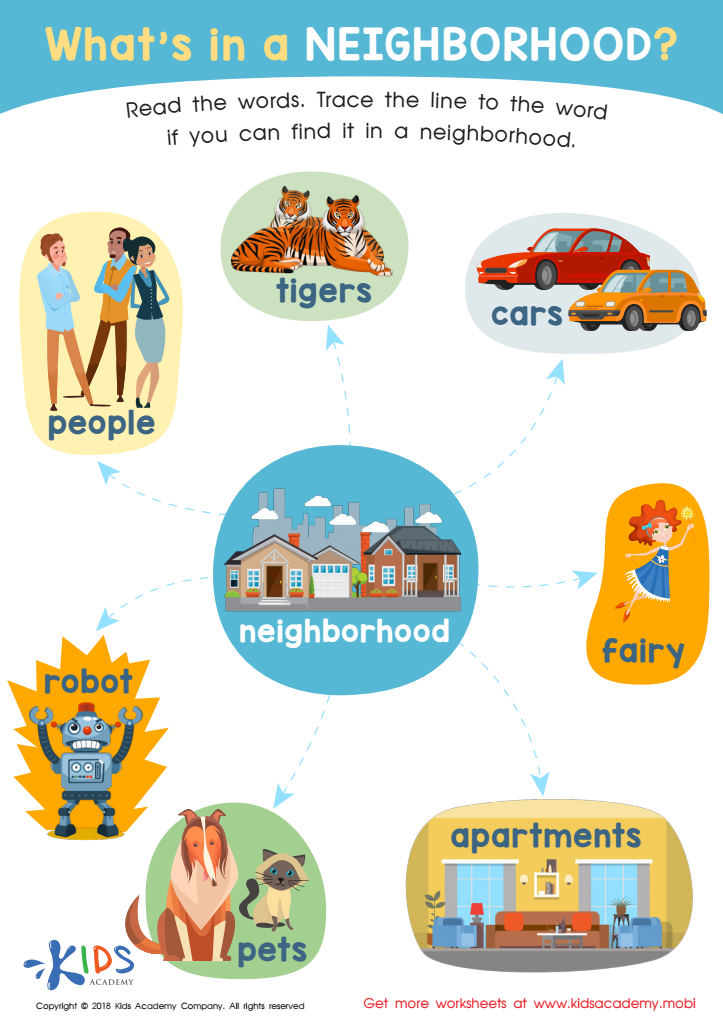
What's in a Neighborhood? Worksheet







Understanding communities is crucial for 7-year-olds, as it lays the foundation for their social, emotional, and cognitive development. Children at this age start to form their identities and are beginning to understand their place in the world. By learning about communities, they grasp the importance of belonging, cooperation, and cultural diversity.
Parents and teachers should care about this because a child's understanding of their community enhances their empathy and respect for others. When children learn about different backgrounds, beliefs, and family structures, they become more accepting and inclusive individuals. This helps create a positive environment both at home and in school.
Furthermore, engaging with the community helps children develop problem-solving and critical-thinking skills. They learn about community resources, responsibilities, and how they can contribute positively. Understanding how communities work can also spark curiosity about geography, history, and social studies.
Incorporating community issues in discussions encourages active participation and fosters a sense of responsibility toward the environment and society. By guiding children in exploring their communities, parents and teachers empower them to become informed, caring, and active citizens who are capable of making a difference.








