Understanding forces Normal Worksheets for 7-Year-Olds
3 filtered results
-
From - To
Welcome to our "Understanding Forces Normal Worksheets" designed specifically for 7-year-olds! These engaging and interactive worksheets provide a fun and insightful way for children to explore the concepts of forces in everyday life. Through colorful illustrations and age-appropriate activities, students will learn about gravity, friction, and more essential forces. Each worksheet encourages creativity and critical thinking while reinforcing mathematical and scientific skills. Perfect for classroom use or at-home learning, our worksheets support young learners in developing a solid foundational understanding of physical science. Discover the exciting world of forces today and empower your child's learning journey with our valuable resources!
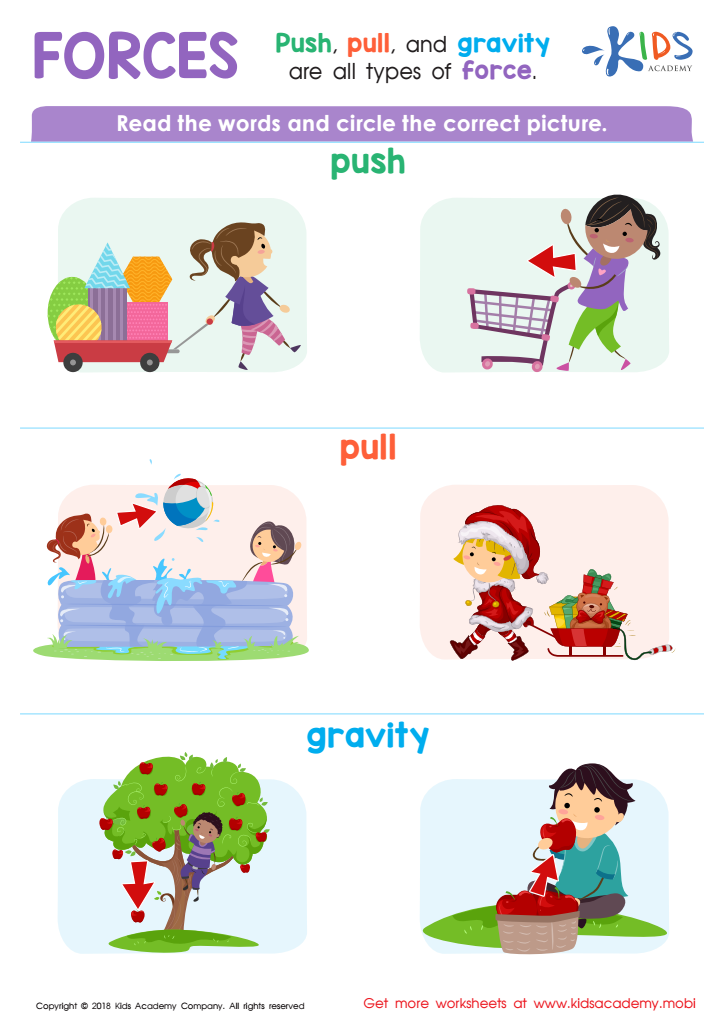
Forces Worksheet
 Assign to My Students
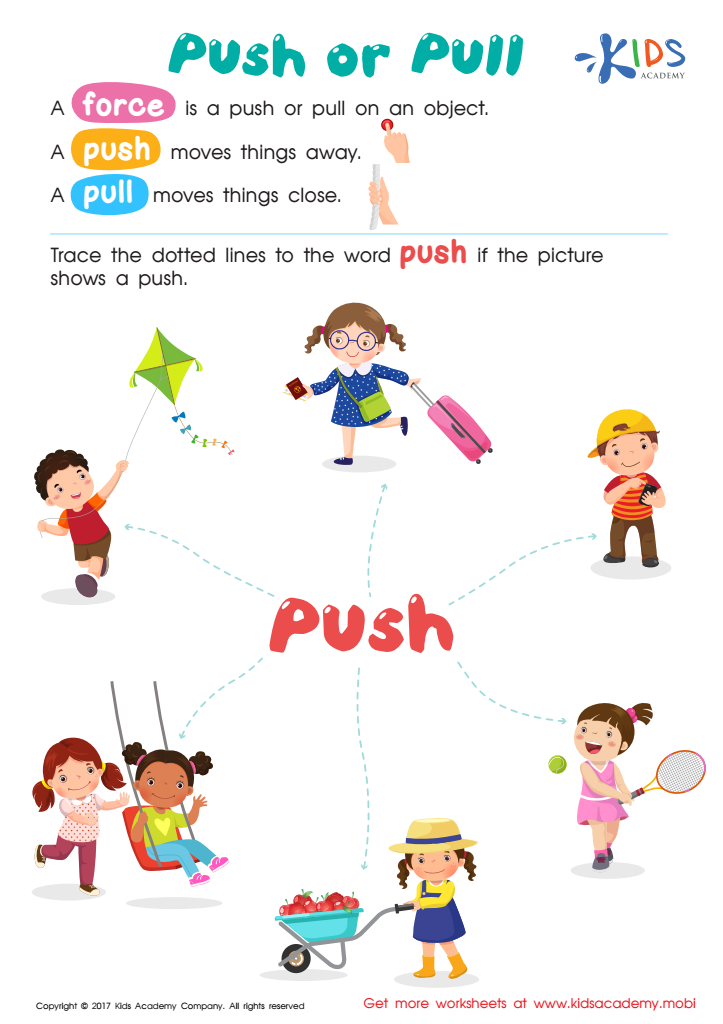
Push or Pull Worksheet
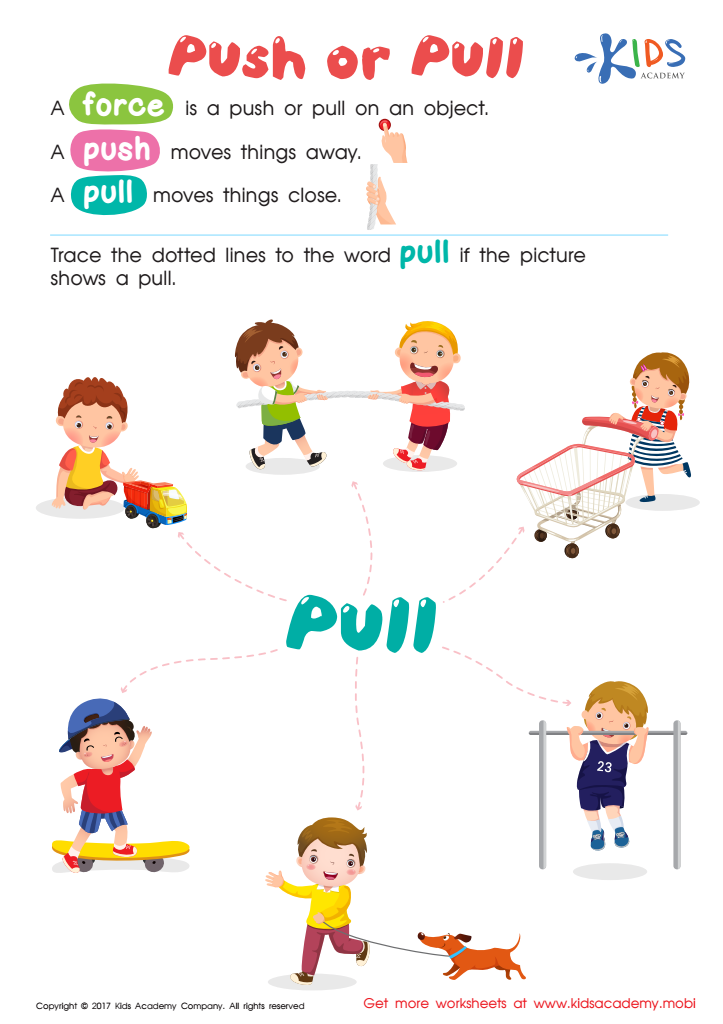
Pull or Push Worksheet






Understanding forces is crucial for 7-year-olds, as it lays the foundation for their comprehension of how the world works. At this age, children are naturally curious and eager to explore their environment, making it the perfect time to introduce them to fundamental concepts like push, pull, friction, and gravity. By grasping these ideas, children can better understand how objects interact, influencing their day-to-day experiences.
Parents and teachers should care about teaching forces because it not only fosters critical thinking and problem-solving skills but also enhances a child's ability to observe and ask questions. Engaging students with hands-on activities—like building models or conducting simple experiments—can enrich their learning experience and make science enjoyable. Additionally, this understanding can help them in future subjects, such as physics and engineering, and cultivate a lifelong interest in STEM fields.
Moreover, lessons on forces can be integrated with real-life scenarios, making the material relevant and exciting. As children relate these concepts to their surroundings—like riding a bike or playing sports—they gain practical knowledge. Ultimately, fostering this curiosity empowers them, supporting their cognitive development and laying a strong educational foundation for the future.








