Vocabulary Building Normal Worksheets for 7-Year-Olds - Page 2
26 filtered results
-
From - To
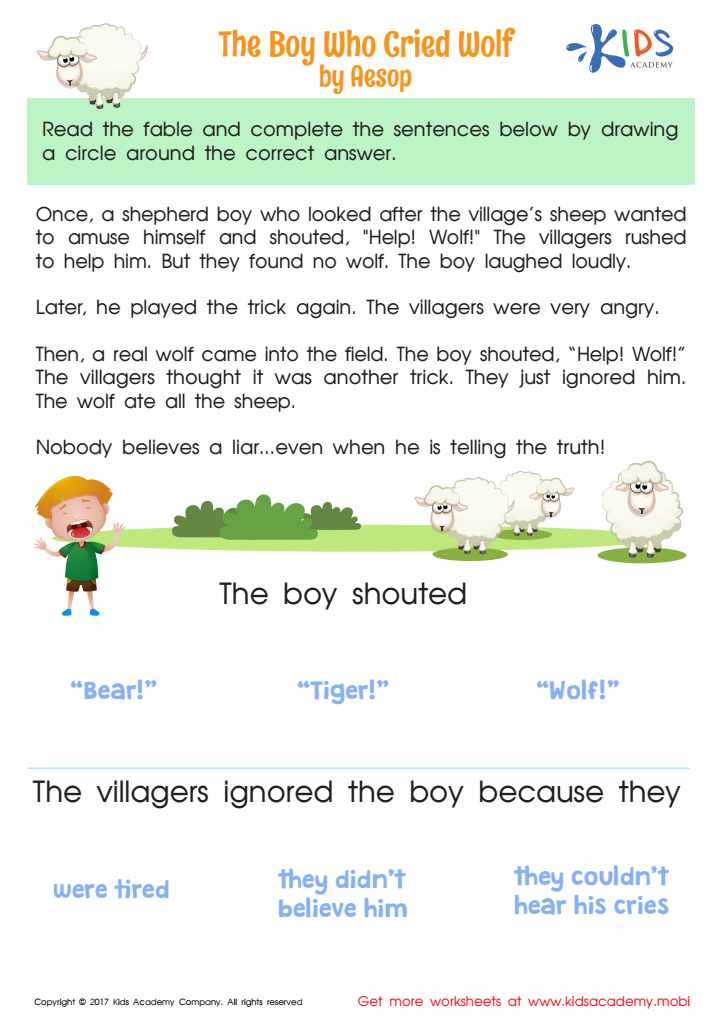
The Boy Who Cried Wolf Worksheet
 Assign to My Students
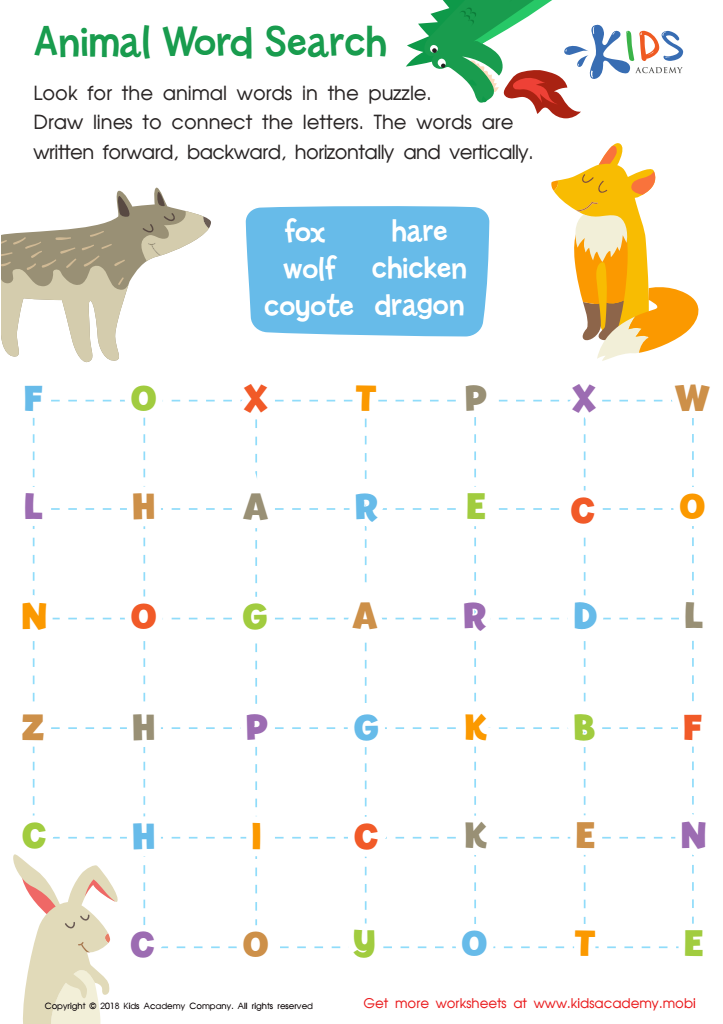
Animal Word Search Worksheet






Vocabulary building for 7-year-olds is crucial for several reasons. At this age, children are experiencing significant cognitive and linguistic development, and a robust vocabulary supports their reading, writing, and communication skills. Strong vocabulary skills not only enhance literacy but also encourage academic success across all subjects, from science to social studies.
Furthermore, a rich vocabulary allows children to express themselves more clearly and understand the nuances of language, which is essential for effective communication. This is particularly important in peer interactions and social settings, where good communication can foster friendships and reduce misunderstandings.
Parents and teachers play a vital role by providing a language-rich environment. Engaging children in conversations, reading a variety of books, and introducing new words through playful activities can make vocabulary building enjoyable. Moreover, a strong vocabulary directly correlates with a child’s self-esteem and confidence. When children can articulate their thoughts and ideas, they are more likely to participate actively in class discussions and group activities.
Ultimately, investing in vocabulary development at this critical stage fosters lifelong learning and equips children with essential tools to navigate complex concepts and communicate effectively throughout their lives. Establishing a solid vocabulary foundation now pays dividends in academic and social arenas in the future.








