Mathematical reasoning Normal Addition & Subtraction Worksheets for 7-Year-Olds
5 filtered results
-
From - To
Enhance your 7-year-old’s math skills with our engaging Normal Addition & Subtraction Worksheets. Designed to bolster mathematical reasoning, these printable worksheets facilitate comprehension of fundamental arithmetic operations. Young learners will master addition and subtraction through a variety of well-structured exercises that promote critical thinking and problem-solving abilities. Each worksheet encourages hands-on practice, ensuring that math becomes an enjoyable and rewarding experience. As part of a thoughtfully developed curriculum, these materials aim to build confidence and proficiency in math. Ideal for both classroom use and home practice, our worksheets make math fun and accessible for early graders.
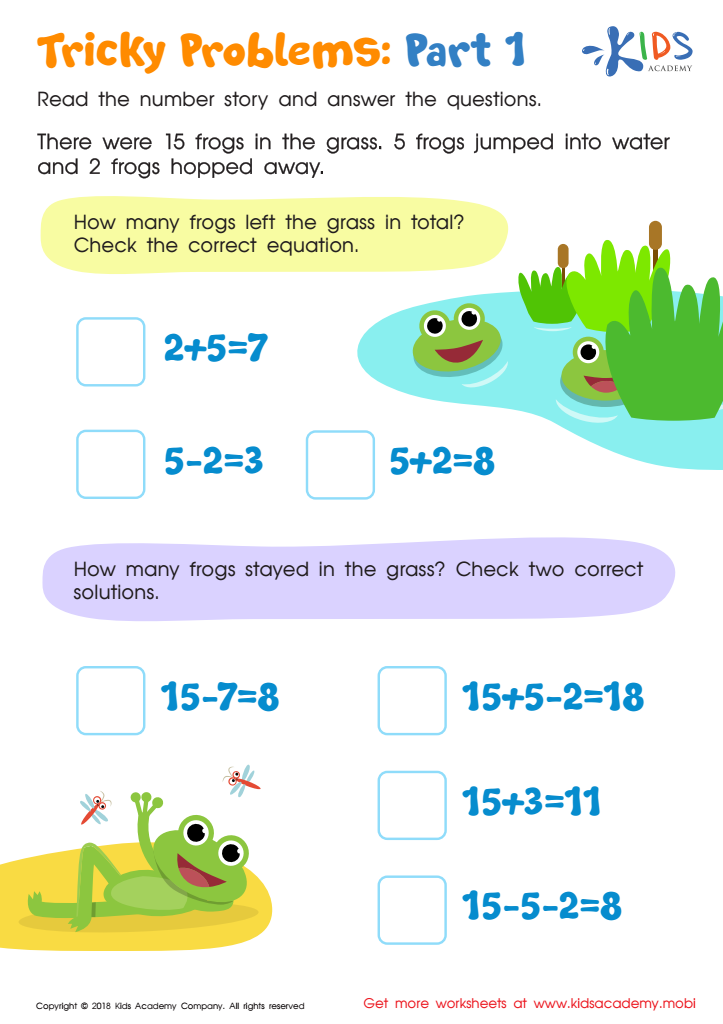
Tricky Problems Worksheet: Part 1
 Assign to My Students
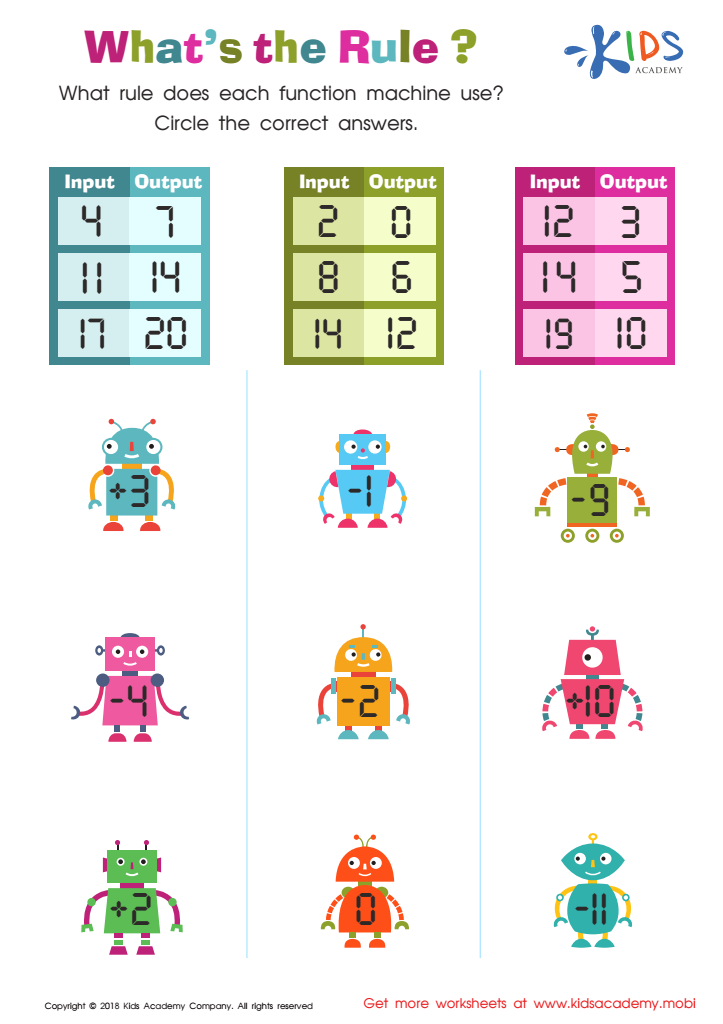
What's the Rule Worksheet
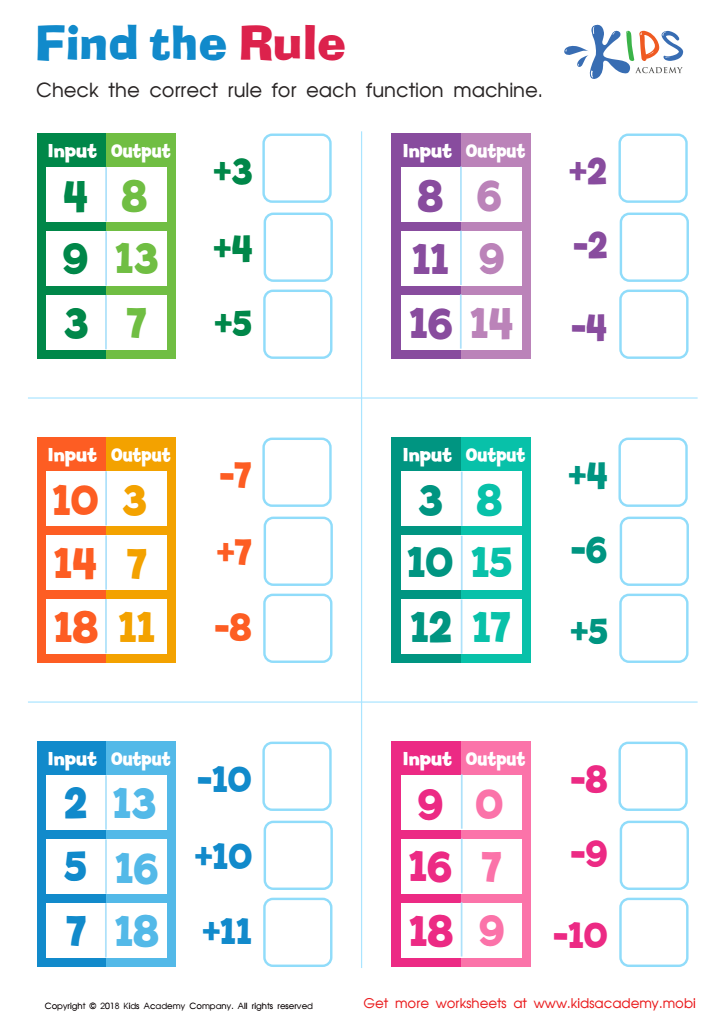
Find the Rule Worksheet
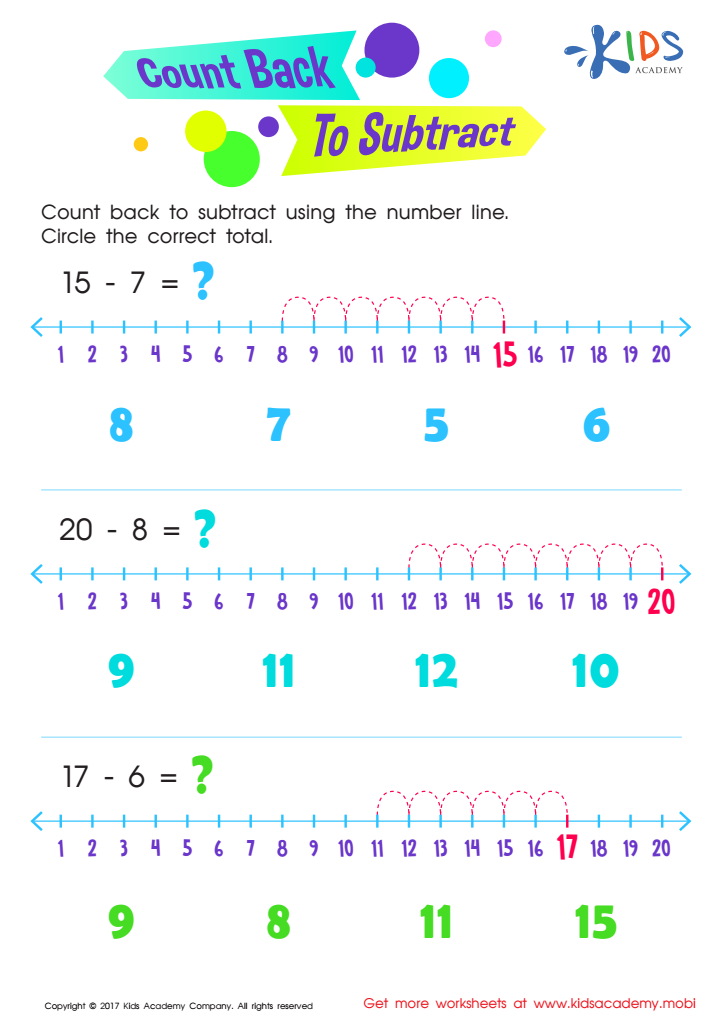
Count Back to Subtract Substraction Worksheet
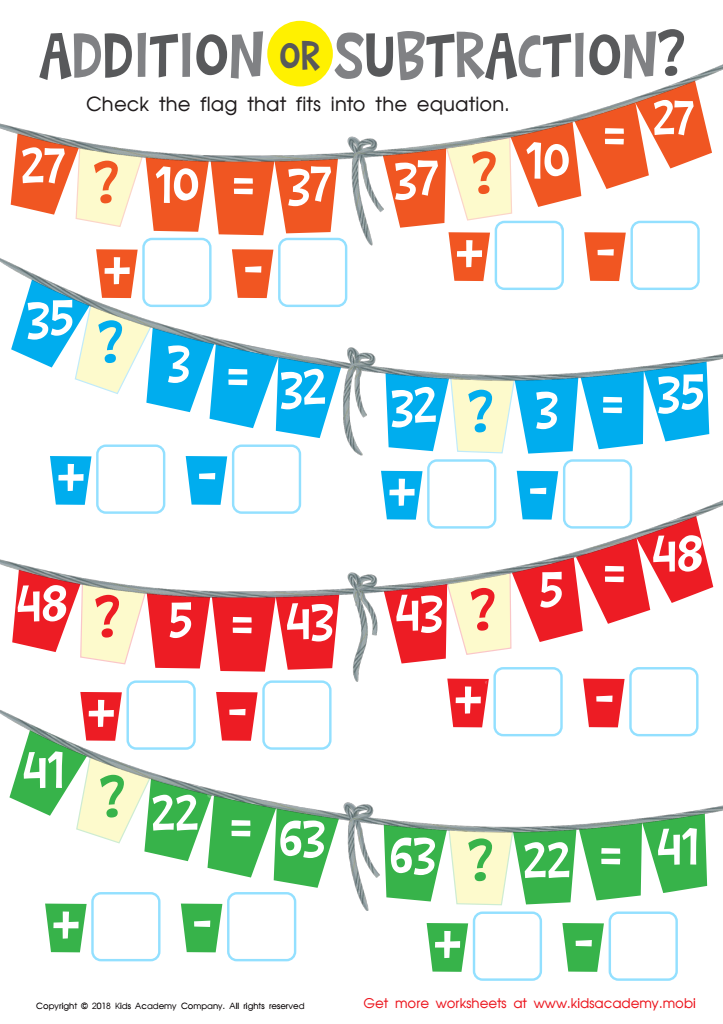
Addition or Subtraction? Worksheet








Understanding basic arithmetic like addition and subtraction is a fundamental cornerstone of a child's mathematical education, and for 7-year-olds, this skill is crucial. Parents and teachers should emphasize mathematical reasoning in these areas to foster a solid foundation for future learning. Developing proficiency in addition and subtraction aids problem-solving skills, enhances numerical fluency, and builds confidence in handling everyday mathematical tasks. Without a firm grasp of these basic concepts, children may struggle as they progress to more complex mathematical operations like multiplication and division.
Mathematical reasoning in addition and subtraction enhances critical thinking and logical reasoning abilities. When children engage in these activities, they learn to recognize patterns, understand number relationships, and make sense of the world quantifiably. This not only applies to math-related tasks; reasoning skills permeate other subjects and daily activities, promoting overall intellectual development.
Incorporating engaging and interactive methods to teach these concepts can make learning enjoyable, motivating children to participate and persist through challenges. By prioritizing mathematical reasoning in addition and subtraction, parents and teachers equip their children with essential life skills, laying the groundwork for academic success and fostering a lifelong appreciation for learning and problem-solving.








