
Basic arithmetic skills Normal Math Worksheets for 7-Year-Olds
5 filtered results
Difficulty Level
Grade
Age
-
From - To
Subject
Activity
Standards
Explore our "Basic Arithmetic Skills Normal Math Worksheets for 7-Year-Olds" to help young learners build a solid mathematical foundation. These engaging and fun worksheets introduce essential math concepts, including addition, subtraction, and simple multiplication, through age-appropriate exercises. Perfectly tailored for 7-year-olds, our worksheets not only reinforce classroom learning but also make math enjoyable. Each carefully crafted activity promotes problem-solving skills, critical thinking, and boosts confidence in handling numbers. Ideal for both teachers and parents looking to supplement children's learning, our worksheets are easy to download and print, encouraging consistent practice at home or in the classroom.
Favorites
With answer key
Interactive
 Assign to My Students
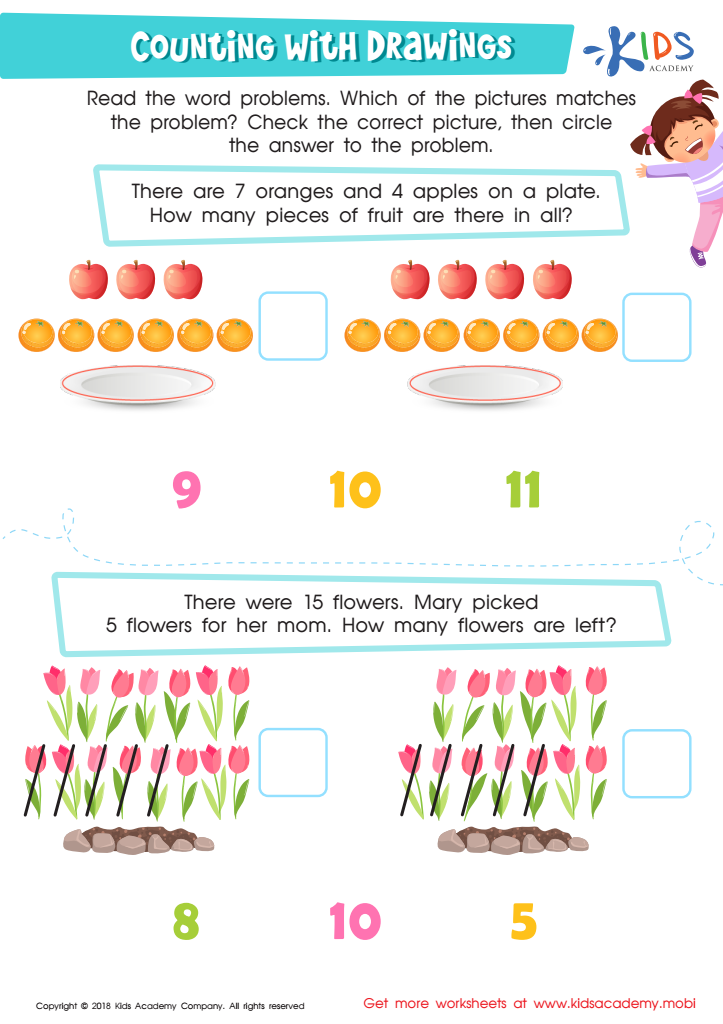
Counting with Drawings: Fruits & Chocolates Worksheet
Learning basic addition and subtraction has never been easier with this free worksheet! Young mathematicians can sort & count to get the right sum or difference for each problem. Plus, they'll practice fine motor skills by circling the correct answer. An ideal way to help kids build important visual recognition and discernment skills.
Counting with Drawings: Fruits & Chocolates Worksheet
Worksheet
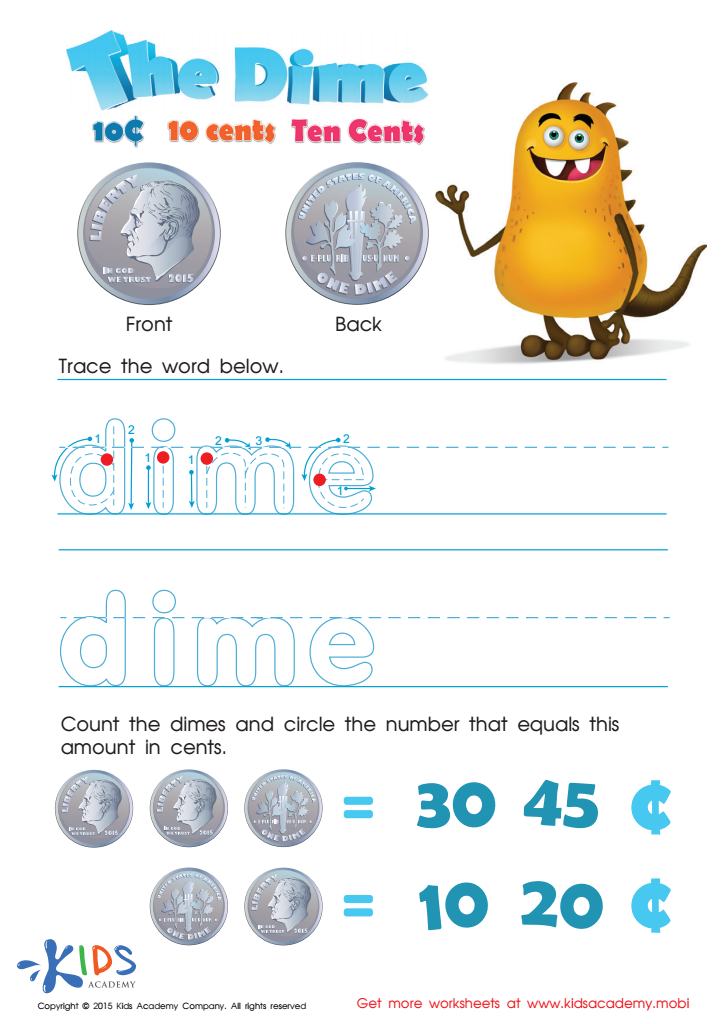
Ten Cents or the Dime Money Worksheet
Introduce your kids to coin games! Start with a dime: trace the word on both sides and count the dimes. Kids Academy has printable worksheets to help your kids learn how to count money.
Ten Cents or the Dime Money Worksheet
Worksheet
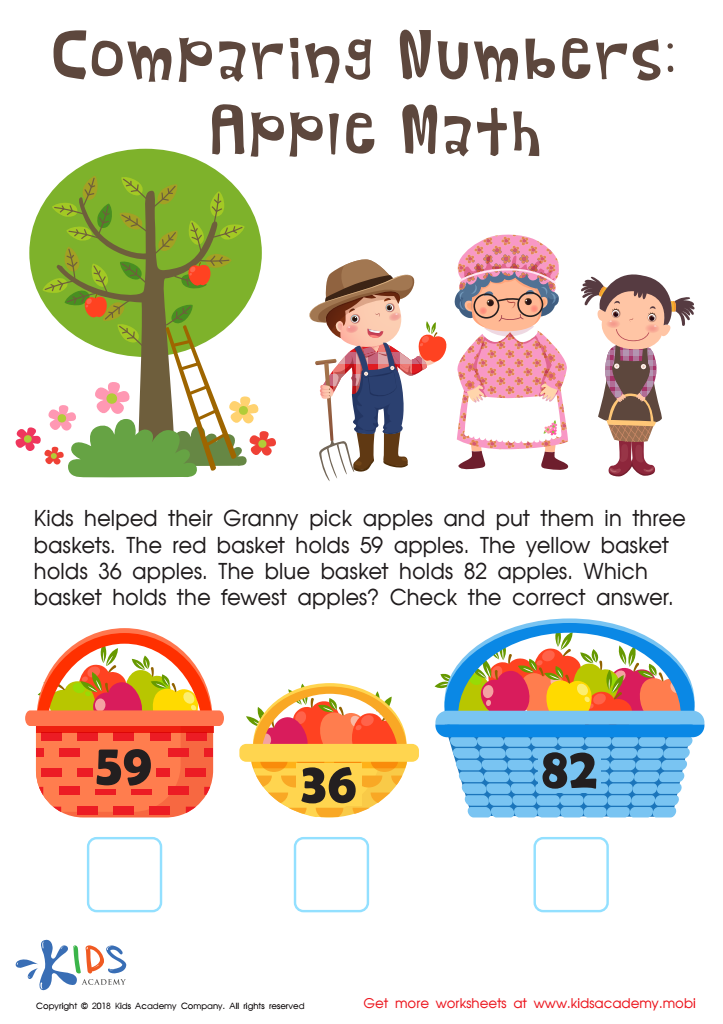
Apple Math Worksheet
Math is more than just counting, adding, subtracting, multiplying, and dividing. Your child may be feeling overwhelmed by all the complexities, like comparing numbers and their differences. But with this worksheet, you can make comparing numbers fun again!
Apple Math Worksheet
Worksheet
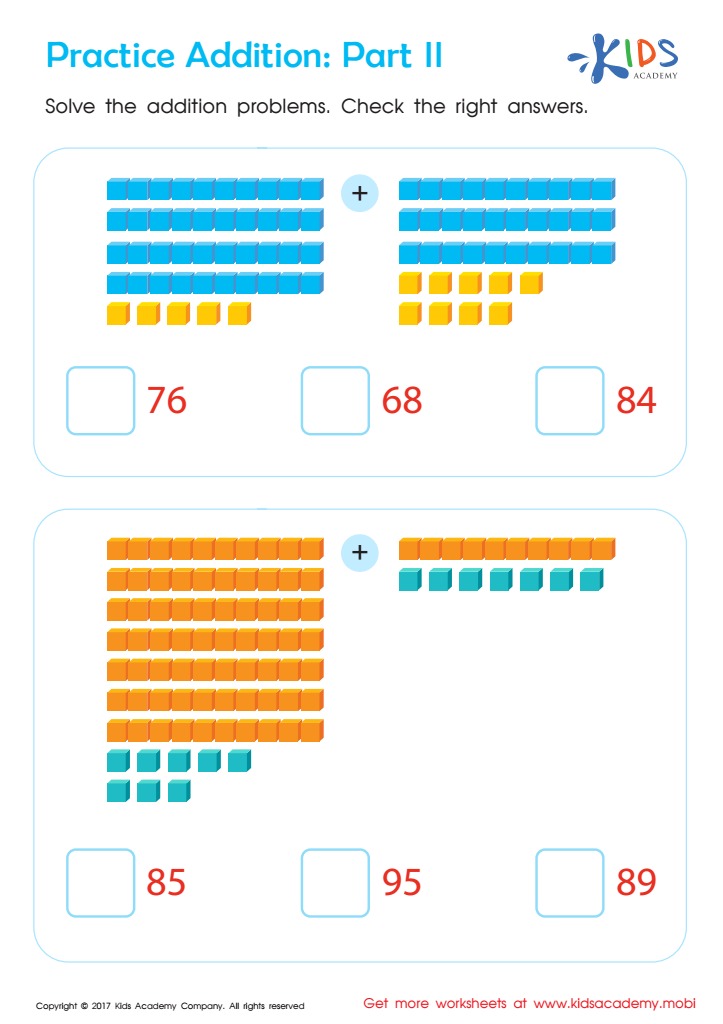
Practice Addition: Part 2 Worksheet
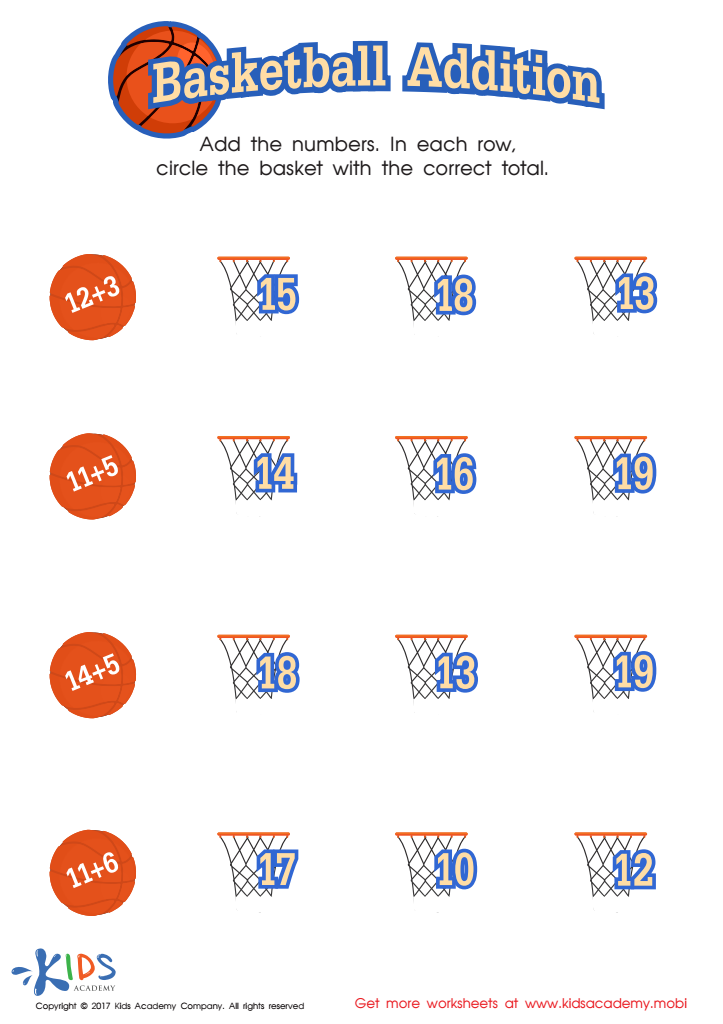
Try this printable worksheet to practice addition! It contains longer, tougher addition equations for 1st graders. Colorful blocks give kids the opportunity to visualize how big numbers are combined. Multiple choice answers help kids gain confidence in problem solving.
Practice Addition: Part 2 Worksheet
Worksheet
Join Kids Academy for Free
Who is primarily going to use this learning content?








Basic arithmetic skills are fundamental for 7-year-olds as they form the cornerstone of more advanced mathematical learning and everyday problem-solving abilities. At this age, children are developing cognitive abilities critical for understanding numerical concepts, which include addition, subtraction, multiplication, and division. Mastery of these basic skills enables children to handle more complex math problems in later grades, fostering academic success and enhancing their confidence in the subject.
Parents and teachers should recognize that arithmetic is not just about rote memorization but about nurturing logical reasoning and analytical thinking. When children can fluently add, subtract, multiply, and divide, they develop a deeper understanding of patterns and relationships in numbers. This skill set is not only pivotal in math but also strengthens critical thinking across other subjects, including science and language arts.
Moreover, basic arithmetic is integral to daily life activities such as managing money, measuring ingredients in recipes, or determining time. By focusing on developing these skills at an early age, parents and teachers can help children become more self-sufficient and responsible individuals.
Investing time in building strong arithmetic foundations makes mathematics less intimidating for children, instilling a lasting appreciation for the subject and preparing them for future academic and real-life challenges.








