Reading analog clocks Normal Math Worksheets for 7-Year-Olds
3 filtered results
-
From - To
Navigate the world of time with our "Reading Analog Clocks Normal Math Worksheets" designed specifically for 7-year-olds! These engaging worksheets help young learners master the skill of telling time on analog clocks, enhancing their mathematical reasoning in a fun and interactive way. With colorful visuals and varied exercises, children will enjoy practicing hour and minute recognition, as well as improving their understanding of time-related concepts. Perfect for homes and classrooms, these worksheets provide an essential foundation for future math skills. Let your child unlock the secrets of time with our easy-to-follow activities that build confidence and proficiency!
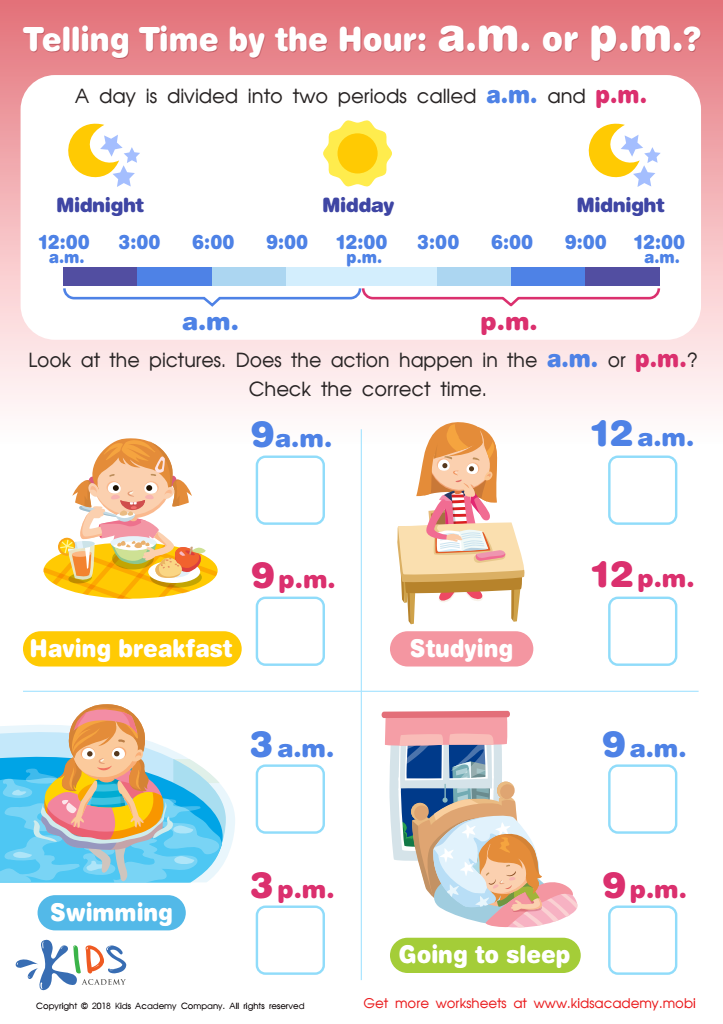
Tilling Time by the Hour: a.m. or p.m.? Worksheet
 Assign to My Students
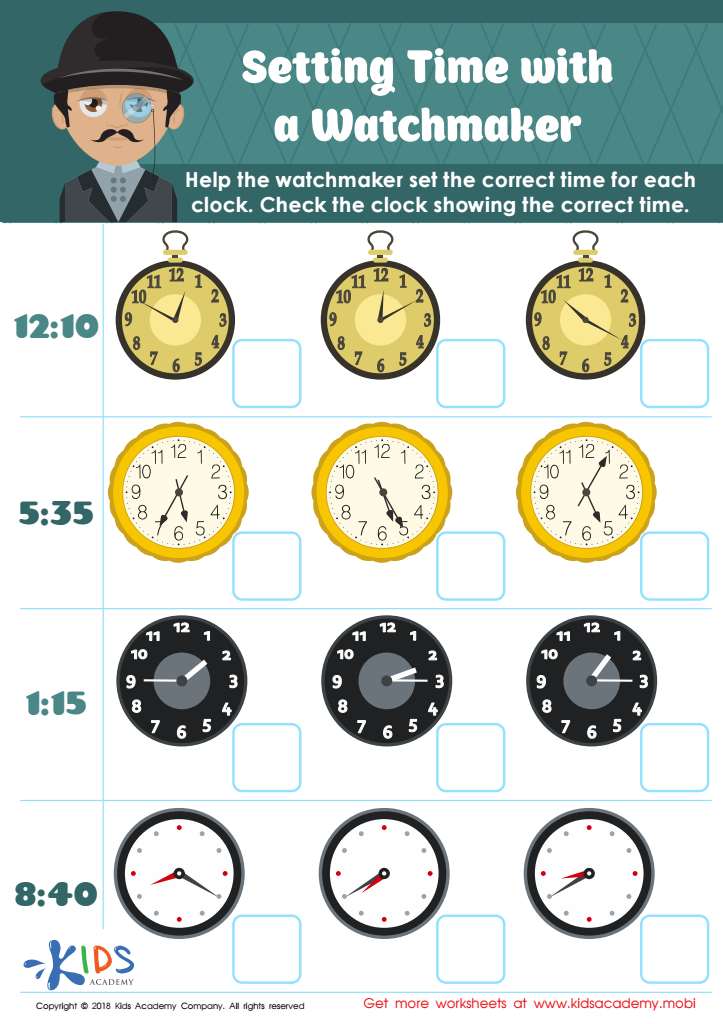
Setting Time with Watchmaker Worksheet
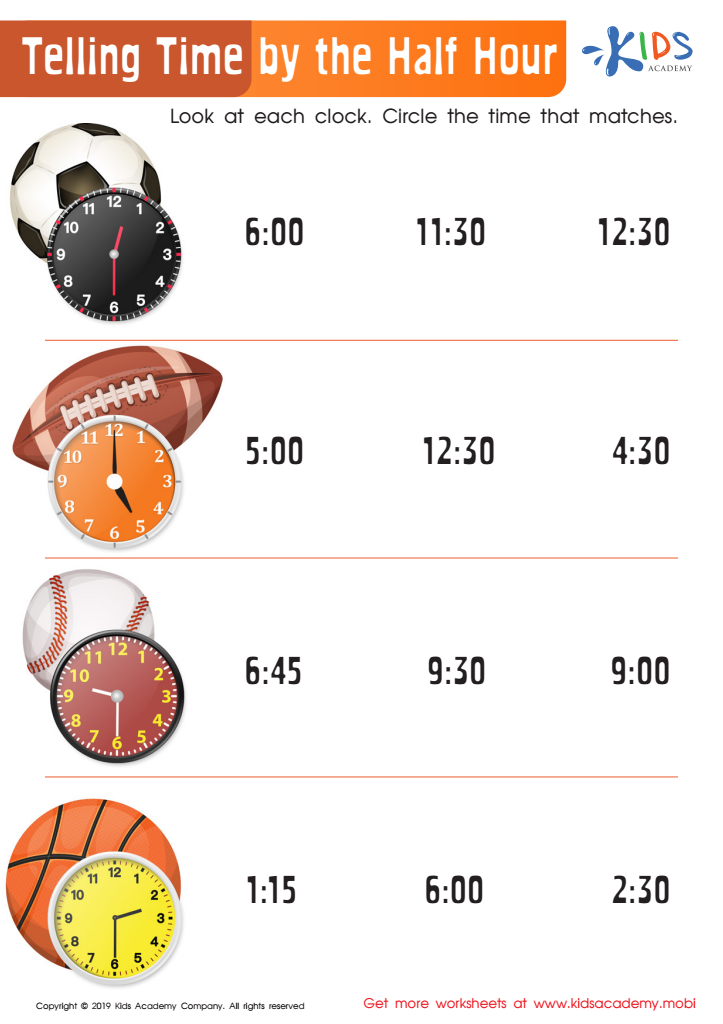
Telling Time by the Half Hour Worksheet








Teaching 7-year-olds to read analog clocks is an essential skill that fosters numerous developmental benefits. Firstly, it enhances their understanding of time, which is critical for daily routines and learning planning skills. Knowing how to read an analog clock helps children become more independent as they manage their own schedules and responsibilities without reliance on digital devices.
Moreover, reading analog clocks supports mathematical development by reinforcing concepts of fractions, divisions, and the manipulation of hands as they move around the clock face. This hands-on experience solidifies mathematical understanding in a practical context, making it relatable and engaging.
Additionally, learning to read analog clocks promotes critical thinking and problem-solving skills, as children learn to estimate and calculate time intervals. It also helps them develop patience and focus—a skill that will benefit them academically and socially.
Furthermore, analog clocks are often used in various environments, such as schools and public spaces, so being proficient in reading them ensures that children are well-prepared for real-life situations. Overall, teaching this skill to young learners not only prepares them for future learning but also instills a sense of responsibility and self-efficacy in managing their own time.








