Rhyming skills development Normal Reading Worksheets for 7-Year-Olds
3 filtered results
-
From - To
Enhance your 7-year-old's reading abilities with our Rhyming Skills Development Normal Reading Worksheets! Designed to foster essential literacy skills, these engaging worksheets make learning fun and interactive. Your child will explore rhymes through vibrant activities that encourage word recognition, phonemic awareness, and auditory discrimination. Each worksheet is aligned with educational standards, ensuring your child is building a strong foundation for future reading success. Perfect for homeschooling or classroom use, our resources provide endless opportunities for practice and reinforcement. Discover the joy of rhyming and watch your child's confidence soar as they master this critical reading skill!
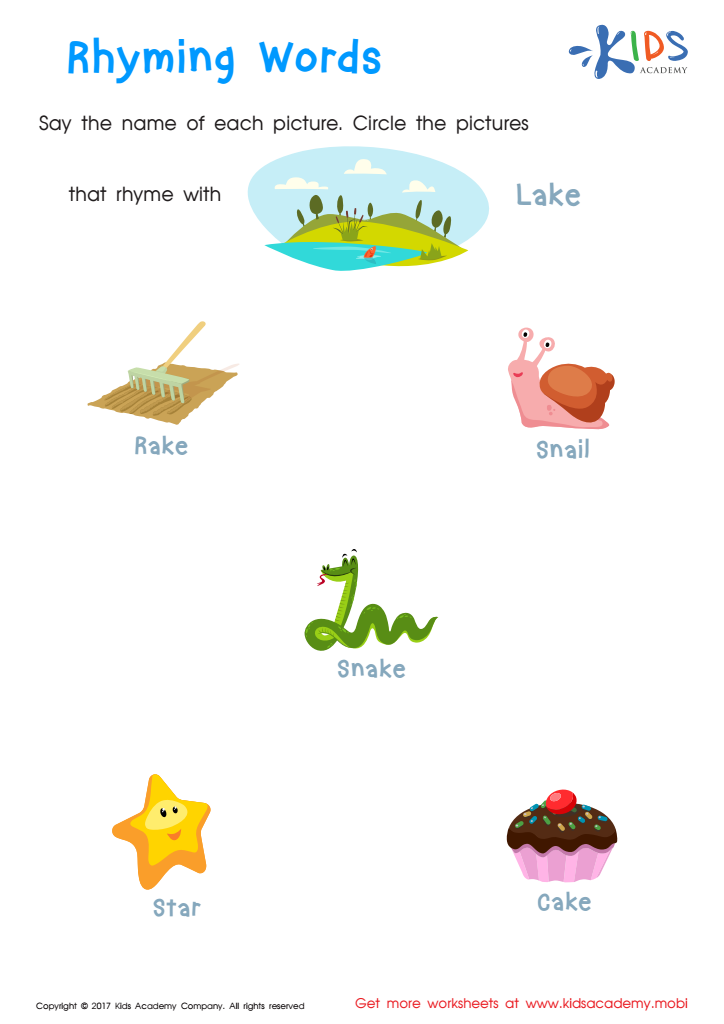
Rhyming Words Rhyming Worksheet
 Assign to My Students
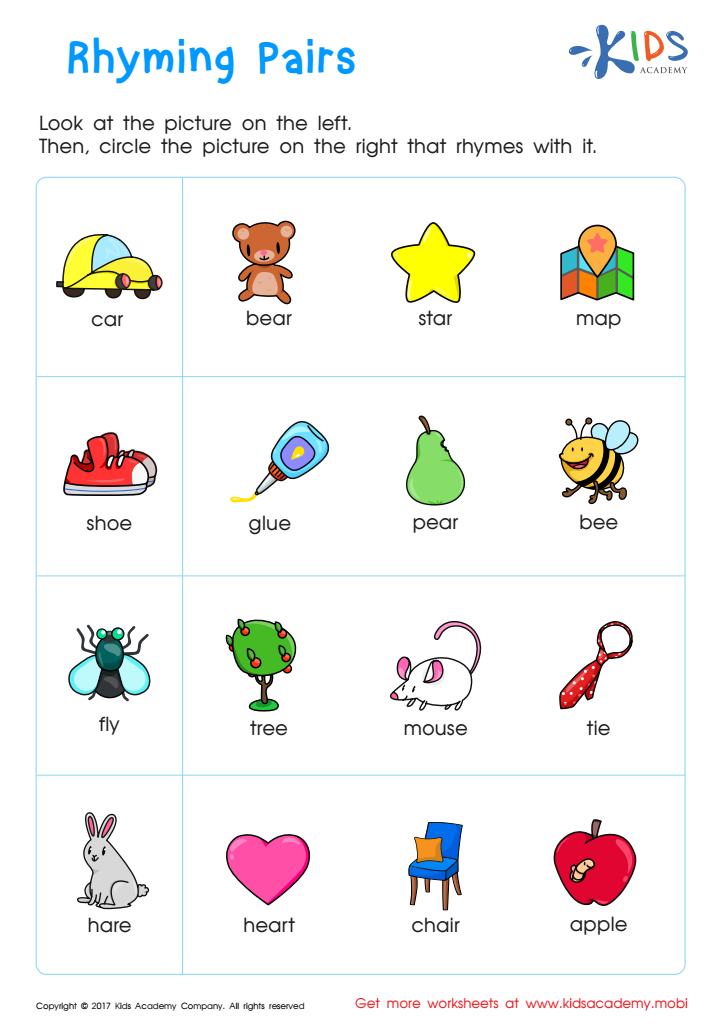
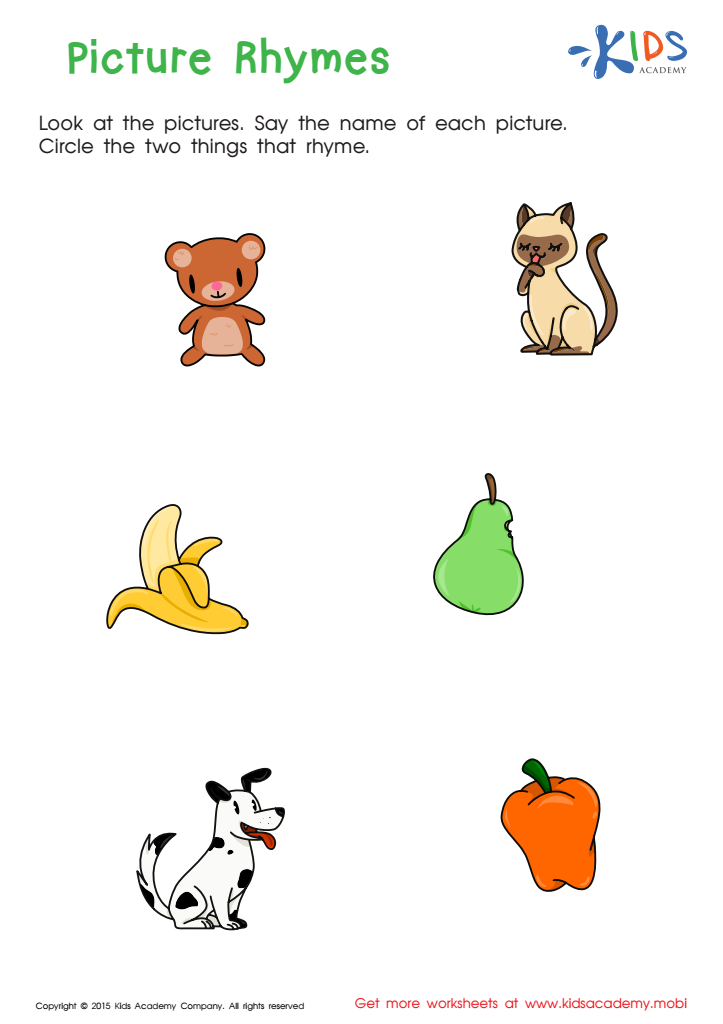
First Words: Picture Rhymes Worksheet








Rhyming skills are a critical component of early literacy development, especially for seven-year-olds, as they serve as a foundation for reading proficiency. When children engage with rhymes, they enhance their phonological awareness, which is necessary for recognizing and manipulating sounds in words. This ability facilitates smoother transitions into reading, helping children decode words and develop spelling skills.
Parents and teachers should care about rhyming because it not only supports academic success but also nurtures creativity and language appreciation. Exposure to rhyming games, songs, and poetry stimulates children's imagination and fosters a love for language. Furthermore, rhyming enhances memory retention, assisting children in memorizing high-frequency words and complex vocabulary.
Incorporating rhyming activities in daily routines helps build confidence while reading aloud, as children feel more competent with familiar sounds and patterns. This interactive learning also strengthens the bond between parents and children and promotes a joyful, engaging learning environment. Overall, by prioritizing rhyming skills, parents and teachers lay a strong groundwork for literacy, academic achievement, and lifelong learning in a child's developmental journey.








