Spelling practice Normal Reading Worksheets for 7-Year-Olds - Page 2
27 filtered results
-
From - To
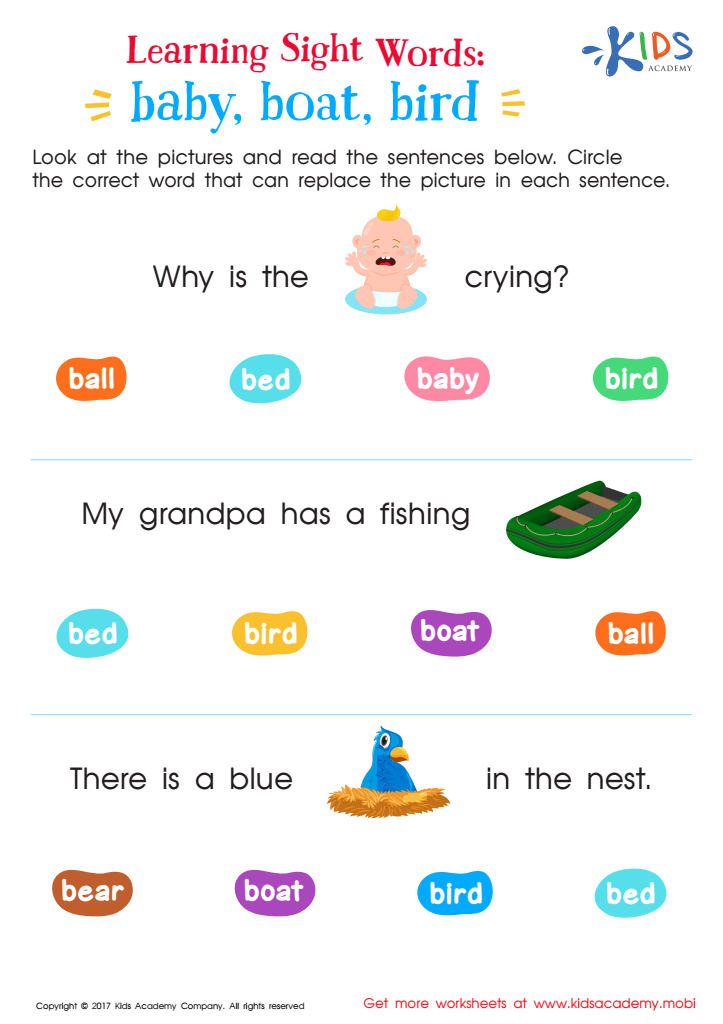
Baby, Boat, Bird Worksheet Sight Words Worksheet
 Assign to My Students
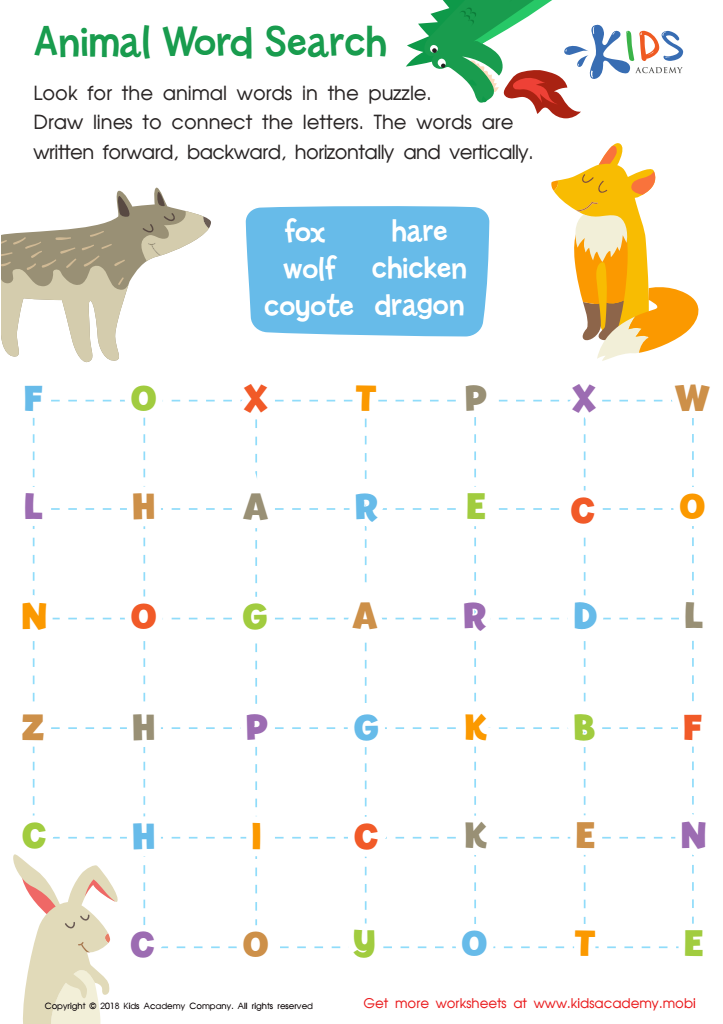
Animal Word Search Worksheet
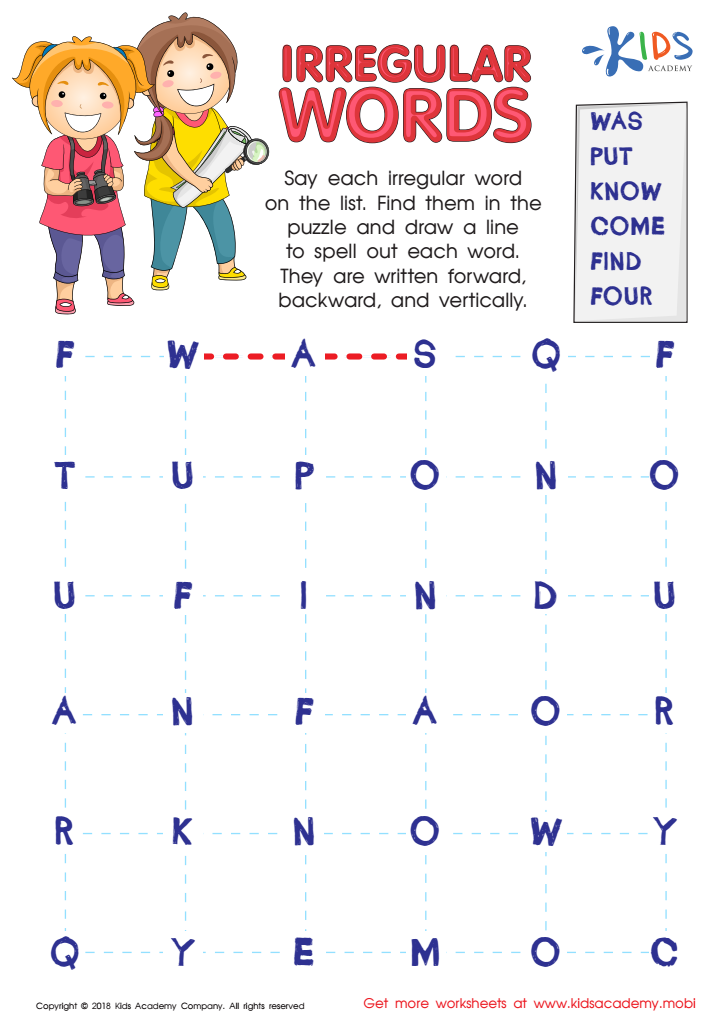
Irregular Words Worksheet








Spelling practice is essential for 7-year-olds as it significantly impacts their reading and writing skills. At this age, children are transitioning from learning to read to reading to learn. Strong spelling skills enhance their ability to decode words efficiently, which aids comprehension. When children can confidently sound out and spell words, they are more likely to engage with texts, boosting their overall literacy.
Moreover, regular spelling practice helps develop critical cognitive skills, such as memory and phonemic awareness. These skills are foundational for building vocabulary and understanding language structure, both of which are vital in academic success. As children become proficient spellers, they also gain confidence in their writing abilities, enabling them to express themselves creatively without the fear of making mistakes.
Teachers and parents should also care about spelling practice because it fosters a love for learning. By making spelling fun and relevant through games and activities, they can inspire children to take an active interest in their education. Support in this area nurtures positive associations with literacy, setting the stage for lifelong learning. Ultimately, effective spelling practice is not just about mastering words; it’s about empowering children to communicate and connect with the world around them.








