
Identifying story elements Normal Reading Comprehension Worksheets for 7-Year-Olds
3 filtered results
Difficulty Level
Grade
Age
-
From - To
Subject
Activity
Standards
Our "Identifying Story Elements" worksheets are designed for 7-year-olds to enhance their reading comprehension skills. These engaging activities help young readers recognize key components of a story such as characters, setting, plot, conflict, and resolution. By breaking down stories into understandable parts, children can better grasp the narrative structure and improve their overall comprehension. Perfect for classroom or home use, our worksheets blend learning with fun, ensuring kids stay motivated as they develop essential reading skills. With colorful illustrations and age-appropriate content, these tools are ideal for fostering a lifelong love of reading in young learners.
Favorites
With answer key
Interactive
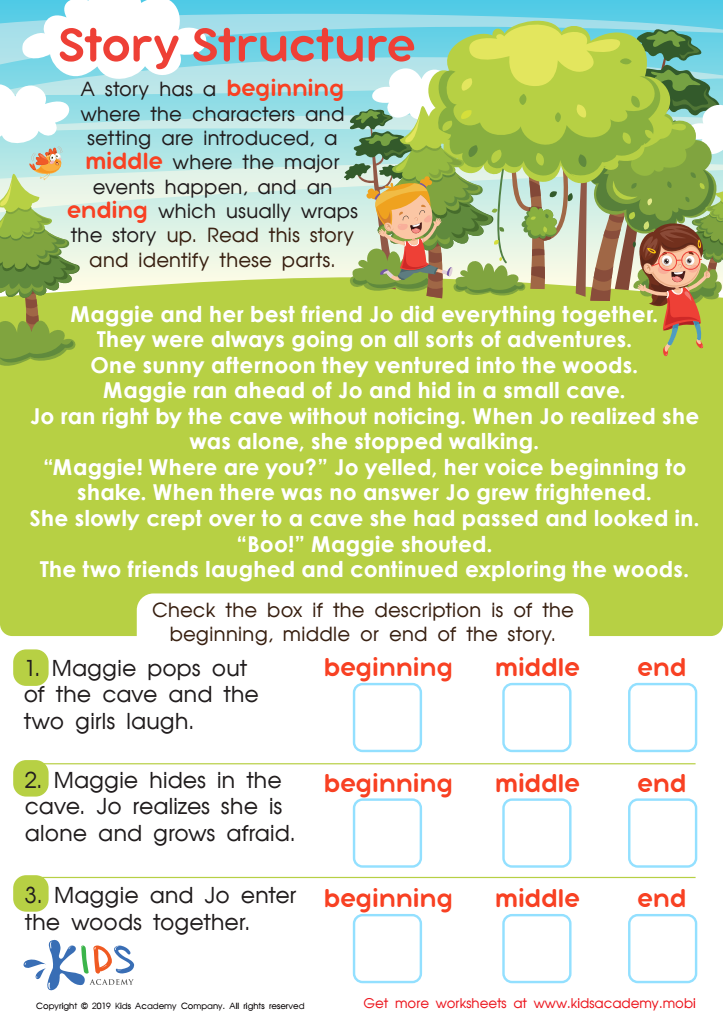
Story Structure Worksheet
Help your students read and identify the parts of the story in this worksheet: the beginning (characters and setting), middle (major events), and ending (events are resolved). Show them how to structure a story for clarity.
 Assign to My Students
Story Structure Worksheet
Worksheet
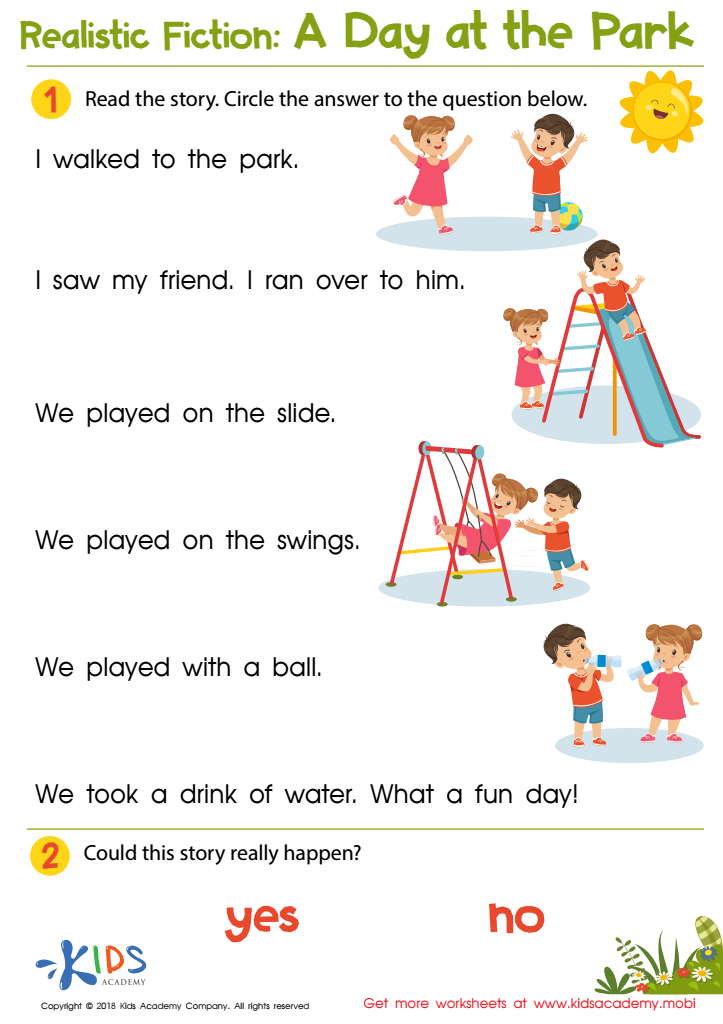
A Day at the Park Worksheet
Kids as young as preschool-age can be taught to evaluate stories! Use this fun worksheet about a day at the park. Read each sentence aloud, looking at the pictures. Ask your child if the events in the story could happen in real life - if yes, circle yes, otherwise circle no. When finished, discuss with them the genre, realistic fiction.
A Day at the Park Worksheet
Worksheet
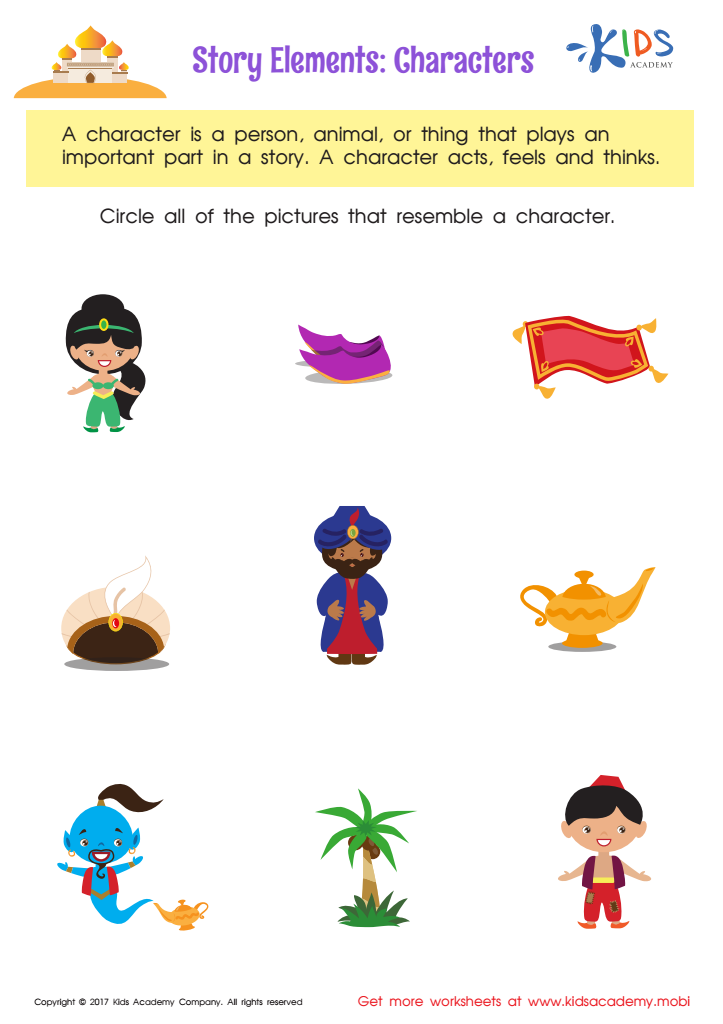
Story Elements Printable
Read the text and review the characters, settings and plot in a guided discussion.
Take your child on a journey to the Middle East and review the characters, settings and plot of their favorite childhood stories with this Aladdin-themed worksheet! It'll help them master early analysis skills and learn about characterization. Enjoy a fun, guided discussion with your child as you review important story elements.
Story Elements Printable
Worksheet
Join Kids Academy for Free
Who is primarily going to use this learning content?








Identifying story elements in normal reading comprehension is crucial for 7-year-olds because it forms the foundation of their literacy skills and overall cognitive development. Story elements typically include components like characters, setting, plot, conflict, and resolution. Understanding these elements helps young readers grasp the structure of a story, making it easier for them to comprehend the narrative and predict events logically.
For parents and teachers, stressing the importance of identifying story elements aids in developing a child's critical thinking and analytical skills. When children can recognize and explain different aspects of a story, they improve their ability to process information and understand context, which are essential skills for both academic success and real-life problem-solving.
Moreover, familiarity with story elements boosts children's imagination and creativity, enabling them to become better writers and effective communicators. It engenders a love for reading by making stories more relatable and enjoyable. By focusing on these elements, children can critically reflect on the stories they read, compare them with their own experiences, and articulate their thoughts more coherently.
Ensuring that children master these skills at a young age sets a solid groundwork for lifelong learning and paves the way for more advanced academic challenges in later grades. Thus, emphasizing the identification of story elements is an investment in a child's educational journey and personal growth.








