
Logical Reasoning Normal Reading Comprehension Worksheets for 7-Year-Olds
4 filtered results
Difficulty Level
Grade
Age
-
From - To
Subject
Activity
Standards
Enhance your child’s reading and thinking skills with our "Logical Reasoning Reading Comprehension Worksheets for 7-Year-Olds." These expertly designed worksheets merge engaging stories with activities that stimulate logical reasoning and critical thinking. Young learners will improve their reading comprehension abilities while developing essential analytical skills. Each worksheet features age-appropriate content and thought-provoking questions, perfect for 7-year-olds eager to explore reading in a fun, educational way. Support your child's learning journey and cultivate their love for reading and problem-solving with our high-quality resources. Visit Kids Academy to download and start nurturing young minds today!
Favorites
With answer key
Interactive
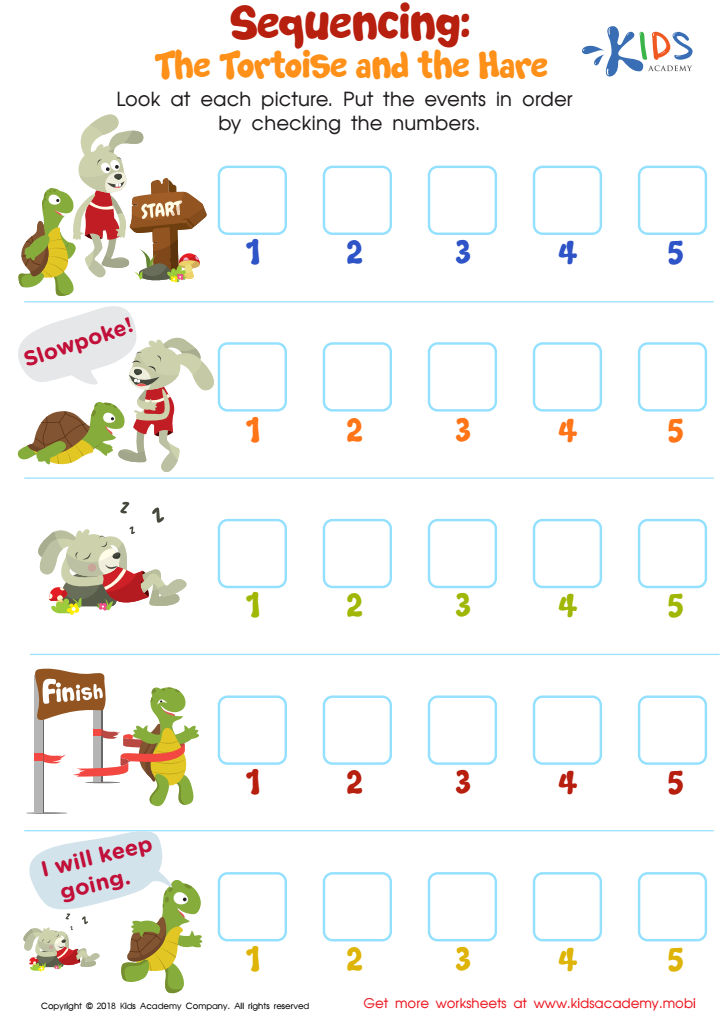
Sequencing: The Tortoise and the Hare Worksheet
Help your child become an independent reader and critical thinker with a sequencing worksheet from Kids Academy! Have them read the classic tale of the tortoise and the hare and use the accompanying worksheet to check their understanding of the story's sequence of events. Have kids identify the correct order of events by selecting the box next to the correct number for each image!
 Assign to My Students
Sequencing: The Tortoise and the Hare Worksheet
Worksheet
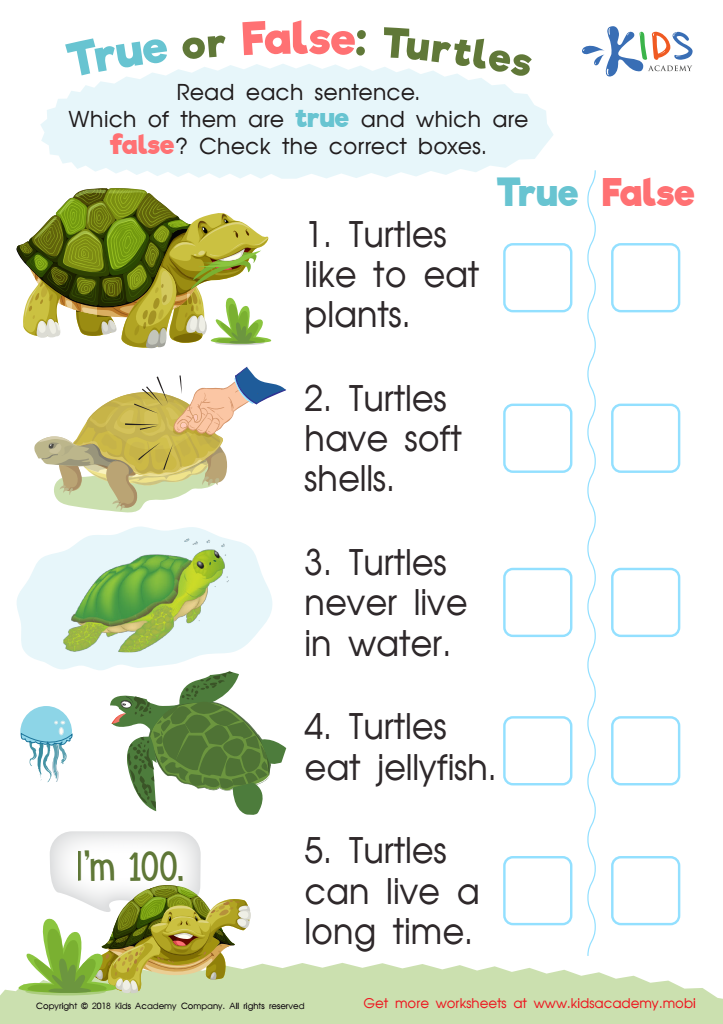
True or False: Turtles Worksheet
Print this free downloadable worksheet to strengthen your child's reading comprehension. Assist them to read each sentence and recall facts about turtles. Check true or false for each statement to verify their knowledge. Perfect for early learners!
True or False: Turtles Worksheet
Worksheet
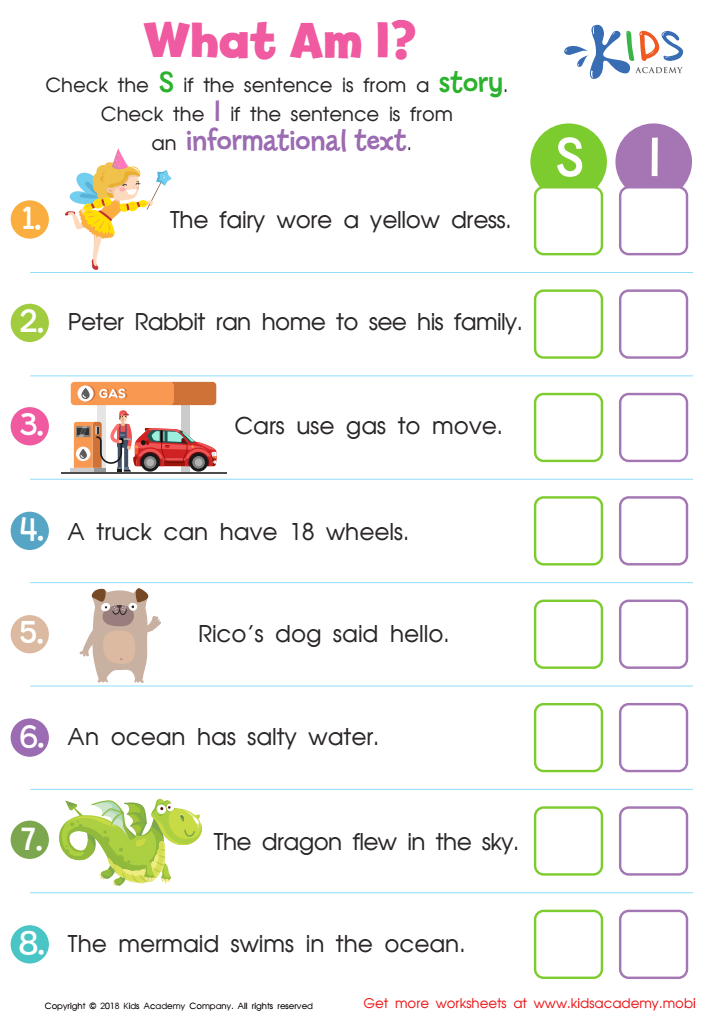
What Am I? Worksheet
This worksheet assesses students' ability to differentiate between stories and texts they read for facts. Students learn to distinguish between reading for pleasure and reading for information. It includes statements from both a story and an informational text, and students must decide what type of text it is.
What Am I? Worksheet
Worksheet
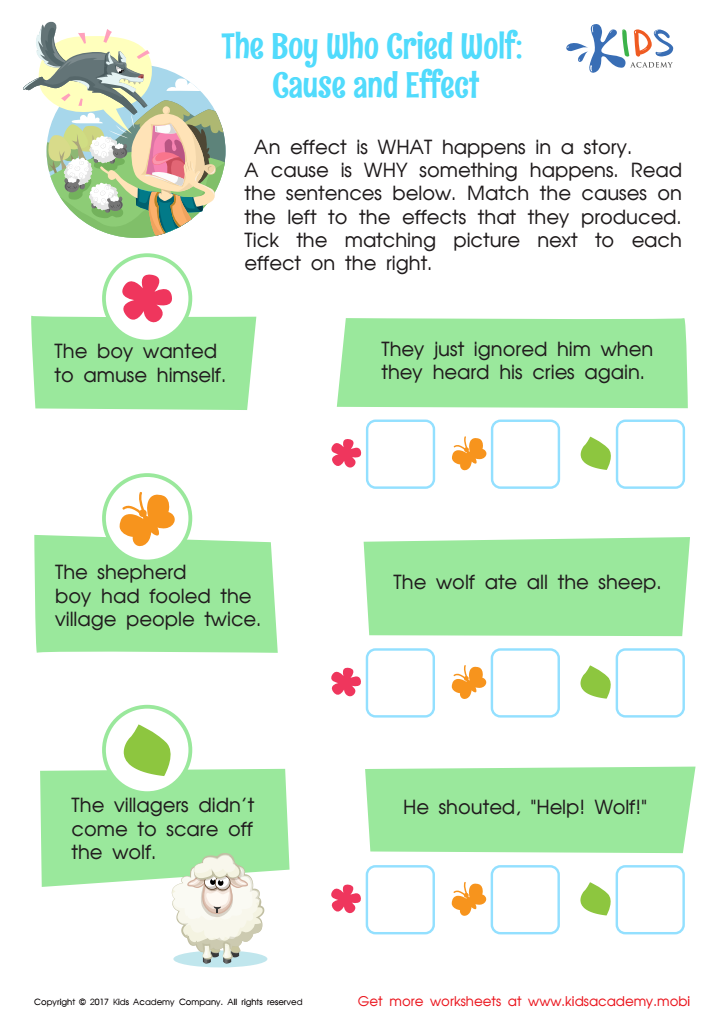
The Boy Who Cried Wolf: Cause and Effect Worksheet
With classic stories and fables, learning reading comprehension is easy - and fun!
The Boy Who Cried Wolf: Cause and Effect Worksheet
Worksheet
Join Kids Academy for Free
Who is primarily going to use this learning content?








Parents and teachers should place significant emphasis on developing logical reasoning and reading comprehension skills in 7-year-olds due to their foundational role in overall cognitive development. At this age, children are in a critical stage of learning where they are not only acquiring knowledge but also the skills to process and apply it effectively.
Logical reasoning enables children to analyze information, identify patterns, make connections, and solve problems. These skills are crucial for success in subjects such as math and science, fostering a mindset that encourages curiosity and systematic thinking. For instance, understanding cause-and-effect relationships in science or solving simple arithmetic problems demands strong logical reasoning abilities.
Reading comprehension, on the other hand, is integral for academic achievement across all subjects. It allows children to understand, interpret, and engage with content, thereby improving their ability to follow instructions, participate in discussions, and apply knowledge in practical contexts. Strong reading skills are also a predictor of future academic success, fostering a love for learning and an intrinsic motivation to explore new topics.
Moreover, these skills enhance verbal communication and enrich vocabulary, facilitating better social interactions. By emphasizing logical reasoning and reading comprehension, parents and teachers not only support academic growth but also nurture a child’s confidence and independence in learning, setting the stage for ongoing educational success.








