Word Recognition Normal Reading Comprehension Worksheets for 7-Year-Olds
5 filtered results
-
From - To
Enhance your 7-year-old's reading skills with our engaging Word Recognition Normal Reading Comprehension Worksheets! Designed to support young learners, these worksheets focus on helping children recognize words and understand their meanings in context. The activities promote vocabulary development and encourage critical thinking, ensuring your child builds a strong foundation for reading fluency. Suitable for classroom use or at-home practice, these worksheets feature age-appropriate texts and interactive exercises that make learning enjoyable. Foster a love for reading and boost comprehension skills with our thoughtfully crafted resources, perfect for 7-year-olds. Unlock your child's potential in reading with our fun and educational worksheets today!
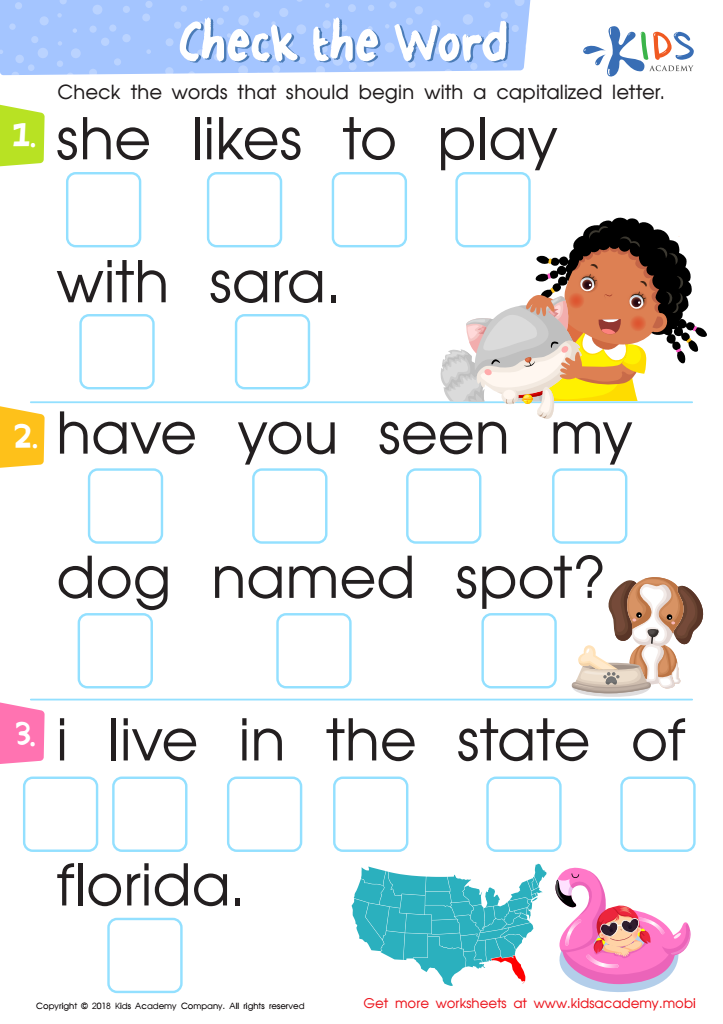
Check the Word Worksheet
 Assign to My Students
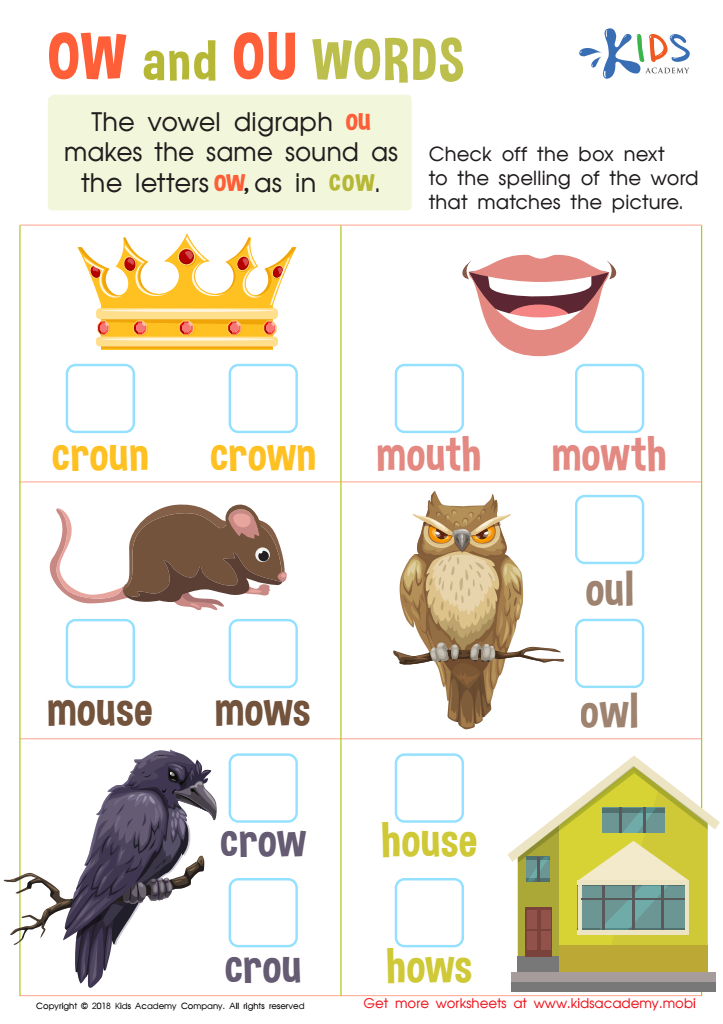
Reading: OW and OU Words Worksheet
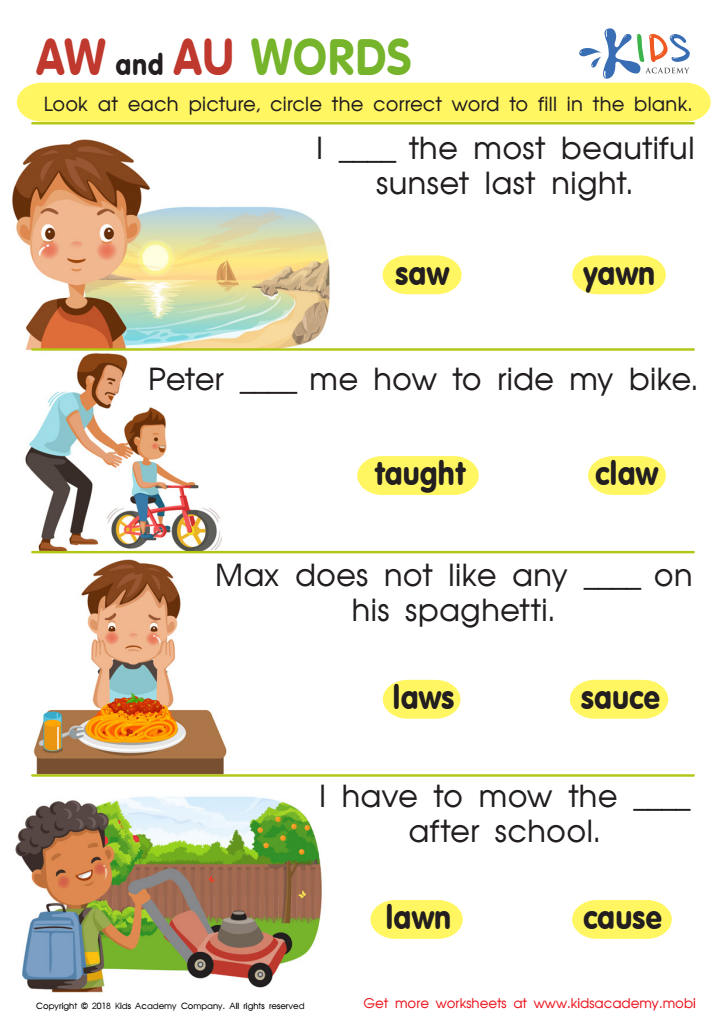
Reading: AW and AU Words Worksheet
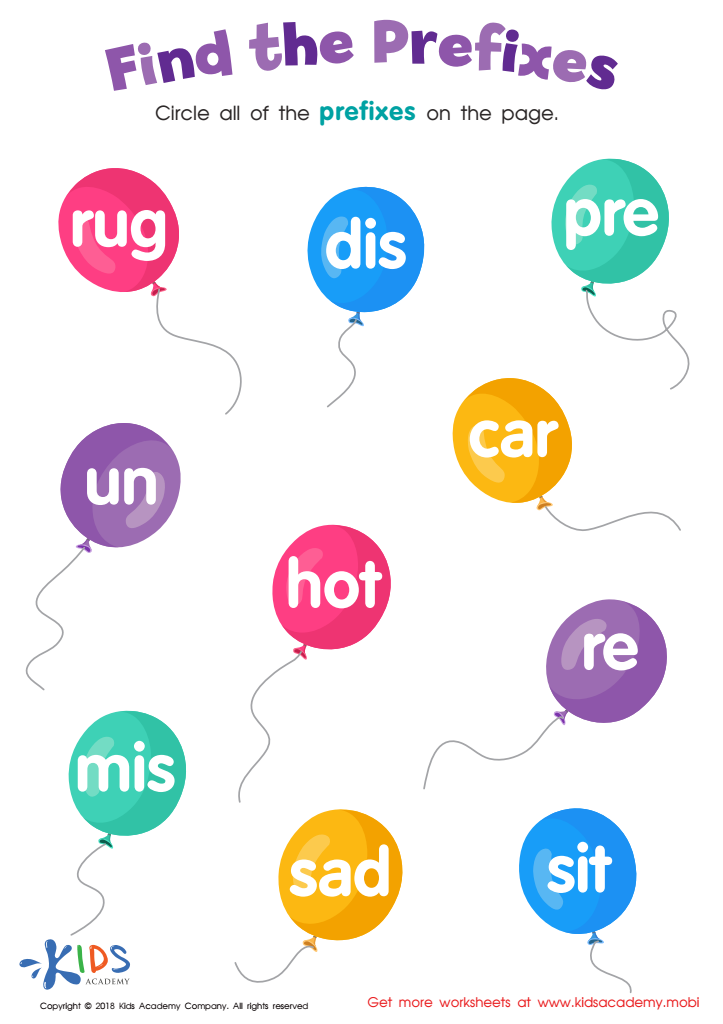
Reading: Find the Prefixes Worksheet
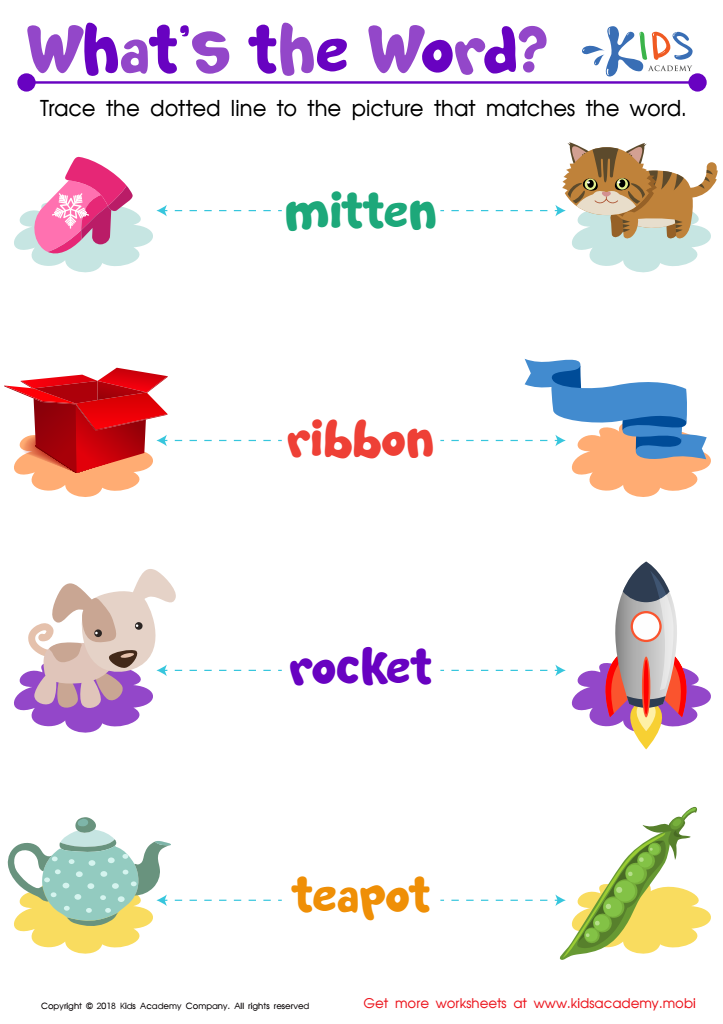
Reading: What's Word Worksheet








Word recognition and reading comprehension are vital components of literacy development for 7-year-olds, significantly impacting their overall academic success and lifelong learning. At this age, children are transitioning from learning to read to reading to learn. Strong word recognition skills enable them to identify and decode words quickly, which in turn frees cognitive resources for comprehension. When children struggle with identifying words, their understanding of the text suffers, leading to frustration and a dislike of reading.
Teachers and parents should care deeply about fostering these skills because they lay the foundation for future learning across subjects. Reading comprehension is not only crucial for understanding narratives but also essential in subjects like math and science, where reading complexity increases. Moreover, strong literacy skills are linked to improved self-esteem and confidence, as children who can read well often engage more in class and express their ideas effectively.
Investing time and resources into enhancing word recognition and comprehension skills ensures children become proficient readers who can navigate academic challenges and gain a broader understanding of the world. As such, prioritizing these skills is essential for fostering a love of reading and preparing children for success in their educational journeys.








