Reading comprehension Normal Rhyming Words Worksheets for 7-Year-Olds
4 filtered results
-
From - To
Enhance your 7-year-old’s reading skills with our engaging worksheets focused on normal rhyming words! These carefully crafted activities promote reading comprehension while making learning enjoyable. Each worksheet is designed to help young learners identify rhyming words, improving their phonetic awareness and word recognition. Through fun and interactive exercises, children will develop critical thinking skills as they connect words and understand contexts. Perfect for home or classroom use, these worksheets support early literacy development and foster a love for reading. Dive into our collection and watch your child thrive as they master the magical world of rhymes!
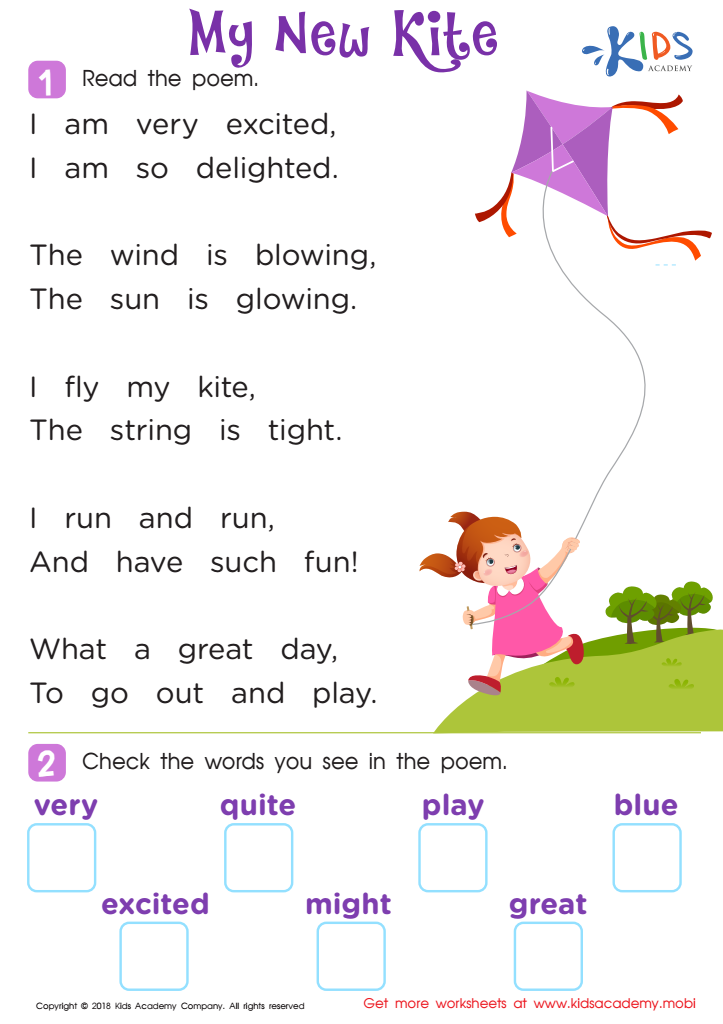
Poem: My New Kite Worksheet
 Assign to My Students
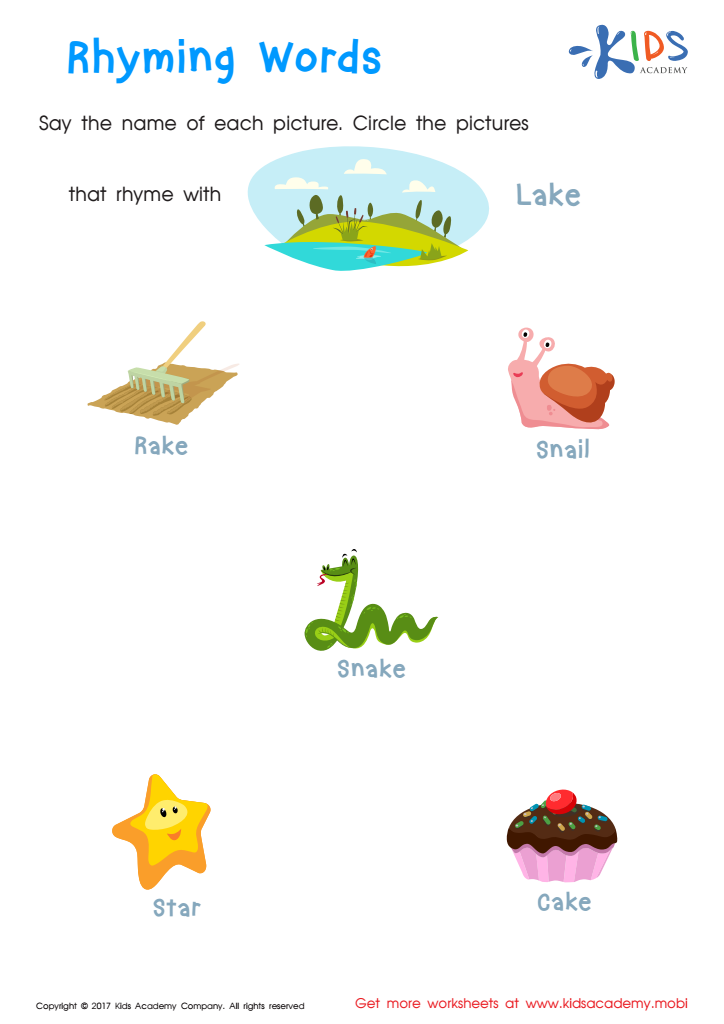
Rhyming Words Rhyming Worksheet
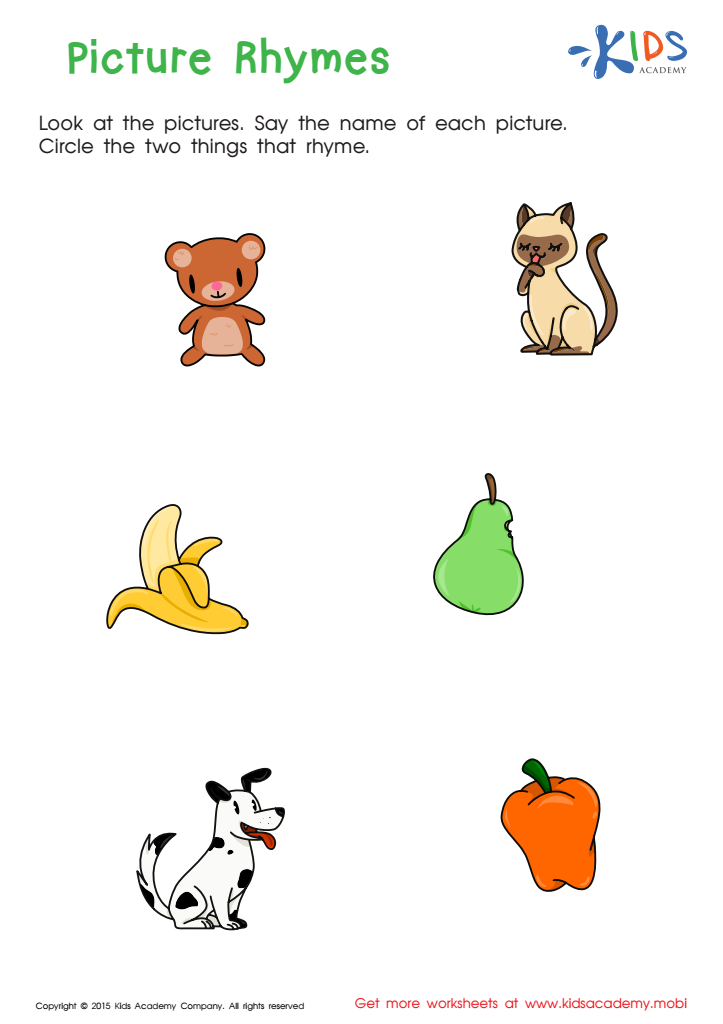
First Words: Picture Rhymes Worksheet
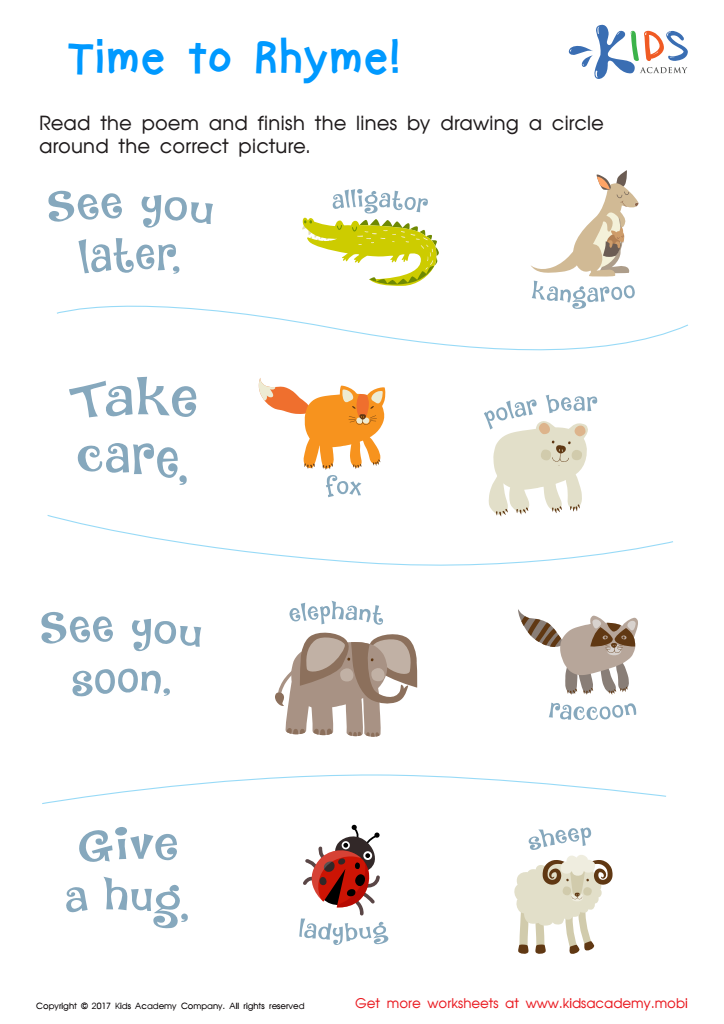
Time to Rhyme Rhyming Worksheet







Reading comprehension, especially in relation to normal rhyming words, is crucial for 7-year-olds as it forms the foundation of their literacy skills. At this stage, children are transitioning from learning to read to reading to learn. Understanding rhyming words supports phonemic awareness, which is the ability to recognize and work with sounds in spoken language. This skill is vital for decoding new words, spurring vocabulary development, and fostering more profound comprehension.
When children engage with rhyming texts, they begin to identify patterns in language, making connections between words, and enhancing their overall fluency. Rhymes not only help with memory retention but also introduce playful aspects of language, making reading an enjoyable experience. This is particularly important in maintaining students’ motivation and confidence as readers.
Furthermore, parents and teachers who prioritize activities involving rhyming can create a supportive learning environment that enhances communication skills. Such engagement encourages discussions about the stories, broadening comprehension to include themes, morals, and character development. By nurturing these skills, adults lay the groundwork for their child's academic success and love for reading throughout their educational journey. Therefore, understanding and supporting reading comprehension with rhyming words should be a priority for caregivers and educators alike.








