Enhancing observational skills Normal Science Worksheets for 7-Year-Olds
7 filtered results
-
From - To
Elevate your child's scientific curiosity with our "Enhancing Observational Skills" science worksheets designed for 7-year-olds. These engaging printables from Kids Academy encourage young learners to closely observe and analyze their surroundings, boosting critical thinking and attention to detail. Our expertly crafted exercises cover diverse topics, blending fun activities with educational content to make learning both enjoyable and effective. Whether identifying patterns, noting differences, or recording data, these worksheets provide the perfect foundation for budding scientists, enhancing their observational skills while fostering a love for discovery. Let these tools be your child's first step into the world of scientific exploration.
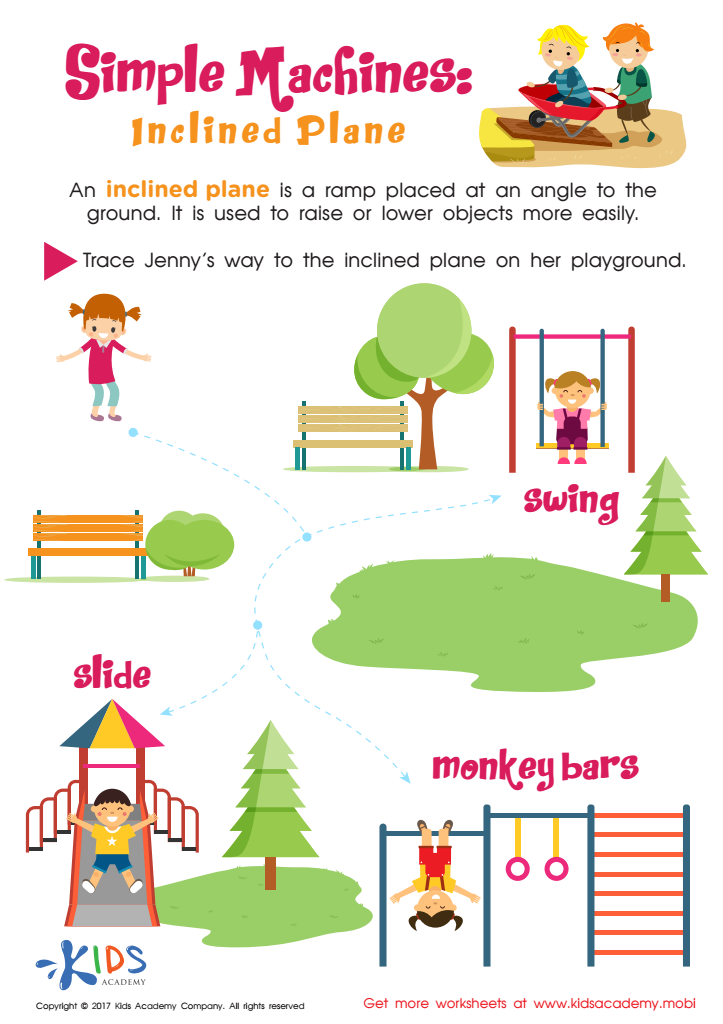
Simple Machines Inclined Plane Worksheet
 Assign to My Students
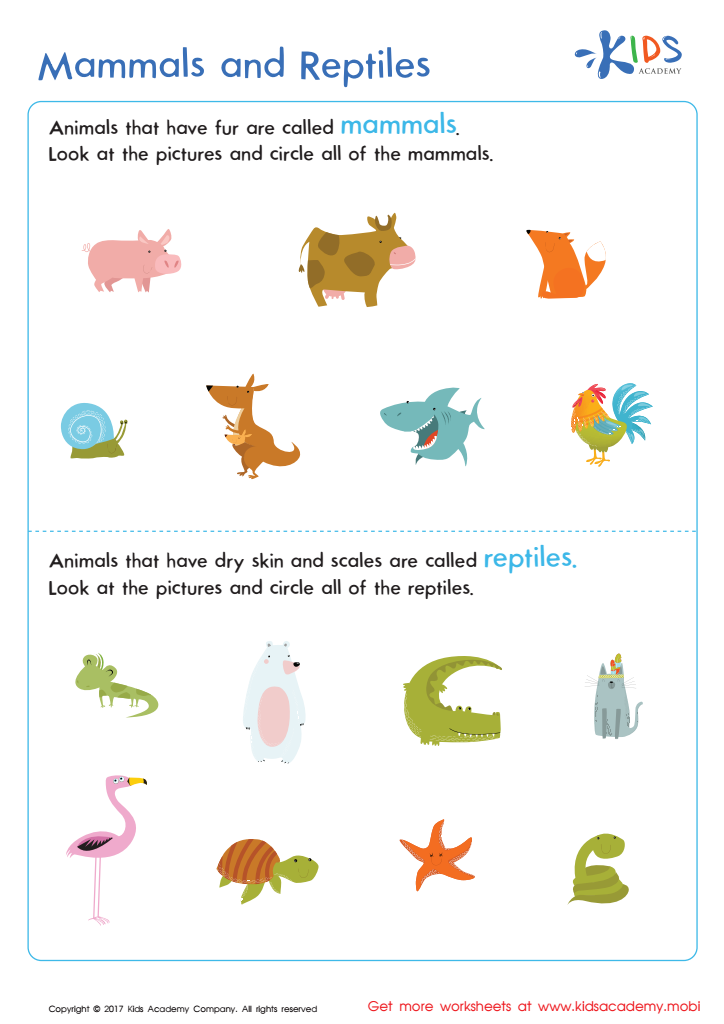
Mammals and Reptiles Worksheet
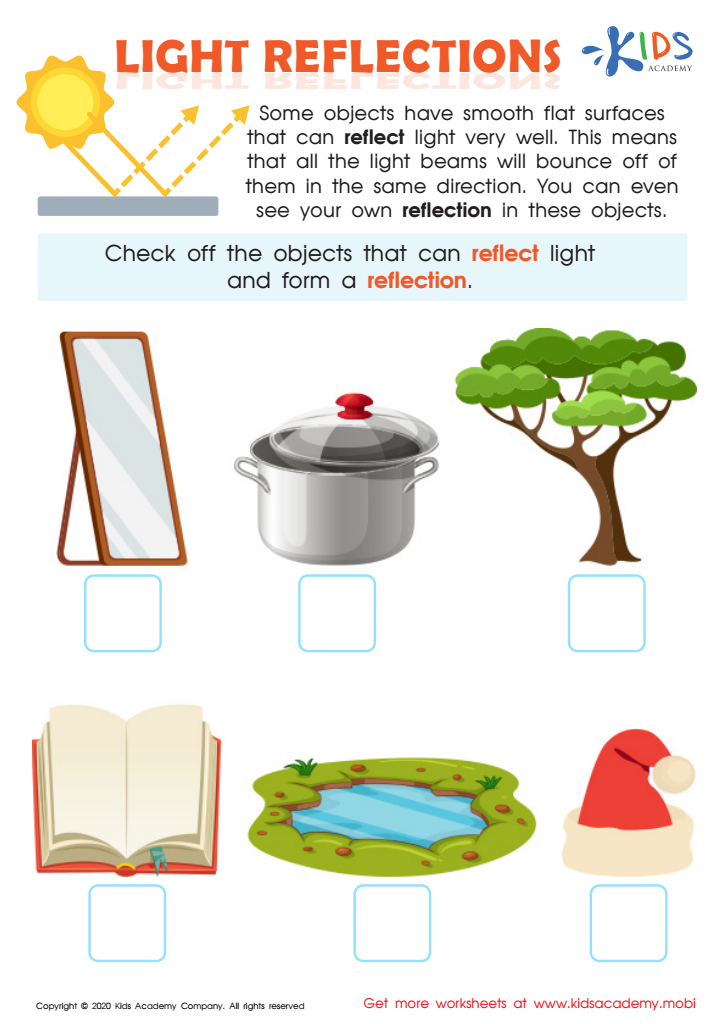
Light Reflections Worksheet
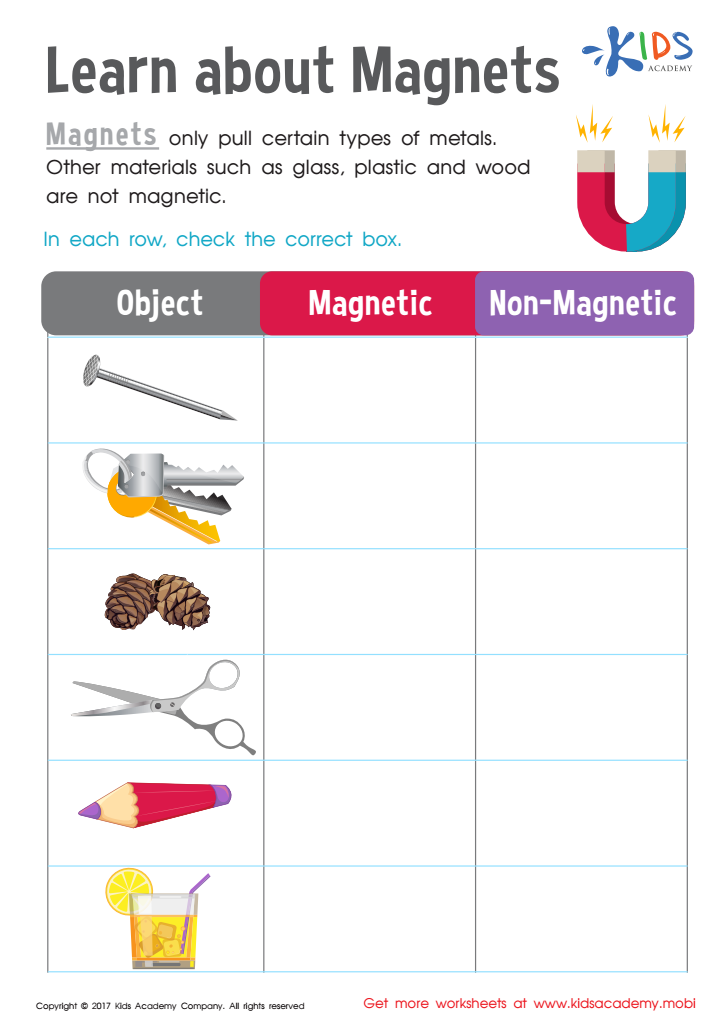
Magnetic Or Not Worksheet
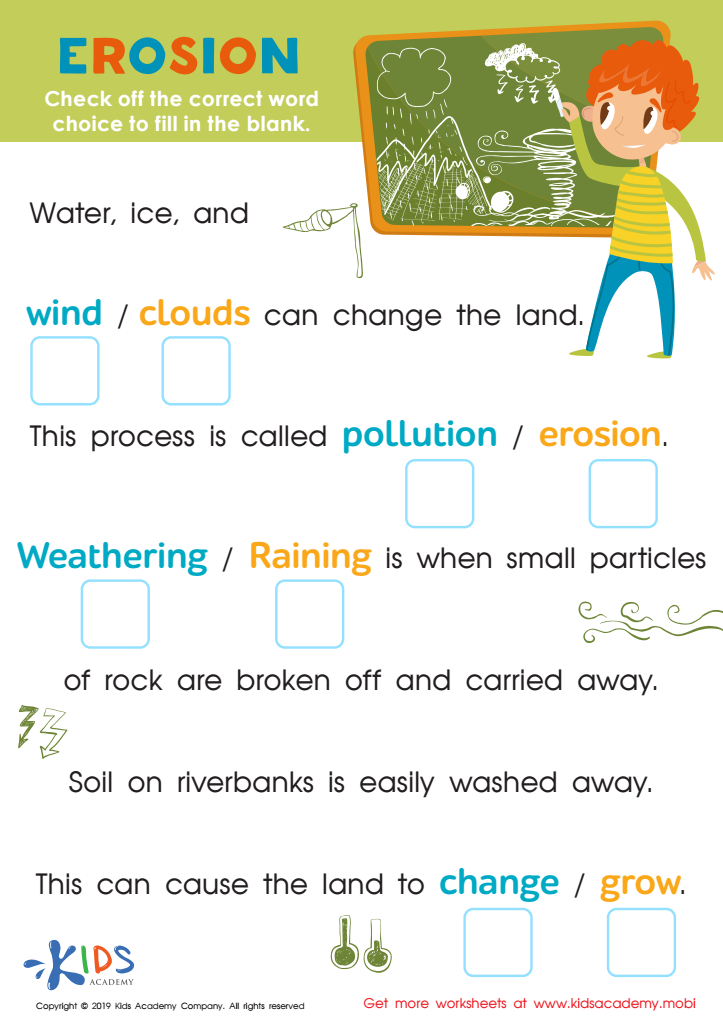
Erosion Worksheet
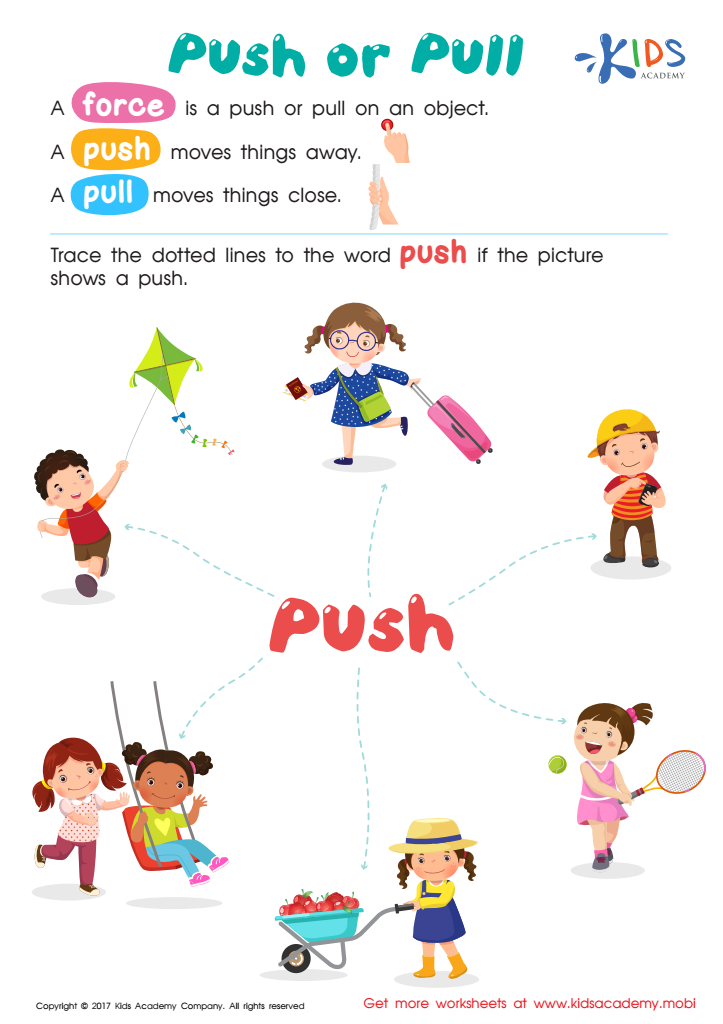
Push or Pull Worksheet
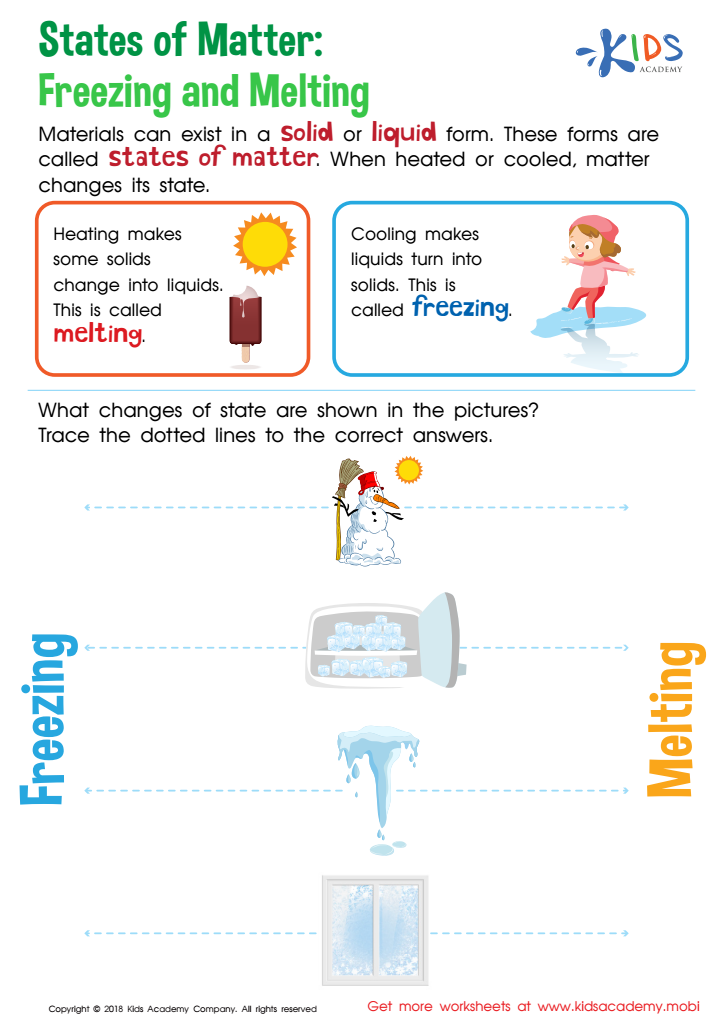
States of Matter: Freezing and Melting Worksheet








Enhancing observational skills in 7-year-olds is a critical component of early science education, crucial for both parents and teachers to prioritize. At this age, children are naturally curious and adept at noticing patterns and details in their environment. Fostering these observational skills supports cognitive development, reinforces attention to detail, and cultivates a robust foundation for scientific thinking.
Observational skills allow children to engage more deeply with the world around them, promoting a higher level of curiosity and a desire to explore. This curiosity is the bedrock of scientific inquiry, as it drives young learners to ask questions, make predictions, and seek answers through direct observation and experimentation. By honing these skills, children learn to observe systematically, notice subtle changes, and make informed conclusions
For teachers, integrating observational activities into lessons results in more engaged students and a richer learning experience. Simple activities, like nature walks or examining everyday objects, can stimulate children's interest in science. For parents, supporting and encouraging these early skills at home enhances a child's learning and development, creating continuity between school and home experiences.
Ultimately, emphasizing observational skills in science for 7-year-olds nurtures critical thinkers and lifelong learners, providing them with the tools necessary to understand complex concepts and phenomena as they grow.







