Understanding landforms Normal Science Worksheets for 7-Year-Olds
3 filtered results
-
From - To
Discover the fascinating world of landforms with our "Understanding Landforms Normal Science Worksheets for 7-Year-Olds." Tailored to spark curiosity and enhance learning, these worksheets are designed to introduce young explorers to the various shapes and formations of the Earth's surface. From towering mountains to rolling hills, each printable activity helps children identify and understand different landforms while boosting critical thinking and observation skills. Perfect for classroom use or at-home enrichment, our worksheets provide an engaging and educational experience for early science learners. Download today and inspire your child’s love for science!
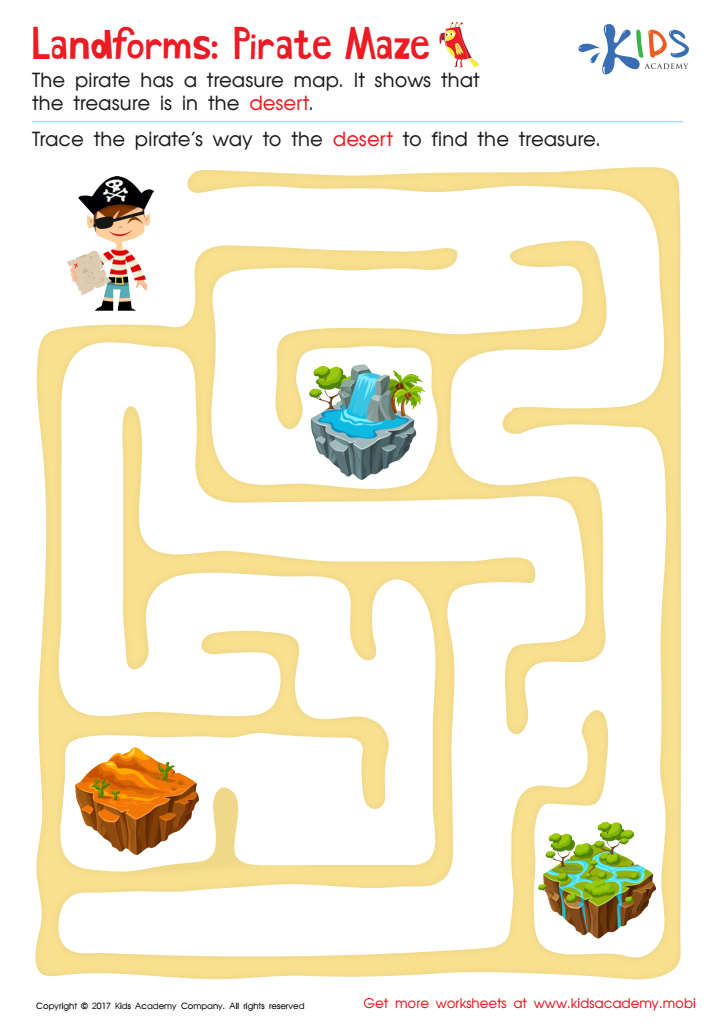
Landforms: Pirate Maze Printable
 Assign to My Students
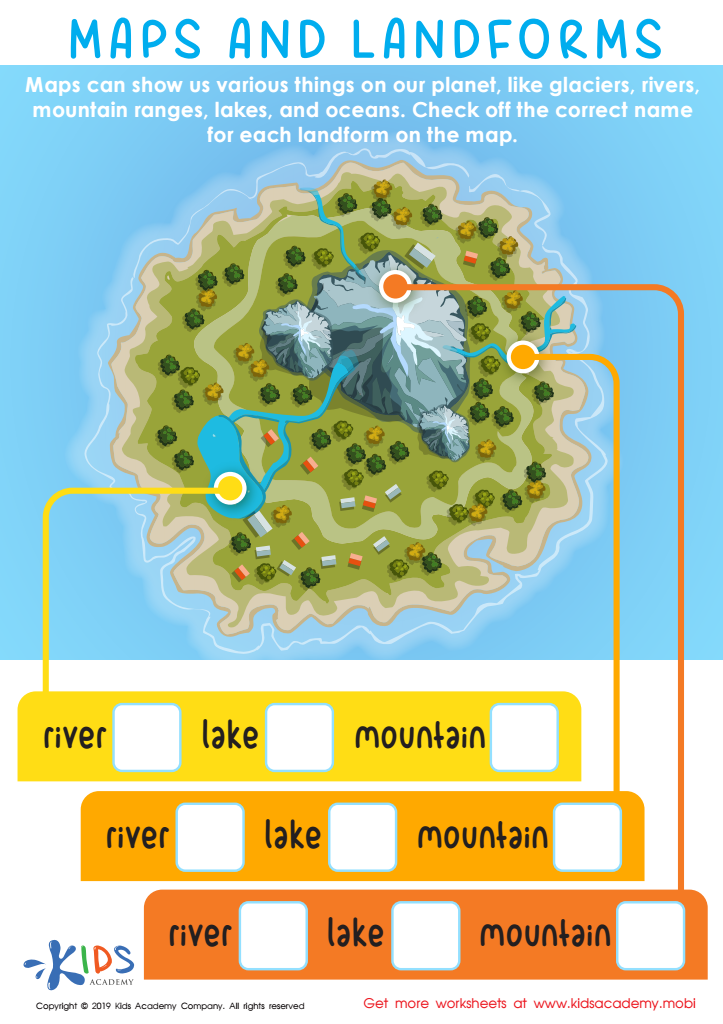
Maps and Landforms Worksheet
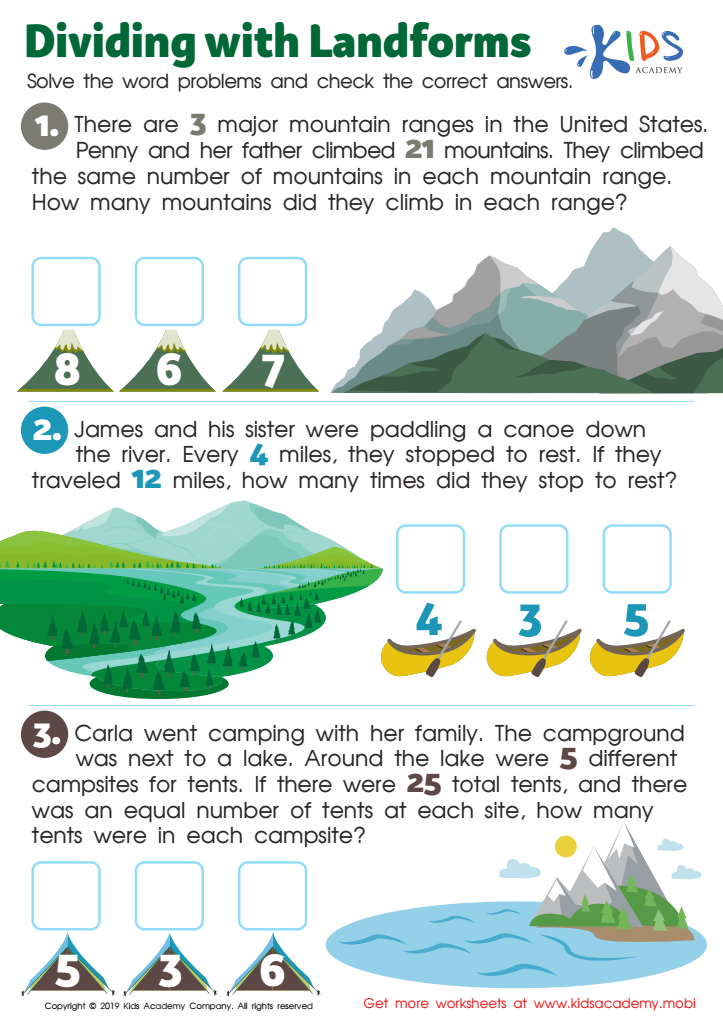
Dividing with Landforms








Understanding landforms is fundamental to a 7-year-old's Normal Science curriculum, and parents and teachers should prioritize this learning for several key reasons.
Firstly, knowledge about landforms helps children grasp basic earth science concepts, forming a foundation for advanced studies. Recognizing mountains, valleys, rivers, and other features allows kids to better understand the physical world around them. This early awareness fosters curiosity and a connection to nature, which is critical for developing lifelong environmental stewardship.
Secondly, understanding landforms enhances children’s geographical awareness. It aids in comprehension of maps and spatial relationships, skills that are applied in everyday activities and future academic pursuits. Knowledge of diverse landforms across the world also broadens a child's perspective, promoting cultural appreciation and global awareness.
Additionally, integrating landform education can bolster critical thinking and observation skills. Activities such as identifying landforms in natural settings or through hands-on projects encourage active, experiential learning. These methods can make science engaging and enjoyable, igniting a passion for the subject.
Lastly, landform education is interdisciplinary; it links with subjects like history, as many historical events and civilizations are tied to geographic locations, and social studies by highlighting how landscapes influence communities and lifestyles.
In summary, understanding landforms at an early age nurtures scientific knowledge, geographical literacy, critical thinking, and a respectful outlook towards the planet, equipping children with essential skills for their future.







