Phonics practice Normal Alphabet Worksheets for Ages 8-9
6 filtered results
-
From - To
Boost your child's reading skills with our Phonics Practice Normal Alphabet Worksheets designed for ages 8-9! These engaging worksheets provide a fun and interactive way for children to strengthen their phonics knowledge through activities tailored to their developmental stage. Featuring recognition exercises, sound blends, and tracing activities, our worksheets encourage independent learning and enhance literacy. Perfect for both classroom and home use, these resources not only help solidify phonemic awareness but also support overall reading comprehension. Unlock your child's potential by nurturing their language skills with our thoughtfully crafted phonics practice worksheets and watch their confidence soar in literacy!
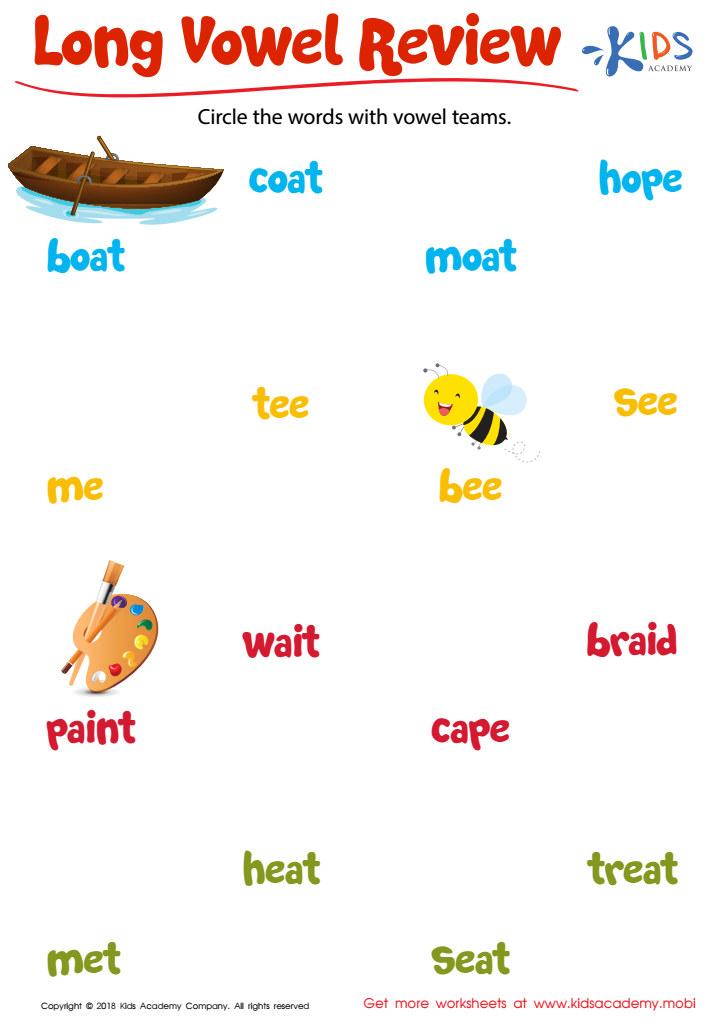
Long Vowel Review Worksheet
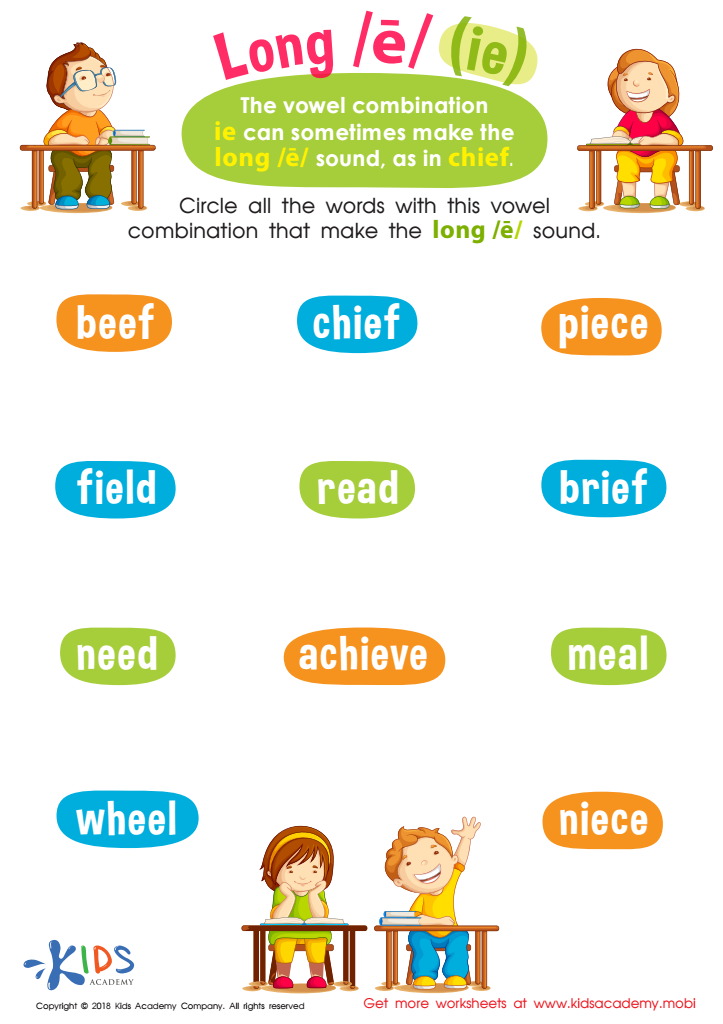
Reading: Long E and IE Worksheet
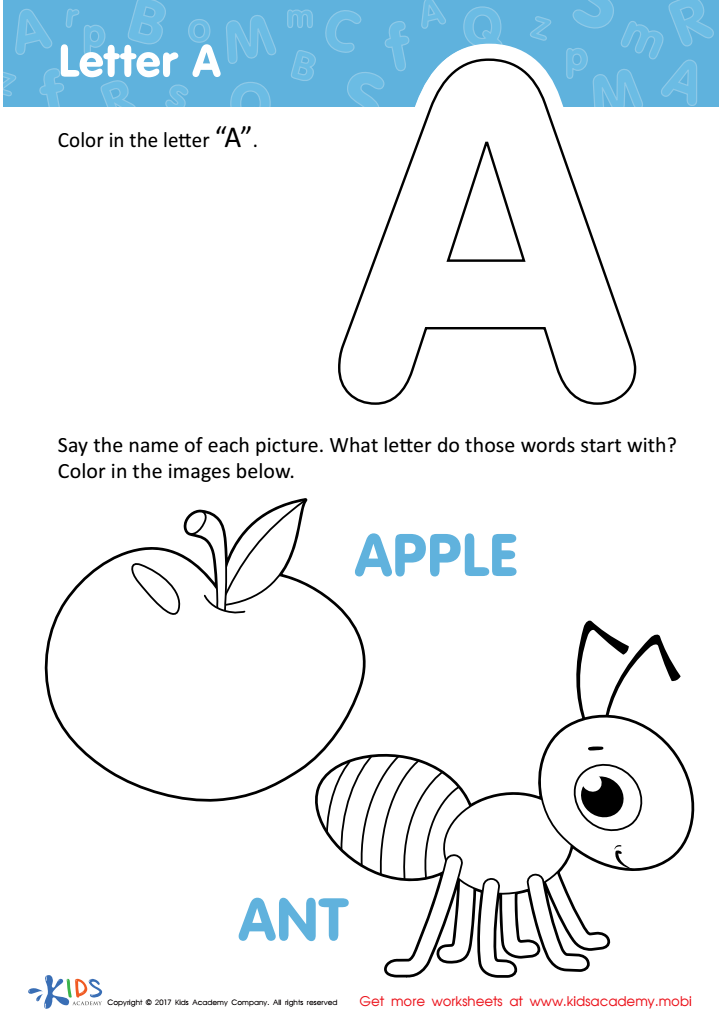
Letter A Coloring Sheet
 Assign to My Students
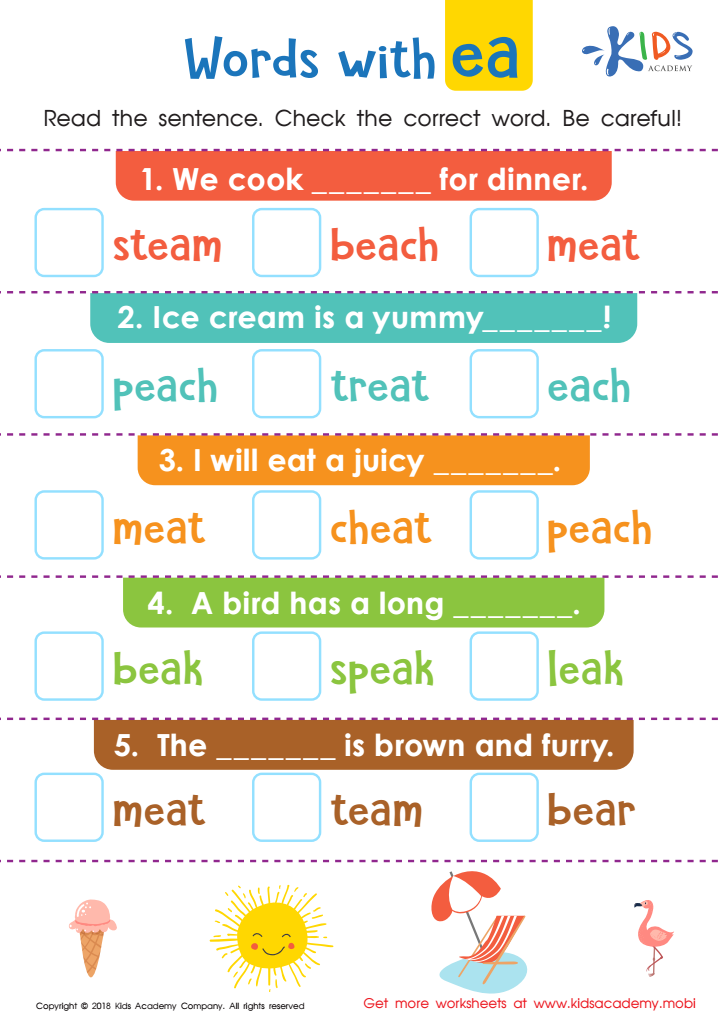
Words with ea Worksheet
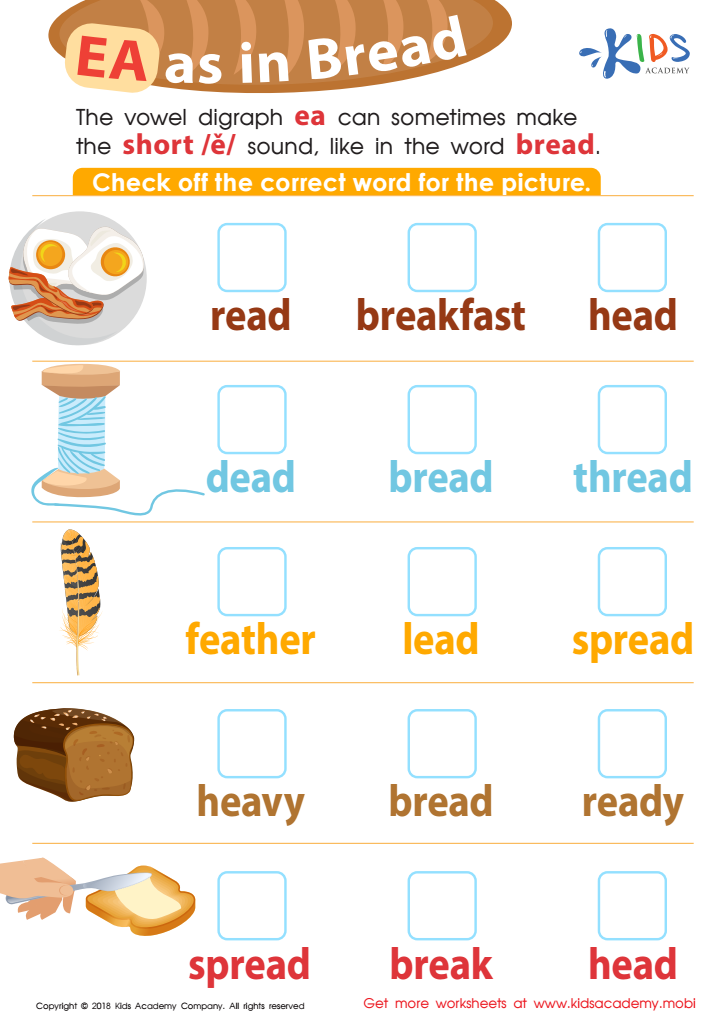
Reading: EA as in Bread Worksheet
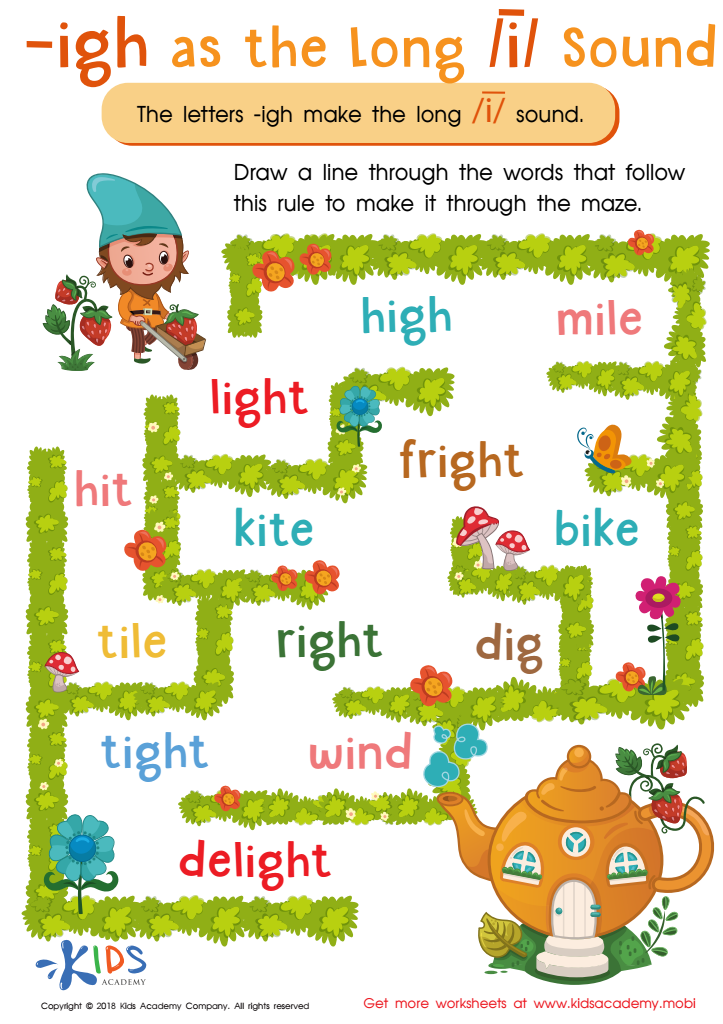
Reading: IGH as Long I Worksheet






Phonics practice, particularly for children ages 8-9, is crucial as it lays the foundation for proficient reading and writing skills. At this age, learners transition from learning to read to reading to learn, making strong phonics skills essential for academic success. Mastery of phonics enhances their ability to decode and spell increasingly complex words, fostering comprehension across various subjects.
As children engage in phonics, they build confidence in their reading abilities, which can reduce anxiety associated with literacy tasks. Now is the time for parents and teachers to reinforce these skills through engaging activities and targeted exercises, ensuring students can tackle grade-level texts with ease.
Furthermore, phonics practice helps close achievement gaps often observed in literacy. By providing focused interventions, adults can support struggling readers, helping them catch up and succeed alongside their peers. Encouraging fun and interactive phonics activities, such as games and storytelling, can also motivate children and foster a love for reading.
In essence, investing time and resources into phonics practice enriches a child’s educational experience, equipping them with essential literacy tools for lifelong learning. It also supports parents and teachers in creating a nurturing and effective learning environment.







