
Reading Improvement Normal Alphabet Worksheets for Ages 8-9
5 filtered results
Difficulty Level
Grade
Age
-
From - To
Subject
Activity
Standards
Discover our engaging Reading Improvement Normal Alphabet Worksheets designed specifically for children ages 8-9. These expertly crafted printable resources focus on enhancing reading skills through interactive exercises that promote letter recognition, phonemic awareness, and vocabulary development. Each worksheet is tailored to suit the learning pace of young readers, ensuring they grasp essential concepts while having fun. Whether at home or in the classroom, these worksheets provide a perfect blend of education and enjoyment, helping children build confidence in their reading abilities. Unlock the joy of learning with our comprehensive reading improvement materials, perfect for nurturing a lifelong love of reading!
Favorites
With answer key
Interactive
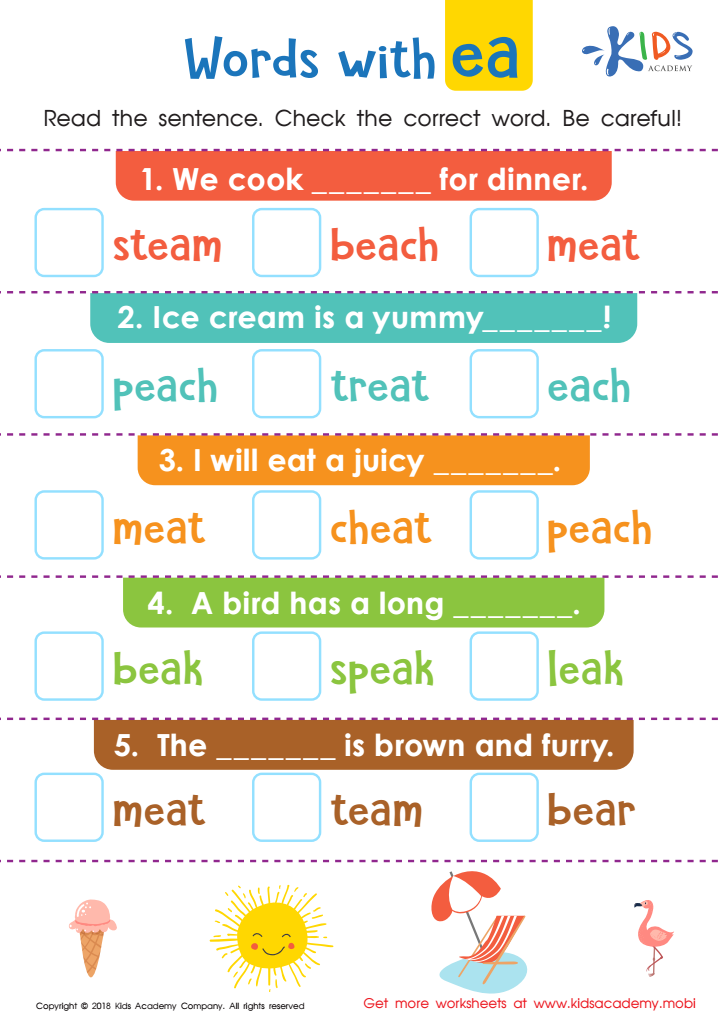
Words with ea Worksheet
Beginning readers may struggle with -ea vowel digraphs, which can have multiple sounds and be tricky to decode. This cheerful worksheet helps kids practice reading sentences with missing -ea words, using context clues to fill in the blanks. They'll also be exposed to various -ea sound examples, and build their sight word knowledge.
Words with ea Worksheet
Worksheet
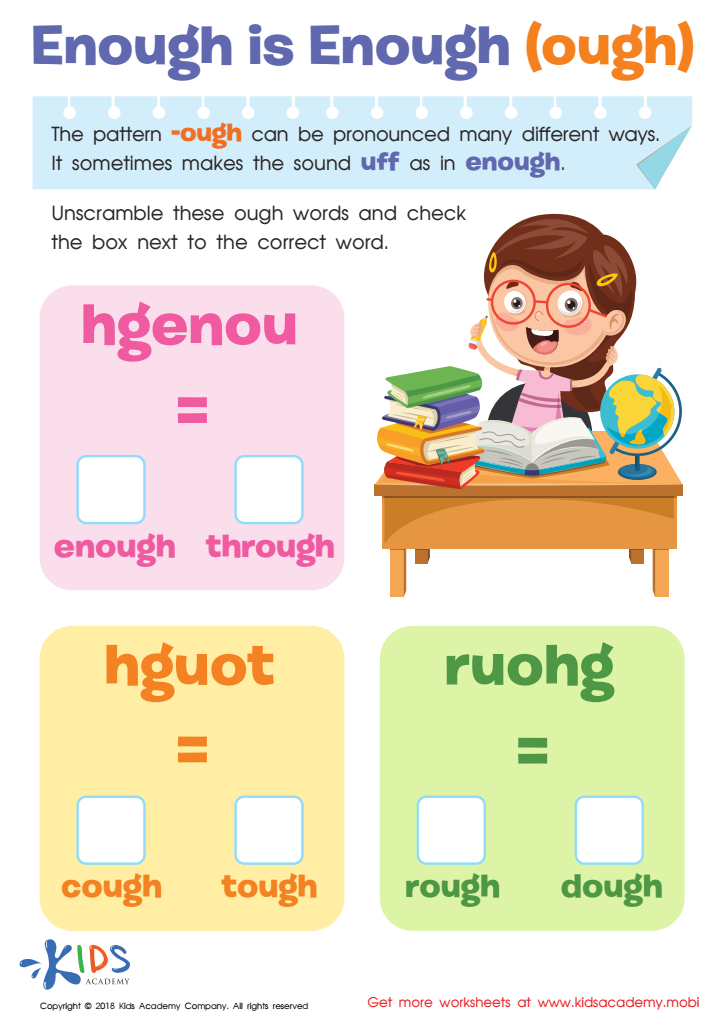
Enough Is Enough (ough) Worksheet
As your students learn more about reading and pronouncing words, they can explore how some word patterns can be said differently. The 'ough' pattern, for instance, can be pronounced several ways. 'Enough' has the 'uff' sound. Provide your students with examples of words pronounced similarly and help them unscramble 'ough' words on this worksheet, ticking the box for the correct word.
Enough Is Enough (ough) Worksheet
Worksheet
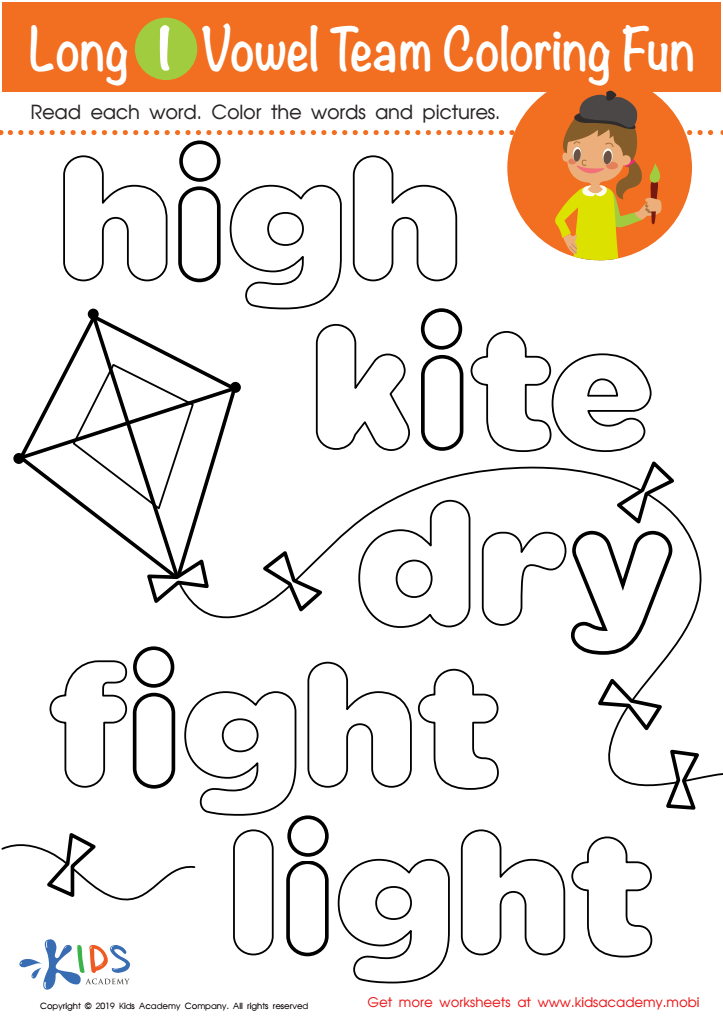
Long I Vowel Team Coloring Worksheet
This worksheet provides practice with letter combinations that make the long "i" sound while enhancing creativity and motor skills with a fun coloring activity. Unknowingly, new readers learn key phonics skills while having fun!
Download (PDF)
 Assign to My Students
Assign to My Students
Long I Vowel Team Coloring Worksheet
Worksheet
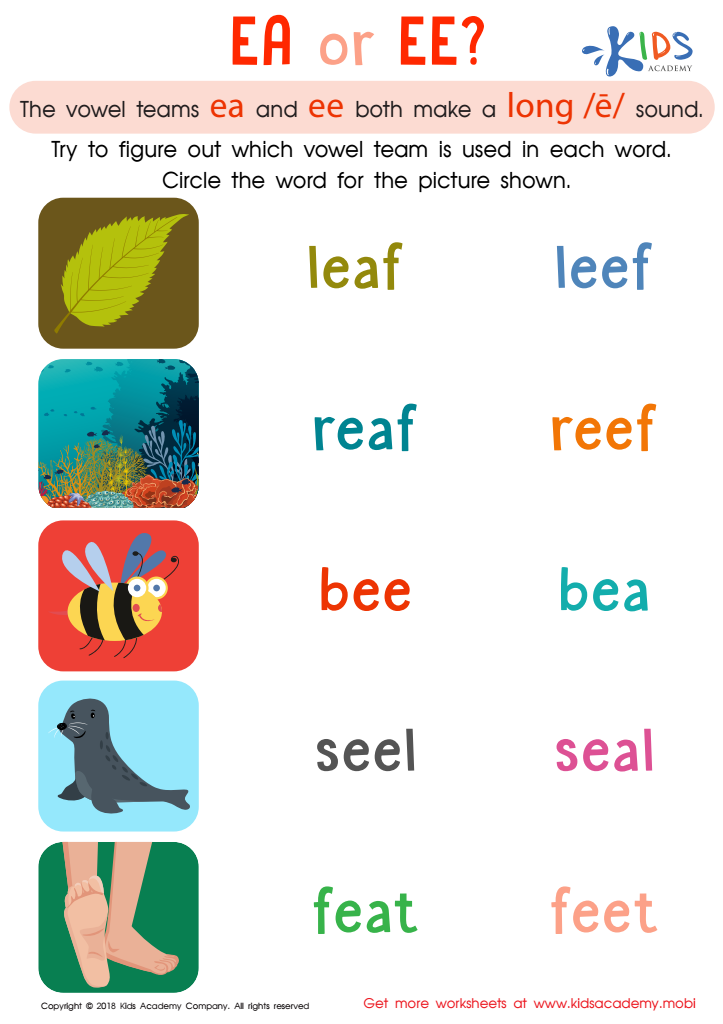
Reading: EA and EE Worksheet
Confused by the long E sound's varying spellings? Give students practice with this printable. It will improve their reading and spelling skills by helping them identify the correct spellings for words with the /ee/ and /ea/ vowel teams. Clear up the confusion and sharpen their skills.
Reading: EA and EE Worksheet
Worksheet
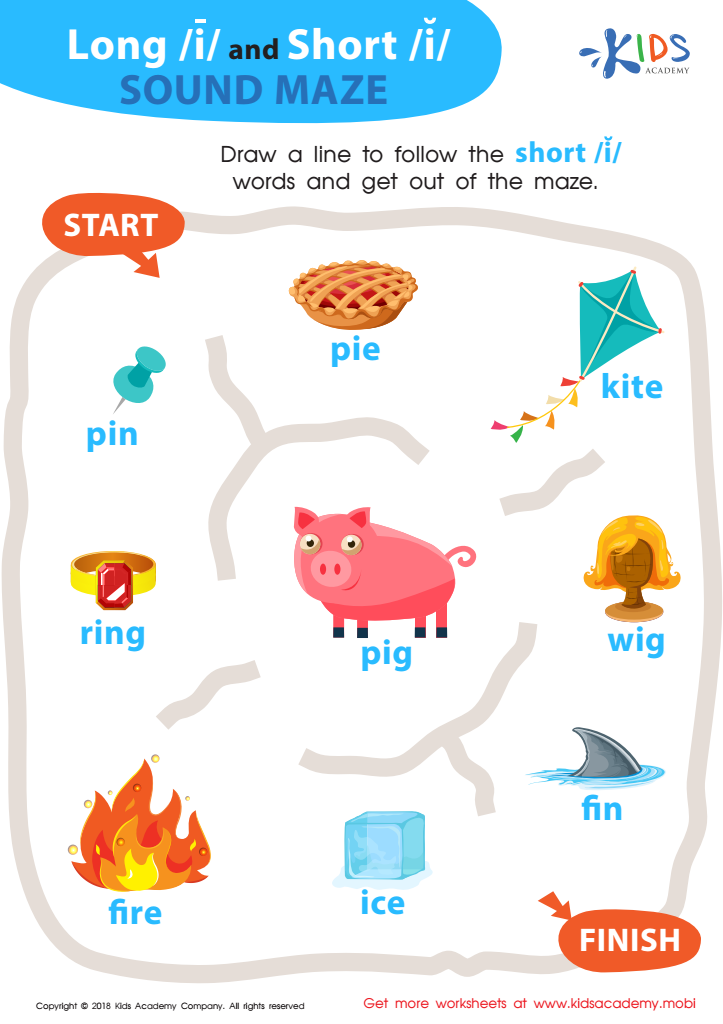
Reading: Long I and Short I Sound Maze Worksheet
Question your students if the worksheet is entertaining. They may respond negatively! Nonetheless, this activity will bring satisfaction while learning the distinction between a long and short I sound. Students read the words in the maze and only follow the words with the short I sound to finish the exercise. Grasping the difference between long and short vowels is demanding, but this worksheet helps students understand this reading skill.
Reading: Long I and Short I Sound Maze Worksheet
Worksheet
Join Kids Academy for Free
Who is primarily going to use this learning content?







.jpg)
Reading Improvement Normal Alphabet for ages 8-9 is crucial for developing foundational literacy skills that are essential for academic success. At this age, children enhance their reading fluency, comprehension, and vocabulary, forming the basis for all future learning. Parents and teachers should prioritize reading improvement efforts during this crucial stage; children who struggle with reading may experience increased frustration and lower self-esteem, leading to negative attitudes toward learning.
Addressing reading skills early helps prevent long-term academic challenges. Engaging with various texts, including fiction and nonfiction, encourages a well-rounded understanding of language and context, fostering critical thinking. Moreover, being proficient in reading supports other subjects like math and science, as comprehension is vital for interpreting problems and instructions.
Reading also enhances social-emotional skills; it enables children to connect with diverse experiences and ideas, promoting empathy and imagination. In today’s increasingly digital world, strong reading abilities are even more important, as much of the information children encounter is text-based. Overall, by focusing on reading improvement in the Normal Alphabet category, parents and teachers can equip children with skills that not only improve academic performance but also enrich their lifelong learning journey.







