Vocabulary Building Normal Alphabet Worksheets for Ages 8-9
6 filtered results
-
From - To
Enhance your child's vocabulary with our engaging Vocabulary Building Normal Alphabet Worksheets designed for ages 8-9! These interactive worksheets promote language development through fun activities that encourage word recognition and usage. Each page features exercises that challenge young learners to explore consonants and vowels, fostering a strong foundation in reading and writing. Tailored to spark creativity, our resources make learning enjoyable and effective, helping children discover new words in a captivating way. Ideal for parents and educators alike, these worksheets are perfect for reinforcing vocabulary skills at home or in the classroom. Start empowering your child's language growth today!
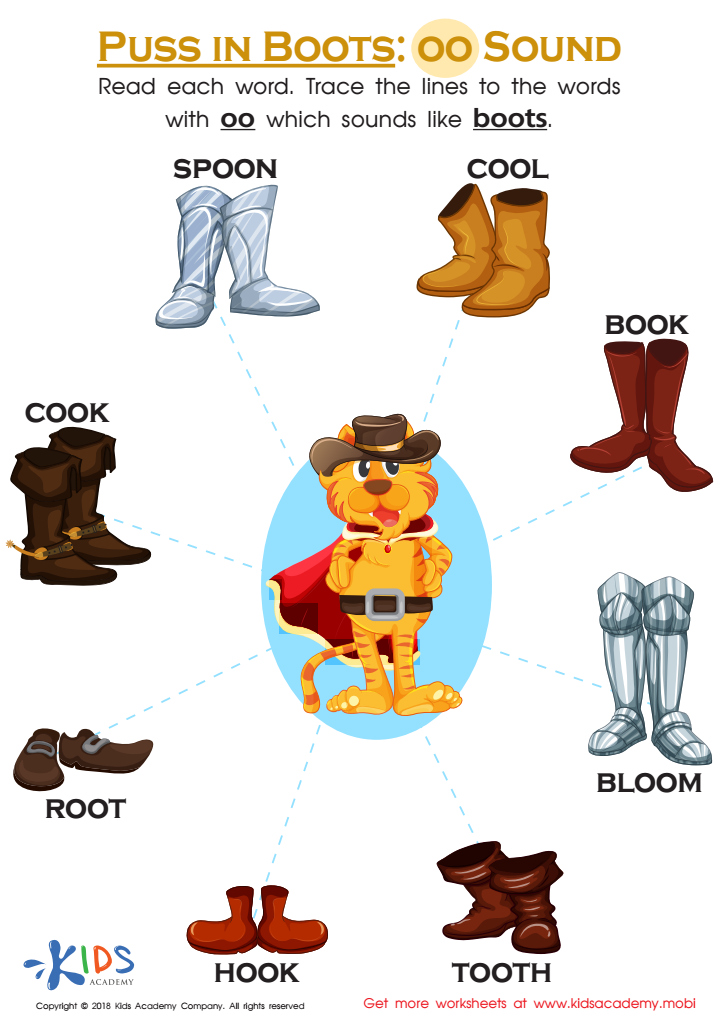
Puss in Boots: OO Sound Worksheet
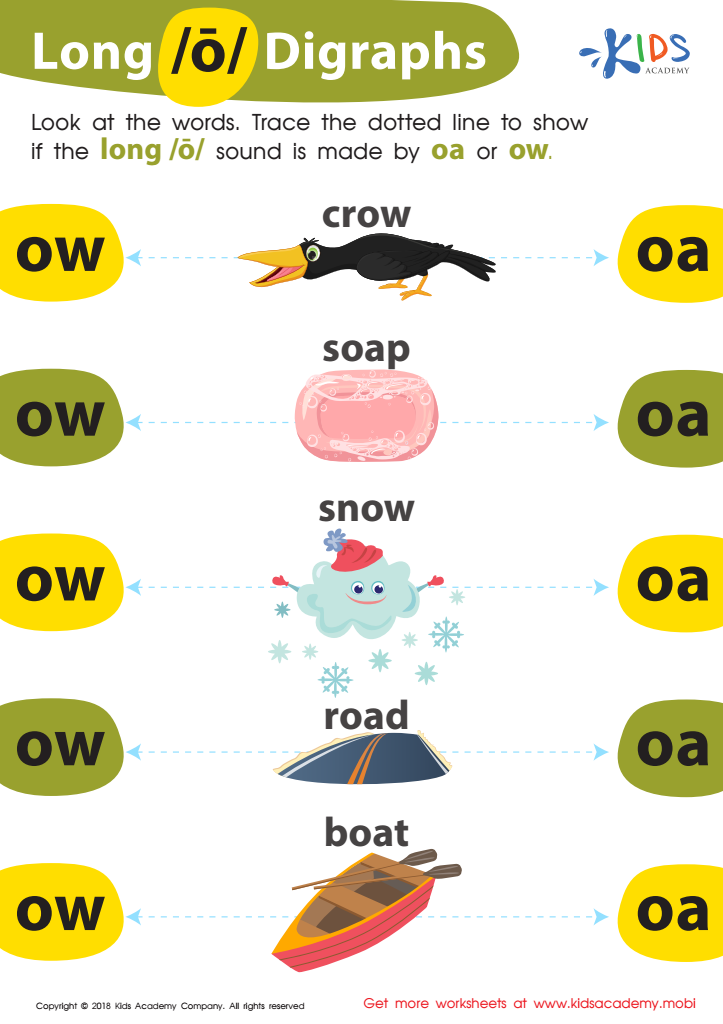
Reading: Long O Digraphs Worksheet
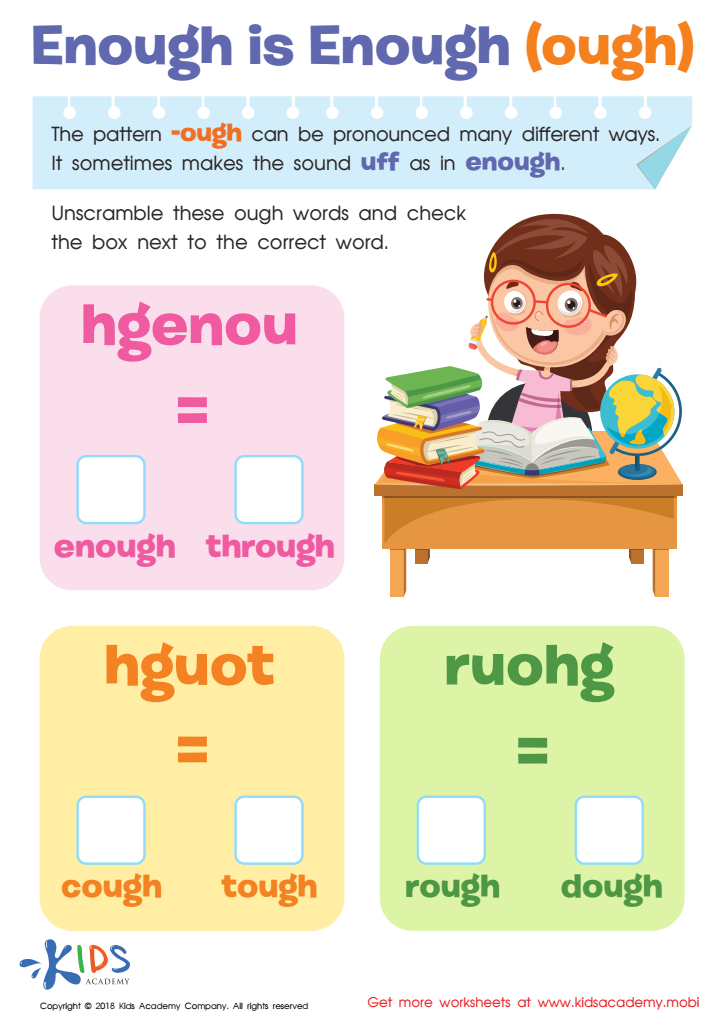
Enough Is Enough (ough) Worksheet
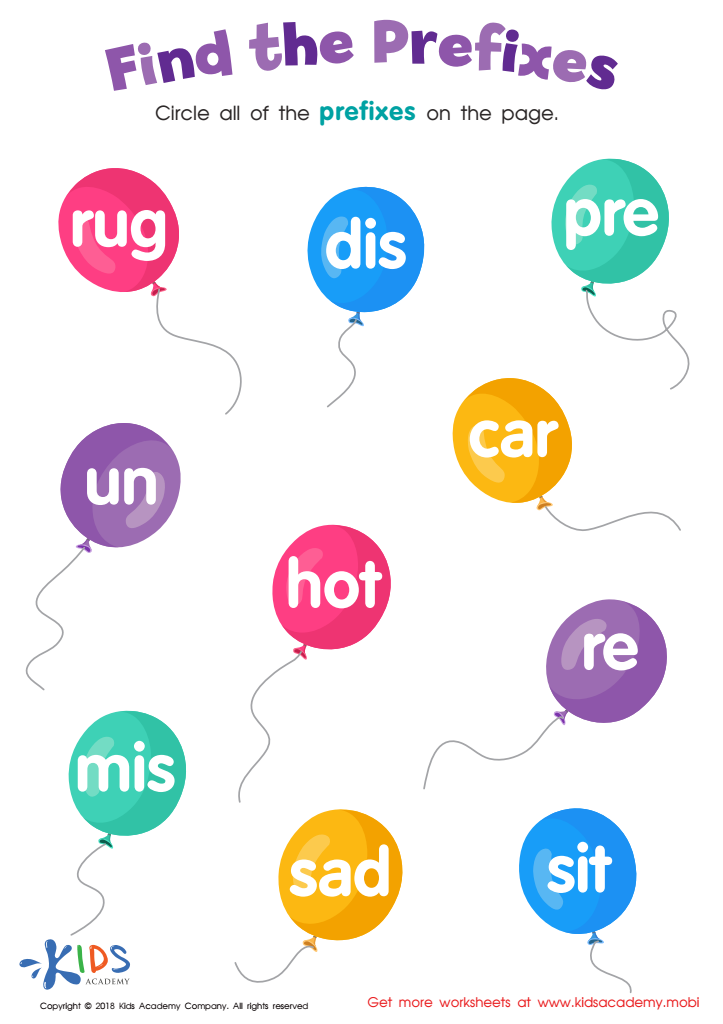
Reading: Find the Prefixes Worksheet
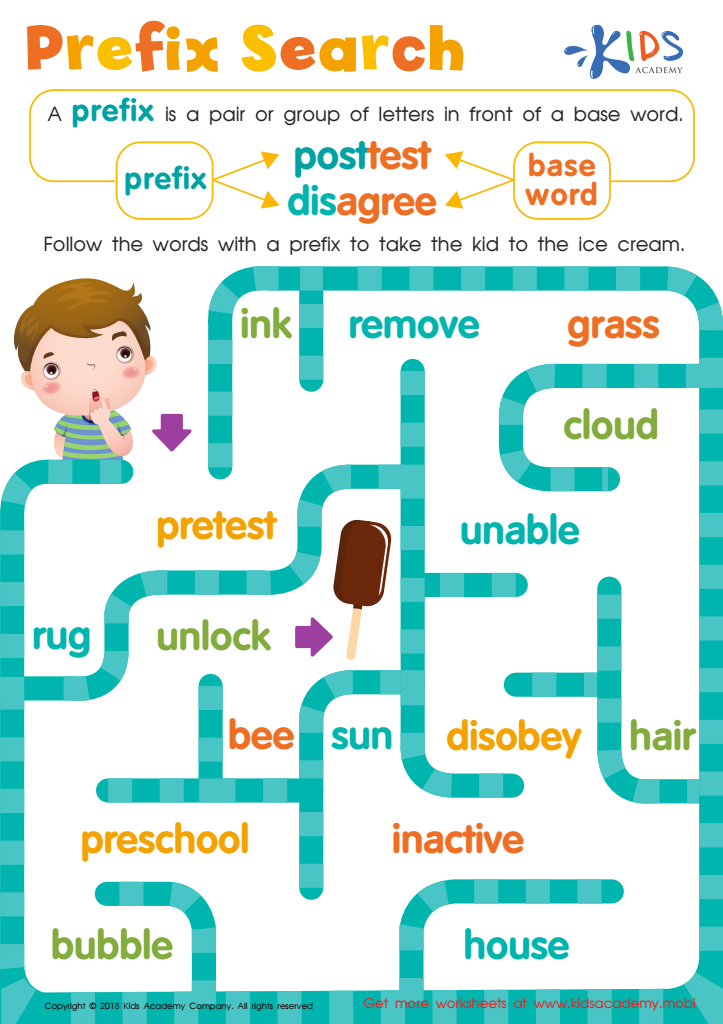
Reading: Prefix Search Worksheet
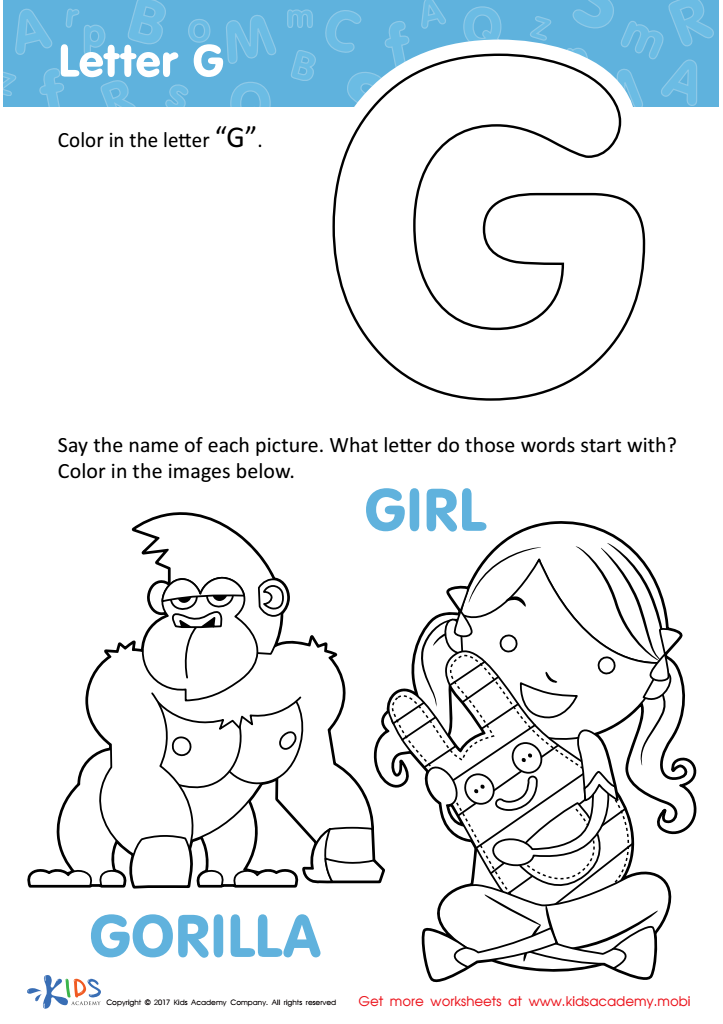
Letter G Coloring Sheet
 Assign to My Students







Vocabulary building is crucial for children aged 8-9 as it lays the foundation for their reading comprehension, communication skills, and overall academic success. At this developmental stage, children transition from learning to read to reading to learn. A robust vocabulary enables them to understand complex texts and express their thoughts and ideas more clearly.
Moreover, vocabulary growth enhances cognitive skills, allowing children to think critically and solve problems effectively. When parents and teachers prioritize vocabulary development, they equip children with the tools needed to navigate increasingly challenging language and concepts in their schoolwork and beyond.
Investing time in vocabulary building activities—such as engaging in conversations, reading together, and encouraging word games—not only fosters language skills but also promotes curiosity and a love for learning. Furthermore, children with a rich vocabulary are often more confident in their ability to participate in discussions and express themselves, which can lead to improved social interactions and emotional well-being.
In essence, focusing on vocabulary for this age group is vital, as it shapes children's academic journeys and future communication abilities, empowering them to thrive in both their personal and professional lives. Parents and teachers share a pivotal role in this foundational aspect of learning.







