
Alphabet tracing Normal Letter Recognition Worksheets for Ages 8-9
5 filtered results
Difficulty Level
Grade
Age
-
From - To
Subject
Activity
Standards
Discover our engaging Alphabet Tracing Normal Letter Recognition Worksheets designed specifically for children aged 8-9. These interactive resources help build essential literacy skills while promoting handwriting proficiency. Through fun tracing activities, young learners can confidently recognize and write both uppercase and lowercase letters. Each worksheet is designed to enhance fine motor skills and reinforce letter identification through repetition. Ideal for home practice or classroom use, these worksheets foster a love of learning and prepare kids for more advanced reading and writing tasks. Perfect for young learners eager to strengthen their foundational language skills in a creative, enjoyable way!
Favorites
With answer key
Interactive

Letter P Tracing Page
Trace the lines from the red dot to learn to write "P"! Then practice this letter with the fun activities: complete the word "Pig" and "Pumpkin". Check out Kids Academy to get more free ABC worksheets.
 Assign to My Students
Letter P Tracing Page
Worksheet
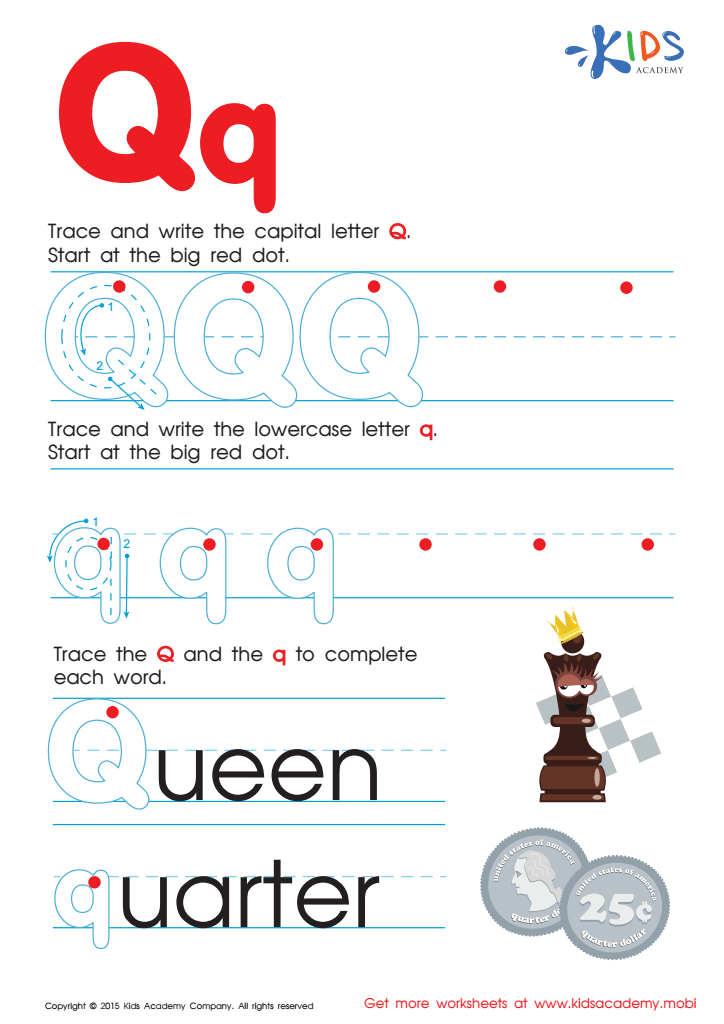
Letter Q Tracing Page
Learn the letter "Q"! Trace and write it a few times in upper and lowercase. Then help the Queen by writing her initial letter. Finally, write "quarters" and practice with more alphabet worksheets.
Letter Q Tracing Page
Worksheet

Letter H Tracing Page
Trace the letter "H", then practice writing its lowercase form. Finally, choose your favorite form of transport and ride away! Get our worksheets to make learning fun and easy.
Letter H Tracing Page
Worksheet
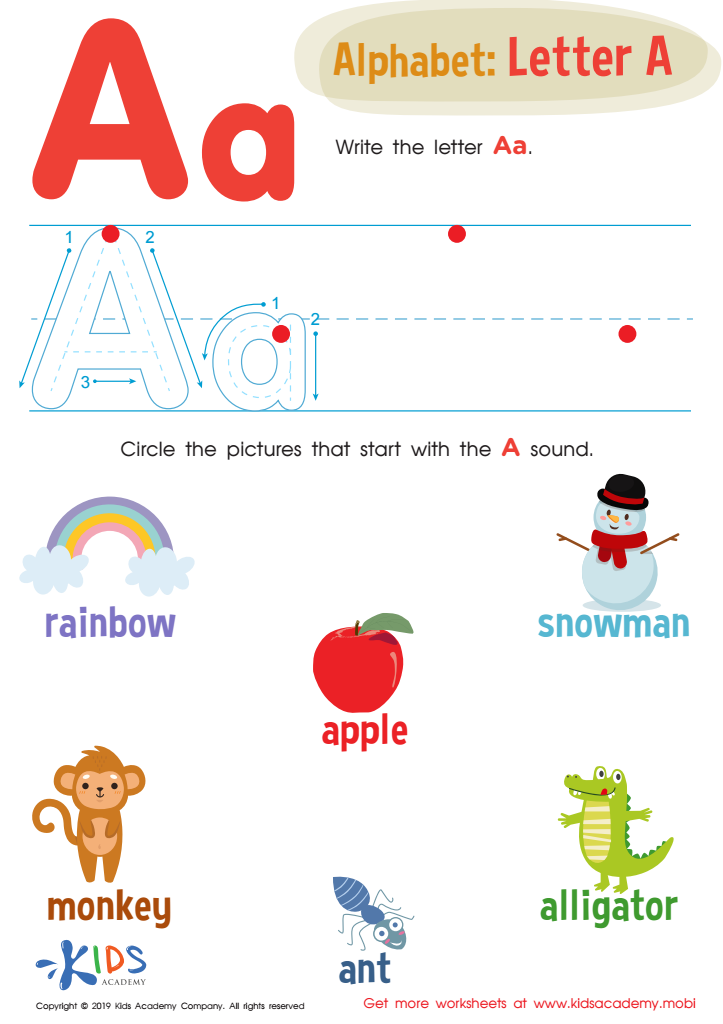
Letter A Tracing Worksheet
Learning the letter "A" is essential. This worksheet helps kids trace and write it, boosting their skill. They also circle pictures with the "A" sound, with both the word and picture provided. This helps them learn how to pronounce words like "apple" correctly.
Letter A Tracing Worksheet
Worksheet

Letter D Tracing Page
Trace and write capital and lowercase letter "D" with our free printable alphabet worksheet! Be careful not to mix up "b" and "d" - just look at the ducks and write their first letter. The dolphin wants to join the fun too - do you like dolphins? Get more fun worksheets and activities at Kids Academy!
Letter D Tracing Page
Worksheet
Join Kids Academy for Free
Who is primarily going to use this learning content?








Alphabet tracing and normal letter recognition are crucial skills for children aged 8-9, as they serve as foundational elements for literacy development. At this age, students are transitioning from learning letters as standalone shapes to integrating them into comprehensive reading and writing processes. By caring about these skills, parents and teachers can enhance a child's understanding of language, since recognizing letters helps in decoding words during reading and spelling during writing exercises.
Tracing letters reinforces proper letter formation and memory retention, promoting smoother transitions to writing fluency. As children practice these skills, they develop fine motor coordination, which is essential not only for writing but also for various daily tasks. Additionally, mastering letter recognition allows students to build their vocabulary and comprehension, which are critical for academic success in all subjects. It also fosters a love for reading by boosting confidence, as recognition opens doors to understanding books and engaging with texts.
Moreover, focusing on letter recognition helps identify any learning difficulties early on, allowing for timely intervention and support. Thus, priority should be given to these activities at home and in educational settings, ensuring children build a secure foundation for their future in literacy.








