Phonics practice Normal Phonics Worksheets for Ages 8-9
5 filtered results
-
From - To
Boost your child's reading skills with our Phonics Practice Worksheets for ages 8-9. Designed to enhance understanding of phonics, these engaging and educational worksheets make learning both effective and enjoyable. Each worksheet integrates fun activities like word matching, sorting, and reading exercises to build confidence in decoding and pronunciation. Suitable for various learning paces, these materials cater to students aiming to refine their phonetic skills. Download now from Kids Academy to provide your child with the essential tools for phonics mastery and lay the foundation for fluent reading. Start today and watch your child succeed!
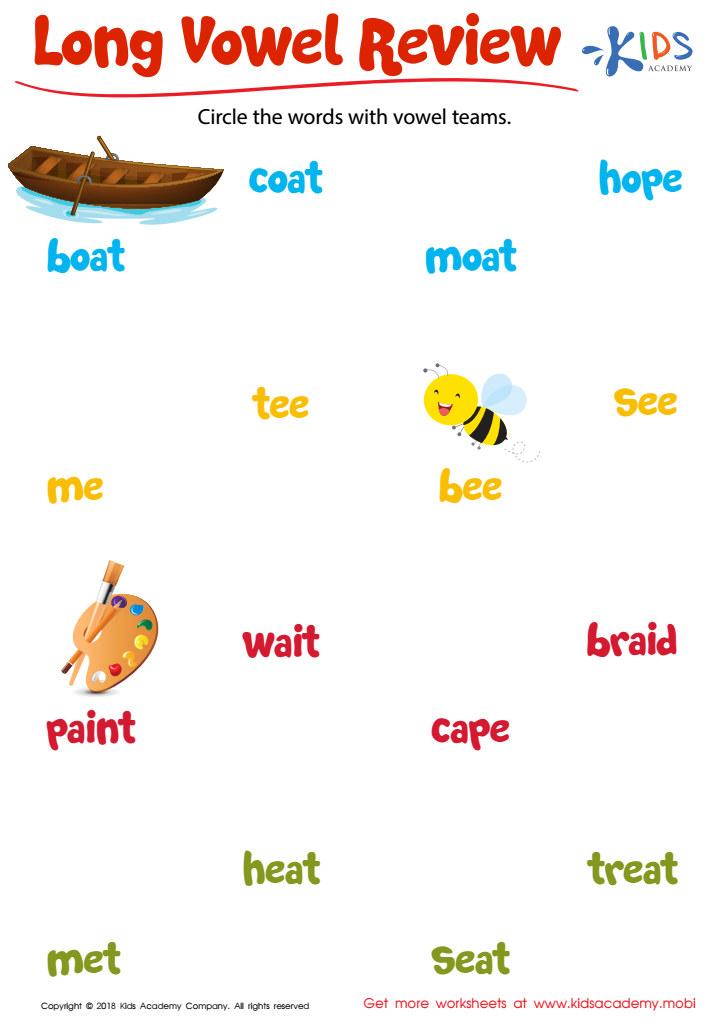
Long Vowel Review Worksheet
 Assign to My Students
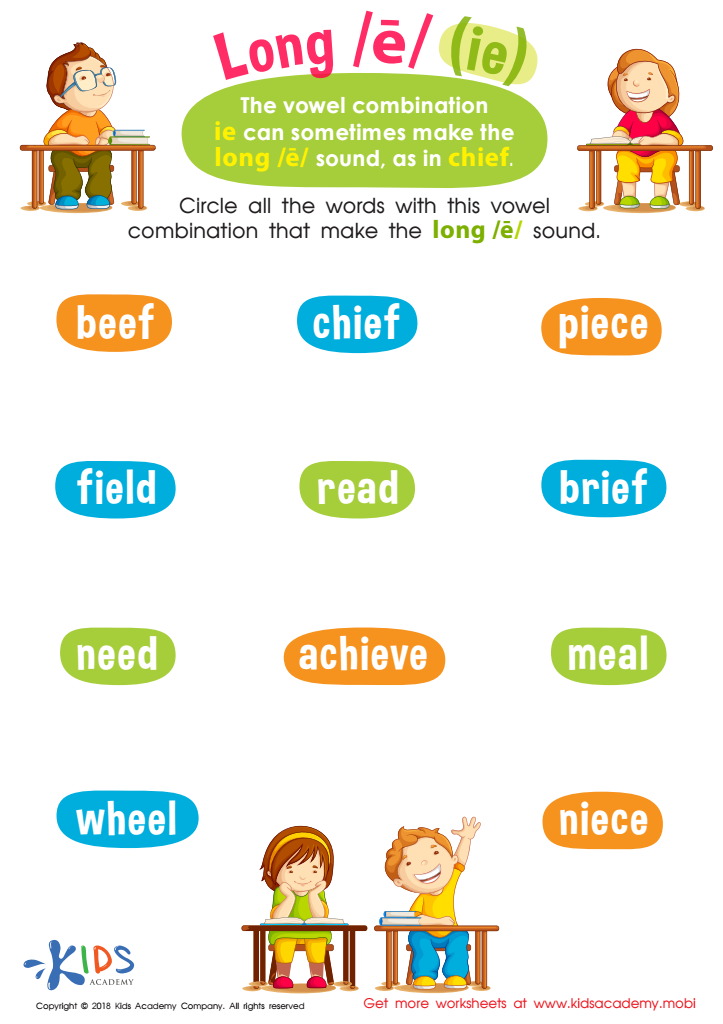
Reading: Long E and IE Worksheet
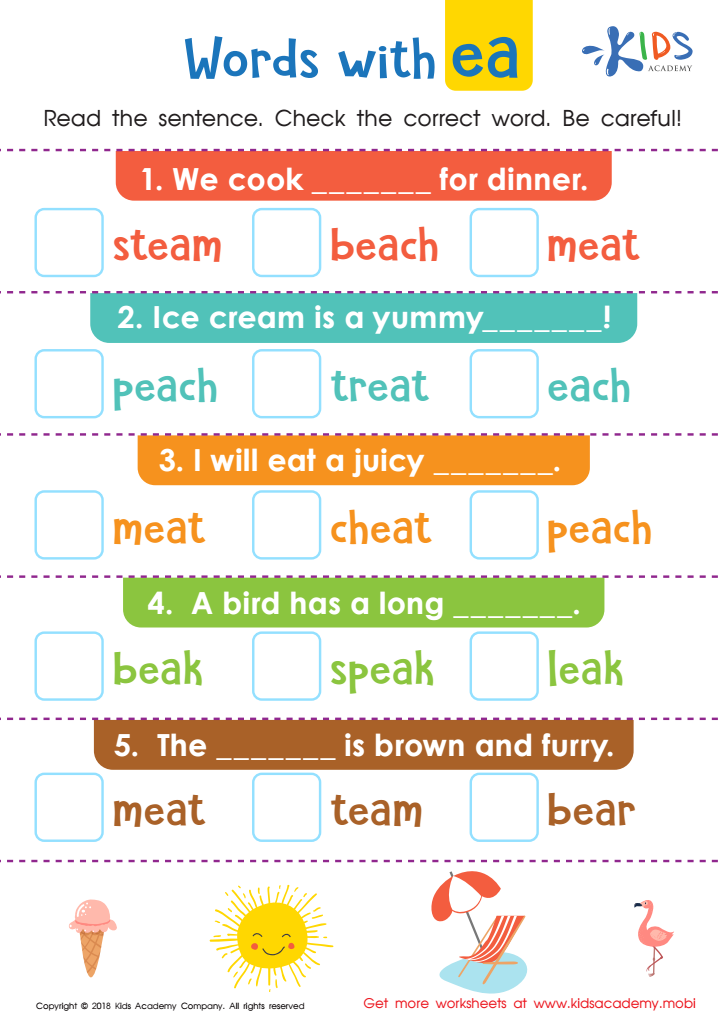
Words with ea Worksheet
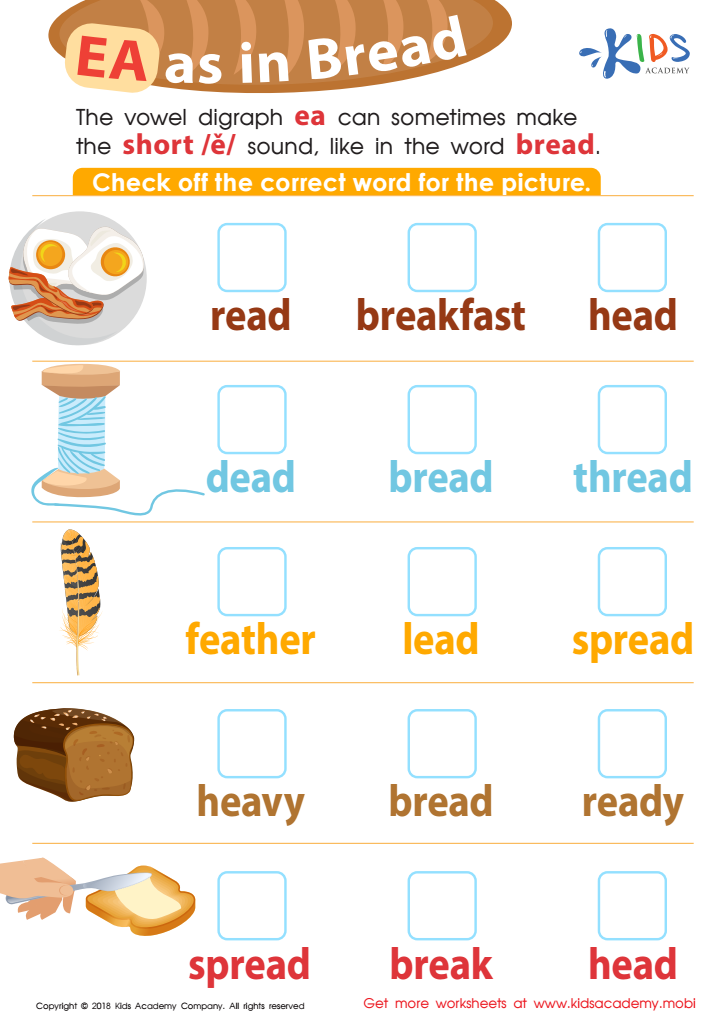
Reading: EA as in Bread Worksheet
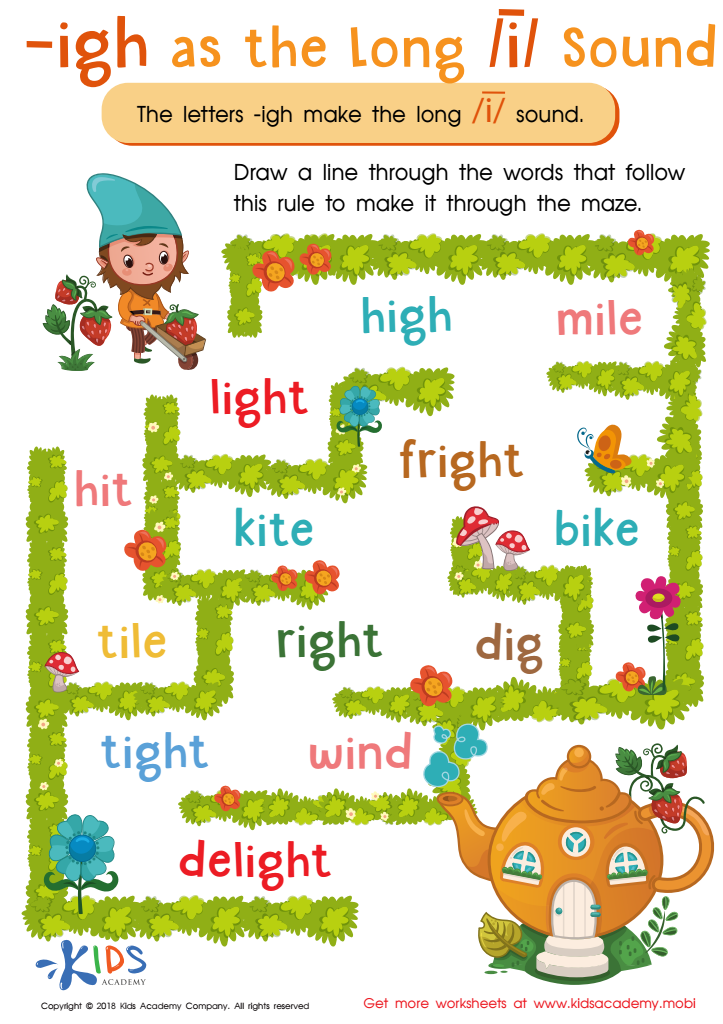
Reading: IGH as Long I Worksheet








Phonics practice centers on the relationship between letters and their sounds, allowing children ages 8-9 to enhance their reading and spelling abilities. For parents and teachers, prioritizing phonics is essential for several reasons.
Firstly, mastering phonics contributes significantly to a child's decoding skills, which are essential for reading fluency. When a child can effortlessly translate written language into spoken words, comprehension and enjoyment of reading naturally improve. As children progress through school, the ability to read proficiently becomes a crucial factor in learning across all subjects.
Secondly, strong phonics skills bolster spelling accuracy. Understanding the consistent patterns and rules in how words are constructed enables children to spell more confidently and correctly, enhancing their written communication.
Furthermore, phonics practice fosters language development and vocabulary growth. As children learn to decode new words, their exposure to diverse language terms expands, enhancing their cognitive and linguistic abilities.
Finally, engaging in regular phonics practice promotes a sense of achievement and confidence in young learners. Early success in reading can develop a positive attitude toward learning and school in general.
Given these benefits, parents and teachers should invest time and effort in providing consistent and effective phonics instruction, catering to each child's unique learning needs and ensuring a solid foundation for future academic success.







