Phonics recognition Normal Phonics Worksheets for Ages 8-9
4 filtered results
-
From - To
Explore our engaging Phonics Recognition Worksheets designed specifically for children aged 8-9. These resources provide valuable practice to enhance reading skills and promote phonetic awareness. Our Normal Phonics Worksheets offer a variety of fun and interactive exercises that encourage learners to recognize and decode sounds, reinforcing their understanding of phonics and building confidence in their reading abilities. With colorful illustrations and age-appropriate content, these worksheets are perfect for classroom use or at-home learning, ensuring that students stay motivated and engaged. Equip your young learners with the essential phonics skills they need to excel in literacy. Start their phonics journey today!
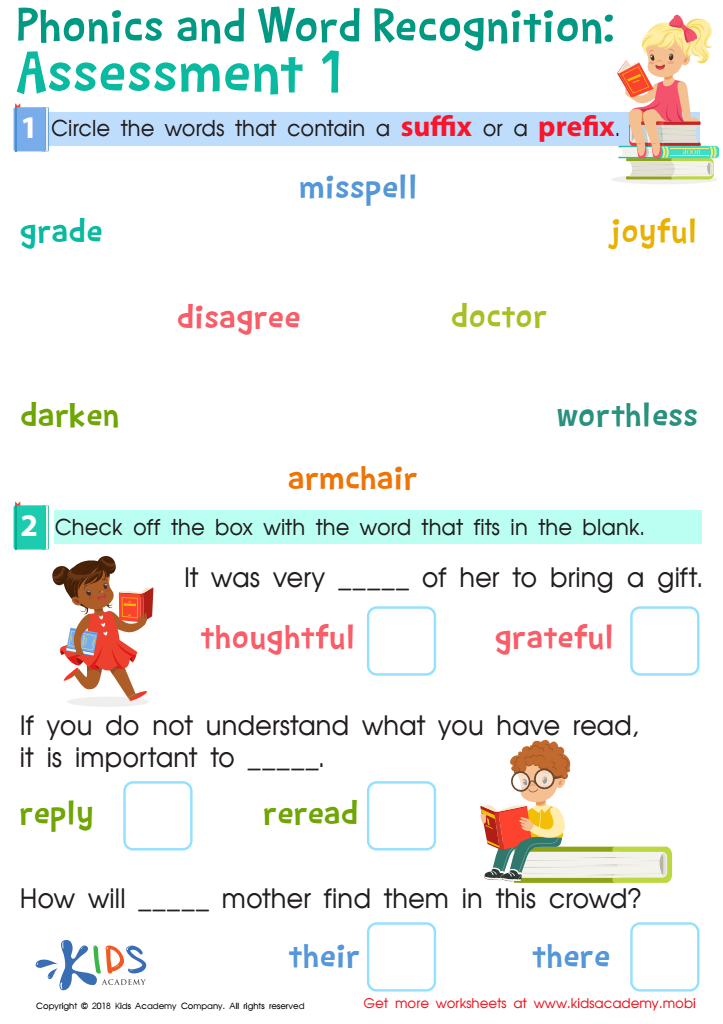
Phonics and Word Recognition: Assessment 1 Worksheet
 Assign to My Students
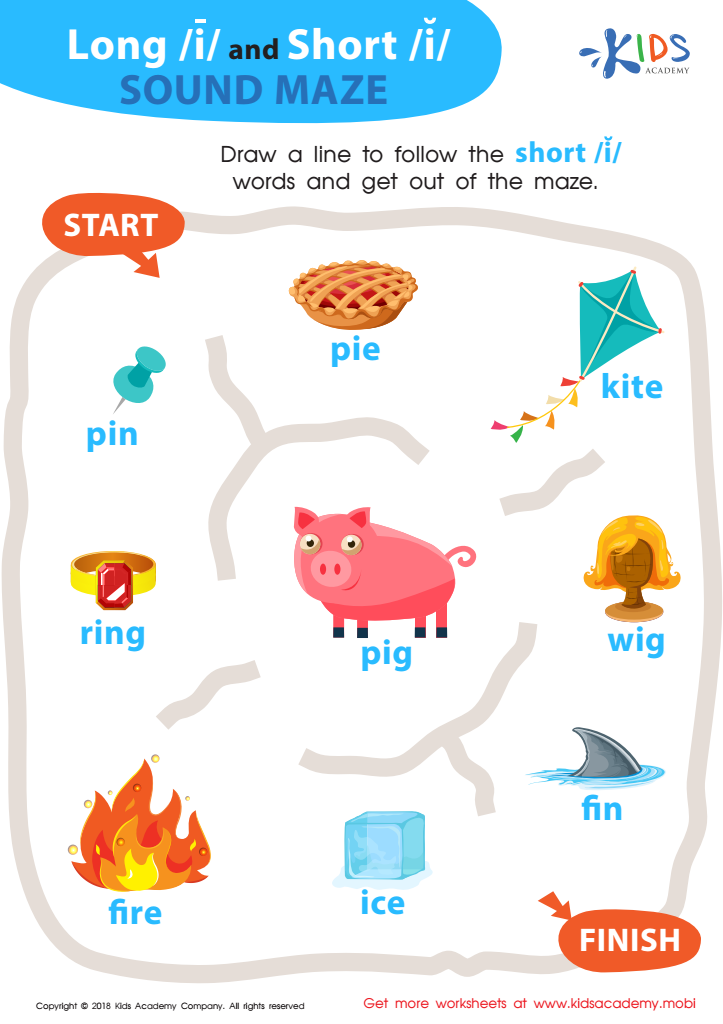
Reading: Long I and Short I Sound Maze Worksheet
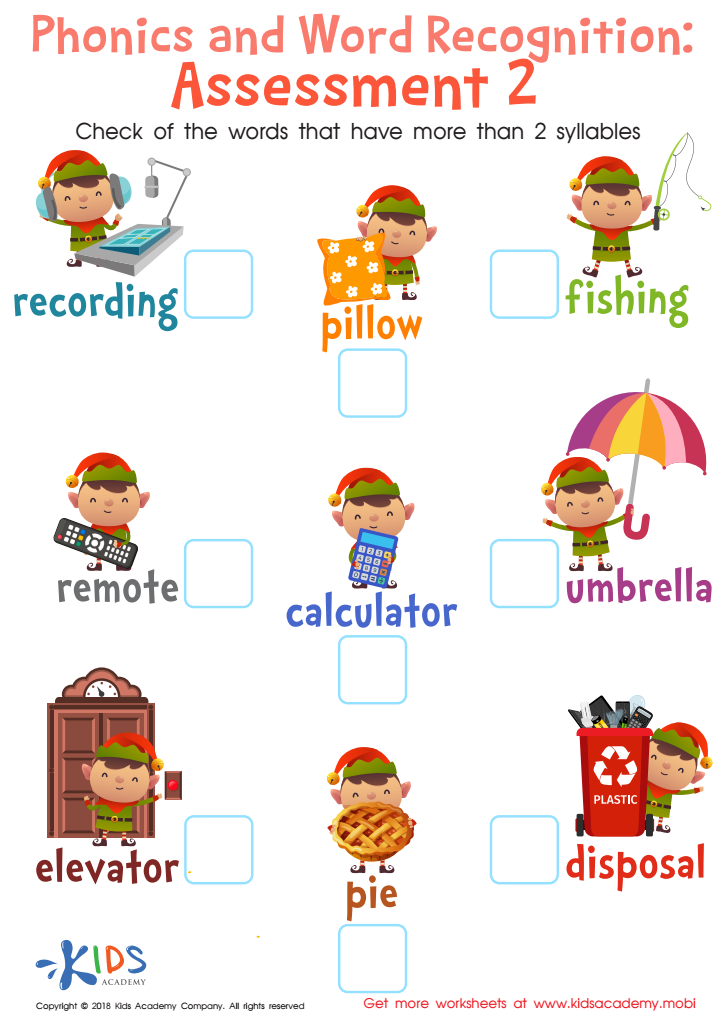
Phonics and Word Recognition: Assessment 2 Worksheet
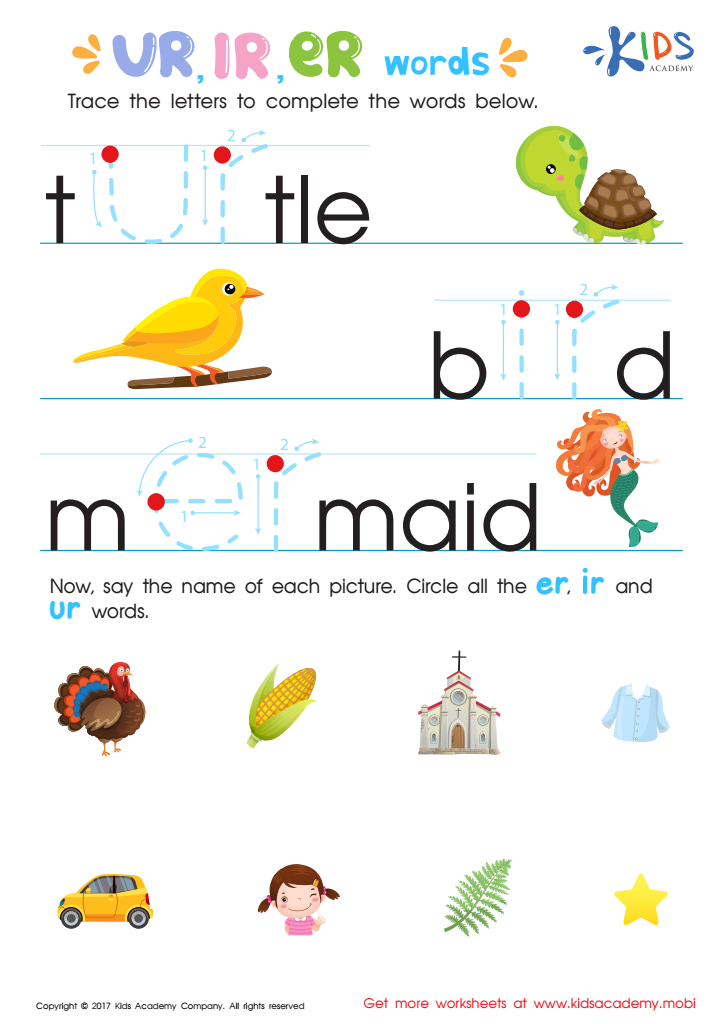
IR UR ER Words Worksheet








Phonics recognition is crucial for children ages 8-9, as it serves as the foundation for reading proficiency and literacy. During this developmental stage, students are expected to transition from learning to read to reading to learn. Mastering phonics—understanding the relationship between letters and sounds—enables children to decode unfamiliar words, enhancing their vocabulary and comprehension skills.
Parents and teachers should be particularly concerned with phonics recognition because it directly influences a child’s academic success across subjects. Strong phonics skills support not just English language proficiency but also facilitate better performance in math and science, where reading complex problems becomes essential. Additionally, proficient readers are often more confident learners, positively impacting their overall attitude toward education.
Moreover, recognizing potential reading difficulties early allows for timely intervention strategies, which can prevent more severe challenges down the road. Creating a supportive environment at home and in the classroom, through engaging phonics activities and resources, reinforces learning. Ultimately, fostering phonics recognition helps cultivate a lifelong love for reading, encourages critical thinking, and equips children with essential tools for future learning endeavors. Therefore, investing in phonics awareness is a pivotal step in nurturing thriving learners.







