
Spelling improvement Normal Phonics Worksheets for Ages 8-9
3 filtered results
Difficulty Level
Grade
Age
-
From - To
Subject
Activity
Standards
Boost your child's spelling skills with our engaging Normal Phonics Worksheets designed specifically for ages 8-9! These worksheets focus on phonics-based activities that enhance spelling proficiency through fun exercises and interactive learning. Kids will explore essential spelling patterns, phonemic awareness, and word recognition while developing their vocabulary. Our thoughtfully crafted materials support different learning styles and promote independent practice. Ideal for both classroom and at-home learning, these worksheets will help young learners gain confidence in their spelling abilities. Access our collection today and watch your child's spelling flourish as they build a strong foundation in language skills!
Favorites
With answer key
Interactive
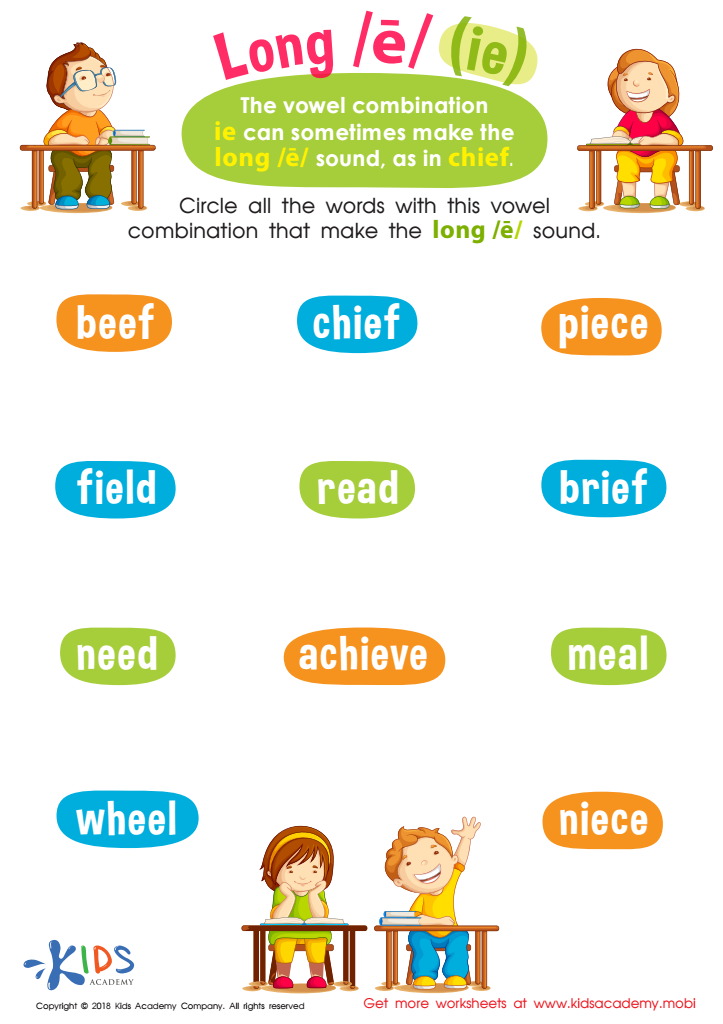
Reading: Long E and IE Worksheet
Ask your child to name some words with the long /e/ sound they hear every day. Then, read aloud all the words in the worksheet with them. Ask them to circle the words containing ie that make this sound.
Reading: Long E and IE Worksheet
Worksheet
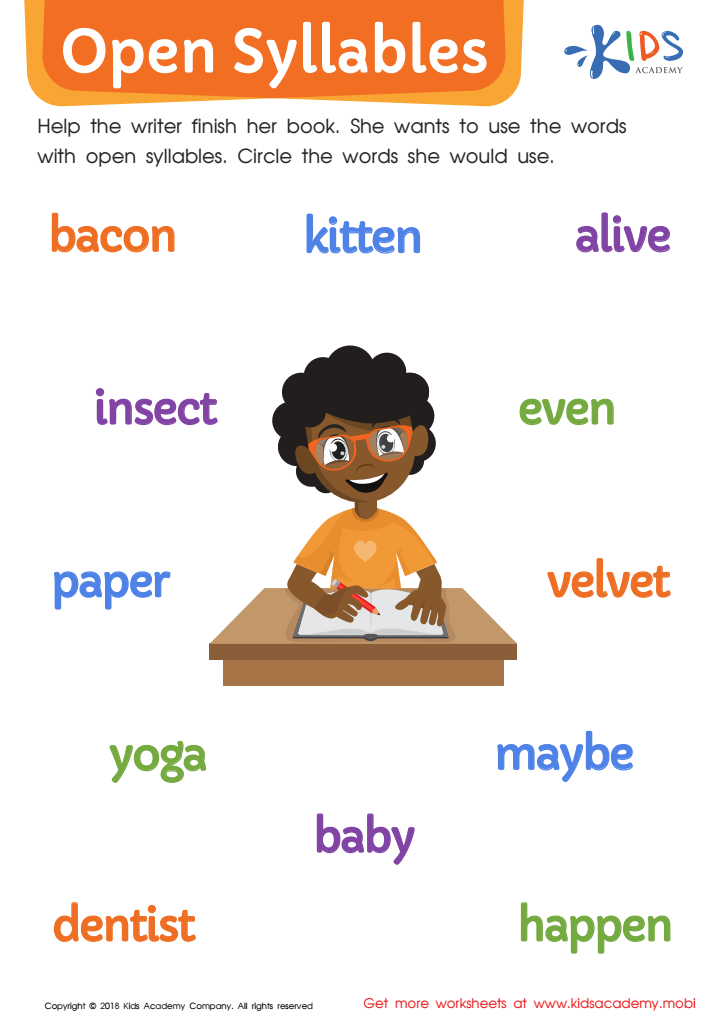
Open Syllables Worksheet
Before beginning this worksheet, make sure your child knows what open syllables are. If not, take time to teach them with examples. Then, help the writer finish her book by circling words with open syllables. She needs your child's help!
Open Syllables Worksheet
Worksheet
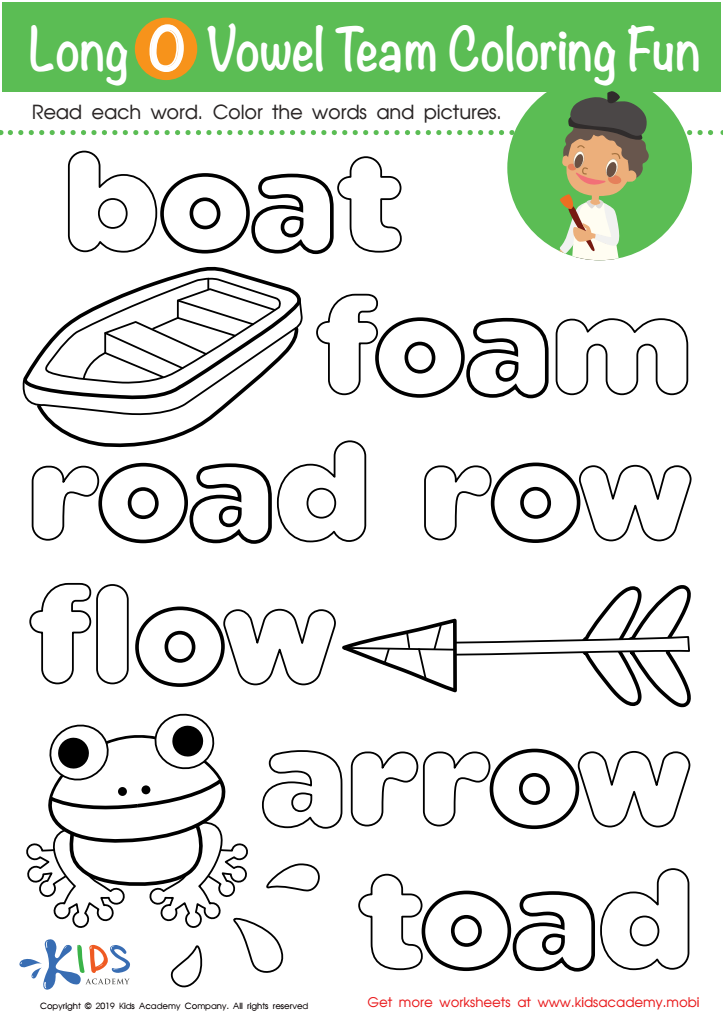
Long O Vowel Team Coloring Worksheet
Divide your class into teams and have them work together to identify and pronounce the long O sound in words like "boat" and "flow". As they read aloud, have the rest of the class listen attentively. Then let teams color in the words and matching pictures, reinforcing the lesson. This simple printout is perfect for phonics lessons and a fun way to energize your class.
Download (PDF)
 Assign to My Students
Assign to My Students
Long O Vowel Team Coloring Worksheet
Worksheet
Join Kids Academy for Free
Who is primarily going to use this learning content?








Spelling improvement through Normal Phonics for ages 8-9 is crucial for several reasons. At this developmental stage, children are honing their literacy skills, which serve as foundational tools for their academic success. A strong grasp of phonics helps young learners understand the relationship between letters and sounds, thereby enhancing their reading and writing capabilities.
Parents and teachers should care about spelling improvement because proficient spelling not only aids in clear communication but also bolsters children’s confidence in their abilities. Struggling with spelling can lead to frustration, diminishing a child's enthusiasm for learning. By reinforcing phonics, educators can help mitigate these challenges, leading to greater engagement and motivation.
Furthermore, mastering spelling can have a positive ripple effect on overall language arts performance. It nourishes vocabulary comprehension, promotes better reading fluency, and supports more effective expression of ideas in writing.
In essence, focusing on spelling improvement fosters a holistic approach to learning; it equips children with precise communication skills essential for their current academic pursuits and future endeavors. By prioritizing Normal Phonics, we cultivate a generation of confident, skilled learners ready to tackle more complex language concepts in subsequent grades.







