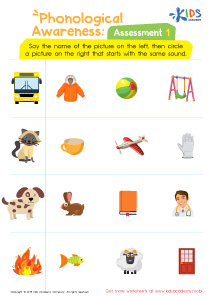
Sound recognition Normal Vowels Worksheets for Ages 8-9
3 filtered results
Difficulty Level
Grade
Age
-
From - To
Subject
Activity
Standards
Enhance your child's phonetic skills with our Sound Recognition Normal Vowels Worksheets, designed specifically for ages 8-9. These engaging printable activities target vowel sounds, helping young learners differentiate, identify, and master normal vowel pronunciations in a fun and interactive way. Each worksheet encourages practice through diverse exercises that promote auditory discrimination and vocabulary development. Perfect for at-home learning or classroom reinforcement, these worksheets provide a solid foundation in language arts. Discover the joy of learning with vibrant visuals and clear instructions, ensuring every child feels confident in their ability to recognize and articulate vowel sounds. Start their phonics journey today!
Favorites
With answer key
Interactive
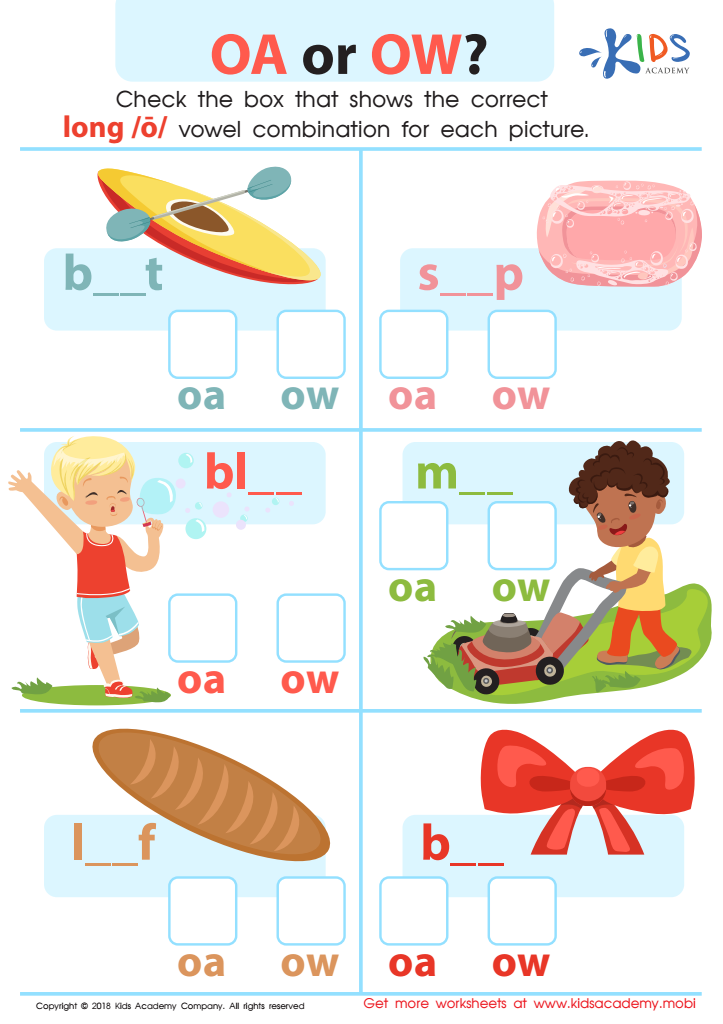
Reading: OA or OW Worksheet
This printable worksheet helps young and emergent readers with decoding words and understanding digraphs (two letters with one sound). It requires students to complete the spelling for each word based on the picture, focusing on /oa/ and /ow/ spellings. It's ideal for a reading classroom and for spelling practice.
Reading: OA or OW Worksheet
Worksheet

Long and Short U Worksheet
Revised: Spice up your lesson on long and short vowels with this fun printout! Kids read the words "tube" and "tub," then reinforce the sound by coloring in the words and pictures. It's a great way to make phonics class enjoyable!
Download (PDF)
 Assign to My Students
Assign to My Students
Long and Short U Worksheet
Worksheet
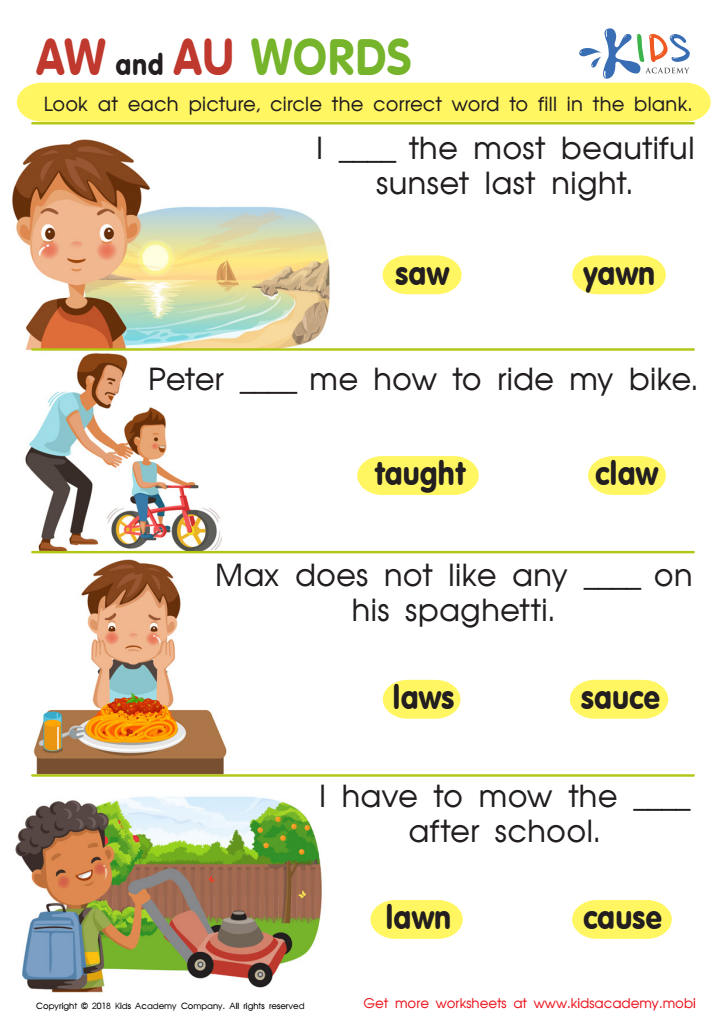
Reading: AW and AU Words Worksheet
This worksheet helps kids recognize that /au/ and /aw/ can make the same sound. Students read sentences and pick the correct word with one of the digraphs. Understanding digraphs improves decoding and reading fluency. Perfect for reading and phonics classes.
Reading: AW and AU Words Worksheet
Worksheet
Join Kids Academy for Free
Who is primarily going to use this learning content?





Sound recognition of normal vowels is crucial for children aged 8-9, as it forms a foundational skill that significantly impacts their overall literacy development. At this age, children are progressing from learning to read to reading to learn, making robust reading skills essential. Mastery of vowel recognition aids in decoding words, enhancing the ability to read fluently and accurately.
Incorporating vowel sound recognition into early grade learning promotes phonemic awareness, which is vital for spelling and writing. Children who understand vowel sounds can better grasp word structures, leading to improved vocabulary and comprehension skills. This proficiency not only boosts confidence in reading but also cultivates a love for learning.
Moreover, when parents or teachers prioritize sound recognition, they foster academic success and provide children with strategies to tackle more complex texts in the future. Engaging in activities that encourage sound recognition can also support language development, critical thinking, and auditory processing skills. By focusing on individual vowel sounds, adults can help young learners to create lasting connections between sounds and letters, setting a solid foundation for lifelong reading and communication skills. In summary, sound recognition is integral to supporting students' academic journeys and enhancing their future learning potential.