Associative learning Normal Worksheets for Ages 8-9
3 filtered results
-
From - To
Discover our engaging "Associative Learning Normal Worksheets" designed for children aged 8-9, where critical thinking and creativity intersect! These worksheets aim to develop essential cognitive skills by helping young learners identify connections between concepts, words, and images. Through fun exercises and interactive activities, kids will enhance their ability to associate ideas and improve memory retention. Our resources support diverse learning styles, ensuring every student can thrive. Perfect for homeschooling or classroom use, these worksheets create a stimulating environment that fosters independent thinking and problem-solving abilities. Empower your child’s learning journey today with our comprehensive and thoughtfully crafted worksheets!
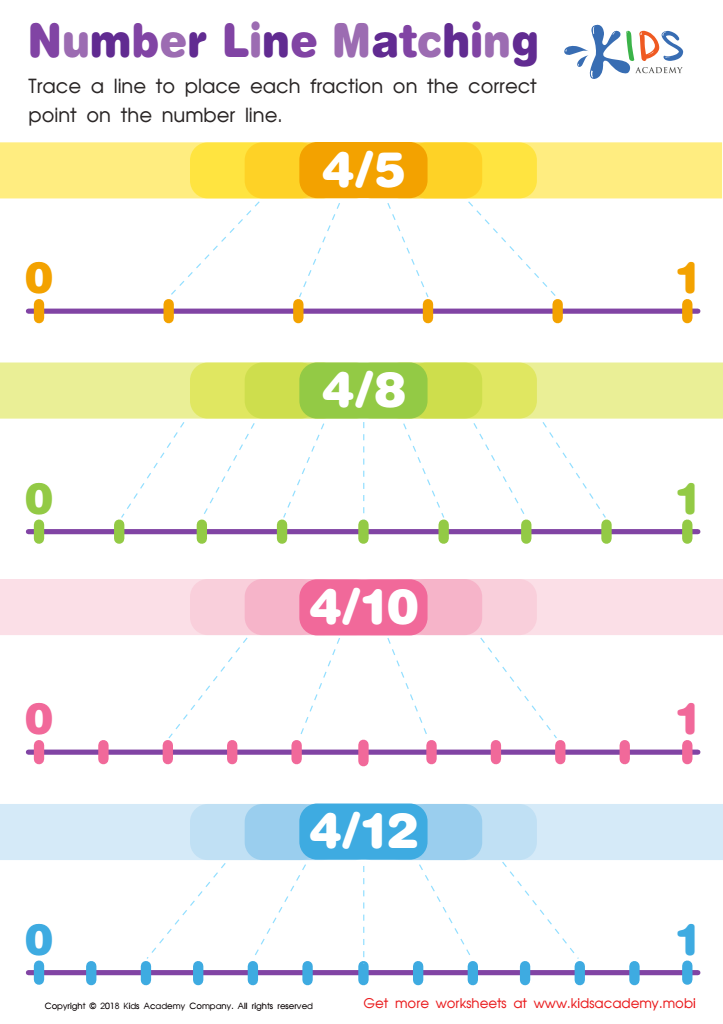
Number Line Matching Worksheet
 Assign to My Students
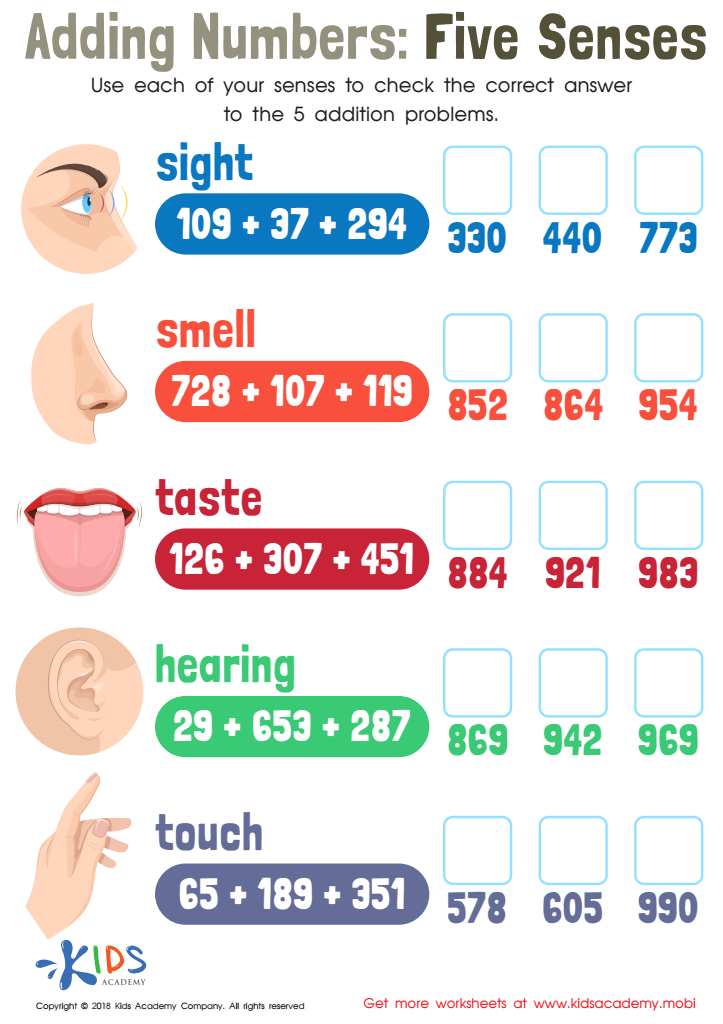
Adding Numbers: Five Senses Worksheet







Associative learning is a vital cognitive process in which children form connections between ideas, experiences, or concepts. For kids aged 8-9, this type of learning is particularly significant because it lays the foundation for more advanced thinking skills, impacting their academic and social development.
In these early stages, children start to grasp complex relationships between different subjects, enabling them to better understand math concepts, language nuances, and scientific principles. For instance, associating the concept of addition with real-life scenarios, such as sharing toys, helps solidify their mathematical understanding.
Moreover, associative learning enhances problem-solving abilities. By making connections between new information and what they already know, children become more capable of applying their knowledge to different situations. This skill is crucial not only academically but also socially, as they learn to recognize patterns in social cues and interactions.
For parents and teachers, promoting an environment rich in associative learning is essential. Incorporating games, storytelling, and hands-on activities encourages children to explore these connections more freely. By caring about associative learning, adults can support holistic development, helping children to become more engaged, confident, and adept learners as they grow.








