Differentiating goods/services Normal Worksheets for Ages 8-9
3 filtered results
-
From - To
Welcome to our "Differentiating Goods/Services Normal Worksheets" designed specifically for ages 8-9. These engaging, educational resources help young learners grasp the important concepts of goods and services in a fun and interactive way. With a variety of activities, children will explore the differences between tangible products and services provided by businesses, enhancing their critical thinking skills. Ideal for classroom use or at-home learning, these worksheets come packed with colorful illustrations and clear instructions, making them easy to navigate. Download now to enrich your child’s understanding of economics and foster an early appreciation for the world of commerce!
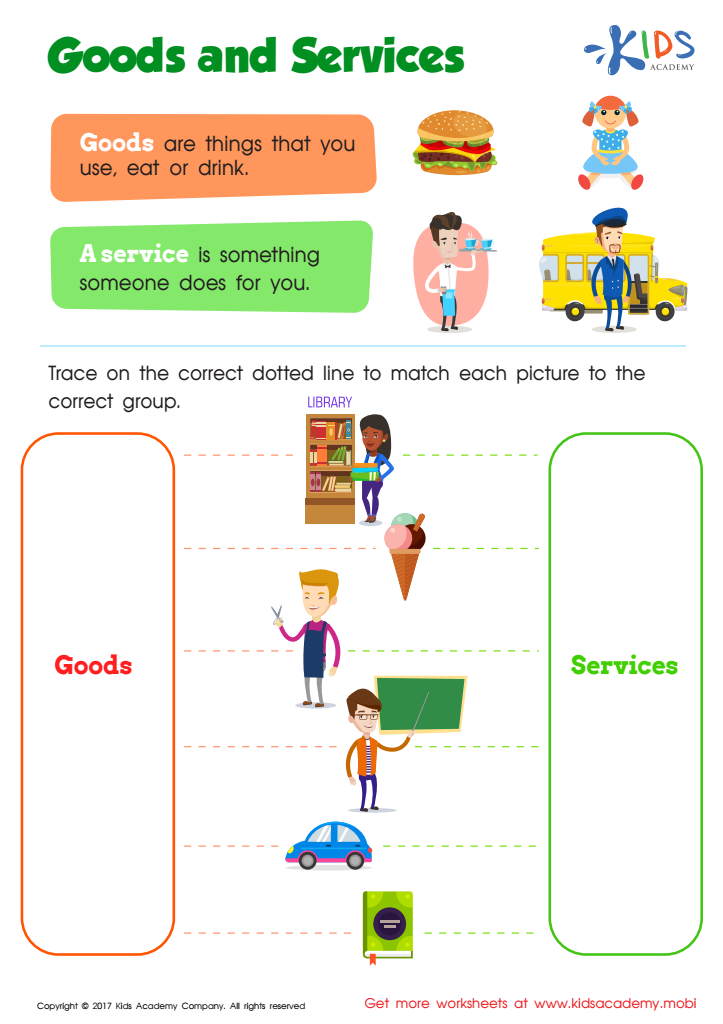
 Assign to My Students
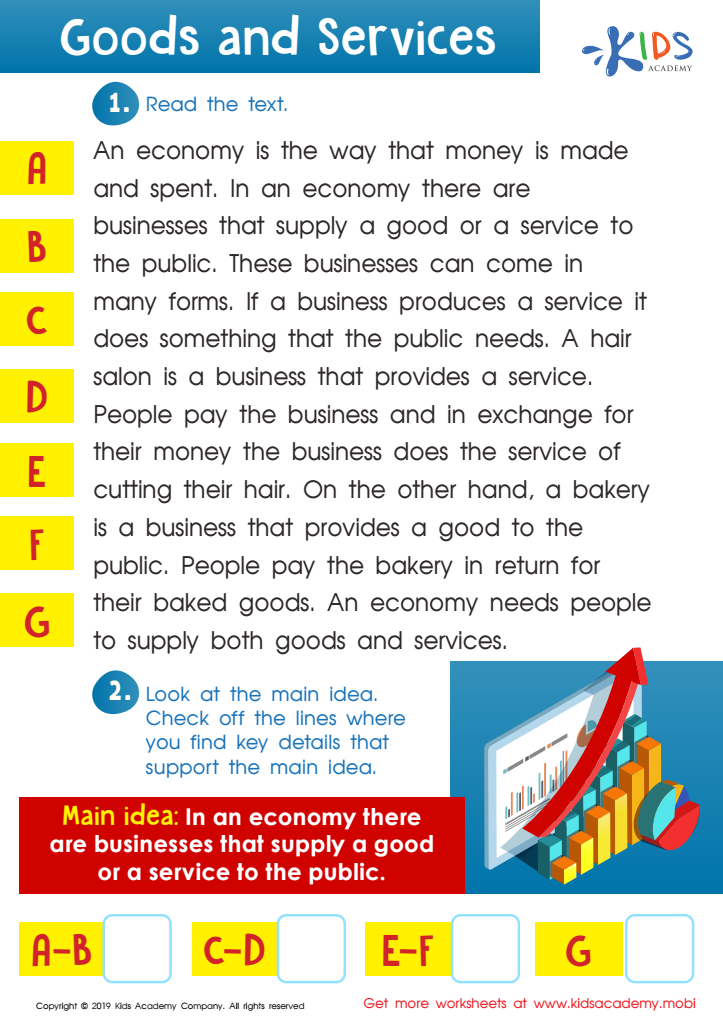
Goods and Services Worksheet
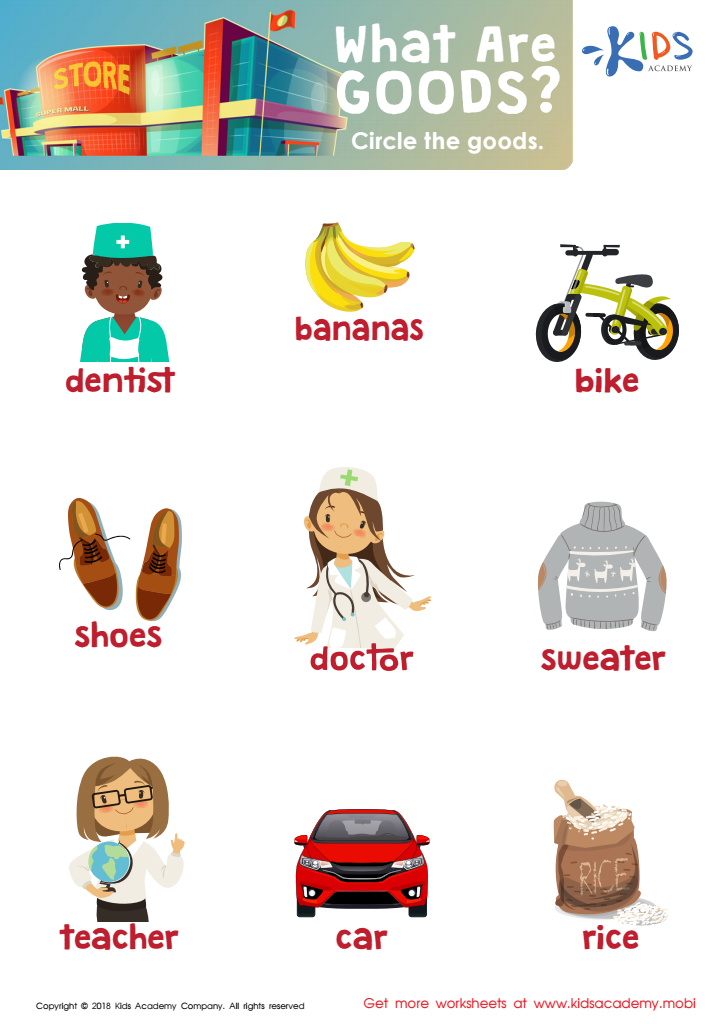
What Are Goods? Worksheet







Differentiating goods and services refers to the practice of tailoring products or offerings to meet the varied needs and preferences of different individuals. For children aged 8-9, this concept is important for several reasons.
Firstly, children at this age are beginning to develop their own identities and preferences. By exposing them to differentiated goods and services, such as books, toys, or educational programs, parents and teachers can foster a sense of individuality and self-expression. This helps children feel valued and understood.
Secondly, differentiation encourages engagement. When children are presented with options that resonate with their interests, they are more likely to participate actively and enthusiastically. This can enhance their learning experiences, making education more enjoyable and effective.
Additionally, learning about differentiation helps children understand diversity and consumer choices in their environment. This knowledge cultivates critical thinking skills and the ability to make informed decisions as they grow.
Lastly, parents and teachers who recognize the importance of differentiated goods and services can better support children in achieving their full potential. By providing tailored resources, they promote academic success, social skills, and emotional well-being, laying a solid foundation for lifelong learning and growth.








