
Mathematical reasoning Normal Worksheets for Ages 8-9
11 filtered results
Difficulty Level
Grade
Age
-
From - To
Subject
Activity
Standards
Discover our engaging Mathematical Reasoning Normal Worksheets, specifically designed for children aged 8-9. These worksheets aim to strengthen critical thinking and problem-solving skills through fun and challenging math exercises. With various topics including logic puzzles, word problems, and number patterns, students will enhance their understanding of mathematical concepts in a hands-on way. Each activity is tailored to encourage independent learning and foster a love for mathematics. Perfect for classroom use or at-home practice, our resources align with educational standards to ensure a comprehensive mathematical foundation. Empower your child’s learning journey with engaging and effective materials that make math enjoyable!
Favorites
With answer key
Interactive
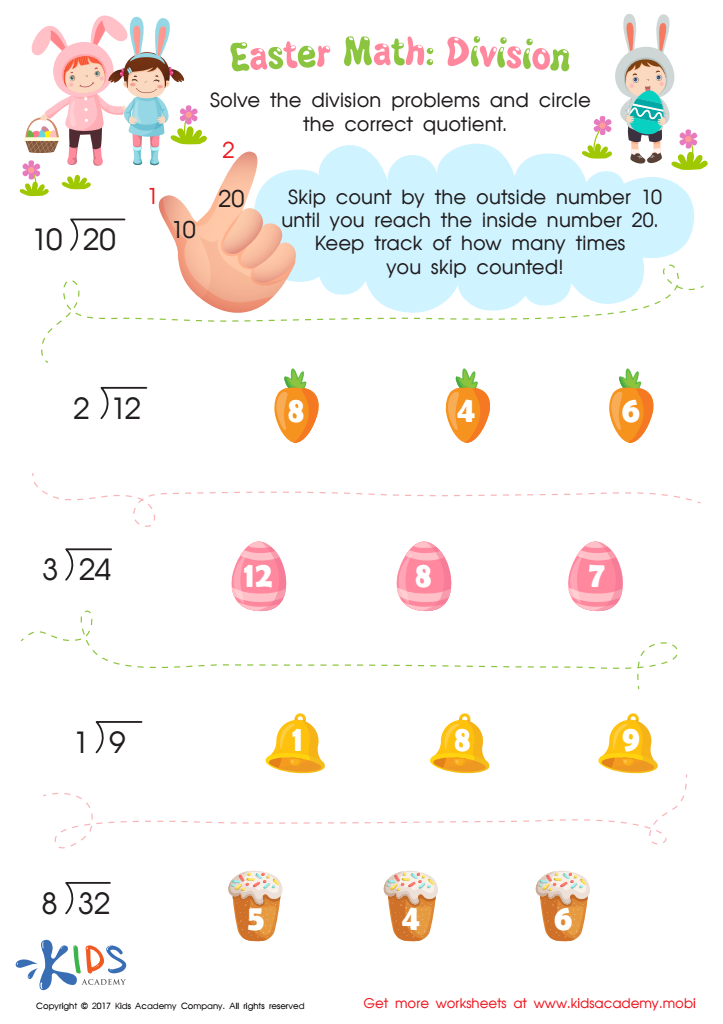
Division Worksheet
Try this Easter-themed PDF worksheet for grade 3: perfect for teaching division with a fun, new trick! It's full of bright, colorful pictures your child will love, and it's as easy as skip counting to solve the problems.
 Assign to My Students
Division Worksheet
Worksheet
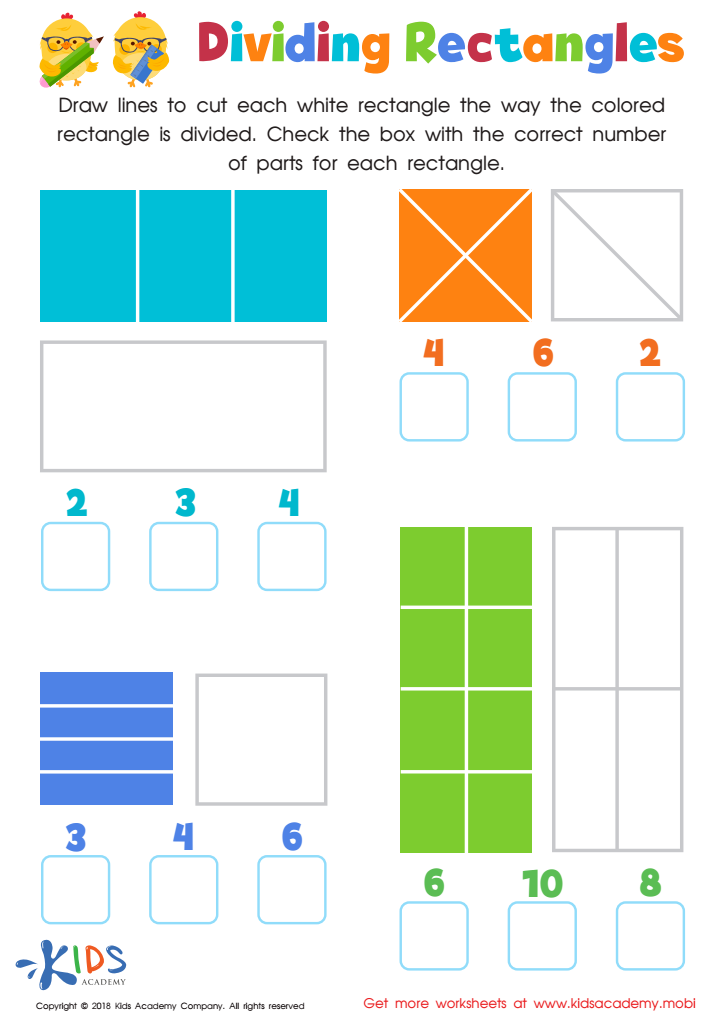
Dividing Rectangles Worksheet
Ask your child to draw lines to divide the white rectangles like the colored ones. Then, have them count the parts in each and choose the correct number. This worksheet will help them practice counting and dividing.
Dividing Rectangles Worksheet
Worksheet
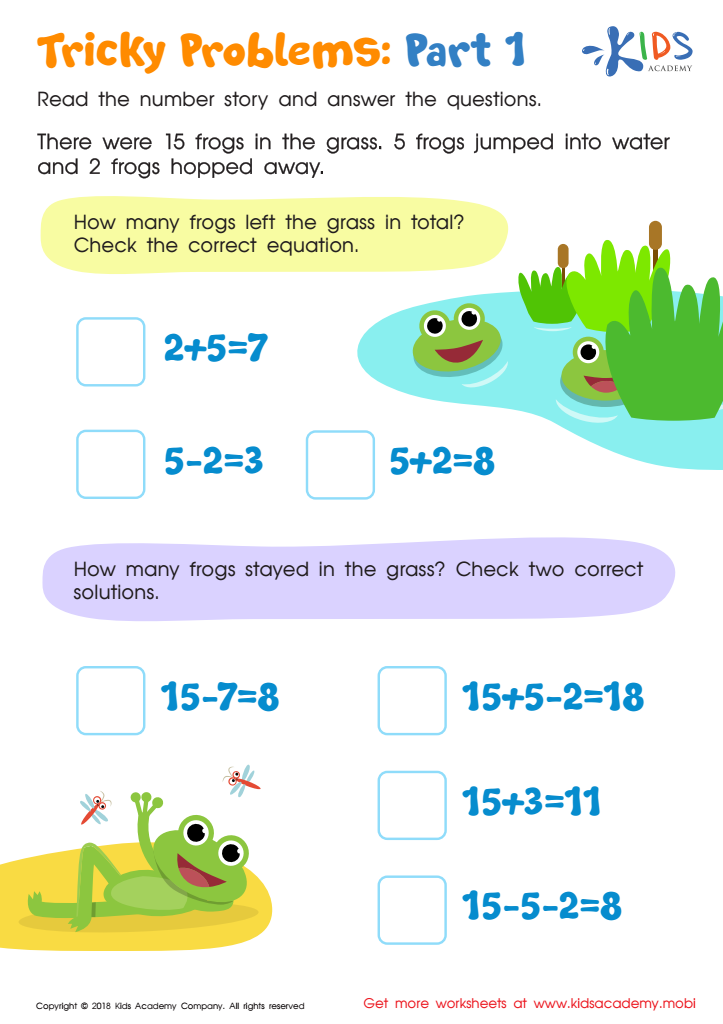
Tricky Problems Worksheet: Part 1
Visualizing word problems can help students solve them. This fun PDF worksheet encourages students to create mental images using math facts, then check boxes to match the equations for basic addition problems. It's a great way to build confidence in solving math.
Tricky Problems Worksheet: Part 1
Worksheet
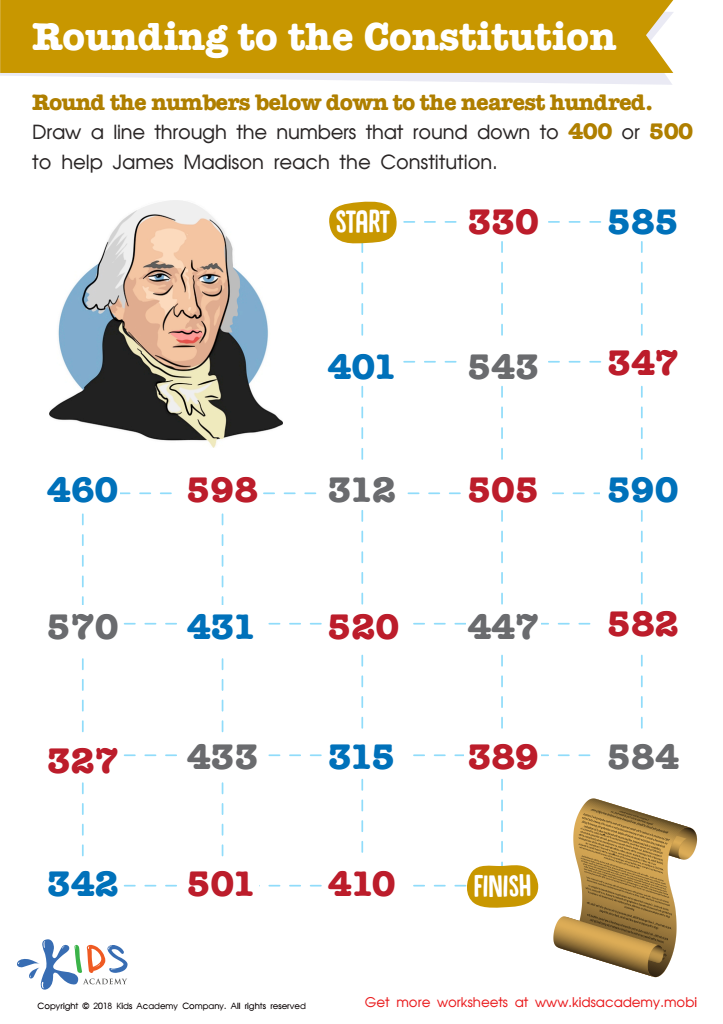
Rounding to the Constitution Worksheet
Before starting this traceable worksheet, ask your students: who is James Madison? If they know, you're doing great! If not, now's your chance to give a quick history lesson. Then, ask them to round the numbers to the nearest numbers. Get your students to draw a line through the numbers that round down to 400/500, to help James Madison reach the Constitution.
Rounding to the Constitution Worksheet
Worksheet
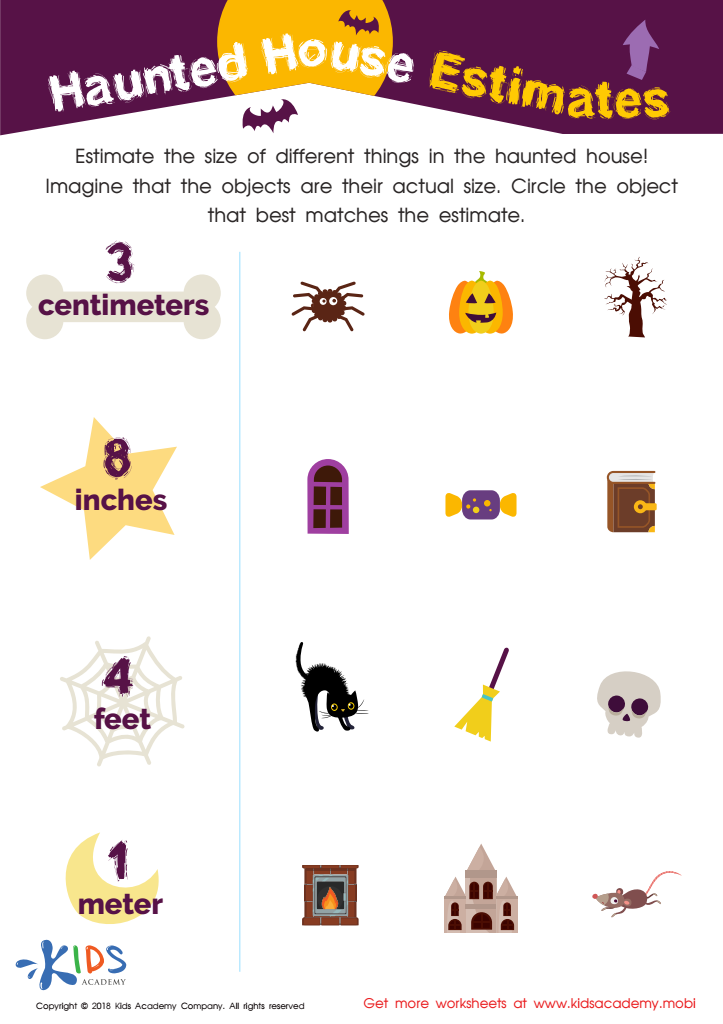
Haunted House Estimates Worksheet
Enliven your kid's learning with this printable worksheet! Have them estimate the size of objects and creatures in a haunted house, then circle the ones that match their estimates. They'll need to understand different measuring units beforehand. It's an exciting way to learn!
Haunted House Estimates Worksheet
Worksheet
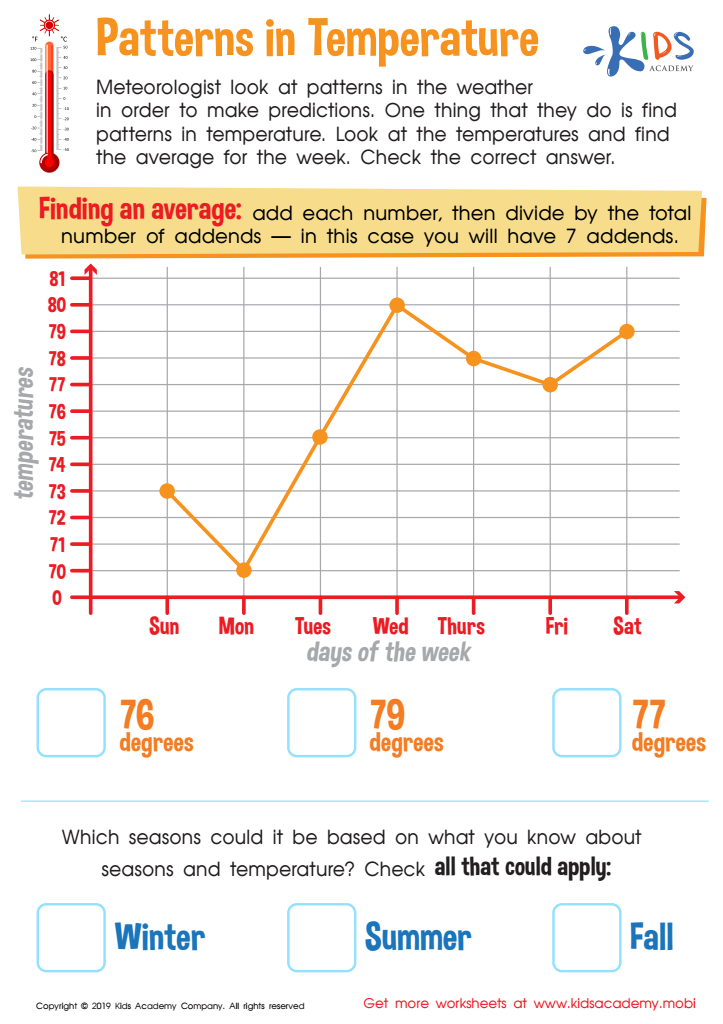
Patterns in Temperature Worksheet
Kids need to learn how to read and interpret data from graphs and charts. This free worksheet on temperature patterns helps them to do just that. They'll practice finding averages and answer questions in multiple-choice format. Plus, it provides a great learning experience!
Patterns in Temperature Worksheet
Worksheet
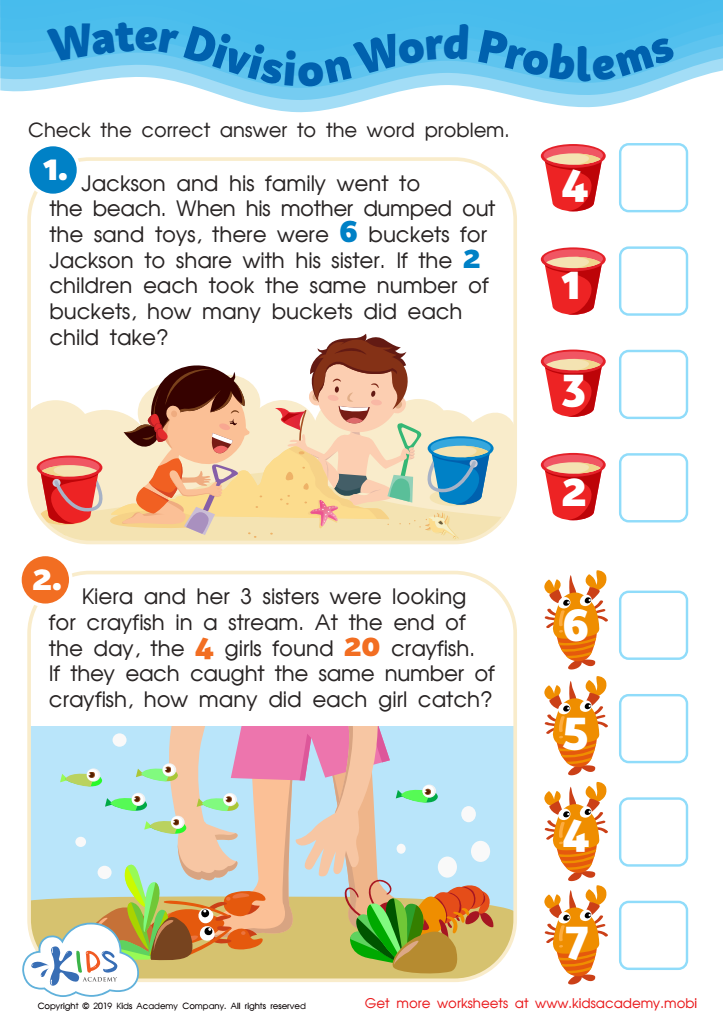
Water Division Word Problems Worksheet
Kids can sharpen their math skills with this fun PDF! They'll see pictures of friends at the beach, plus bold numbers and colorful pictures. All they need to do is read and understand the problem to find the answer - without even realizing they're doing division. A great way to make math enjoyable!
Water Division Word Problems Worksheet
Worksheet
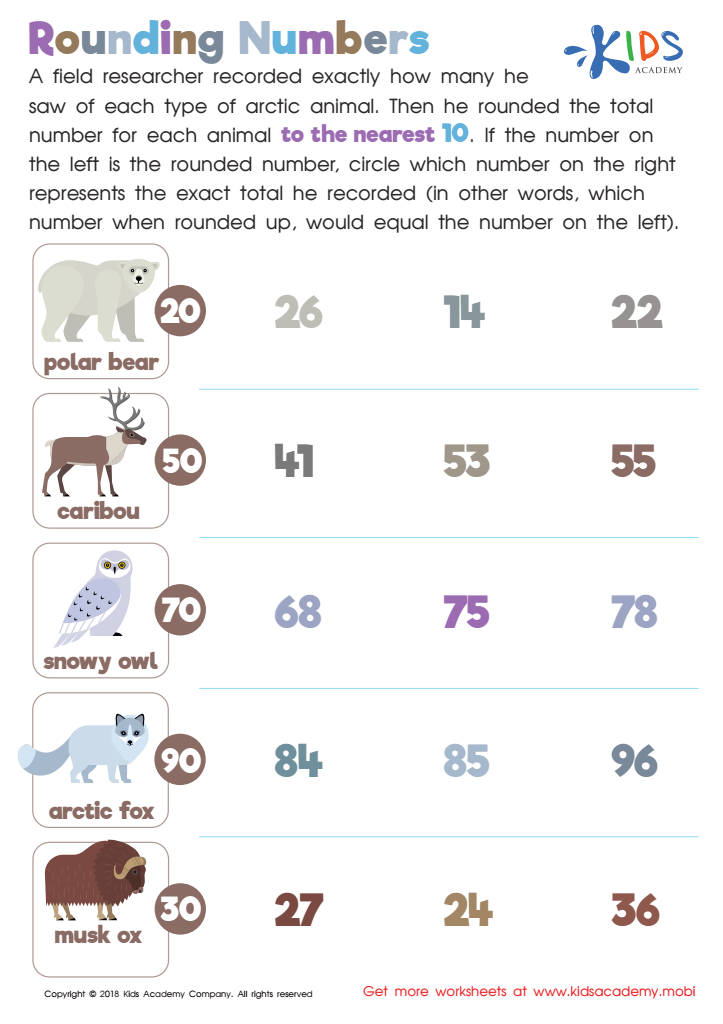
Rounding Numbers Worksheet
Take a trip north with this cute rounding math worksheet! Perfect for mastering number work, it adds a twist to the usual rounding practice. Help your child by getting them to view each animal picture to find the exact total of the rounded number. Then, look at the numbers on the right to determine what number was used to create the rounded total.
Rounding Numbers Worksheet
Worksheet
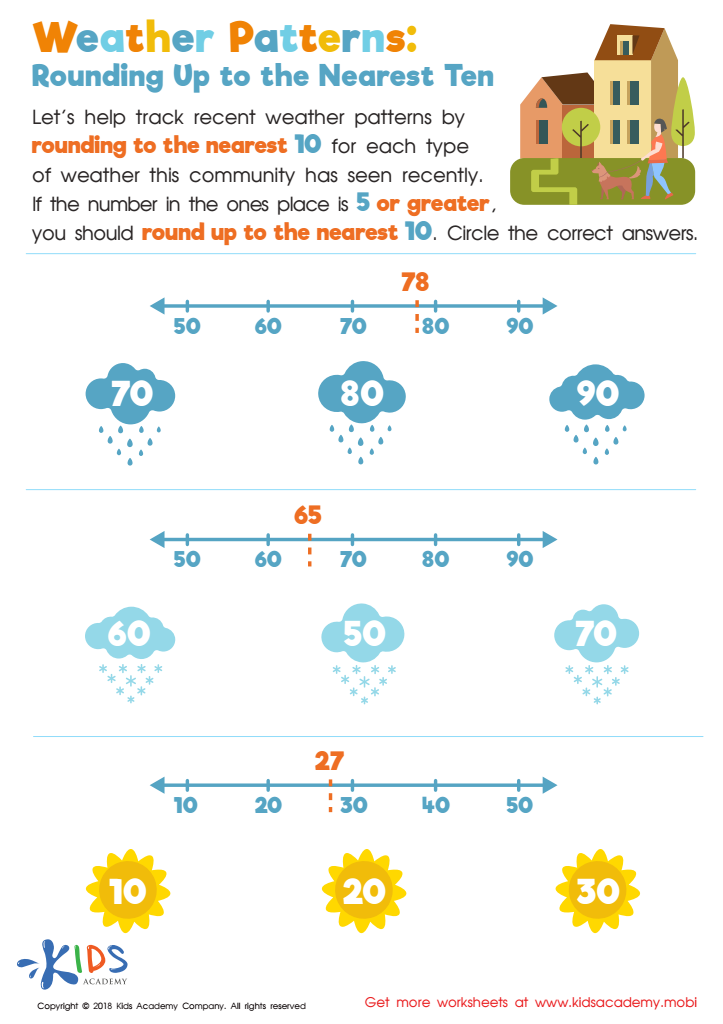
Weather Patterns Worksheet
Use this Weather Patterns worksheet to help your kids develop their mathematical skills. Get them to round the recent weather patterns to the nearest 10 and round up if the number in the ones place is 5 or higher. Work with them to figure out which answers are correct and get them to circle them.
Weather Patterns Worksheet
Worksheet
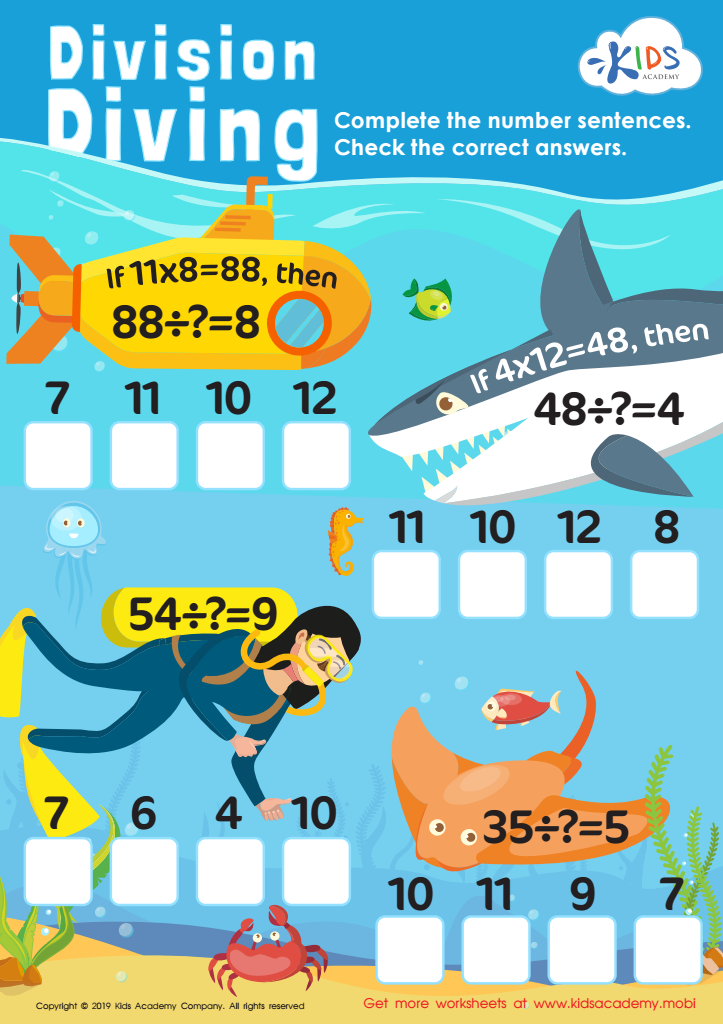
Division Diving Worksheet
Kids love exploring water and this free PDF worksheet is a great way to bring the fun and math together! Kids can help the underwater friends with number sentences, and use their fact family knowledge to solve for the missing number, then choose the correct answer. This worksheet is an enjoyable way for them to practice division!
Division Diving Worksheet
Worksheet
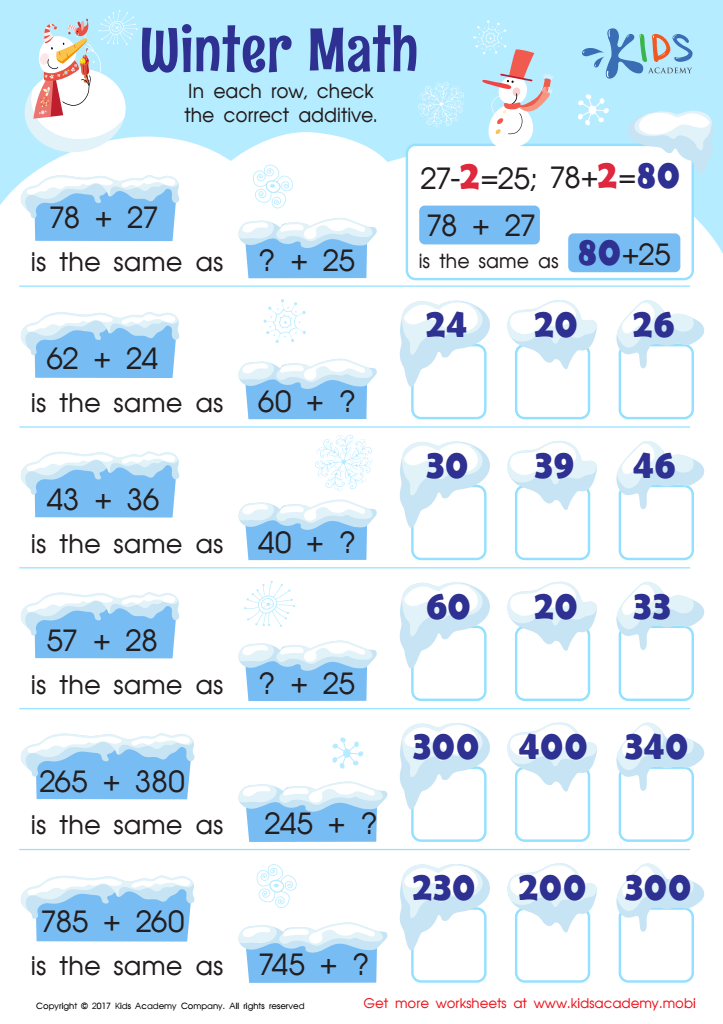
Free Addition Worksheet
Perfect for a wintry day, challenge your 3rd grader to compare addition equations and fill in the missing numbers in the PDF.
This winter-themed worksheet is sure to bring a smile while your 3rd grader practices their addition skills. Perfect for a blustery day, challenge your child to compare addition equations and complete the missing numbers in the PDF.
Free Addition Worksheet
Worksheet
Join Kids Academy for Free
Who is primarily going to use this learning content?








Mathematical reasoning is a crucial skill that allows children aged 8-9 to understand and apply mathematical concepts effectively. At this developmental stage, children are transitioning from basic arithmetic to more complex problem-solving involving reasoning and logical thinking. Parents and teachers should prioritize this skill because it forms the foundation for future mathematical learning and critical thinking.
Mathematical reasoning helps children make connections between different concepts, which is essential for their overall cognitive development. When students understand the "why" behind mathematical operations, they are more likely to retain their knowledge and apply it creatively in various contexts. This strengthens their confidence and independence in learning.
Furthermore, fostering mathematical reasoning prepares children for real-world problem-solving and decision-making tasks. As they encounter various mathematical challenges, the ability to reason helps them tackle these situations effectively. Moreover, in an increasingly data-driven world, strong mathematical skills enhance opportunities for future academic and career success.
Encouraging parents and teachers to nurture mathematical reasoning at a young age supports not only individual growth but also fosters a generation capable of navigating complex mathematical landscapes with confidence and ease. Thus, their investment in this foundational skill is crucial for holistic development in children.








