Recognizing number patterns Normal Worksheets for Ages 8-9
3 filtered results
-
From - To
Unlock the world of mathematics for your child with our "Recognizing Number Patterns Normal Worksheets" designed for ages 8-9. These engaging worksheets help students identify and understand various numerical sequences and patterns, a key skill in developing their mathematical understanding. Each printable activity encourages critical thinking and problem-solving, providing a fun, interactive way to reinforce essential math concepts. Perfect for classroom use or independent practice at home, our worksheets cater to diverse learning styles. Help your child build confidence in their math abilities and prepare them for future academic success with these carefully crafted activities! Explore the fun of number patterns today!
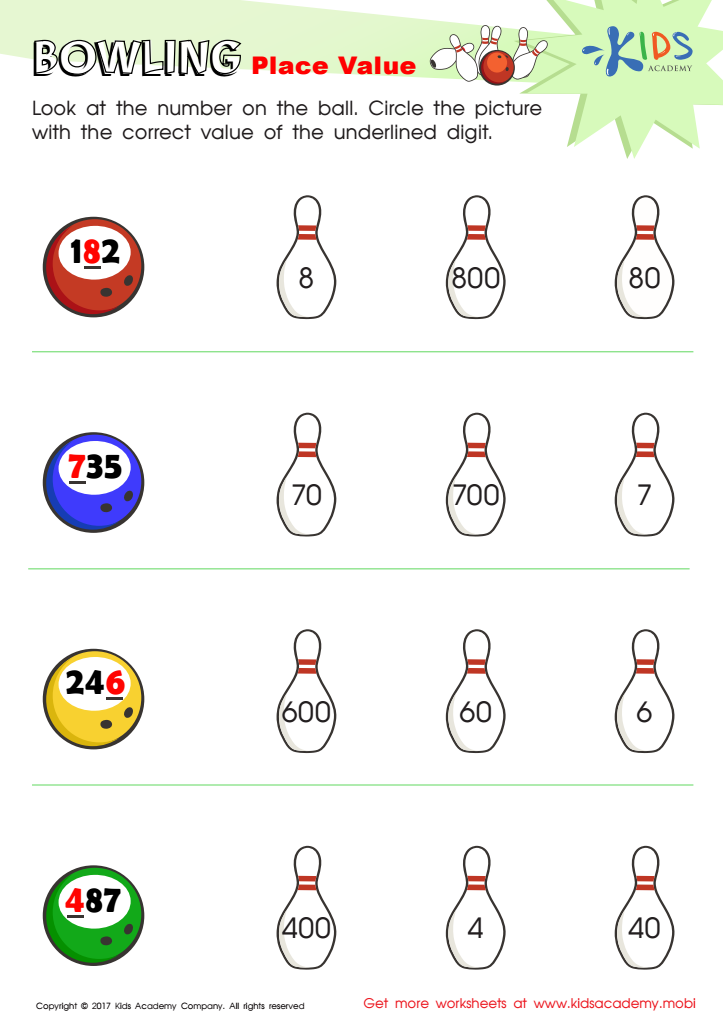
Place Value Worksheet
 Assign to My Students
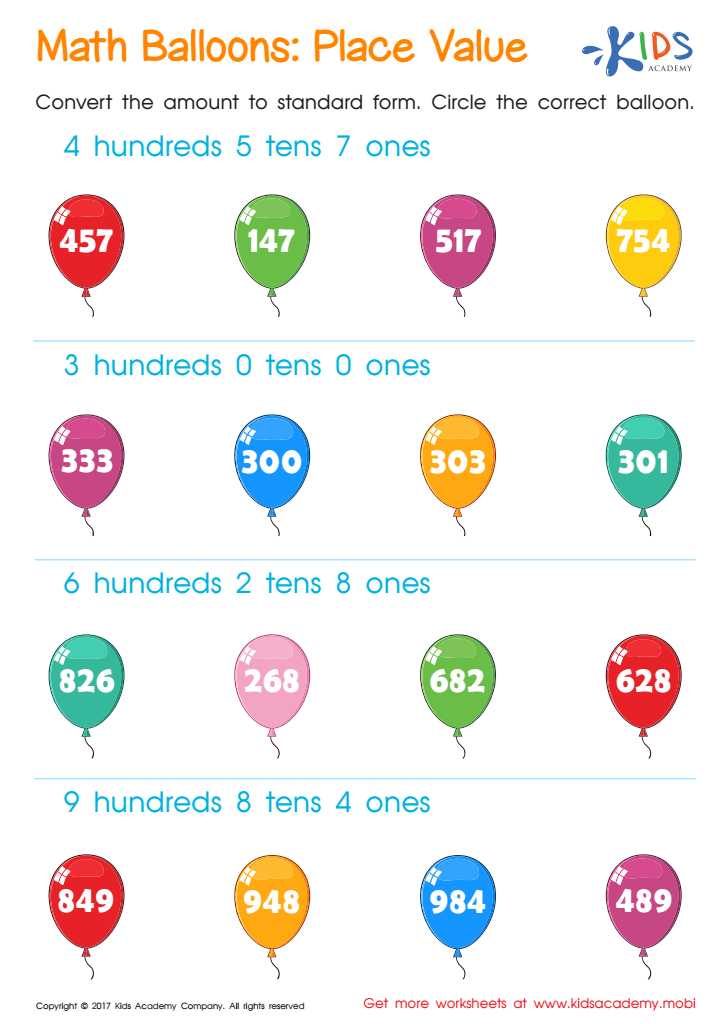
Place Value Printable Worksheet
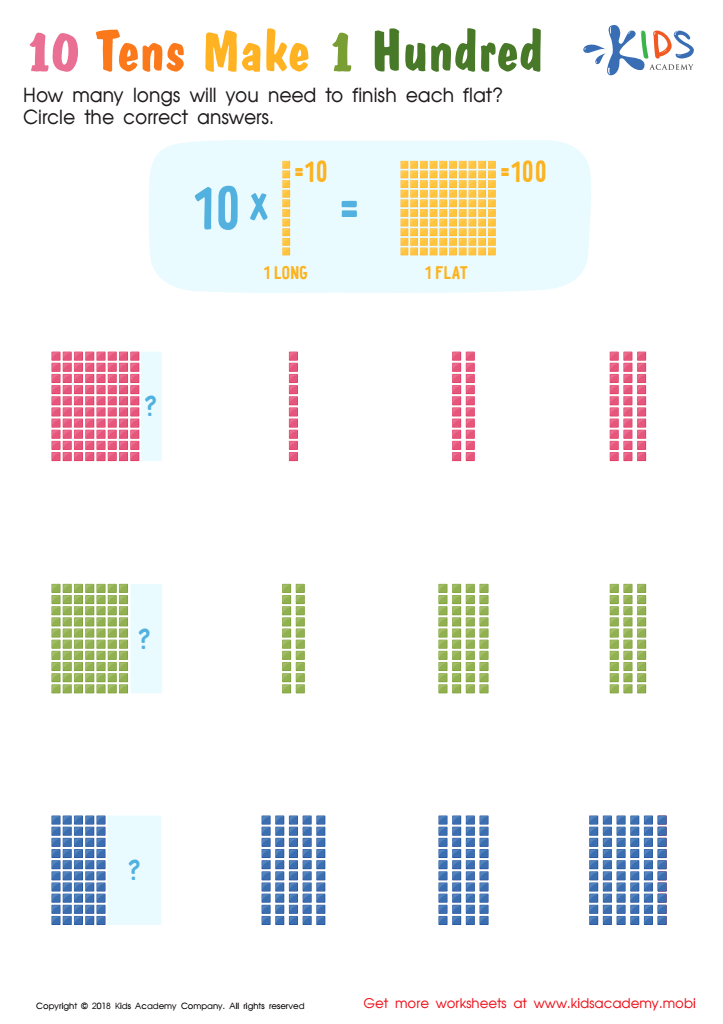
10 Tens Make 1 Hundred Worksheet








Recognizing number patterns is crucial for children aged 8-9, as it forms a foundational skill for their overall mathematical development. At this age, students are transitioning from concrete to more abstract thinking, making it an ideal time to introduce them to mathematical patterns. Understanding patterns helps children develop critical thinking and problem-solving skills, as they learn to identify relationships and make predictions based on observed sequences.
For parents and teachers, focusing on number patterns can enhance children's number sense and computational skills. This understanding contributes to more complex areas of mathematics, such as algebra and geometry, which children will encounter later in their academic journey. Additionally, recognizing patterns cultivates a sense of order and structure in learning, boosting confidence and engagement in math activities.
Furthermore, pattern recognition extends beyond mathematics; it nurtures skills applicable in science, art, and daily life, helping children make connections across subjects. Parents and teachers who emphasize this skill play a vital role in preparing students not only for assessments but for real-world problem solving as well. Ultimately, encouraging children to explore and recognize patterns equips them with tools for academic success and lifelong learning.








