Understanding history Normal Worksheets for Ages 8-9
6 filtered results
-
From - To
Explore an enriching world of history with our "Understanding History Normal Worksheets for Ages 8-9" from Kids Academy! Specially designed to captivate young minds, these worksheets introduce historical concepts and figures in an engaging way. Tailored for 8-9-year-olds, each sheet combines narrative elements with fun activities that encourage critical thinking and fuel curiosity about the past. Enhance your child's learning skills while making history relatable and exciting. Visit our web page to unlock interactive lessons and ensure a bright educational journey. Make history a favorite subject with Kids Academy’s expertly crafted worksheets!
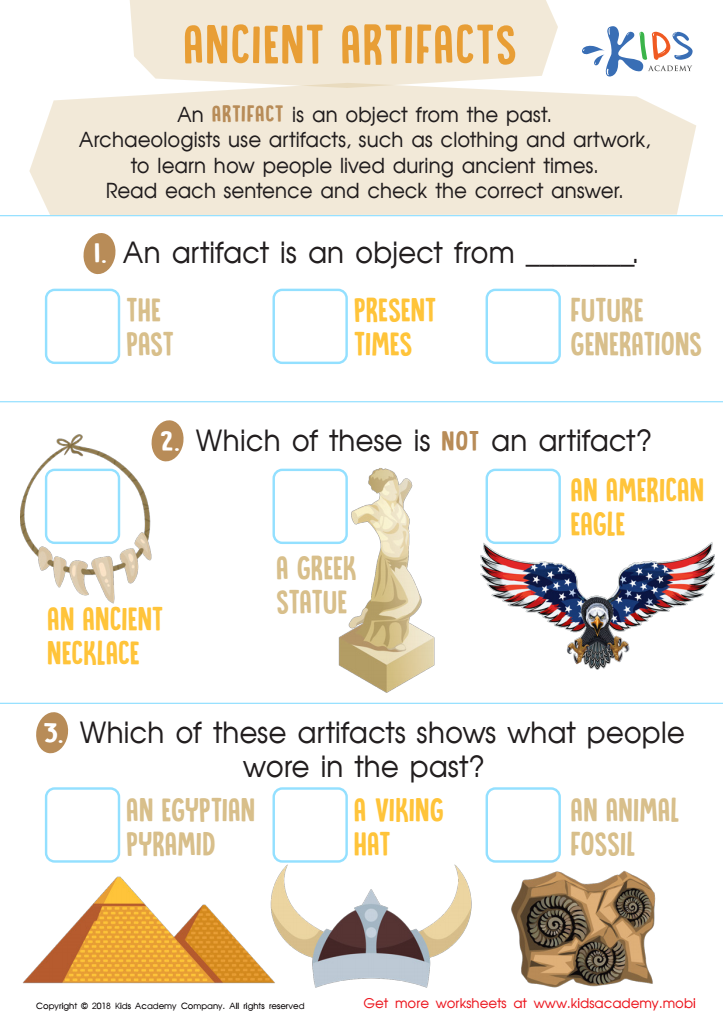
Ancient Artifacts Worksheet
 Assign to My Students
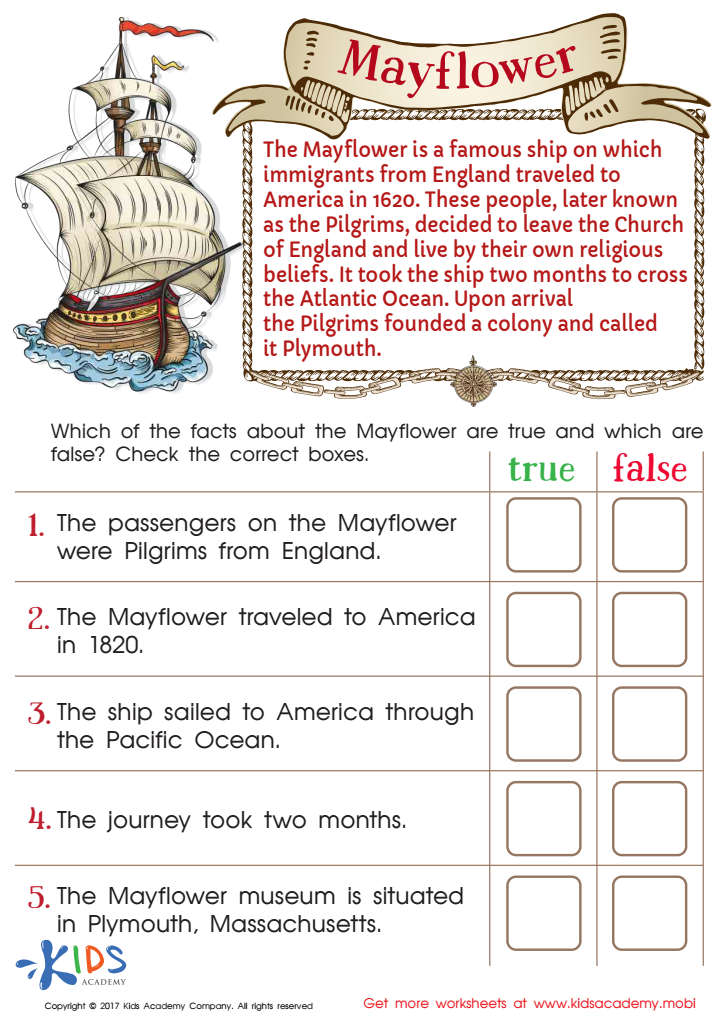
Free Mayflower Worksheet
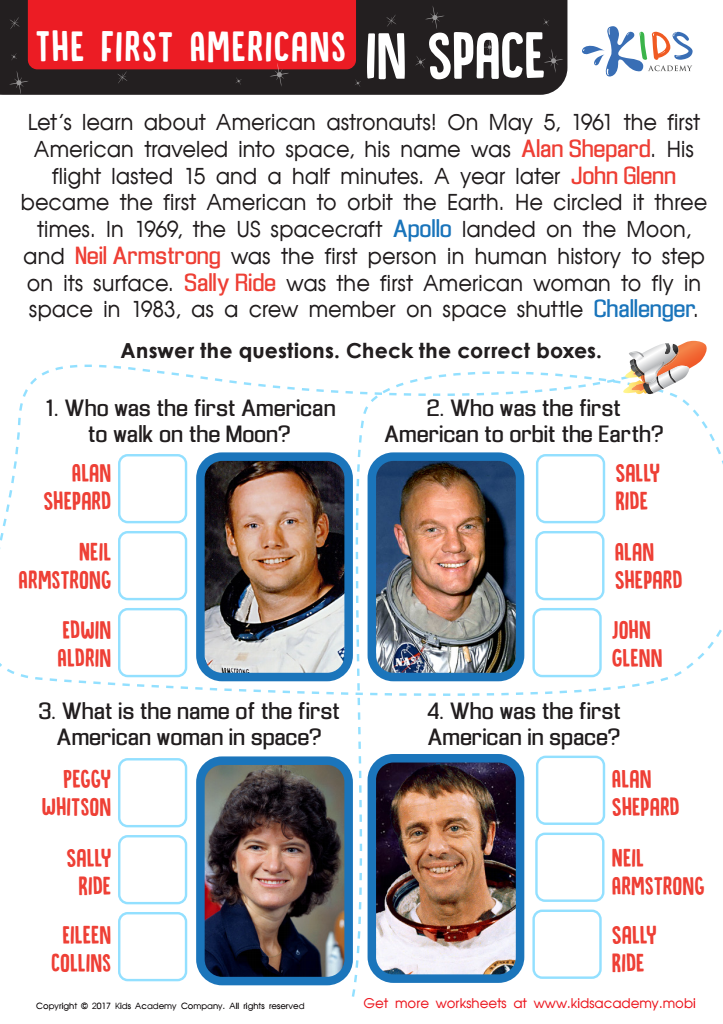
First Americans in Space Worksheet
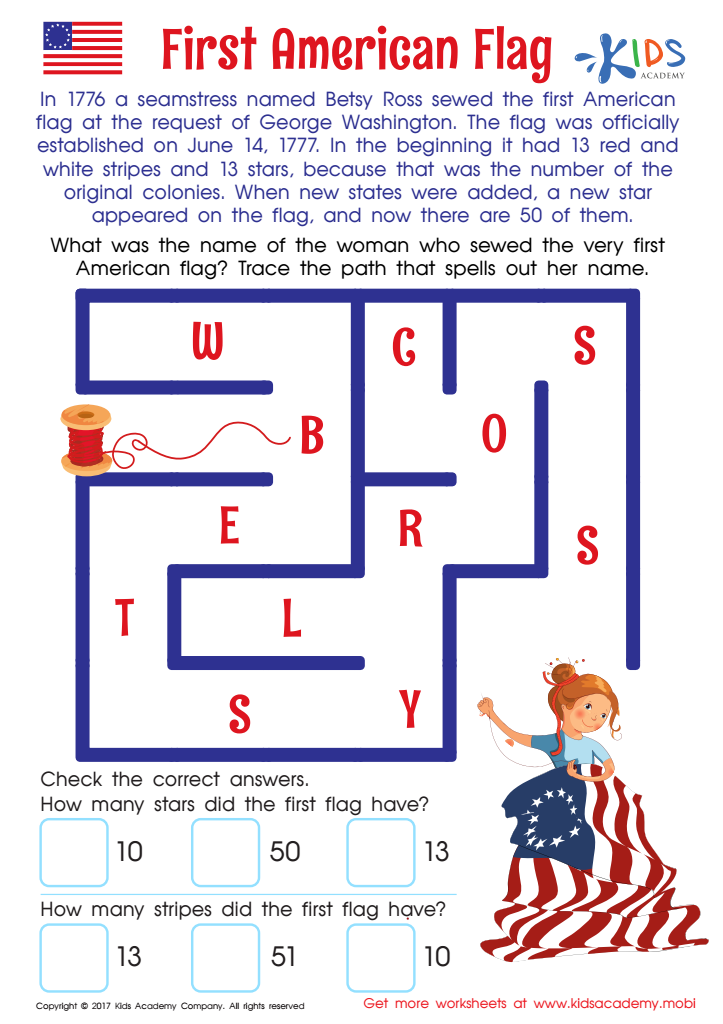
First American Flag Worksheet
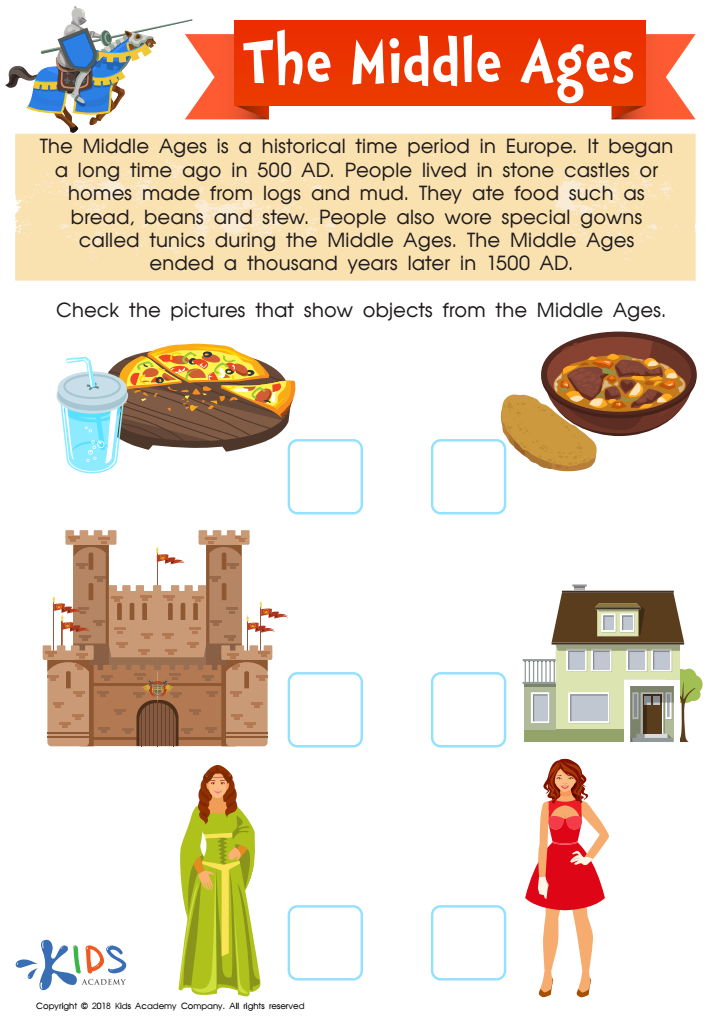
The Middle Ages Worksheet
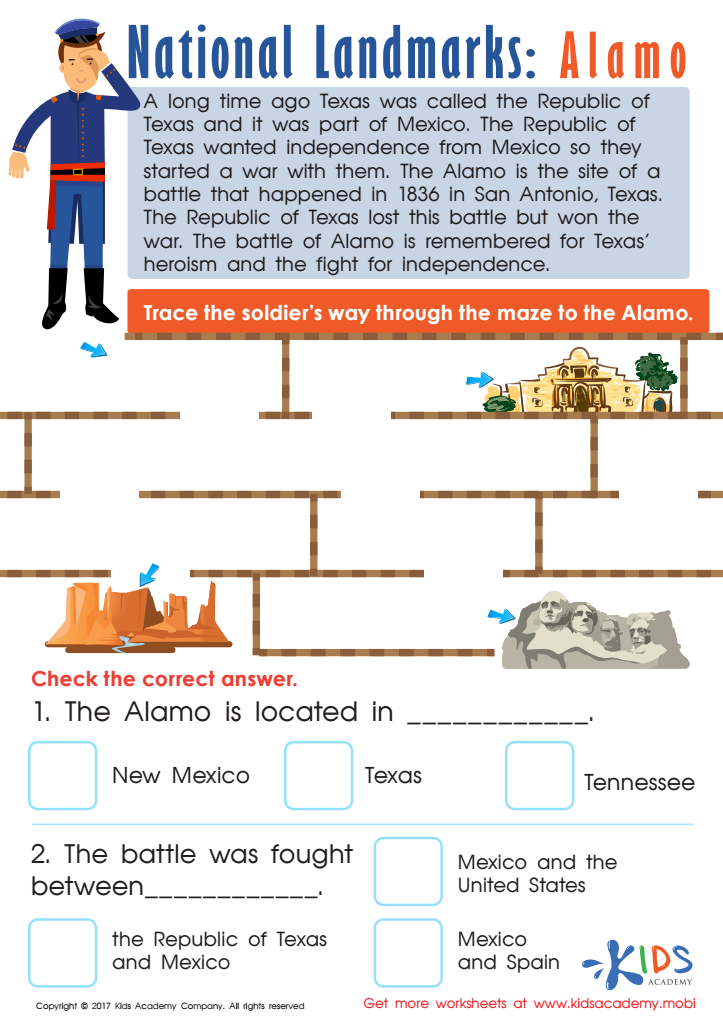
Alamo Printable Worksheet


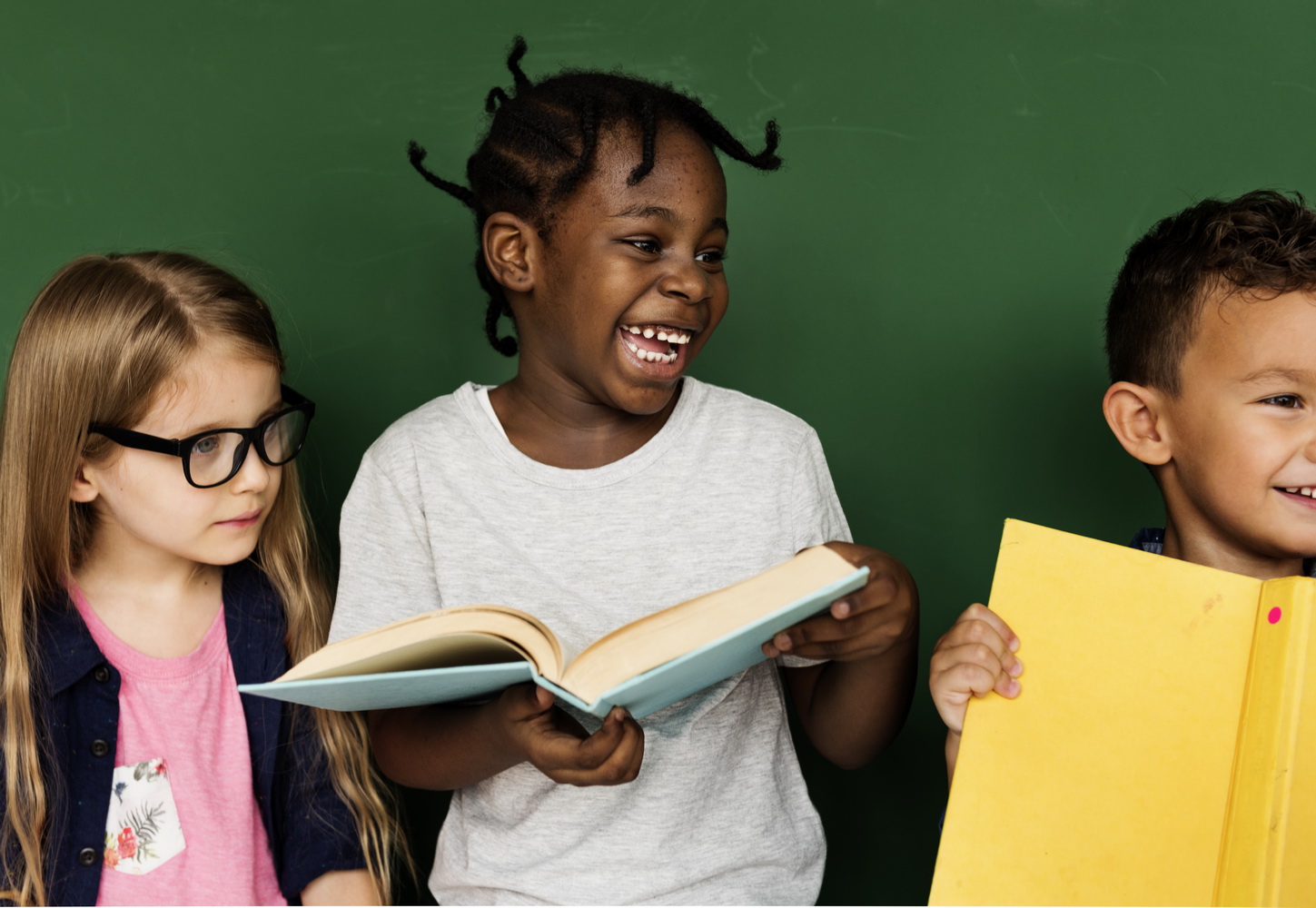




Understanding history at a young age, particularly for children aged 8-9, is crucial for several reasons. First, it helps students develop a foundational awareness of the world beyond their immediate experience. Learning about different cultures, events, and significant figures broadens their perspective and fosters empathy, encouraging a more inclusive and respectful outlook towards others.
Second, history lessons enhance critical thinking skills. When children examine past events and their causes, they learn to make connections, discern biases, and understand the concept of cause and effect. These analytical skills are integral to problem-solving and decision-making, both academically and in daily life.
Third, history provides context for understanding present-day society. By learning the origins of current traditions, governmental structures, and societal norms, students can appreciate how past influences shape their lives today. This contextual knowledge makes it easier for them to grasp why certain events and cultural practices occur.
Lastly, the study of history can inspire a sense of identity and belonging. Knowing one’s heritage and the story of one’s own country or community imbues a sense of pride and continuity. Encouraging this curiosity ensures that children value their personal and collective histories, cultivating informed and thoughtful future citizens. Therefore, both parents and teachers should prioritize history education as a fundamental aspect of holistic child development.








