Understanding vowel sounds Normal Worksheets for Ages 8-9
3 filtered results
-
From - To
Vowels play a crucial role in building a strong reading foundation. Our "Understanding Vowel Sounds" worksheets, designed for ages 8-9, help young learners master the nuances of vowel sounds through engaging activities. These worksheets provide targeted practice to recognize, pronounce, and differentiate between long and short vowel sounds. By working through fun, educational exercises, children enhance their reading and spelling skills, ensuring fluency and comprehension. Ideal for classroom use or homeschooling, these expert-crafted worksheets make vowel learning both effective and enjoyable. Get ready to watch your child’s confidence and literacy skills soar!
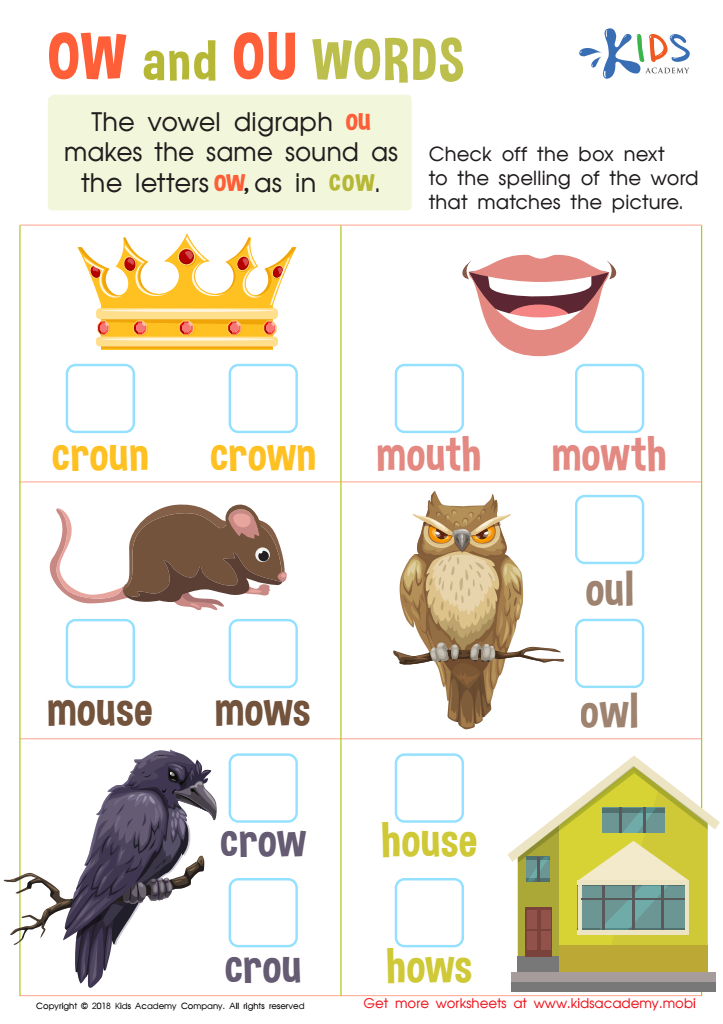
Reading: OW and OU Words Worksheet
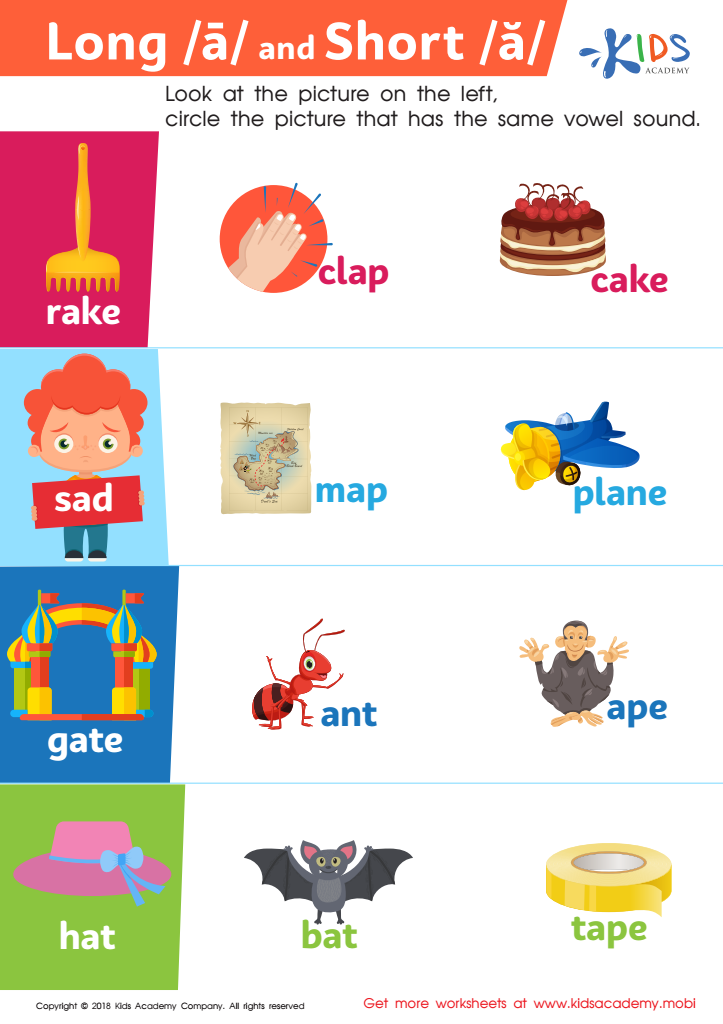
Reading: Long a and Short a Worksheet
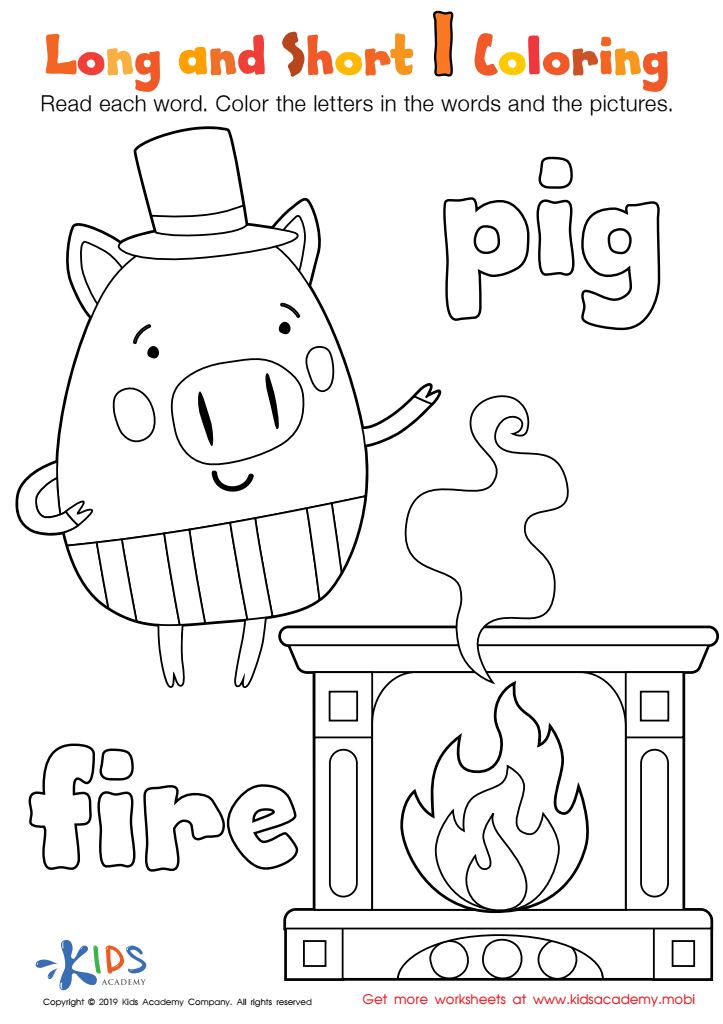
Long and Short I Worksheet
 Assign to My Students


.jpg)





Understanding vowel sounds is fundamental for children ages 8-9 as they navigate early literacy education. At this developmental stage, mastering vowel sounds significantly boosts their reading and writing abilities. Vowel sounds, which include both short and long variants, form the core of phonics and enable children to decode words more effectively. As children learn to recognize and produce these sounds accurately, they become more proficient readers.
For parents and teachers, awareness of vowel sounds enhances their ability to support literacy development. Missing or misidentifying these sounds can impede a child’s progress, leading to frustration and a lack of confidence in their reading skills. Furthermore, children with a solid grasp of vowel sounds exhibit better spelling patterns, as they can decipher and articulate words more precisely.
Children who are adept in vowel sounds develop stronger phonemic awareness, a critical skill that underpins their ability to manipulate and blend sounds—key processes for fluent reading and writing. Consistent practice and positive reinforcement from parents and teachers foster a supportive learning environment where children feel encouraged to tackle challenging words.
In essence, nurturing these skills at an early age lays a robust foundation for future literacy, encouraging a lifelong love for reading and enriched academic journeys.








