Logical thinking development Normal Addition & Subtraction Worksheets for Ages 8-9
4 filtered results
-
From - To
Enhance your child's logical thinking skills with our engaging Normal Addition & Subtraction Worksheets designed specifically for ages 8-9. These resources combine essential math concepts with critical thinking exercises, encouraging students to solve problems while developing reasoning abilities. Each worksheet is interactive, allowing children to explore various addition and subtraction scenarios that challenge their understanding and stimulate their cognitive growth. Our thoughtfully crafted activities foster a love for learning and build confidence in young learners. Perfect for classroom or home use, these worksheets provide a fun and effective way to strengthen mathematical foundations while nurturing logical thinking skills. Unlock your child's potential today!
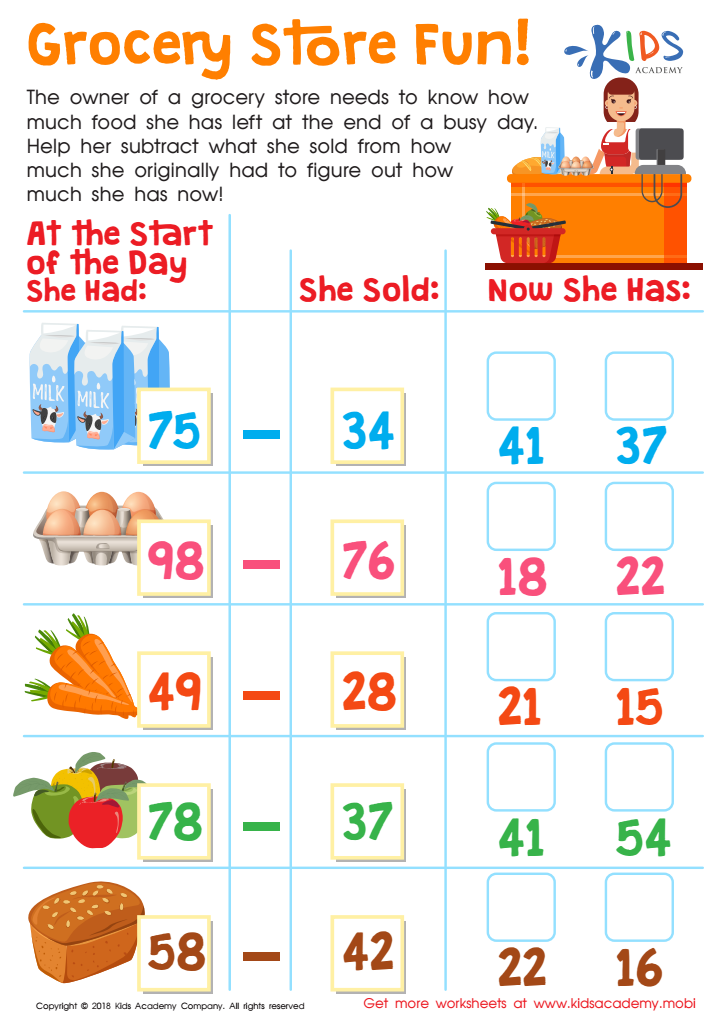
Grocery Store Fun! Worksheet
 Assign to My Students
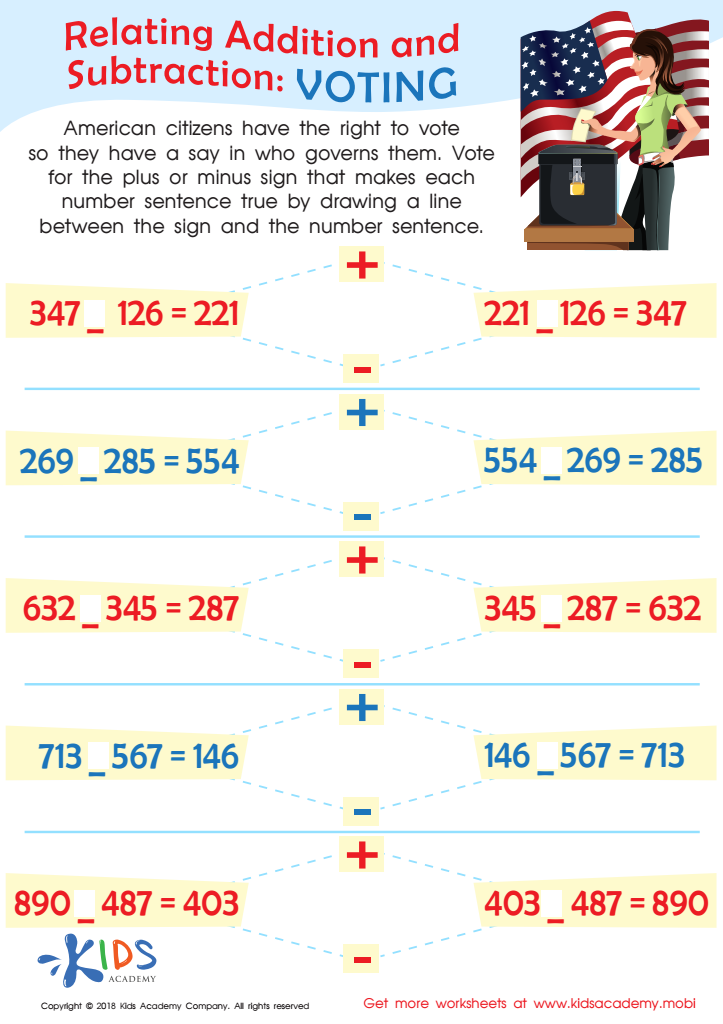
Voting Worksheet
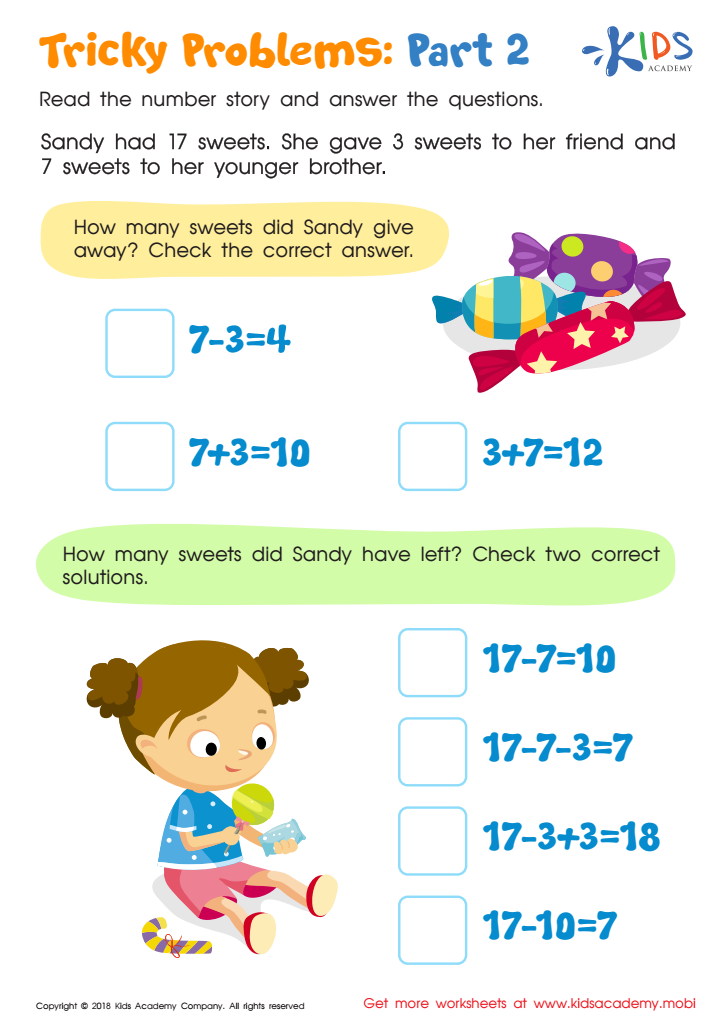
Tricky Problems Worksheet: Part 2
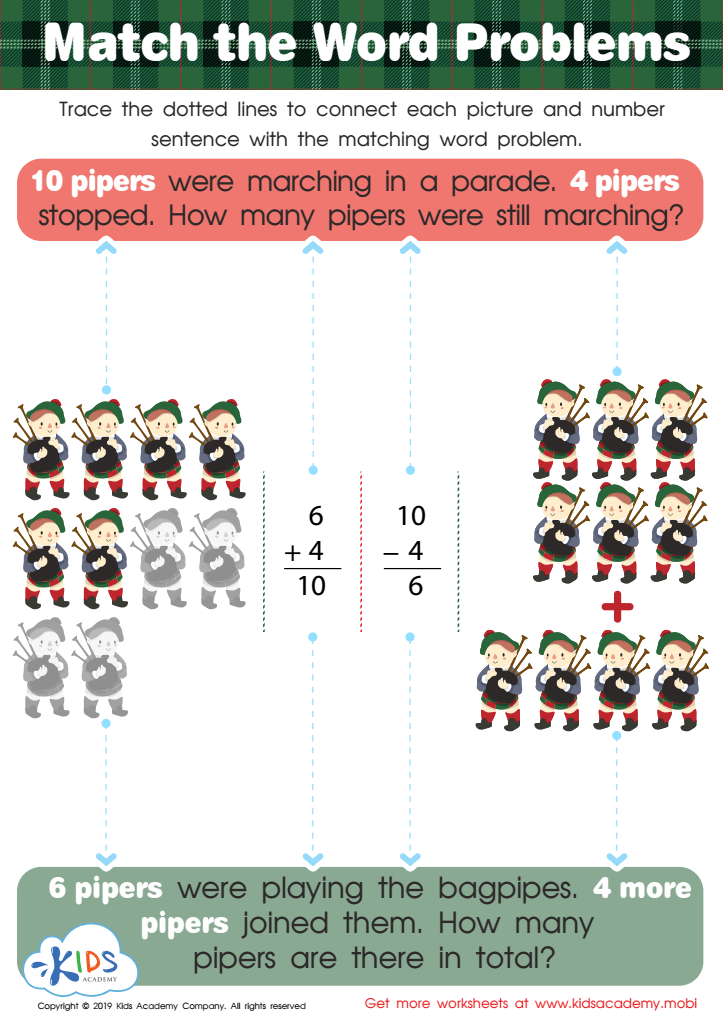
Match the Word Problems Worksheet








Parents and teachers should prioritize the development of logical thinking alongside normal addition and subtraction for children aged 8-9 because these skills form the foundation for future academic and life success. At this age, children are transitioning from concrete understanding to more abstract reasoning. Logical thinking enables them to analyze problems, identify patterns, and develop strategies for solving mathematical challenges. This not only enhances their ability to perform basic arithmetic but also prepares them for more complex concepts in mathematics, science, and critical thinking.
Additionally, fostering these skills at this developmental stage encourages confidence and independence in problem-solving. Children begin to understand the "why" behind the "how," which promotes deeper learning. Engaging with logical thinking through fun activities—like puzzles, games, and real-life scenarios—makes learning enjoyable and relevant, thereby increasing motivation.
Moreover, strong logical reasoning enhances decision-making and analytical skills that are crucial in everyday-life situations, from managing personal finances to understanding societal issues. Parents and teachers, therefore, play a vital role in nurturing these competencies, ensuring that children not only excel academically, but also develop essential skills that benefit them throughout their lives.








