Problem-Solving Skills Normal Arrays Worksheets for Ages 8-9
3 filtered results
-
From - To
Boost your child's problem-solving skills with our engaging Normal Arrays worksheets designed for ages 8-9! These worksheets offer fun and interactive exercises that help children understand the concept of arrays while developing critical thinking abilities. By working through challenges that involve arranging and counting items in rows and columns, kids will enhance their mathematical reasoning and become more confident in their problem-solving techniques. Perfect for classroom use or at-home learning, these resources incorporate essential math skills in a delightful way. Explore our collection and empower your child to tackle problems with creativity and logic! Join us in fostering a love for math today!
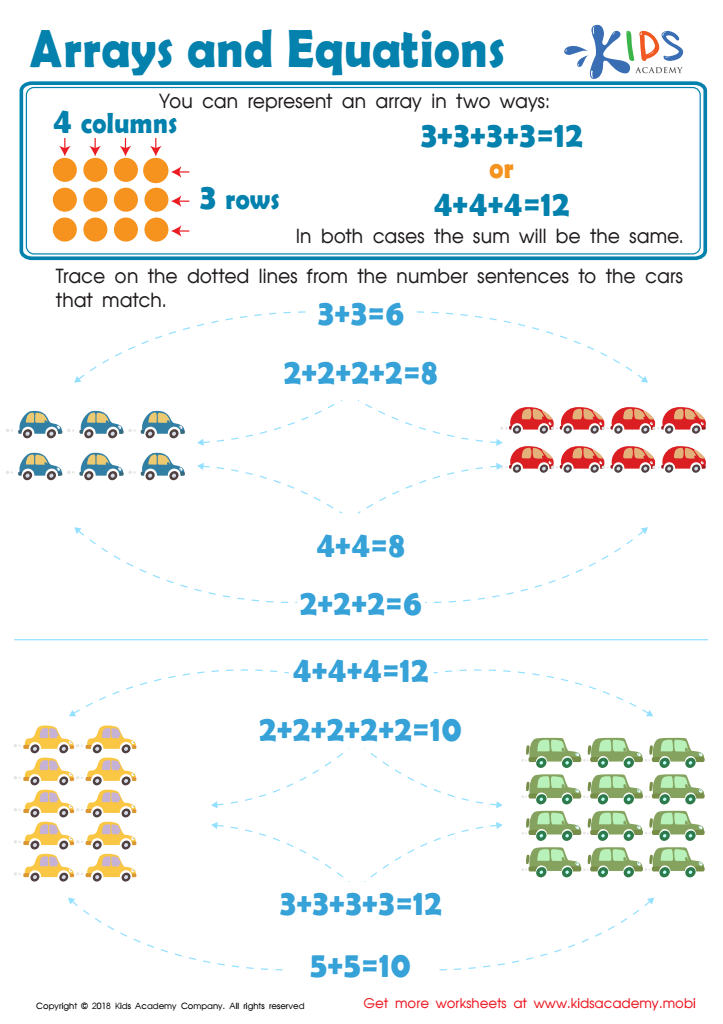
Arrays and Equations Worksheet
 Assign to My Students
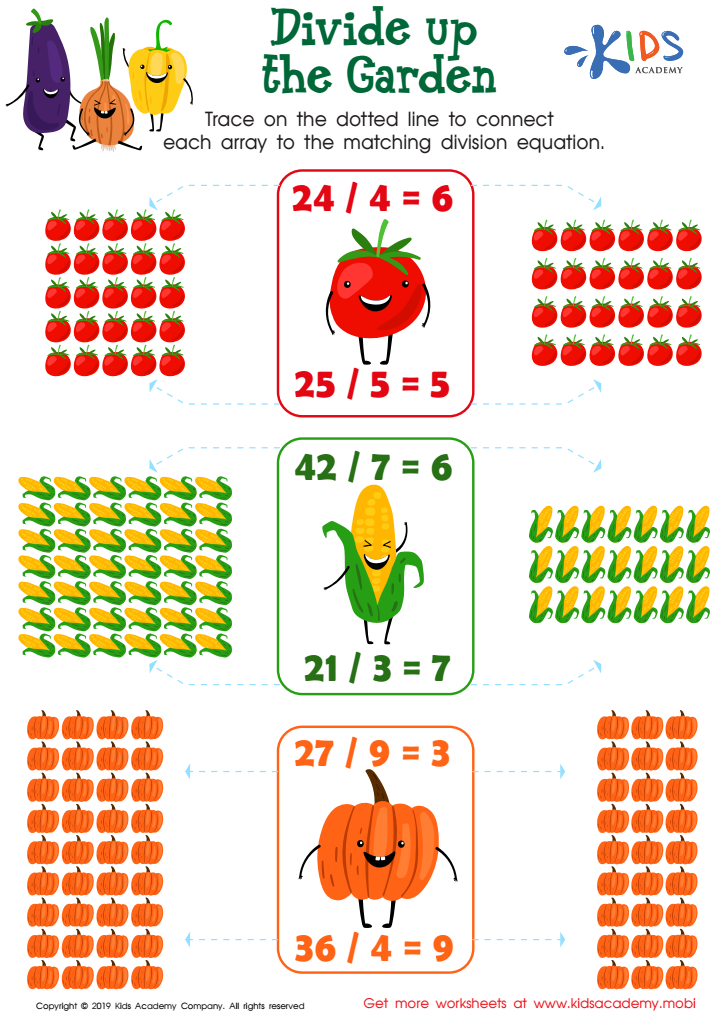
Divide up the Garden Worksheet
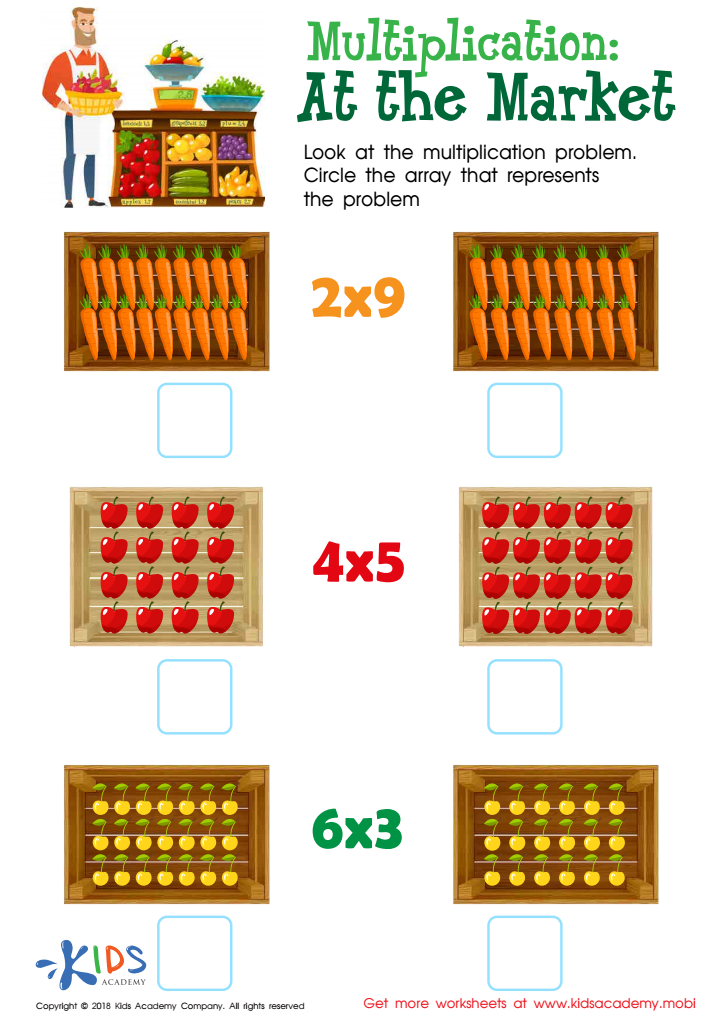
At the Market Worksheet








Problem-solving skills are crucial for children aged 8-9 as they form the foundation for academic success and real-world competencies. At this age, students are not only learning to apply basic concepts in mathematics, but they’re also expanding their critical thinking and reasoning abilities. Understanding normal arrays—specifically in relation to multiplication and division—empowers children to visualize and organize information effectively, leading to a deeper grasp of mathematical relationships.
Parents and teachers should prioritize nurturing these skills because they enhance cognitive development and encourage independence. This age group begins encountering more complex problems in school, and proficiency in problem-solving allows students to tackle challenges with confidence. When children learn to break down problems into simpler components using arrays, they develop resilience and perseverance, skills that are transferrable to many facets of life.
Moreover, fostering these skills creates a love for learning, as children become more engaged when they see how problem-solving works in real-life situations. This engagement encourages academic motivation and self-efficacy. Therefore, the cultivation of problem-solving through normal arrays at this stage supports not just mathematical proficiency but sets the stage for lifelong learning and adaptability in an ever-changing world.








