
Practicing subtraction Normal Math Worksheets for Ages 8-9
3 filtered results
Difficulty Level
Grade
Age
-
From - To
Subject
Activity
Standards
Enhance your child’s subtraction skills with our engaging Normal Math Worksheets designed for ages 8-9. Our curated collection focuses on fundamental subtraction concepts, helping young learners build confidence and improve their mathematical proficiency. Each worksheet is crafted to challenge and inspire, featuring a variety of problems that will keep kids motivated and eager to learn. With our fun and effective subtraction practice, your child will master essential skills while enjoying the learning process. Perfect for at-home practice or supplementing schoolwork, our worksheets provide a strong foundation for future math success. Explore and discover the joy of subtraction today!
Favorites
With answer key
Interactive
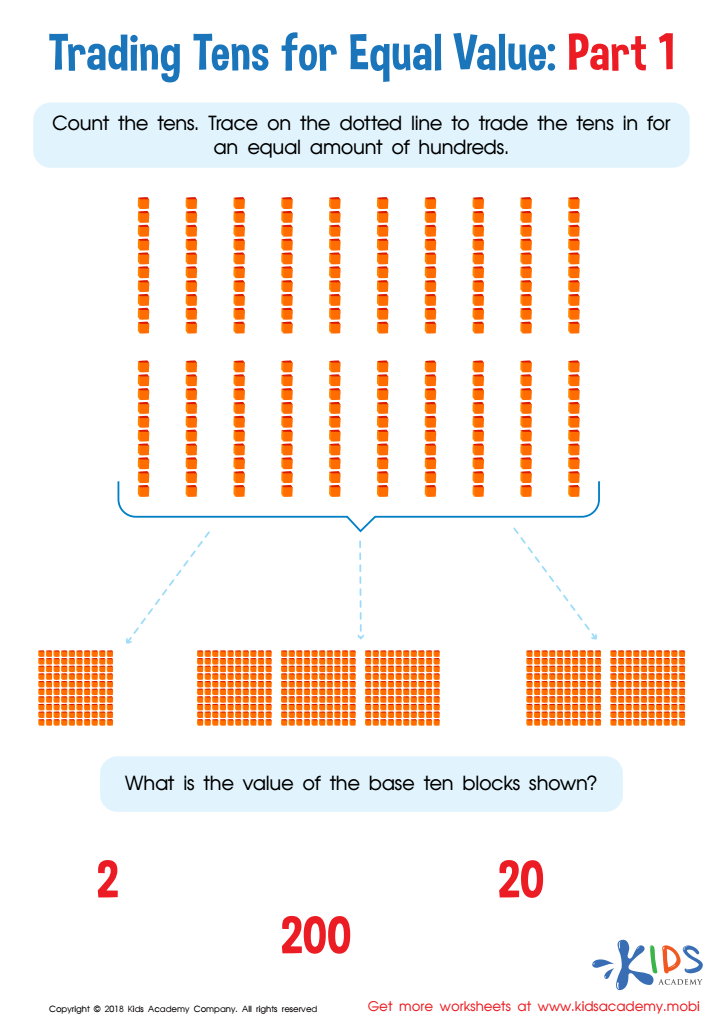
Trading Tens for Equal Value Worksheet: Part 1
This worksheet helps 3rd graders count large numbers and recognize base numbers. It lists 10 cubes and asks students to identify the hundreds, then circle the base blocks. This colorful pdf provides a fun, visual way to help students strengthen their math basics.
 Assign to My Students
Trading Tens for Equal Value Worksheet: Part 1
Worksheet
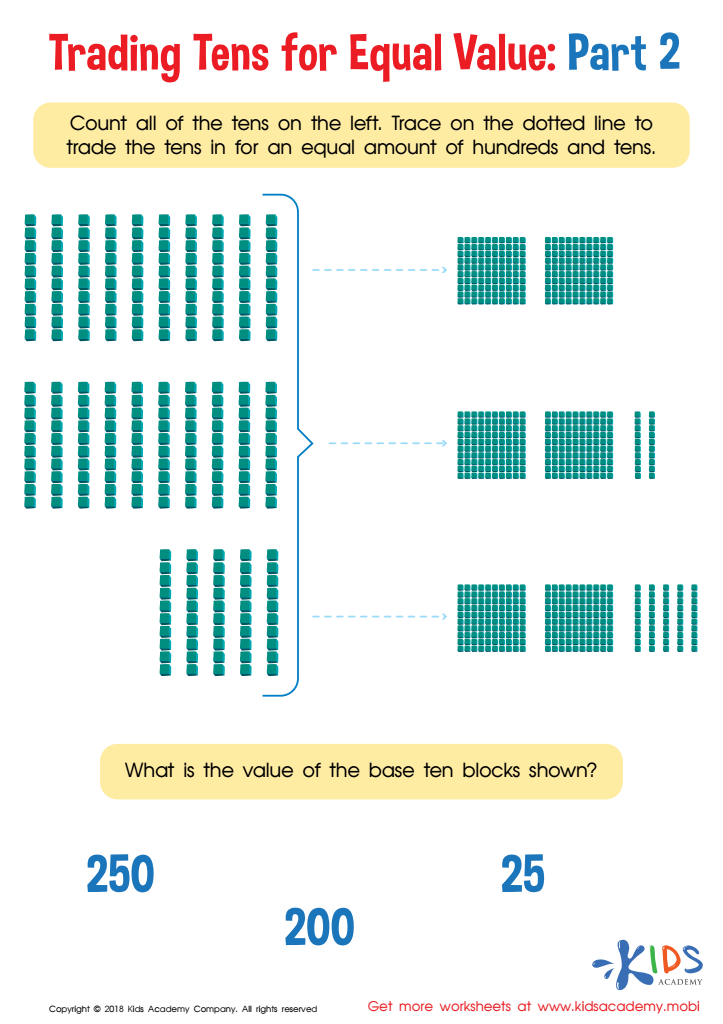
Trading Tens for Equal Value Worksheet: Part 2
Exchange coins for bills and cubes for longs or flats with this helpful place value worksheet! Encourage children to count all the tens, then trace the dotted line to the correct answer and determine the value. This concept can be tricky to teach in elementary math, but this worksheet can help!
Trading Tens for Equal Value Worksheet: Part 2
Worksheet
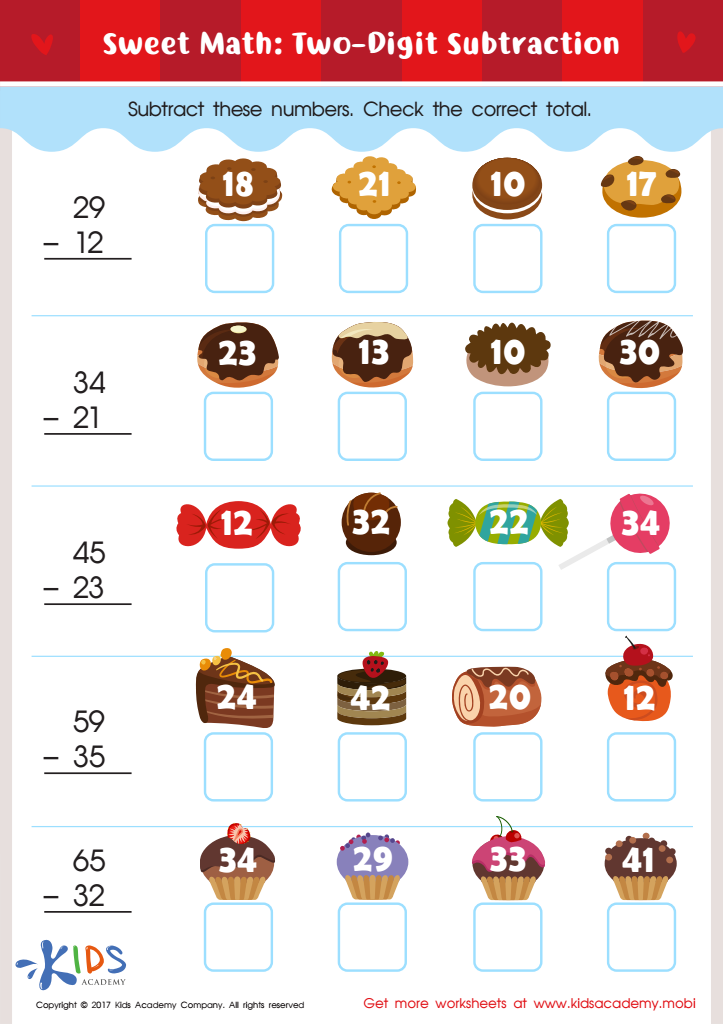
Two Digit Subtraction Worksheet
Make subtraction practice fun and easy with Kids Academy's delightful two digit subtraction worksheet PDF! Your child will love finding the sweet treat containing the correct answer to each 2-digit problem. Offer this quick practice and watch them learn!
Two Digit Subtraction Worksheet
Worksheet
Join Kids Academy for Free
Who is primarily going to use this learning content?








Practicing subtraction for children ages 8-9 is crucial for several reasons. At this developmental stage, students are transitioning from basic arithmetic to more complex math problems, making mastery of subtraction essential. Proficient subtraction skills enhance their number sense, allowing kids to solve daily life problems like calculating change, measuring ingredients, or managing time effectively.
Subtraction isn't just about numbers; it fosters critical thinking and problem-solving skills. As children practice and understand the concept of taking away, they develop logical reasoning and the ability to approach various problems from multiple angles. This foundation fortifies their confidence in tackling math challenges, reducing anxiety and fostering a positive attitude towards learning.
Moreover, proficient subtraction abilities serve as building blocks for more advanced math concepts such as multiplication, division, fractions, and algebra. Poor subtraction skills can create gaps in mathematical understanding, leading to struggles in later grades.
Parents and teachers play a vital role in encouraging regular practice, whether through homework, interactive games, or real-life applications. Making learning engaging promotes a deeper connection to the material, ensuring that subtraction isn't just a skill learned but a tool used confidently in daily life. This thoughtful investment in their early math education lays the groundwork for academic success and a positive lifelong relationship with mathematics.








